
Quick report
- Cracking
- isolated
- Collapsing
- specific
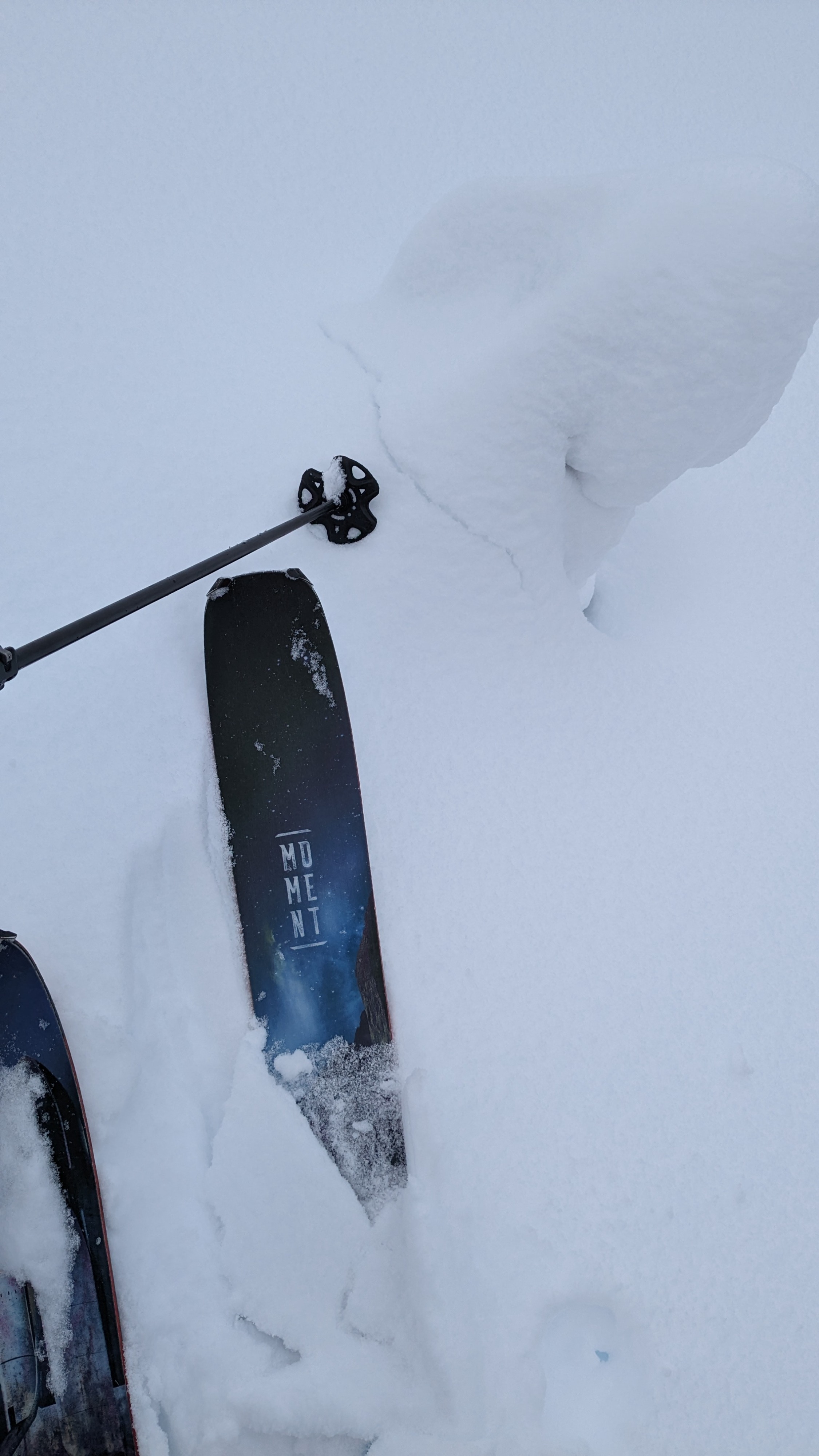
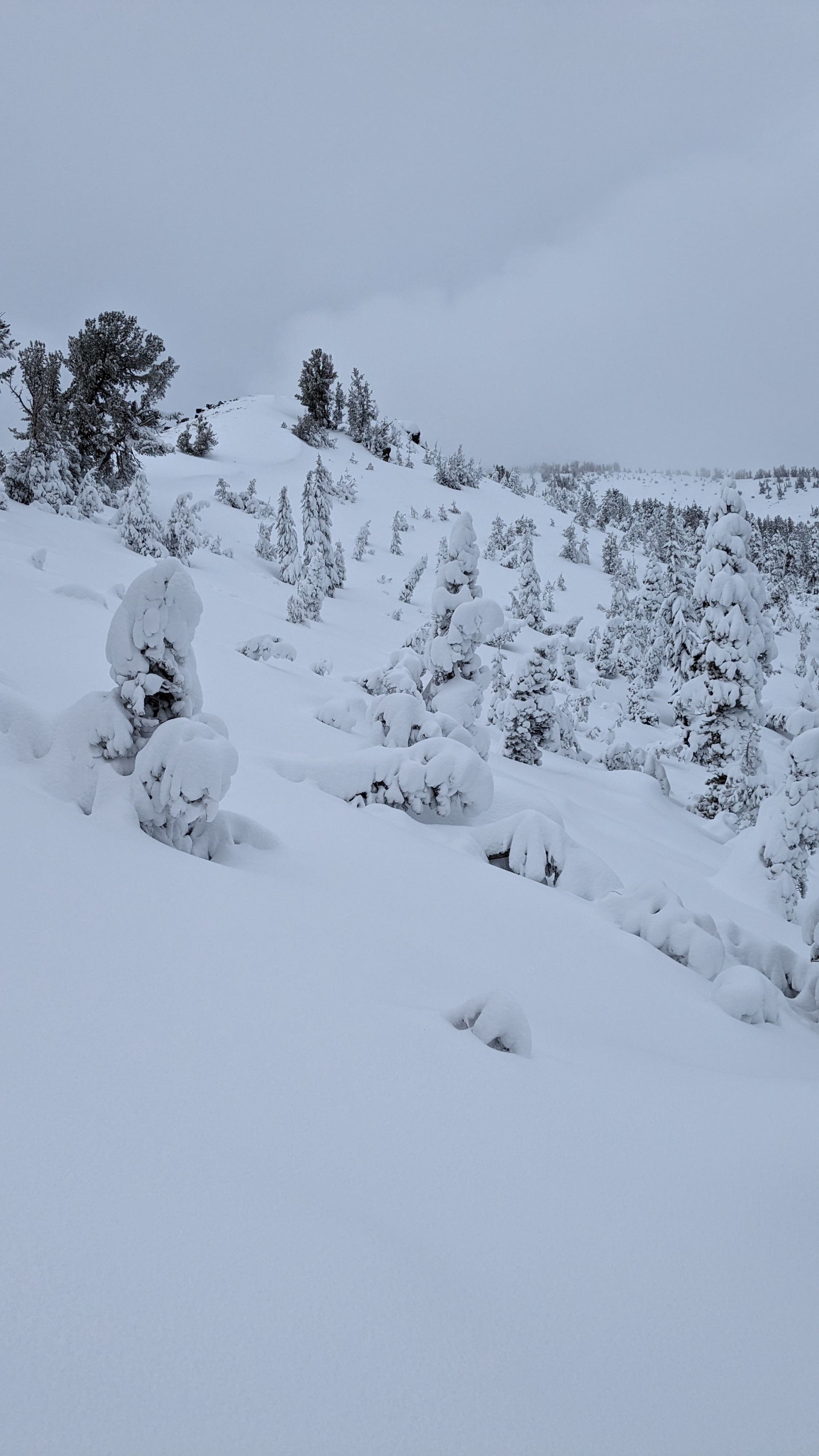
I toured up the Far East Ridge of Tamarack Peak today looking for signs on instability in elevations below where they had been reported yesterday at 9,400'. Basically, I saw signs of persistent slab instability everywhere I looked on northerly aspect terrain starting from roadside at 8,670'. Collapsing/whumpfing occurred in a couple of locations with minimal cracking. Snowpit tests indicated instability with propagation likely on old, faceted snow in the lower half of the snowpack. Facets were wet at 8,670', with less moisture observed in snowpits as I increased elevation.
I stomped on every wind loaded test slope I could find with no failure or other signs of a wind slab problem observed.
I triggered one slope scale collapse with some cracking in N aspect terrain near 9,100' along the Far East Ridge. I spoke to another group who trigger a collapse while in the Hourglass on NE aspect terrain at approx 9,600'.Weather
- Air Temp
- 29
- Cloud Cover
- overcast
- Wind Loading
- none
- Recent Snowfall
- 45
- Snow Avail For Transport
- moderate amounts
Overcast skies with mid level cloud cover, occasional fog near the summit of Tamarack at 9,800'+. No precipitation observed between 0945 and 1300. Light to moderate speed E winds along ridgetops with no drifting snow observed.
Snowpack
45 cm of recent new snow on top of facets. Bottom of the slab up to 1F in hardness. I dug pits in three different locations in northerly aspect terrain (8,670', 9,080', & 9,440'). I had ECTP results on faceted layers near the base of the snowpack in all three snowpits and no ECTN results. 8,670' = ECTP-18, 9,080' = ECTP 21 & ECTP-22, 9,440 = ECTP-14. At 8,670' the facets were wet. At 9,080' and 9,440' the facets were moist.