
Quick report
- Collapsing
- widespread
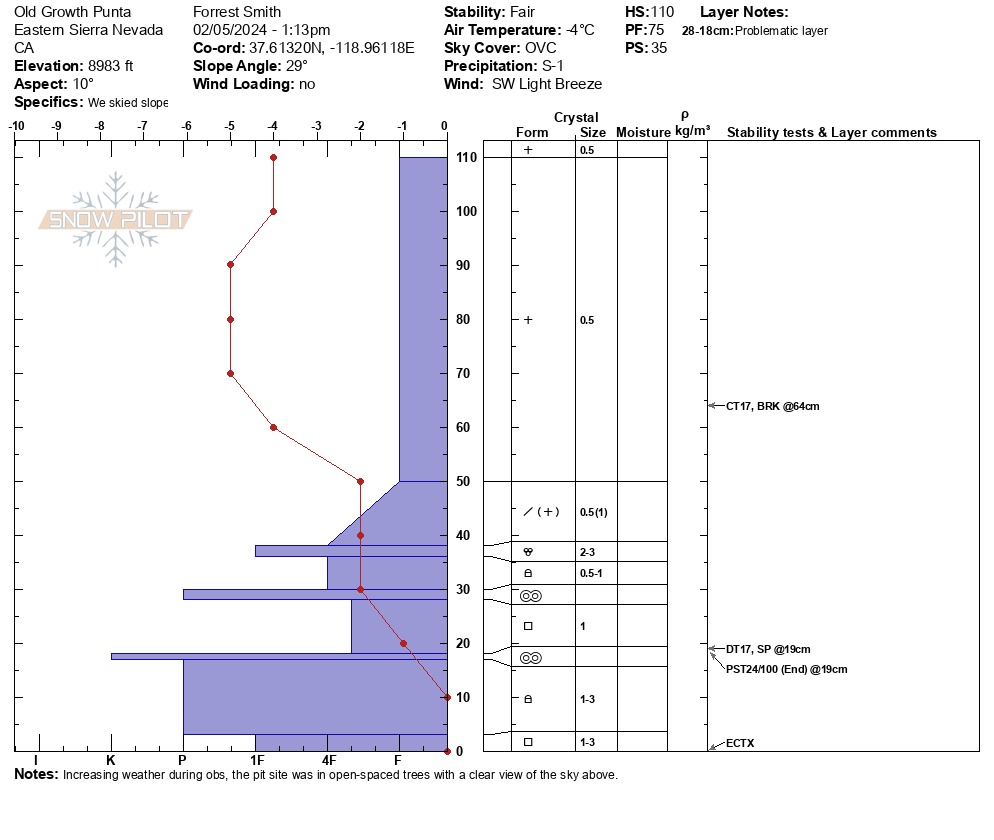
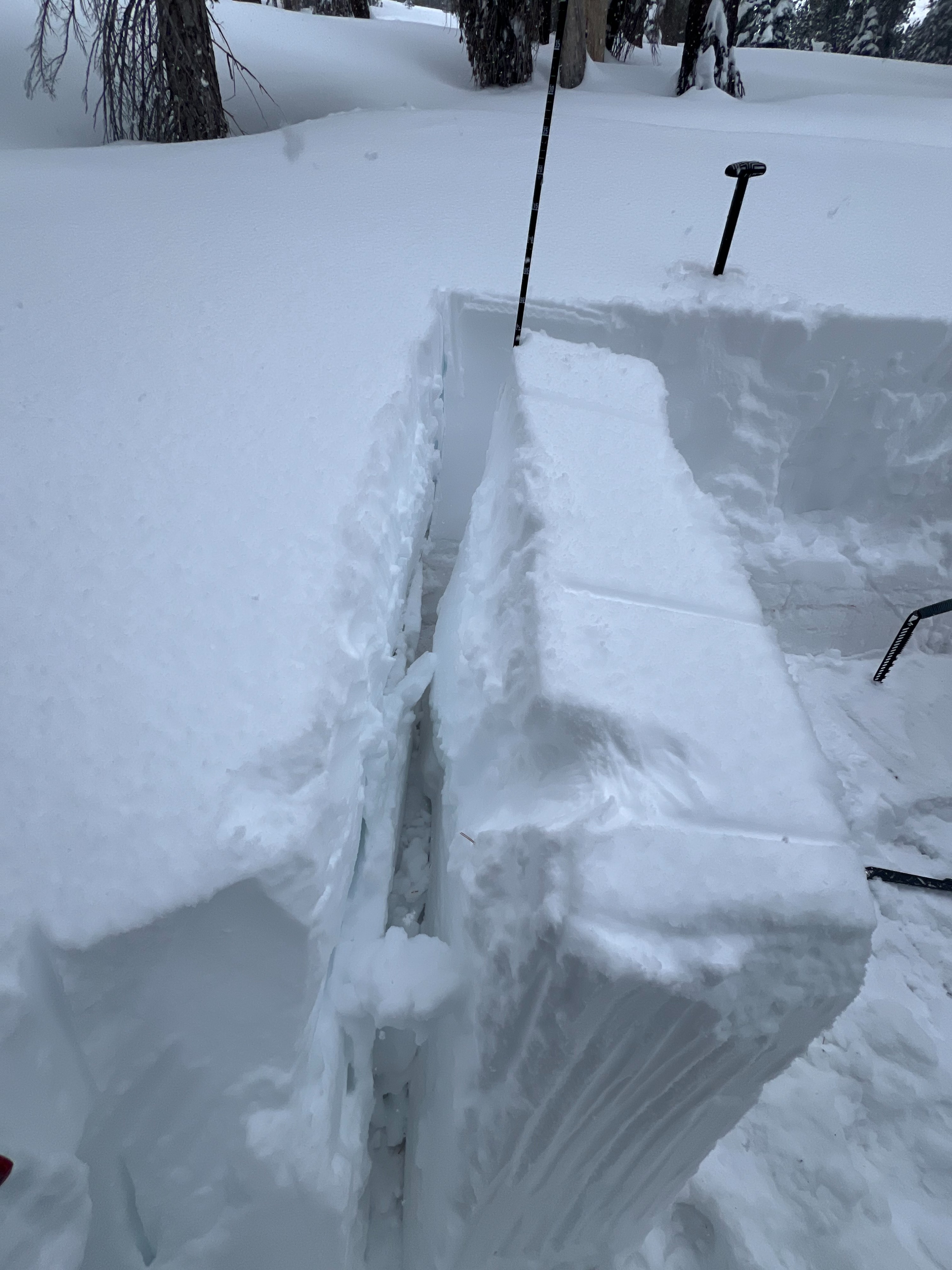
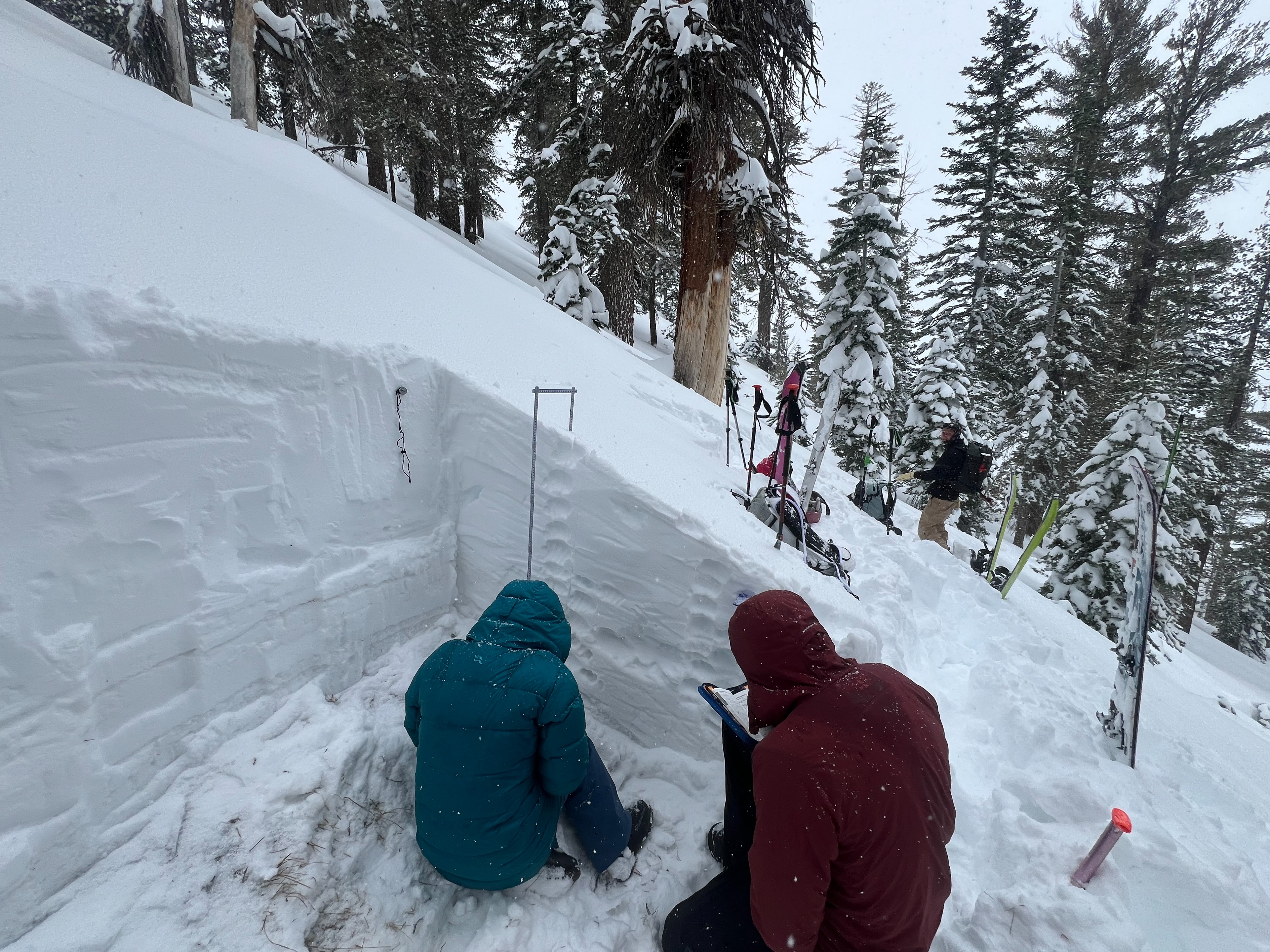
Our expectation for the day was to see shooting cracks and hear whumpfing, however our expectations were not met. The only shooting cracks we saw were next to or on top of bushes and other buried vegetation. The snow felt upside down while skinning up, but wasn't showing much signs of instability outside of difficulty trail breaking. Once we got down into the snow we did experience one loud whumpf as our boots interrupted the weak layer(s) near the ground. While it seems as if things may be headed towards a healing trend, and the persistent slab issues are becoming harder to trigger, they're still quite sensitive and willing to propagate. We had few concerning results in our pit when interacting with the snow near the surface, the results of a deep tap test and propagation saw test were concerning. Relying on increased snow depth to keep you safe from the P-Slab hazard might fail if you happen to find a thin spot. It seemed as if the weak layer was hard to reach due to both increased HS and multiple temp crusts. Widespread collapsing was due to the slight increase of density at the top of the snowpack which was hard to quantify in our pit, partially because we selected a spot with less wind effect.
Weather
- Air Temp
- 25
- Cloud Cover
- overcast
- Wind Loading
- none
- Rain Elevation
- N/A
- Recent Snowfall
- 60
- Snow Avail For Transport
- large amounts
Whether increased in intensity throughout the day shifting from broken sky to overcast, with snowfall increasing from none to S1, and winds increasing from calm to light. Temperature was steady throughout the day.
Snowpack
The surface layer was variable due to the increase in wind during the end of the storm, ski pen varied between 45 and 2-3cm and was full of manzanita at the bottom. Multiple crusts were present at the bottom of the snowpack, probably due to the early season dry spells. Ski penetration fluctuated less as we gained elevation and trended towards denser tree cover.