
Quick report
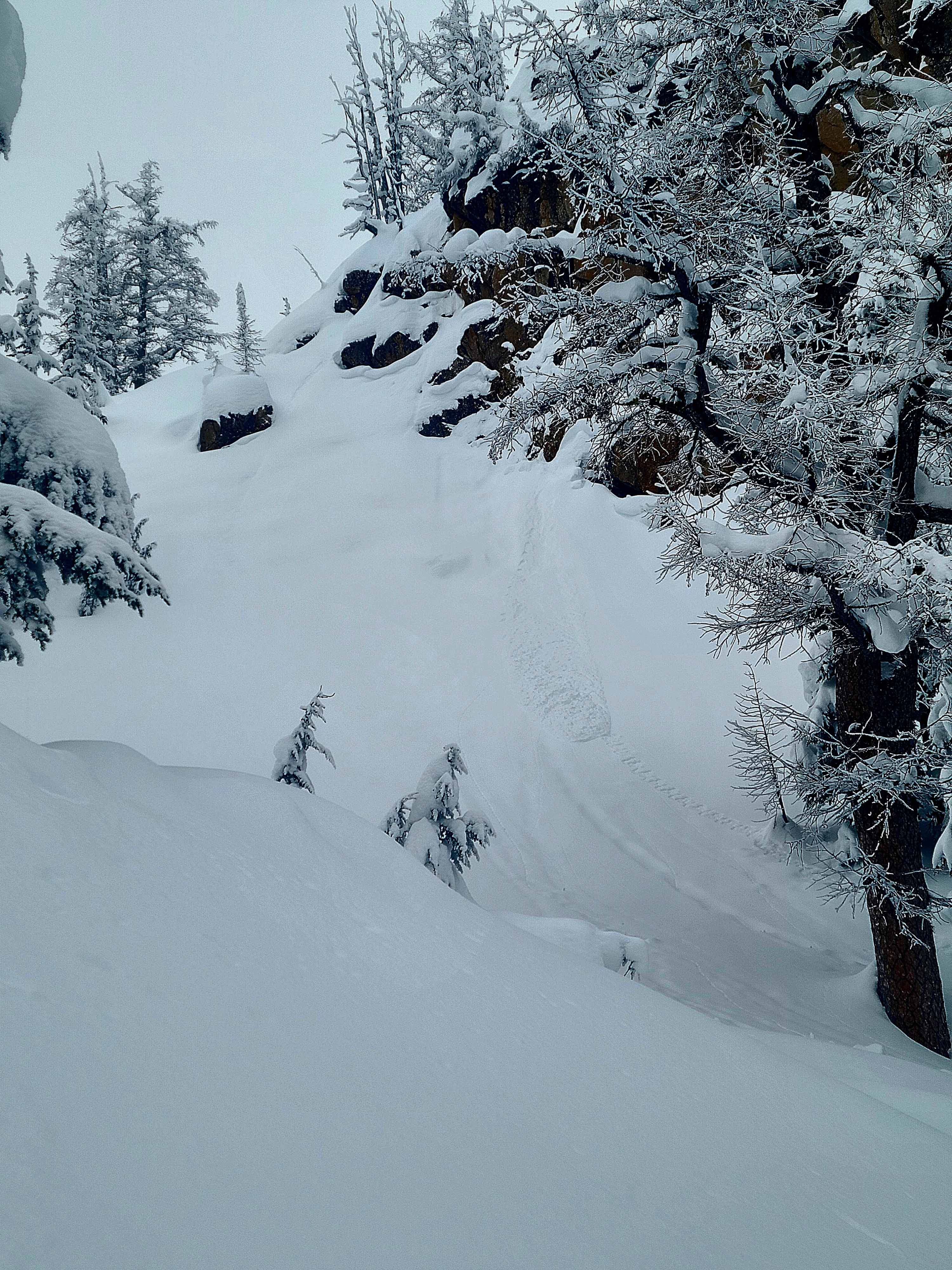
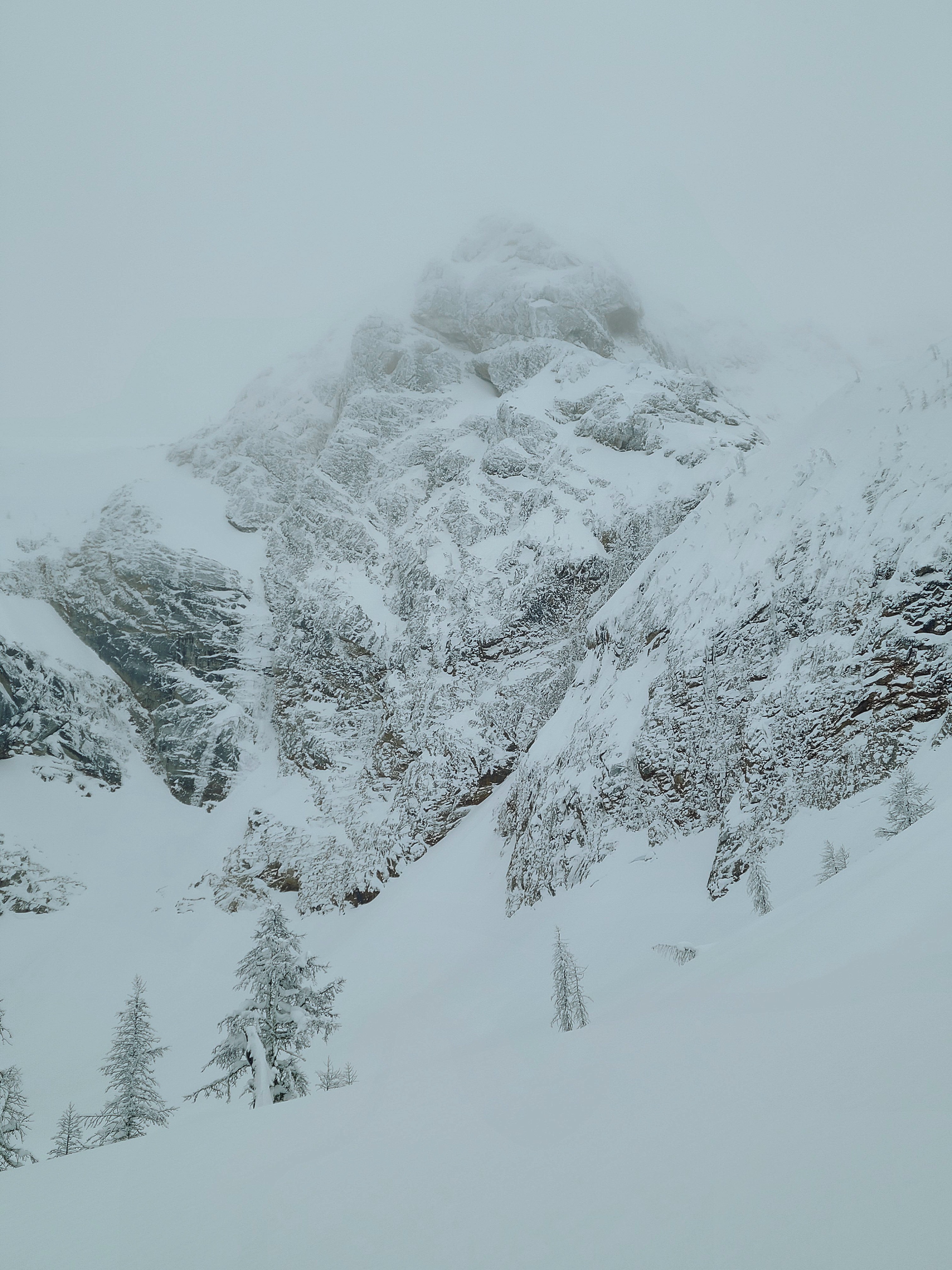
Since we found obvious signs of instability in wind-affected terrain yesterday, our goals for the day were to investigate the reactivity of the buried surface hoar and any other signs of instability in more wind-sheltered terrain. With good visibility in the morning hours, we got a good look at a variety of terrain up to 7000ft. We saw a few small wind slabs and loose dry avalanches at the base of cliffs but found better stability than expected in sheltered terrain. Test slopes produced minimal sluffing even with ski cuts in steep, unsupported terrain. However, the buried surface hoar was widespread, even in more exposed locations at 6700 ft where we dug a snow profile. While this layer was only buried 15cm deep with low-density snow today, unstable test results indicate this layer could become more reactive with the incoming snowfall.
We stuck to more sheltered terrain because of yesterday's winds and evidence of recent wind slabs and saw no signs of instability. The buried surface hoar (1/1) was present throughout the terrain but currently doesn't have enough cohesive snow over it to produce obvious signs of instability. Very steep, unsupported test slopes in sheltered terrain produced no results other than small, loose dry sluffs that didn't have much energy.Weather
- Wind Loading
- previous
- Recent Snowfall
- 15cm
- Snow Avail For Transport
- large amounts
The morning started beautifully with clear skies and little to no wind. As the day progressed, overcast conditions developed, with clouds thickening and lowering throughout the afternoon. Just as we arrived back at our snowmobiles, light snow began to fall. Winds were light throughout the day, with the occasional moderate gust.
Snowpack
The snowpack is robust for this time of the year. We measured approximately 230cm of snow at 6700ft.
We dug down below the Solstice Crust and found a generally right-side-up snowpack with soft, dry snow in the upper pack. There is a layer of buried surface hoar 1cm down 15cm. This layer produced easy, sudden results in small column tests and failed with planar shears in shovel tilt tests. While the snow above this layer did not seem to have enough cohesion to produce any avalanches or signs of instability, the unstable test results indicate that this layer might become problematic with additional snow load. Also notable were a couple of very thin zipper crusts down 44 and 46cm. Below these thin crusts, the snowpack increases in strength and consists of small rounded grains down to the Solstice Crusts. Neither the zipper crusts nor the Solstice Crust produced any stability test results.
Avalanche
We saw several small wind slabs and a couple of loose dry avalanches at the base of cliff bands.