
Quick report
- Cracking
- isolated
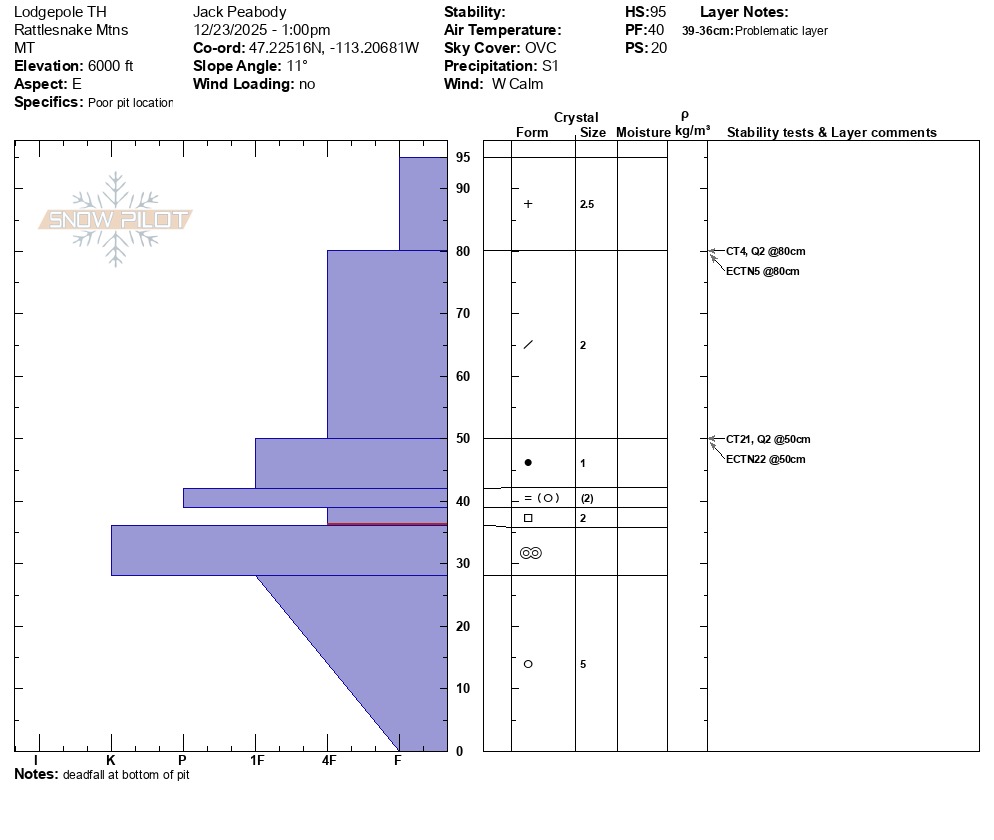
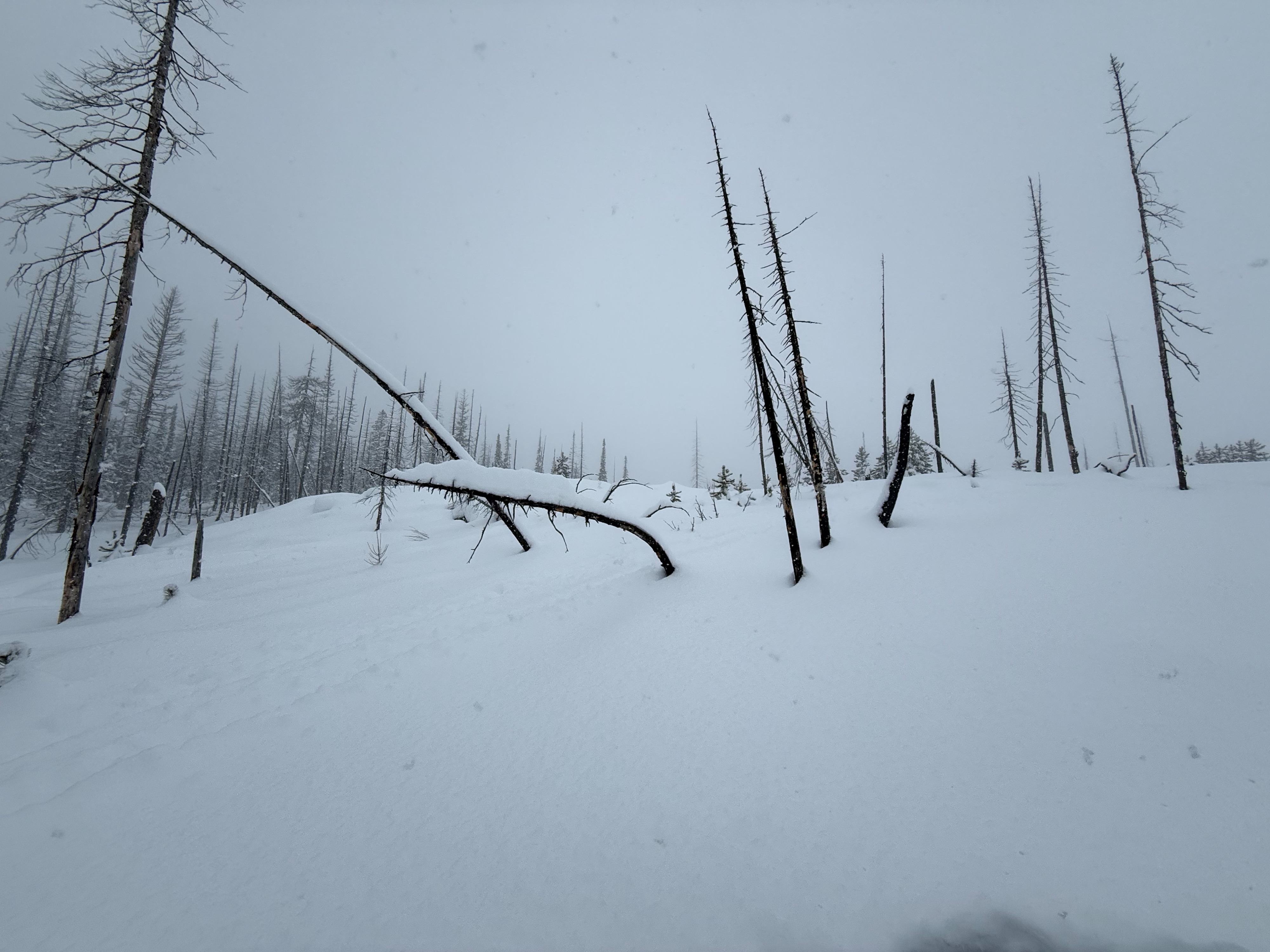
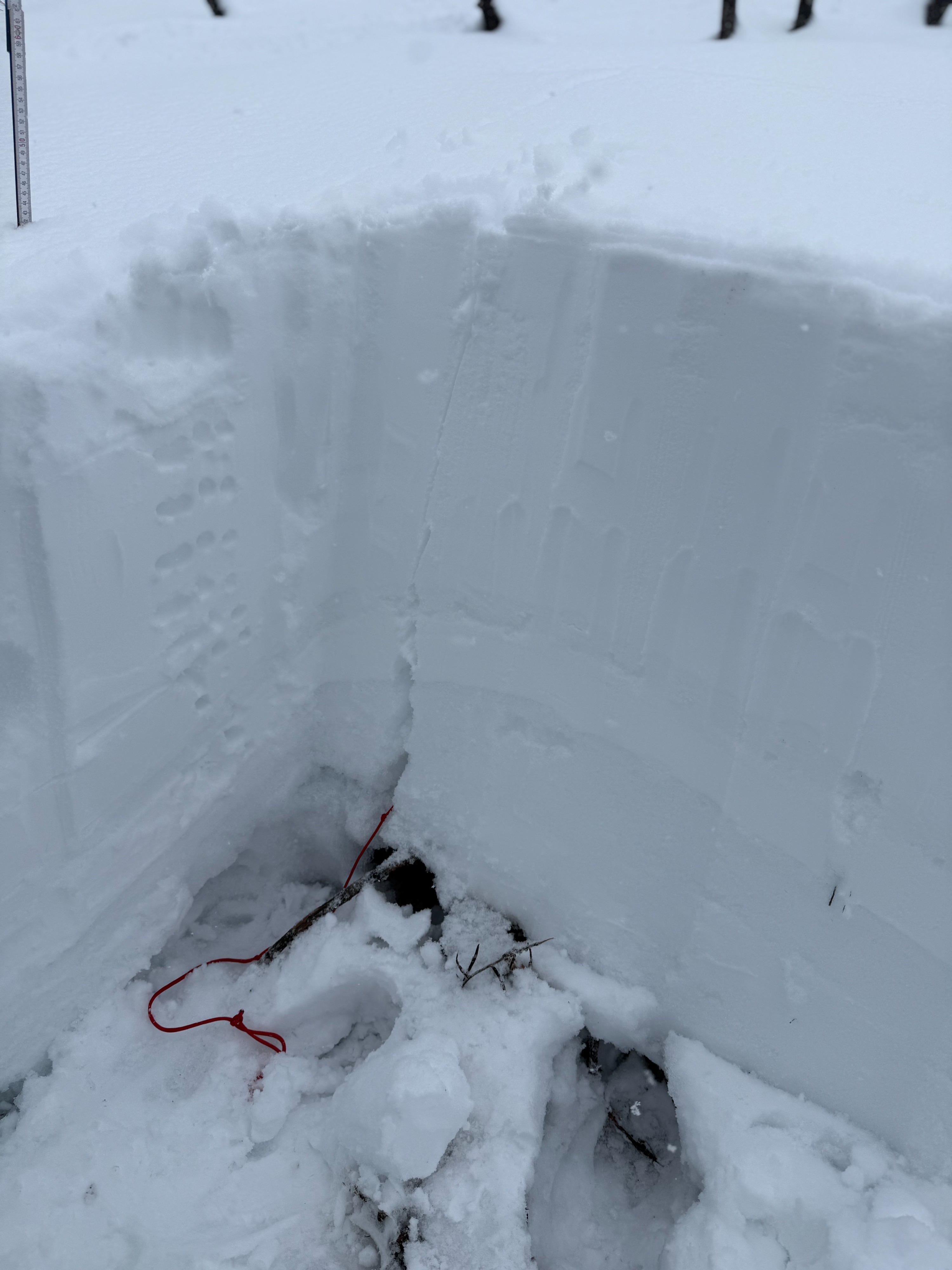
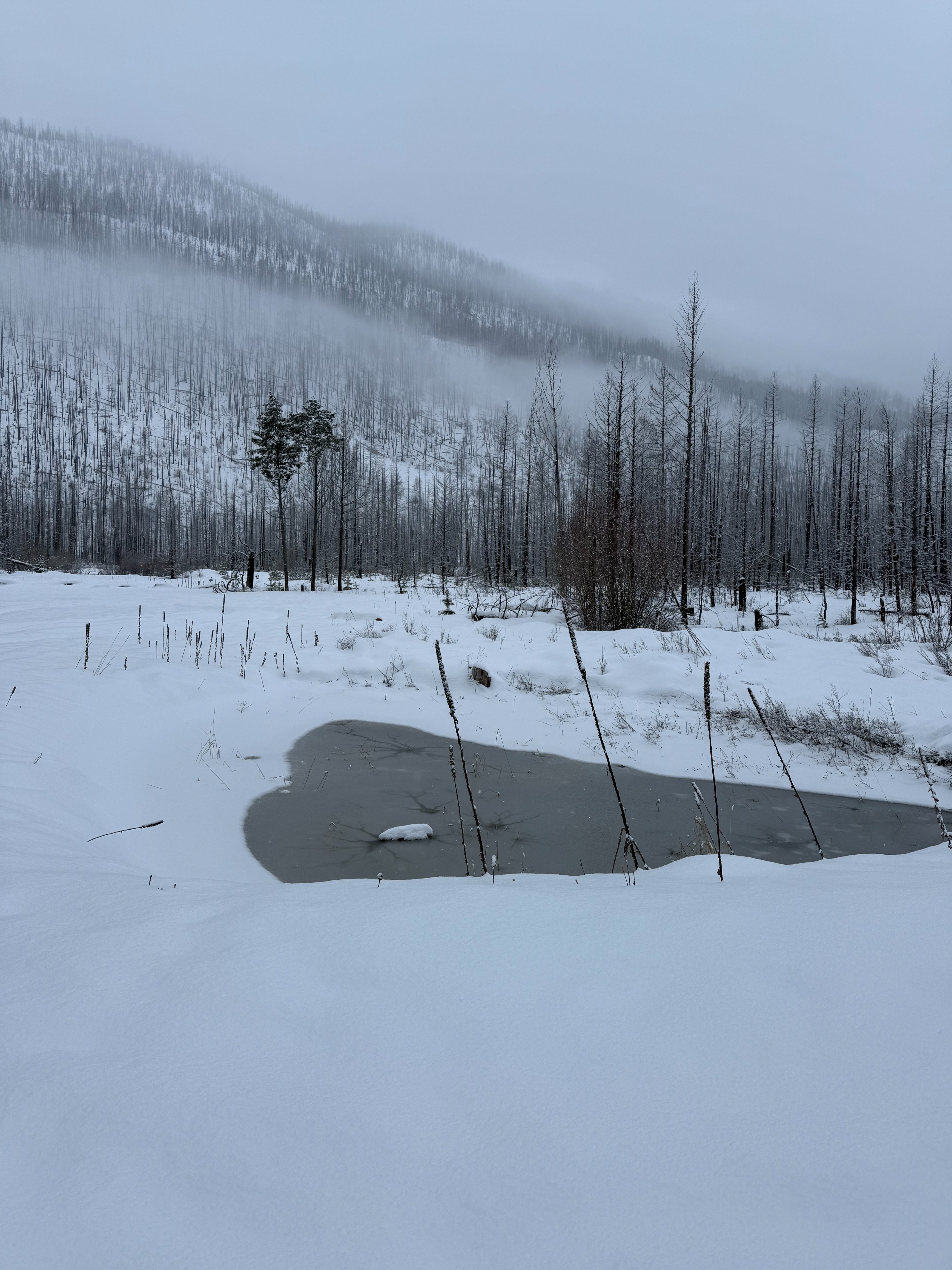
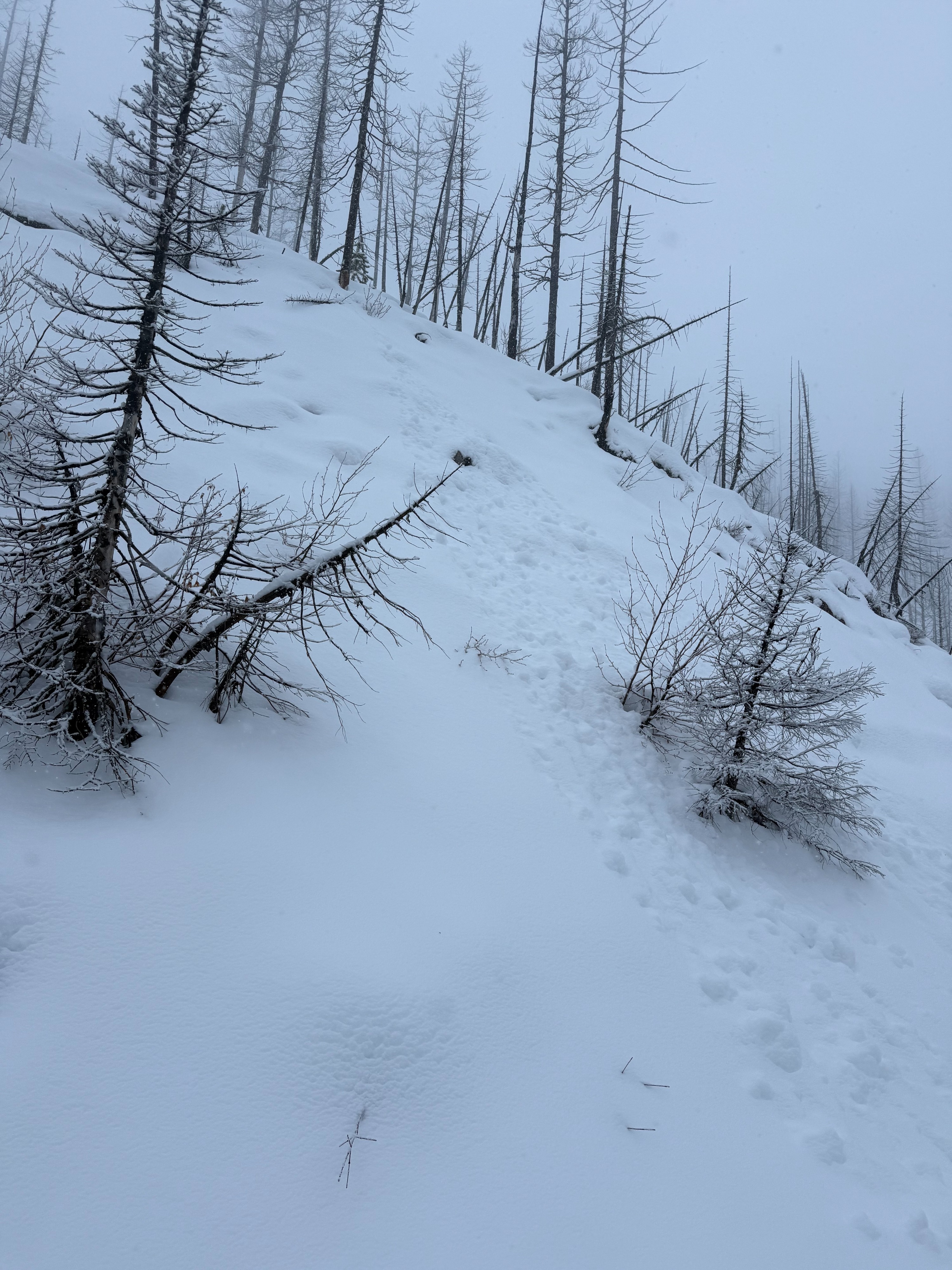
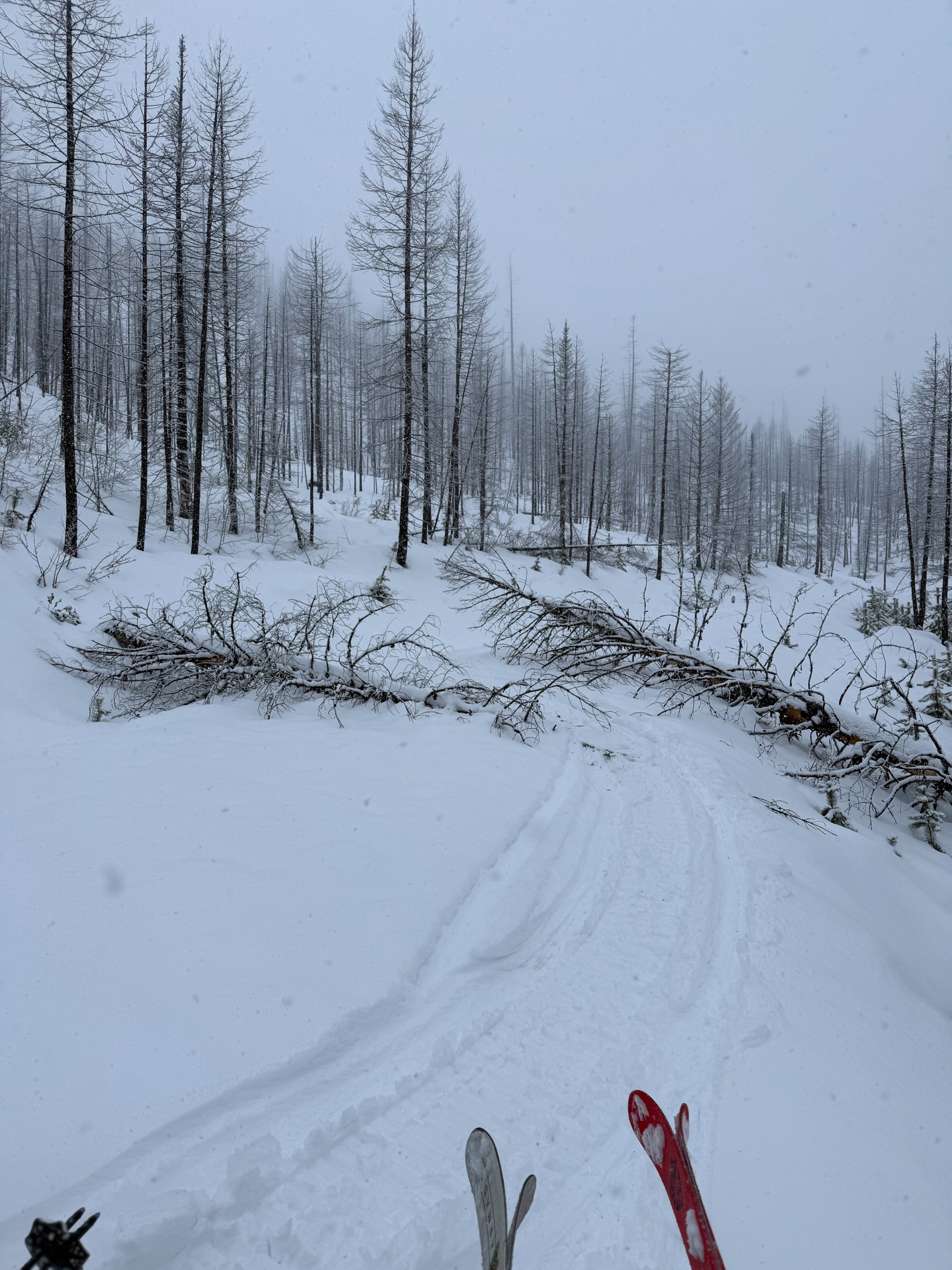
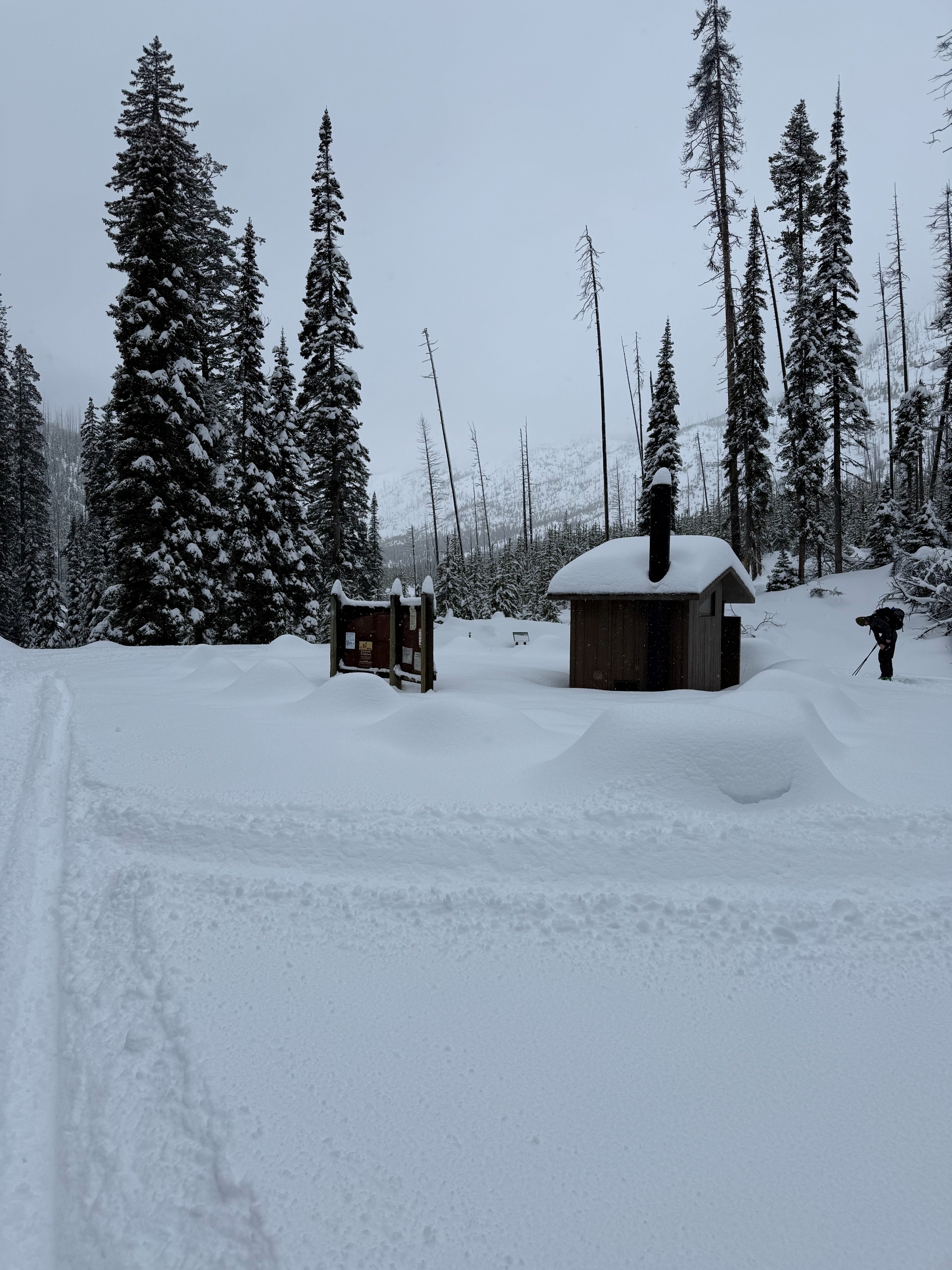
We went out searching for a supportive base and were able to find it on N and E aspects above 5,200ft. On the road at 5,500 ft there was roughly 2 feet of snow, with 8 inches of old supportive snow at the bottom. At 6,000 ft snow depth was roughly 3 feet. New snow totals ranged from 4 inches at the TH (4,200 ft) to 6 inches at 6,000 ft. It snowed on and off throughout the day with calm winds, with 2-3 inches of accumulation while we were out from 10am to 3:30pm. Temps were at or above freezing near 5,500 ft around 2:00 pm. The new snow was wet, and we had glopping issues. Visibility was severely limited, and we observed no recent avalanches on any aspects during our ingress/egress. As we exited the steep creek crossing to access a short E aspect at the end of the road, we had cracking and collapsing underfoot. Due to the sheer amount of deadfall in the area, we were unable to find a pit location that was free of wood at the bottom. We found 3 feet of snow, with 1 ft of soft snow, 1 ft of crust/facet layers, and 1ft of old snow. The most concerning layer was facets sandwiched between a rain crust and the firm, refrozen snow. Probing with our pole on the way up, we found this setup to be prevalent across the entire slope. At the bottom of our snowpack, we found large, loose, moist melt freeze crystals. These may be more compacted in areas where the snowpack rests on the ground, not deadfall. CT and ECT tests were unremarkable, with fractures occurring at the density changes in the snow above the rain crust. We travelled cautiously due to lots of unknowns, and wouldn’t have entered avalanche terrain if given the chance due to snowpack structure.