
Quick report
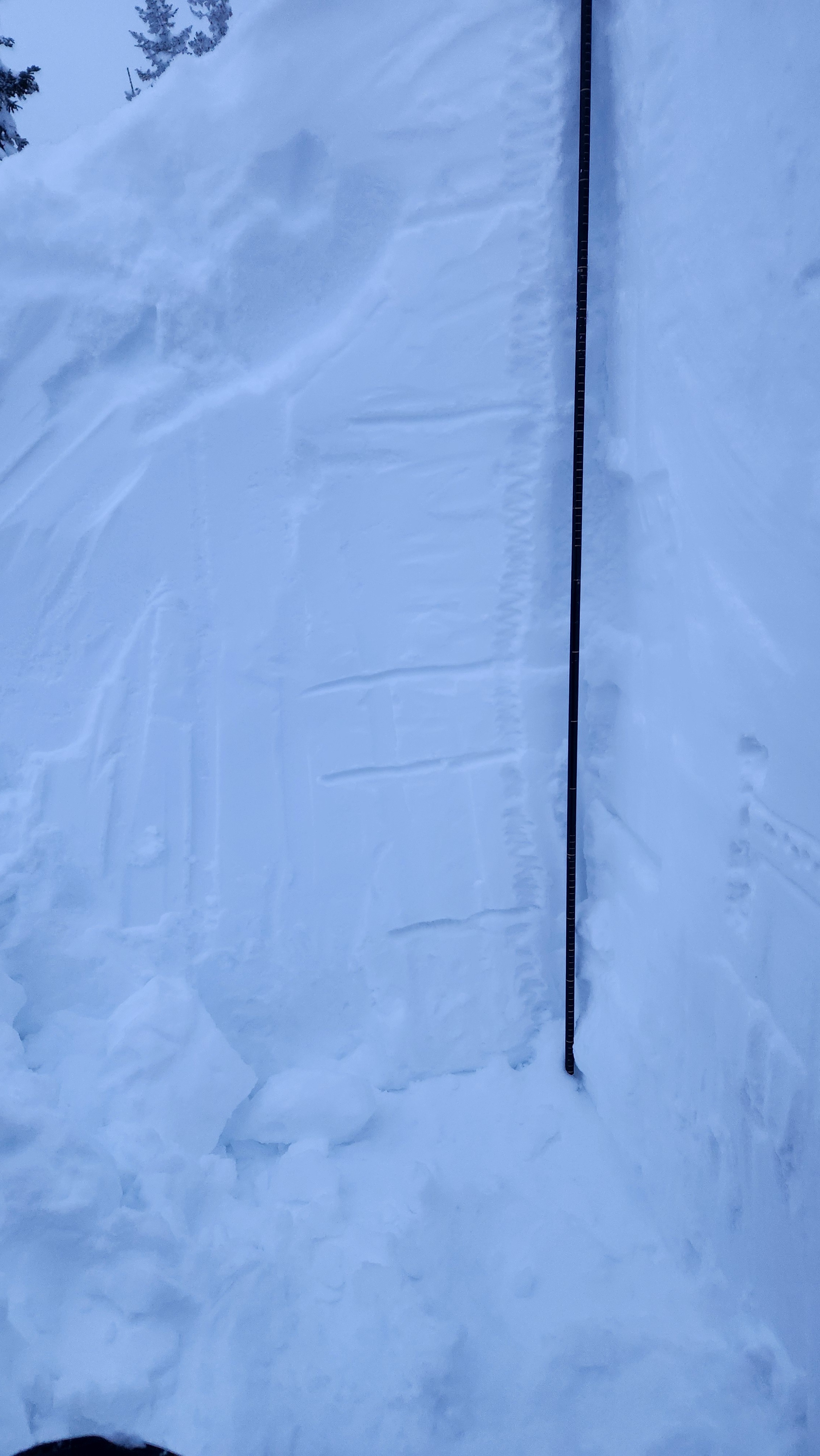
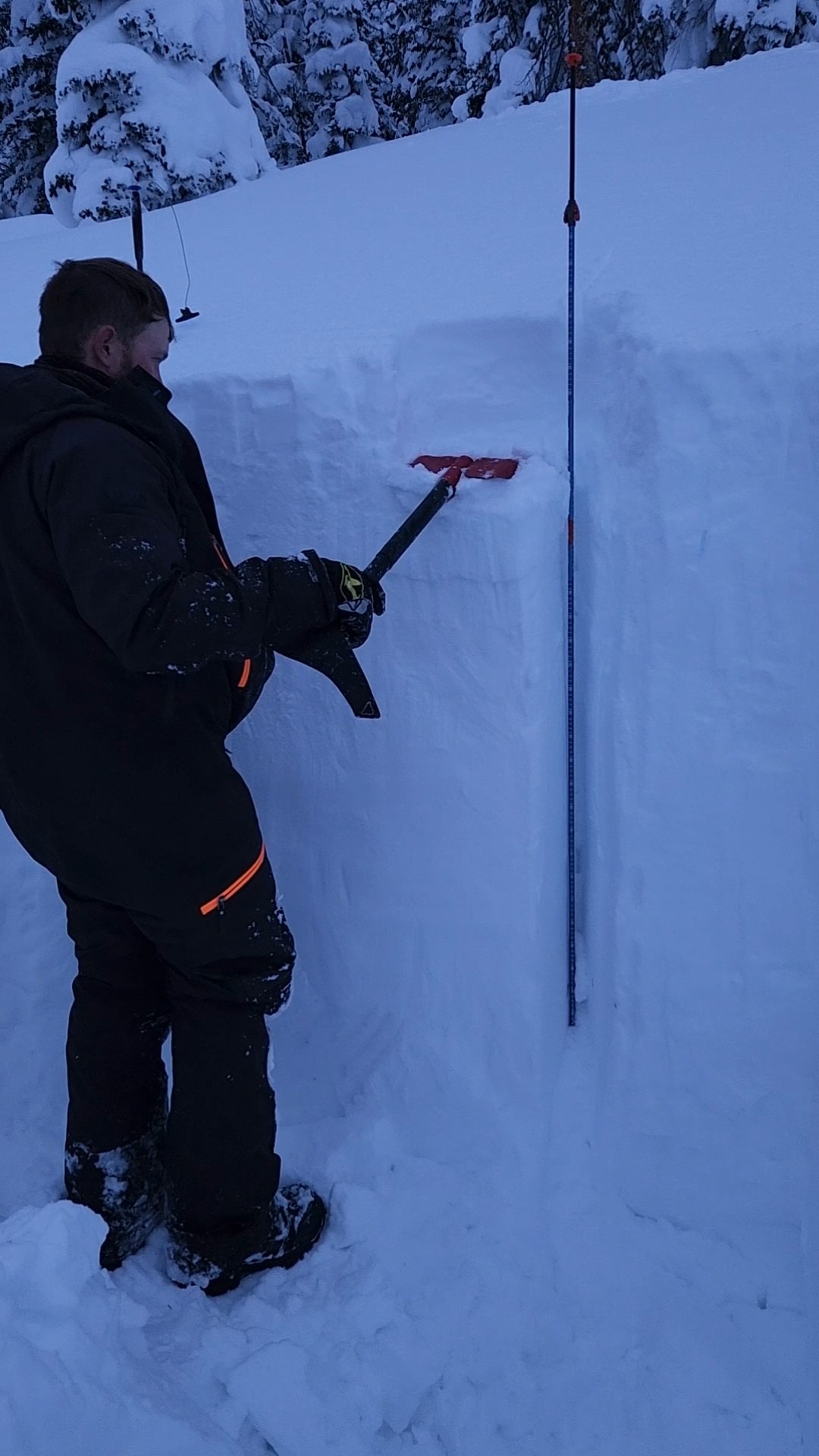
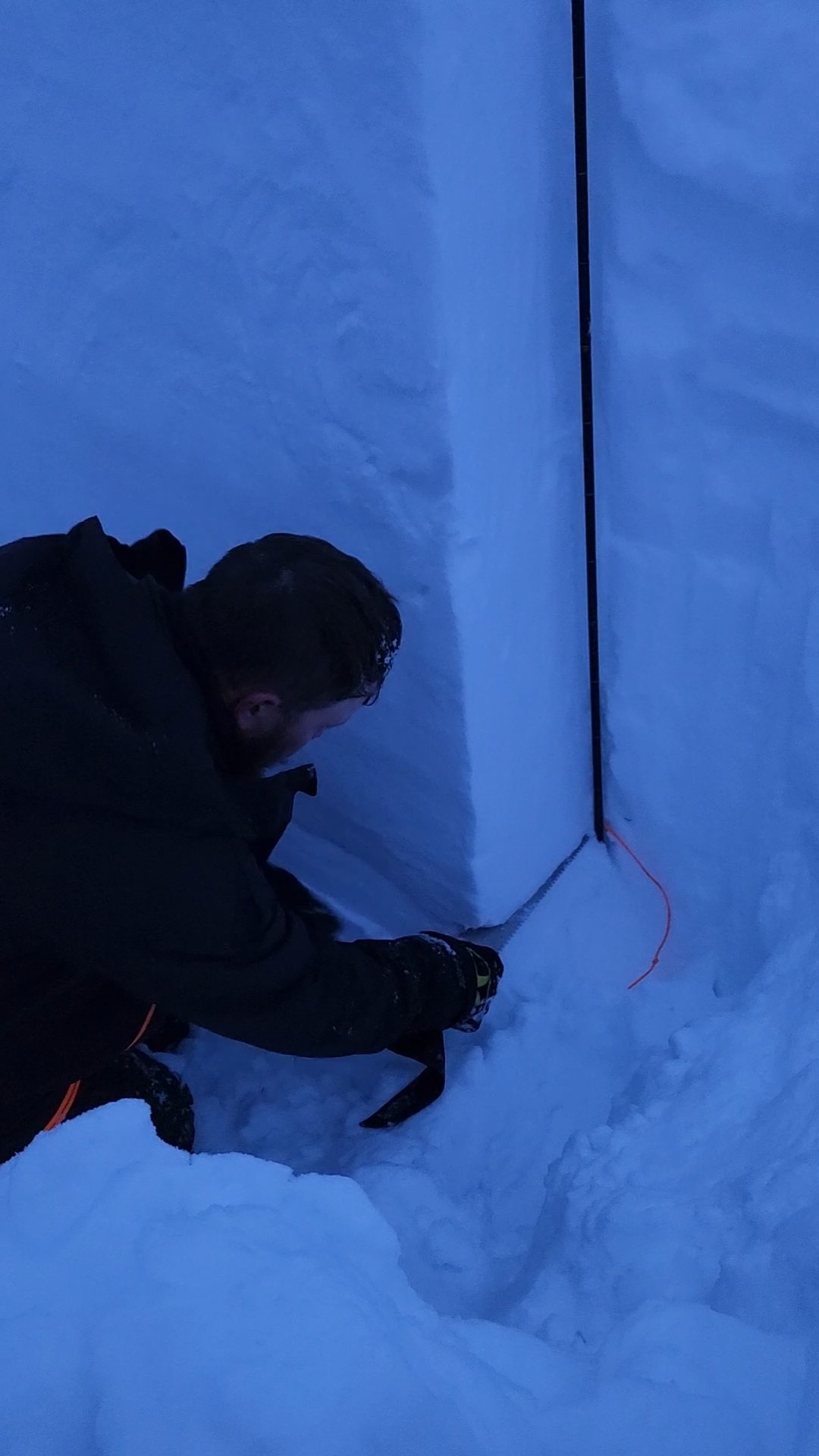
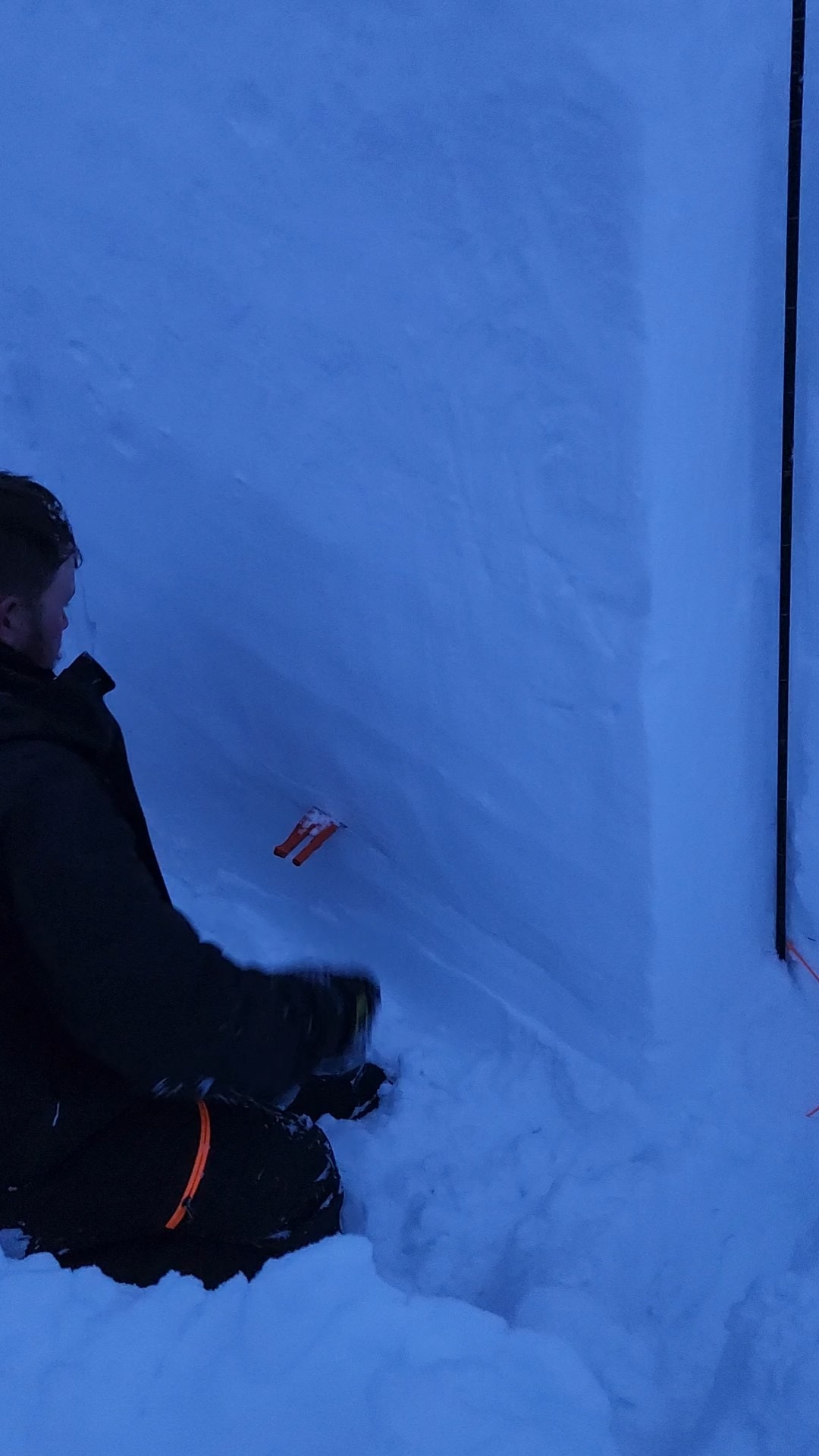
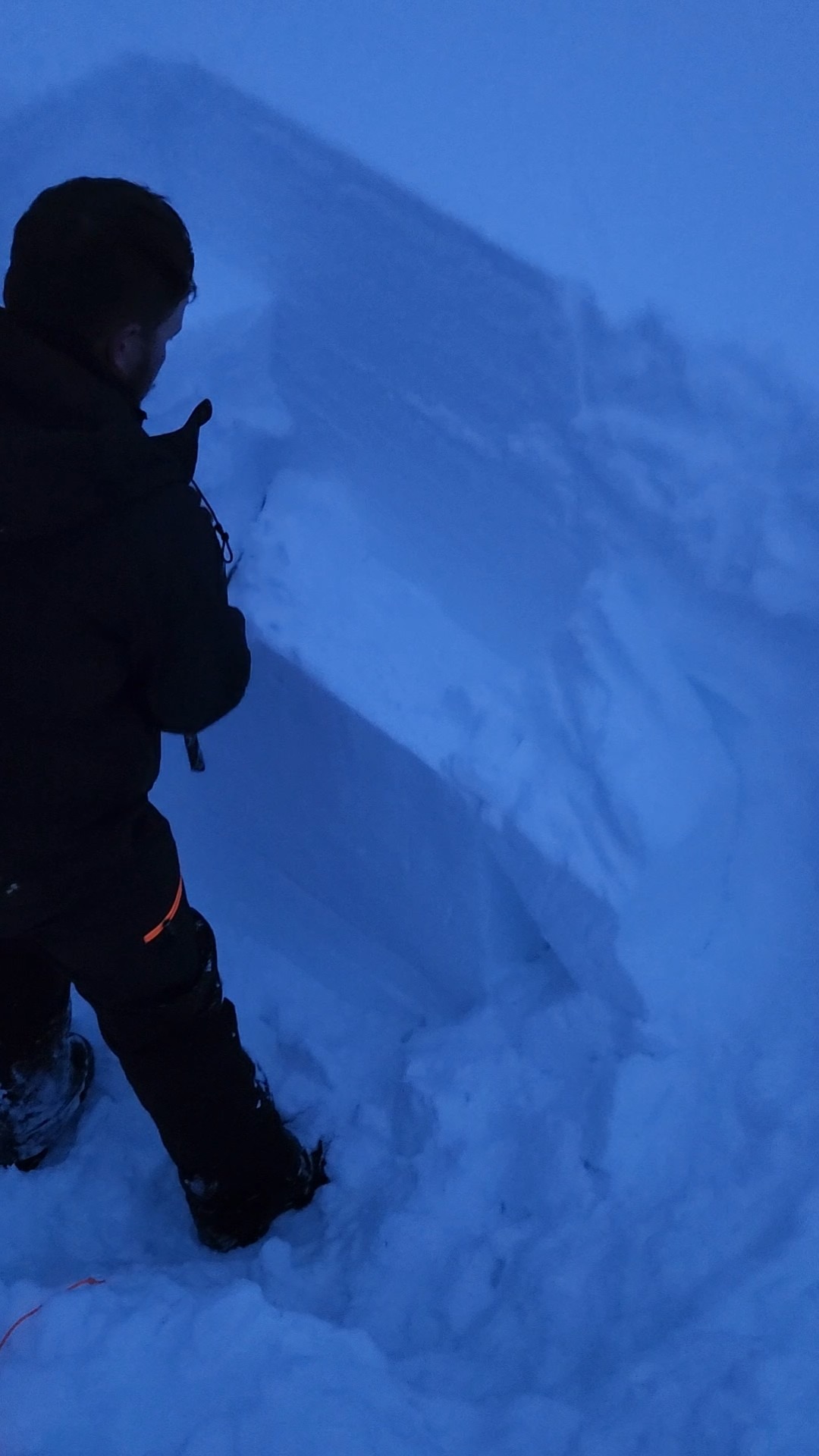
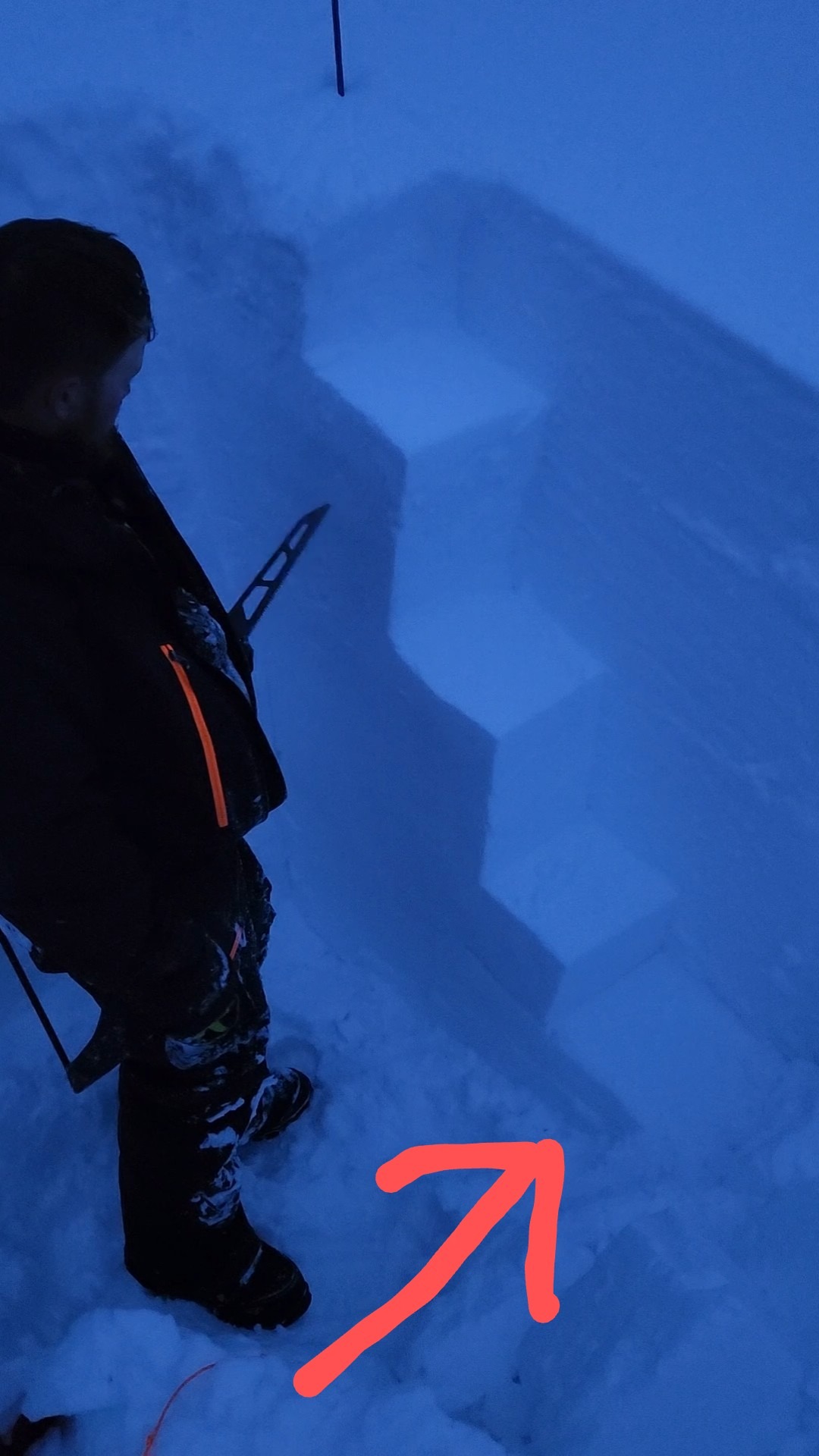
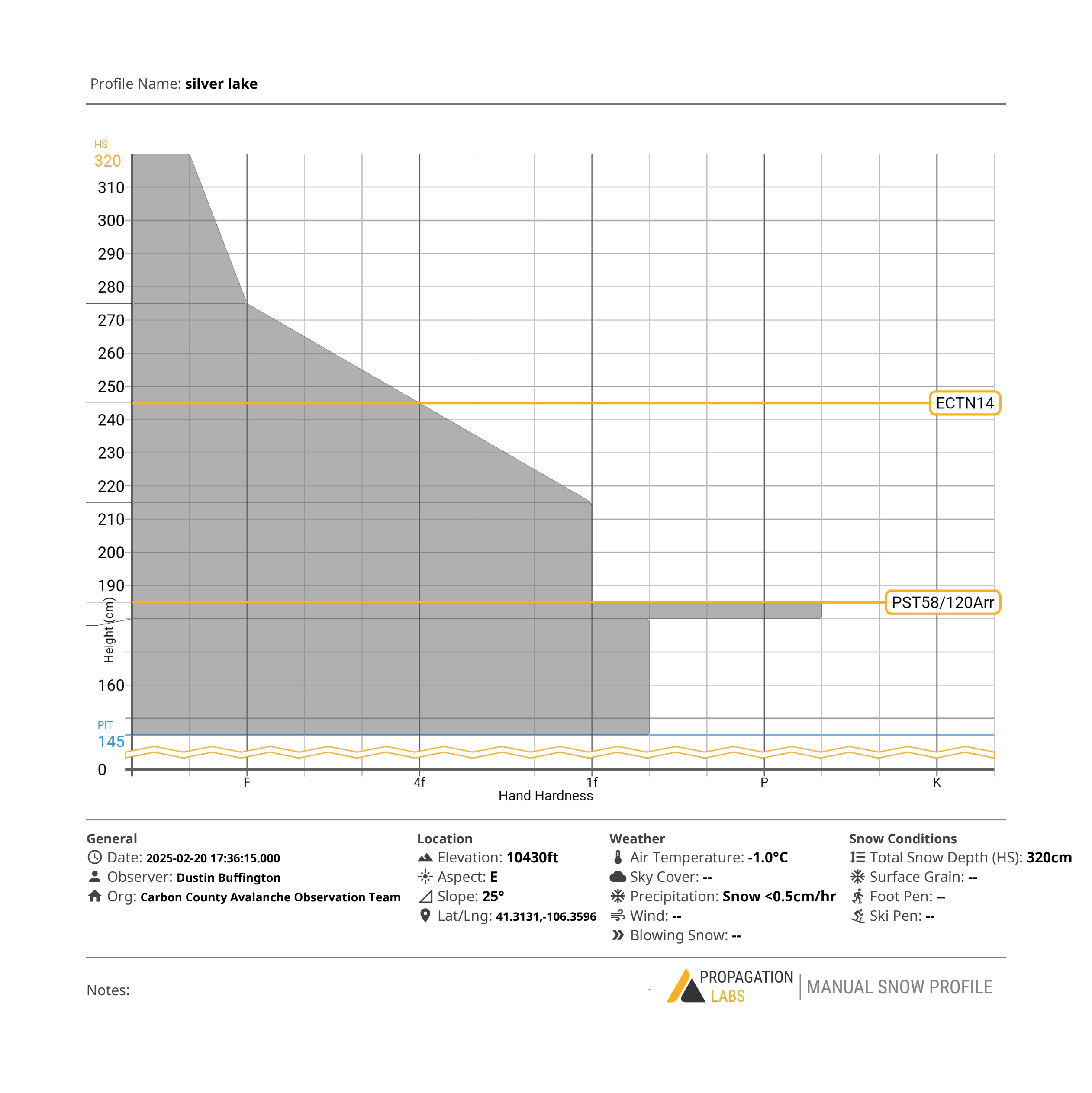
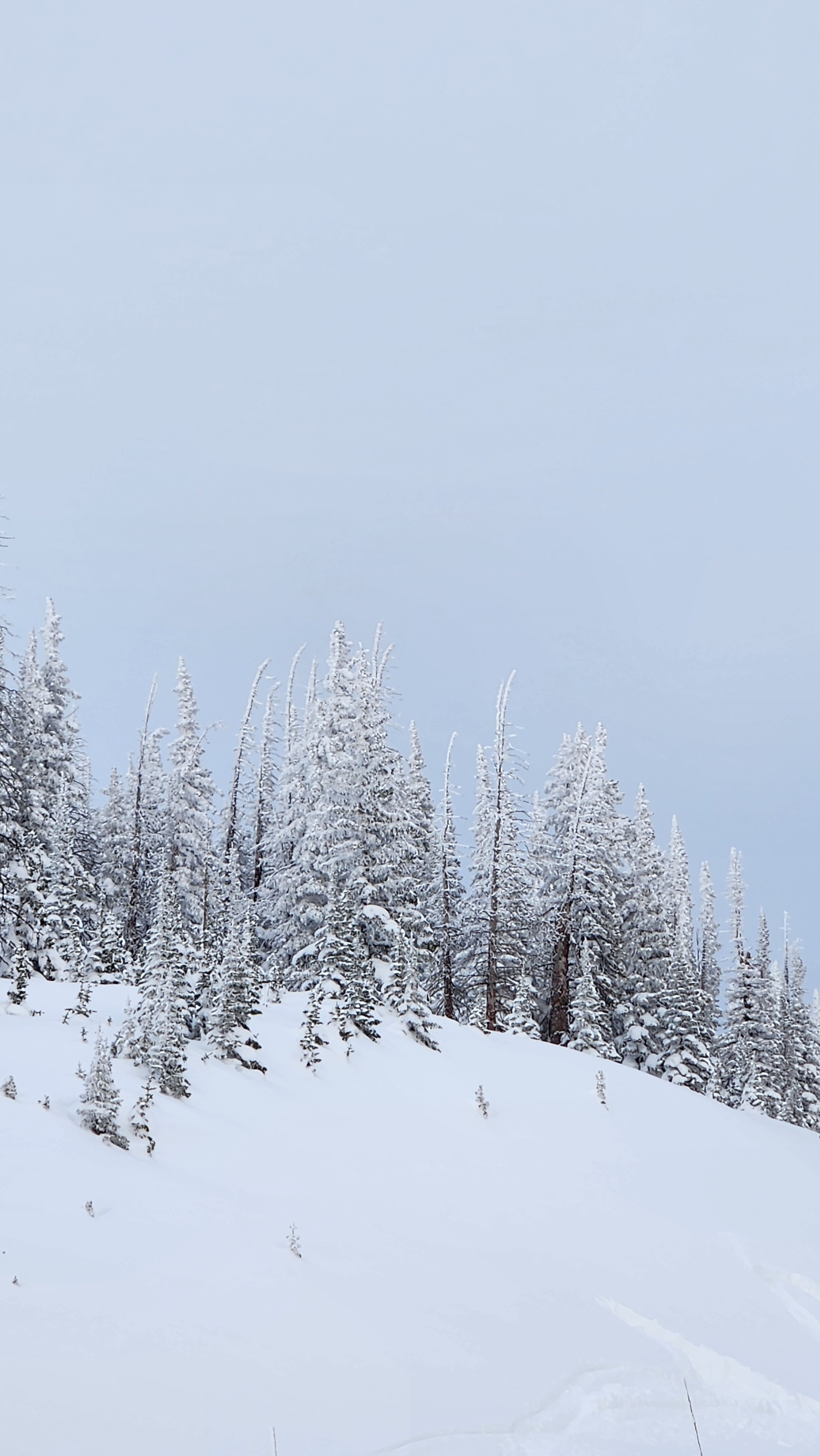
During our observation, we performed an Extended Column Test, yielding a score of ECTN14@75cm down meaning the new snow totals we recently received, reacted to our test by fracturing on 14 taps but not fully propagating. This could mean the potential for a Storm Slab avalanche is not out of the question and it could potentially step down and trigger the deeper persistent slab. We also did a Propagation Saw Test near the persistent slab at 145cm down. That yielded a score of PST58/120Arr, meaning the column collapsed and arrested but did not propagate, as the saw cut through the column approx halfway through. Given our findings, caution should still be taken while traversing the wind loaded areas(Northerly and Easterly facing)where the potential for an avalanche may exist. The possibility of triggering a Storm Slab avalanche is not out of the question and the potential for it to step down to that persistent layer and trigger a much larger avalanche is there as well. Be cautious on slope angles greater than 30 degrees and remember what's above you as well, as persistent slab avalanches can also be remotely triggered from a distance. Many areas with wind loading, especially on the easterly facing slopes.
Weather
- Air Temp
- 30
- Cloud Cover
- broken
- Wind Loading
- moderate
- Recent Snowfall
- 75
- Snow Avail For Transport
- large amounts
Snowpack
The snowpack in this area measured 320 cm or 10.5ft deep and our test pit was 175cm deep. It was on a small hill with moderate wind loading. The hand hardness density of the snowpack in the test pit ranged from Fist(really soft) in the upper snowpack to 1 finger( fairly dense) in the middle and the bottom of the test pit, which is a good thing. However we did observe a thin ice layer, with faceted snow directly below it, at 145cm down.