
Quick report
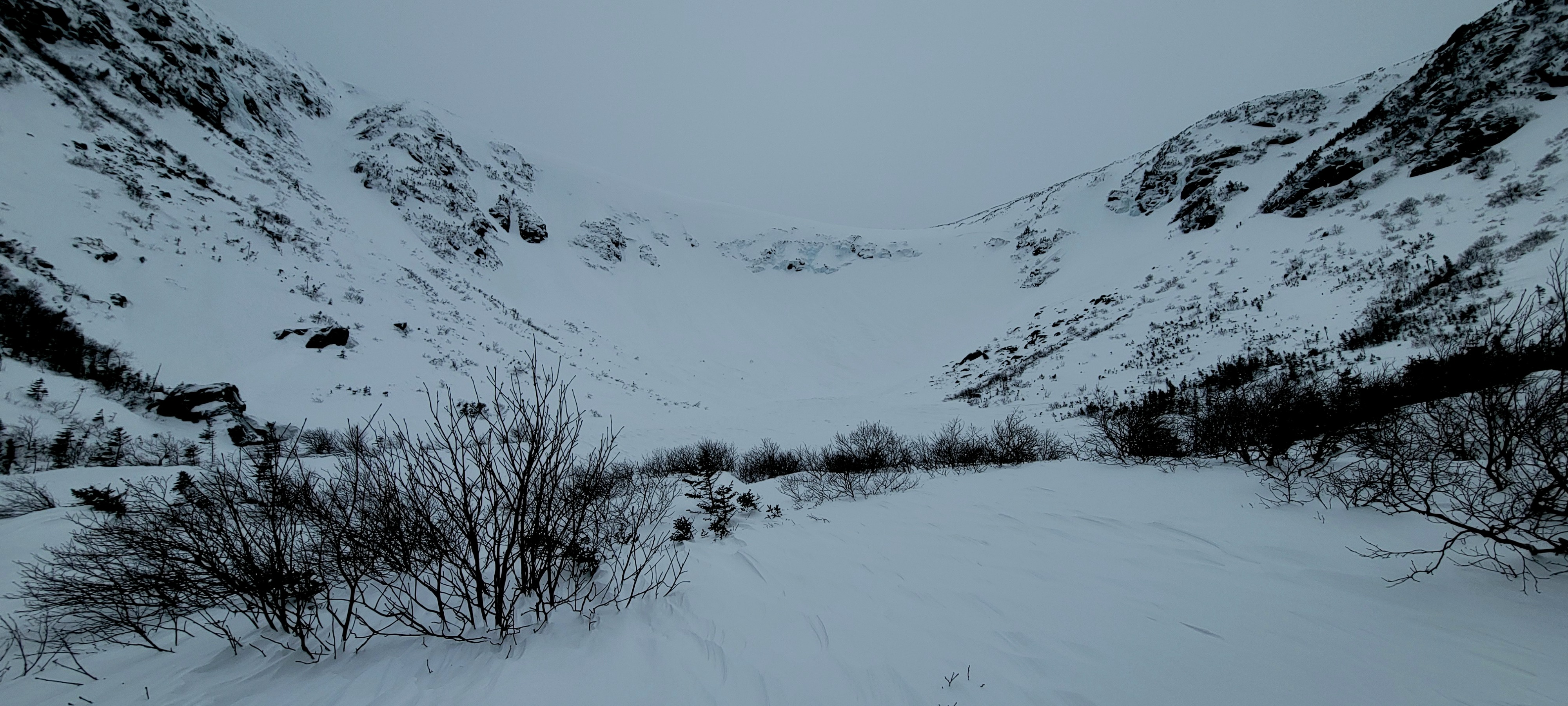
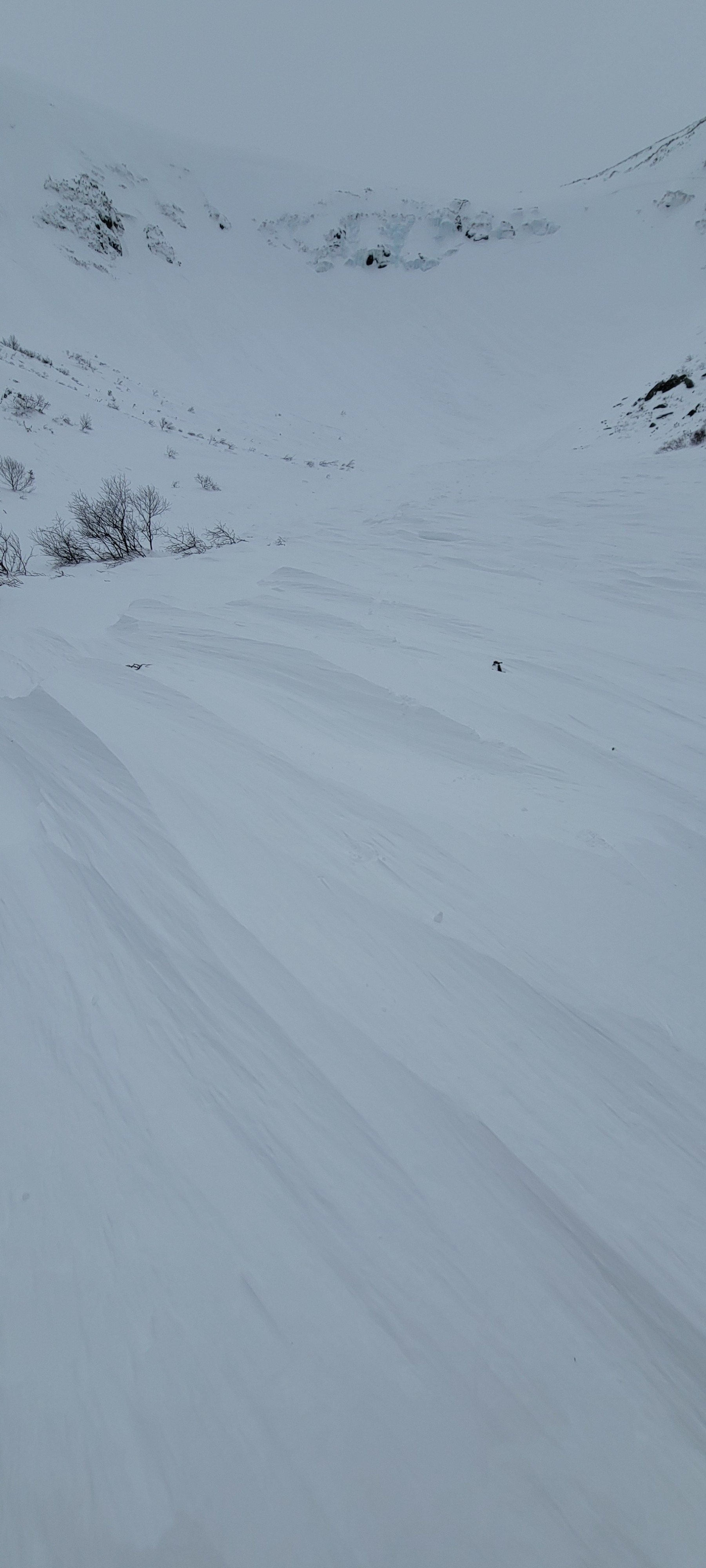
We hiked into Tuckerman Ravine to observe a recently reported avalanche in the Lip that likely cycled Friday night (1/23). The ravine floor continues to display a variety of surface snow conditions, including exposed 1/10 melt-freeze crust, recent soft-slab avalanche debris, and wind-affected snow. From Left Gully to the Lip, surface snow appeared predominantly wind-affected, with scoured ridgelines on east-facing aspects. Sluice, in contrast, appeared smoother with less wind effect.
While many areas of Tuckerman Ravine showed wind-affected surfaces, terrain below Chute and Center Headwall appeared planar and well filled in for January. Skin tracks and boot packs were observed between Right Gully and Lobster Claw. Skiers were observed exiting both Left and Right Gully. Higher in the gullies, snow appeared soft in most areas where skiers were turning, though audible harder snow was noted in a few locations, including upper Right Gully and lower Left Gully. Snow in Left Gully appeared to have a breakable windcrsut, or windslab, that was did not react when we observed one skier exiting the gully.
Debris from the Lip avalanche covering the ravine floor was soft, wind-affected, and consistent in hardness throughout the pile.
Observed a crown line in Lip that continued along Center Headwall just below the largest ice bulge. Debris in the floor of the ravine was uniform, soft and had become textured by recent winds.Weather
- Cloud Cover
- overcast
- Wind Loading
- none
- Recent Snowfall
- 0
- Snow Avail For Transport
- small smounts
Upon entering Tuckerman Ravine, skies were overcast with no wind and cold but comfortable temperatures. By the time we departed around 12:30, winds had increased slightly and light snow began to fall.
Avalanche
- Size
- D2 R3
- Type
- SS
- Aspect
- E
- Trigger
- N
- Elevation
- 5000 ft
A natural avalanche a few days old (est. Friday) was observed across the upper starting zone of the lip and contouring down, directly underneath the rocks in the icefall area of the headwall. The depth of the debris was between 40cm and 80cm deep with an average depth of around 45cm - 50cm. This is a suspected wind slab avalanche that did not appear to step down into a deeper weak layer of concern on top of the January 10th melt-freeze crust.