
Quick report
- Collapsing
- Observed
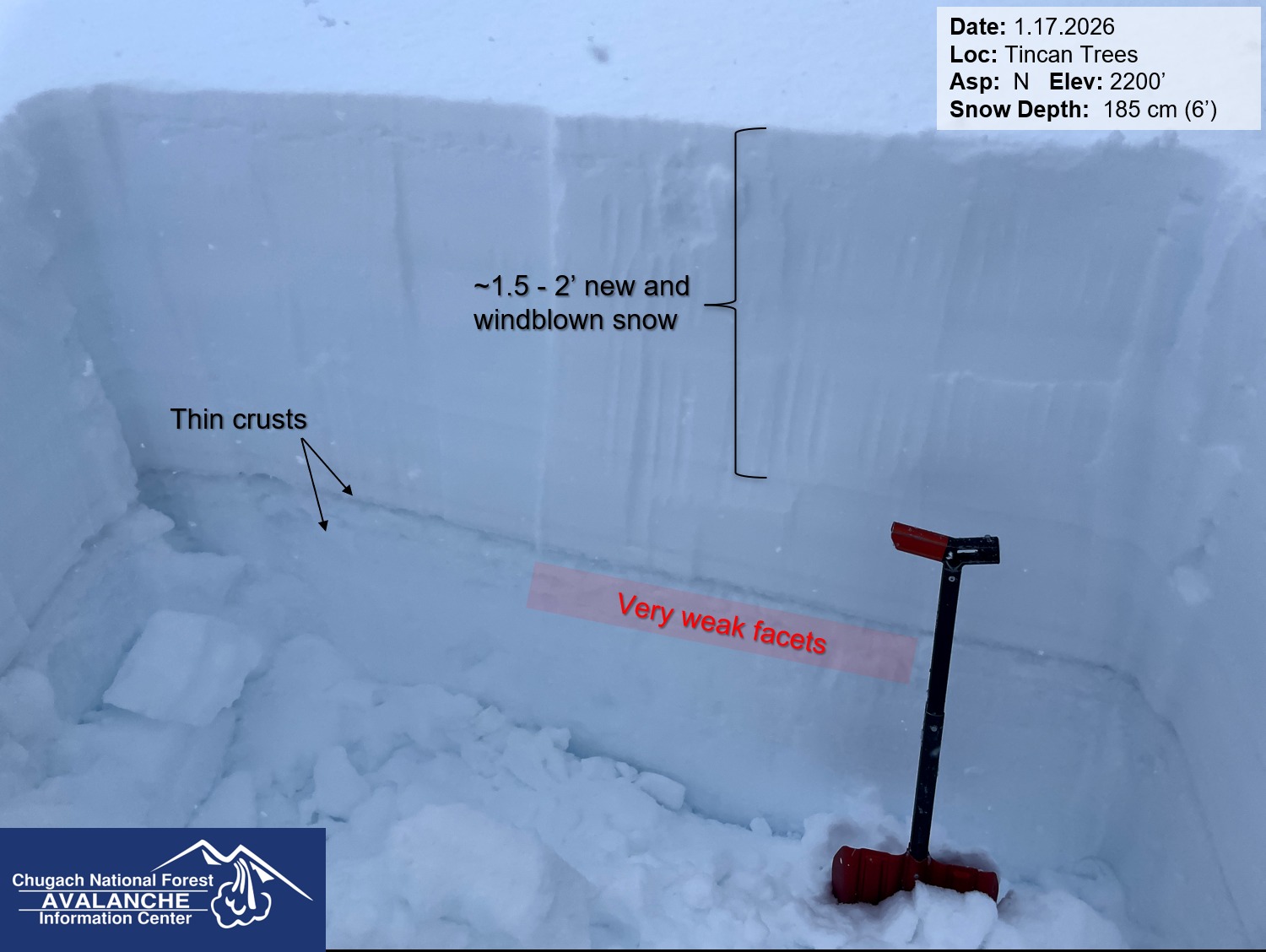
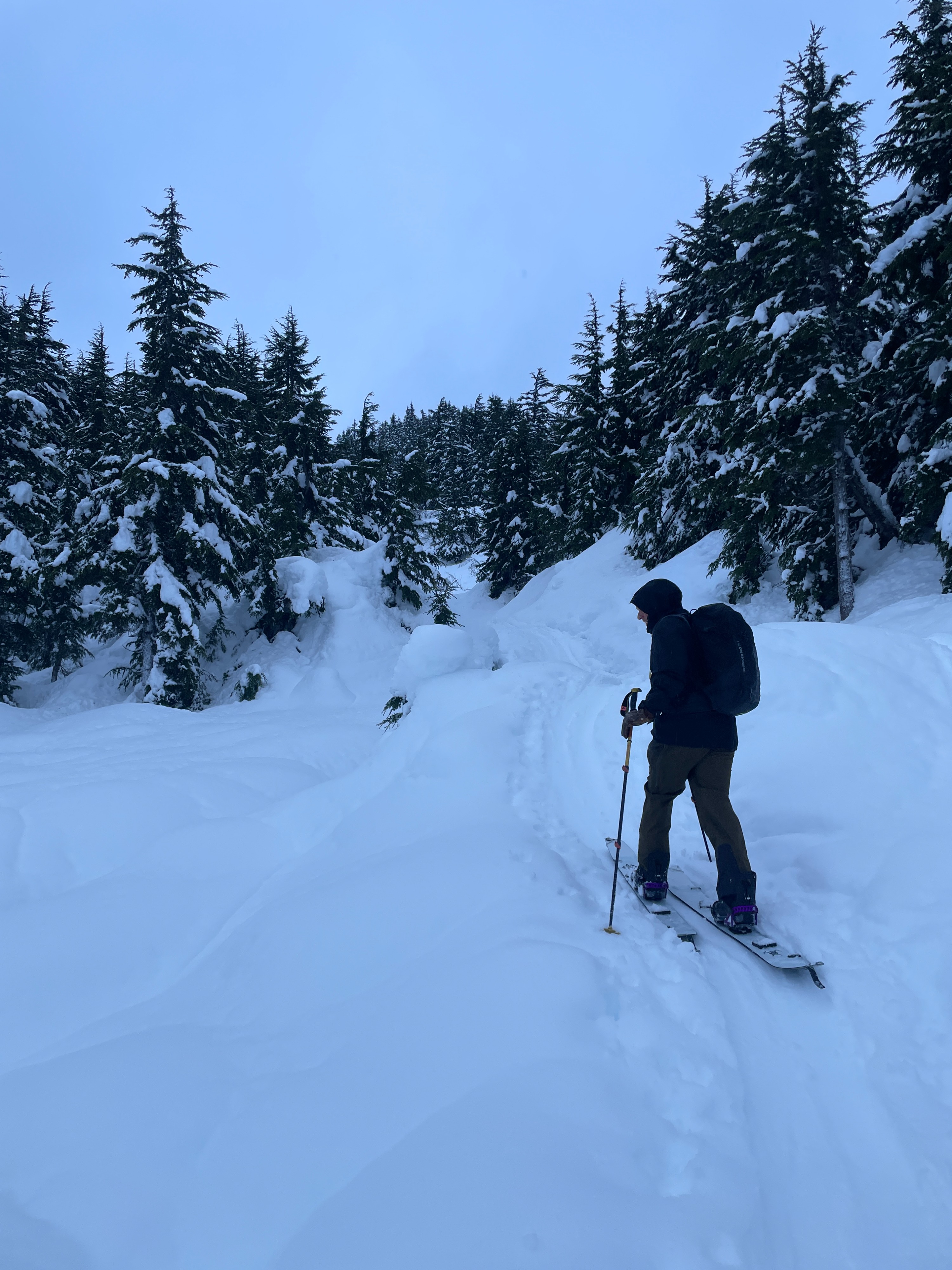
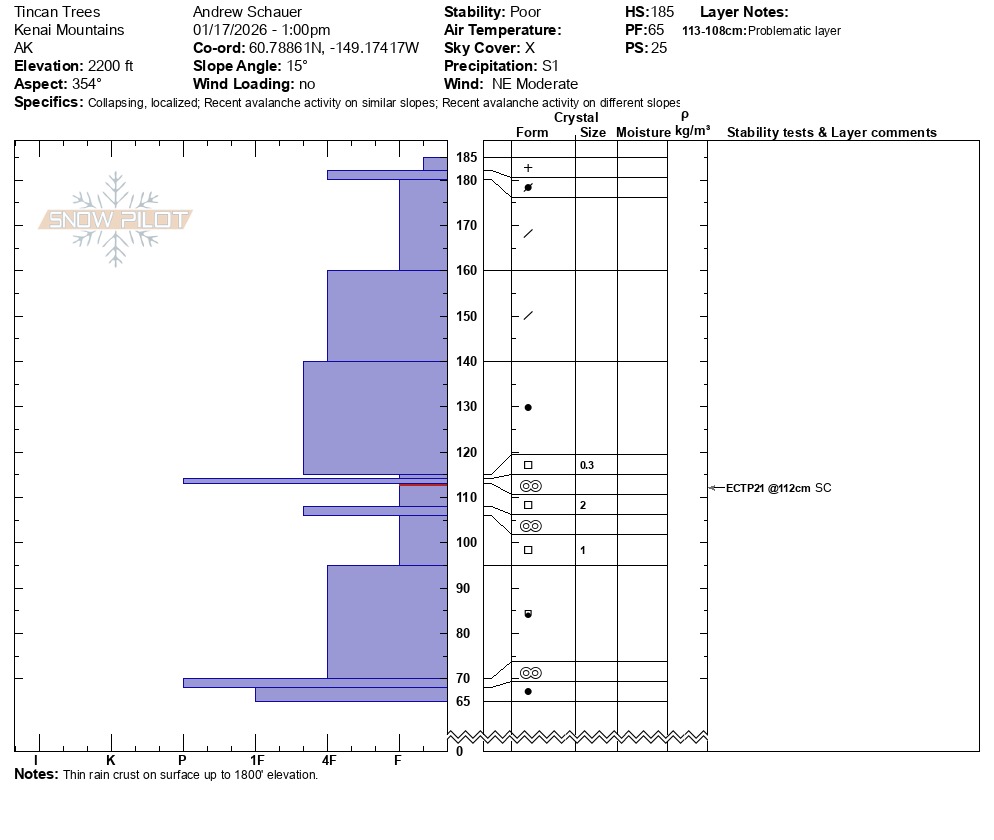
We had a soggy day in the Tincan trees, with rain up to around 1500' while we were skinning, dropping to around 1200' by the afternoon. Steady snowfall continued above that through the day. We got one very noticeable collapse at about 1800' elevation, where we could feel the snowpack drop beneath us. A quick pole probe at that location confirmed the December crust/facet layer as the culprit. We also got poor stability results in our snowpit on a north aspect at 2200', failing on that same facet layer, which was about 2' deep in our pit.
This is a scary setup. It is not going to heal quickly like we are used to, and it remains very likely that people will trigger very large avalanches failing on the December crust/facet layer.
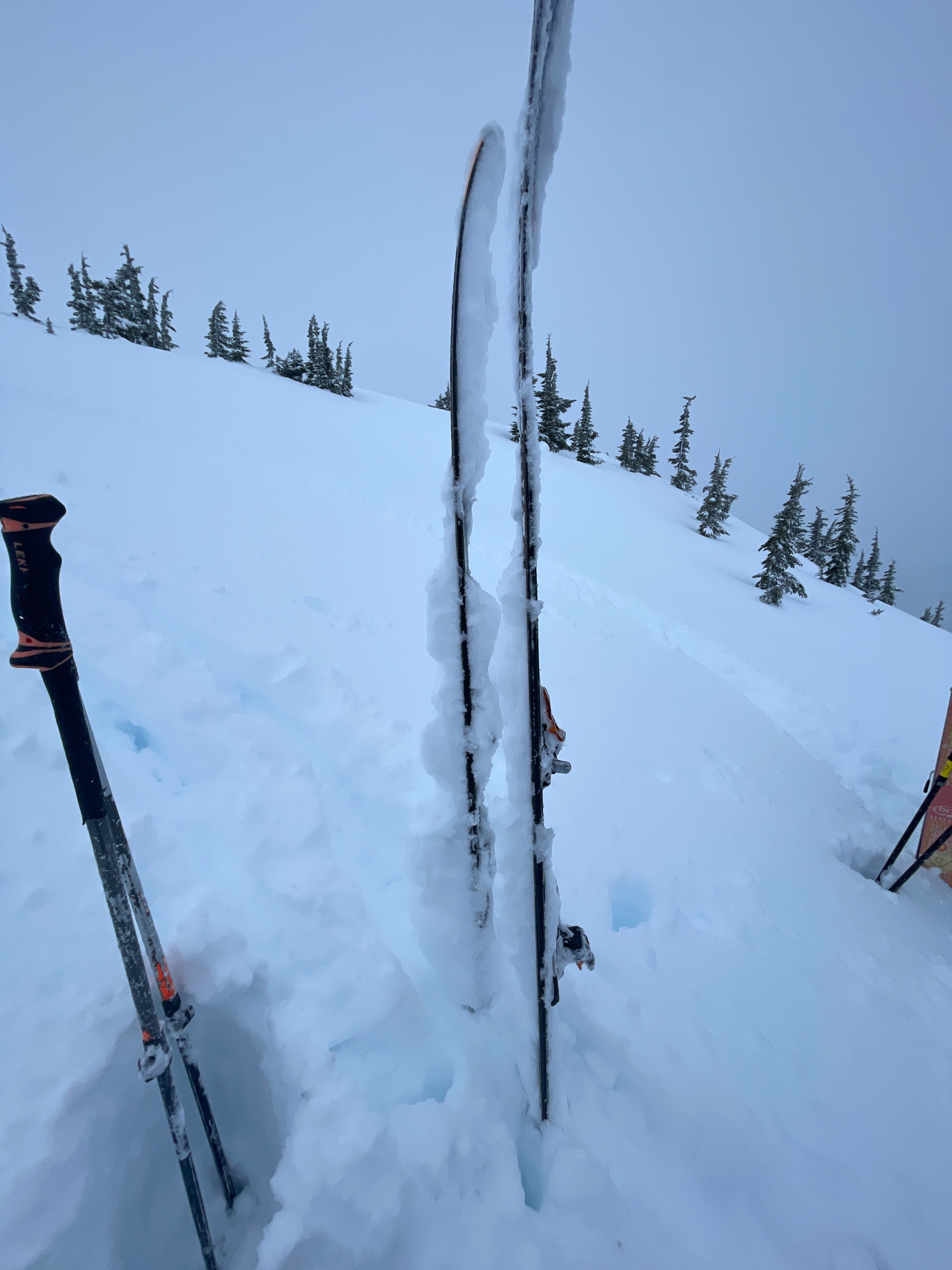
We felt one major collapse while standing on a bump in the trees. Two of us felt the snow drop a few inches. It was LOUD!Weather
- Cloud Cover
- obscured
- Wind Loading
- previous
- Rain Elevation
- 1900'
- Recent Snowfall
- 1-2'
- Snow Avail For Transport
- large amounts
Cloudy skies with rain up to 1500' while we were hiking up. The rain line dropped to ~1200' by the time we were headed out in the afternoon. Sustained ~10 mph NE winds at treeline.
Snowpack
The December crust/facet layer was buried about 1' deep at road level, 1.5' deep at 1500' elevation and 2' deep at 2000' elevation. The layer was easily identifiable with pole probes as we traveled, and felt very hollow.
We dug one pit on a north aspect at 2200' and confirmed the layer was buried about 2' deep and still very reactive in stability tests (ECTP21). We also got one very large collapse on that weak layer at about 1800' elevation in the trees. See attached photos for additional snowpack details.
Avalanche
None observed, but we really couldn't see anything.