
Quick report
- Collapsing
- isolated
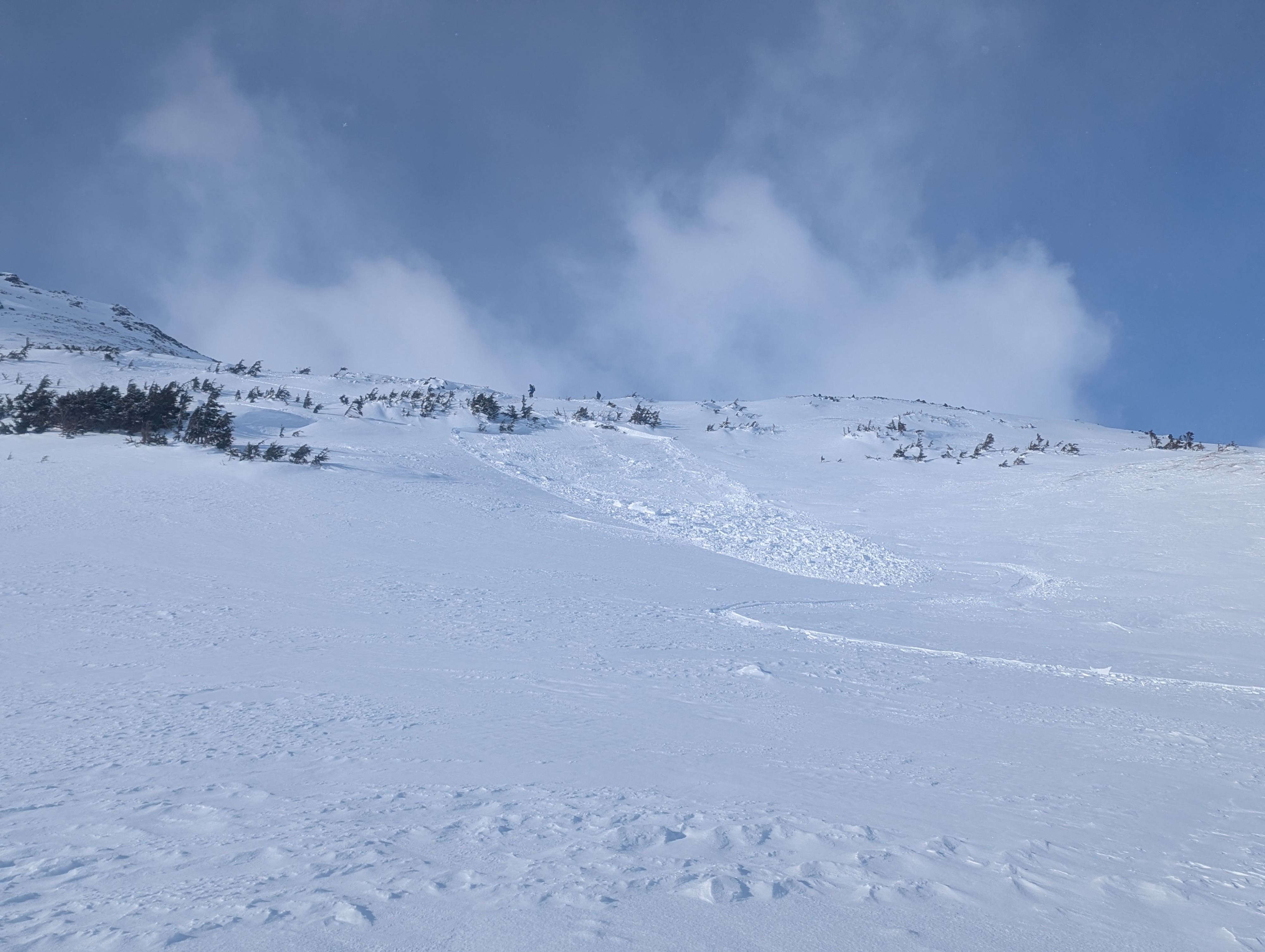
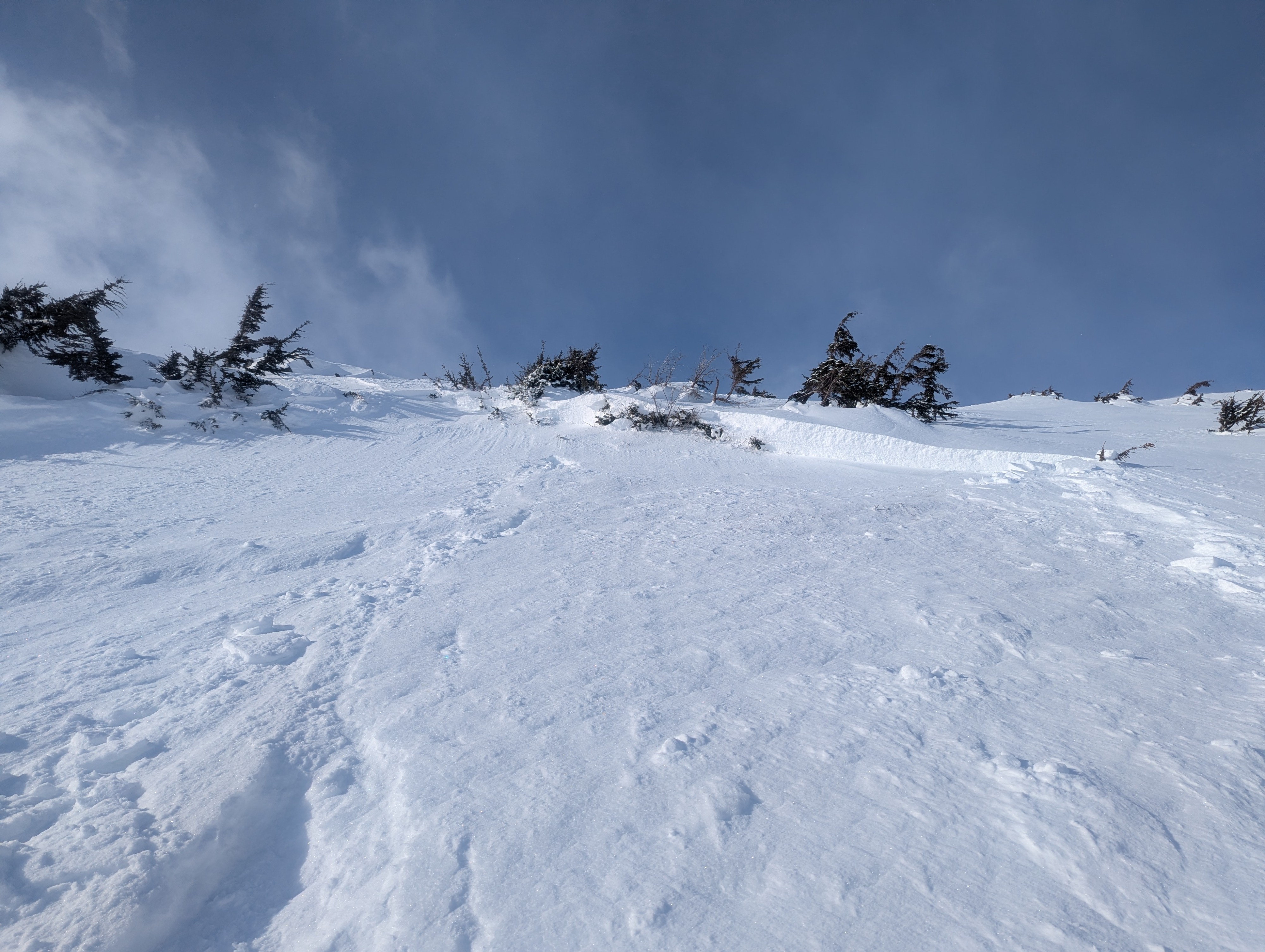
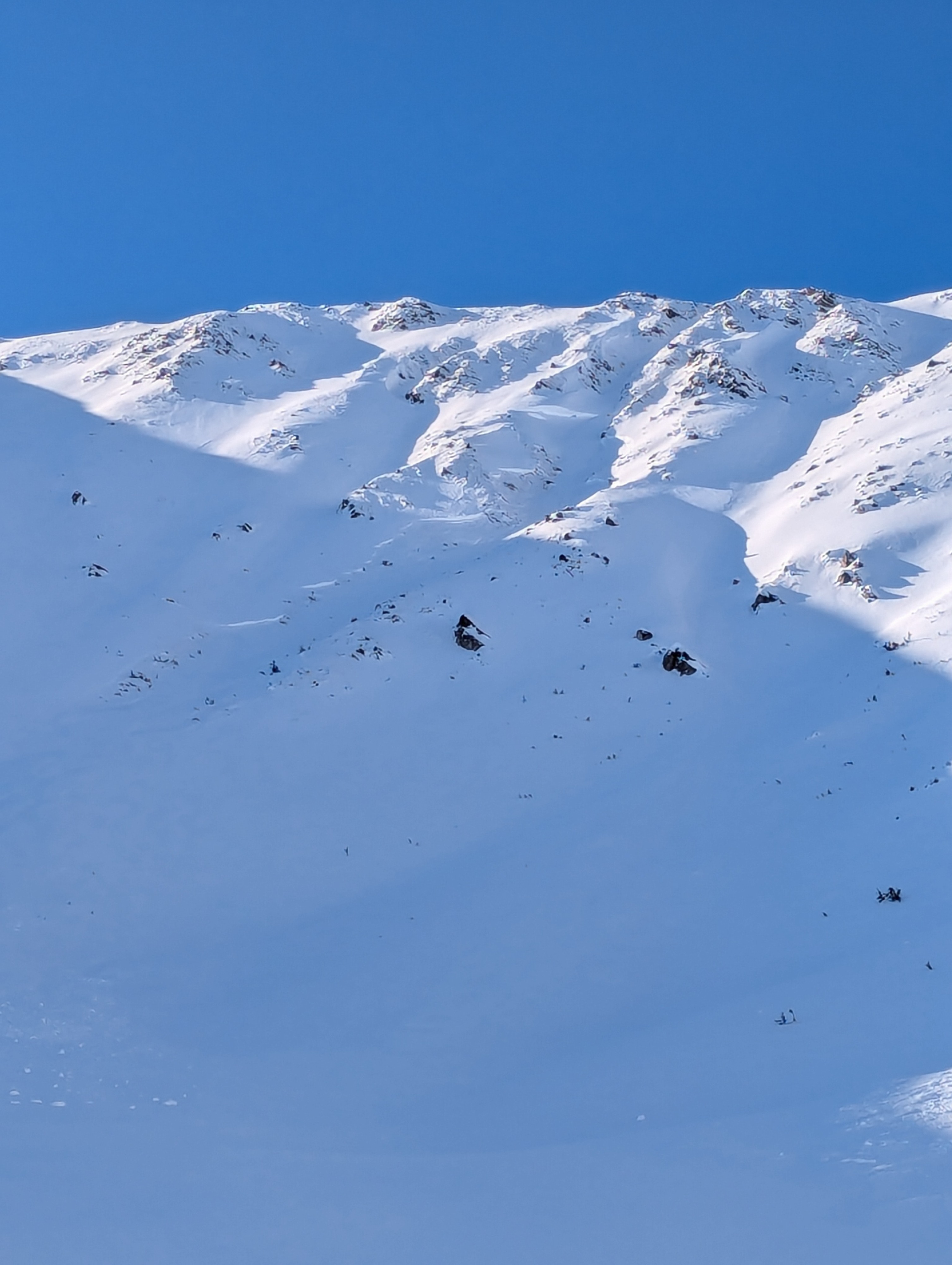
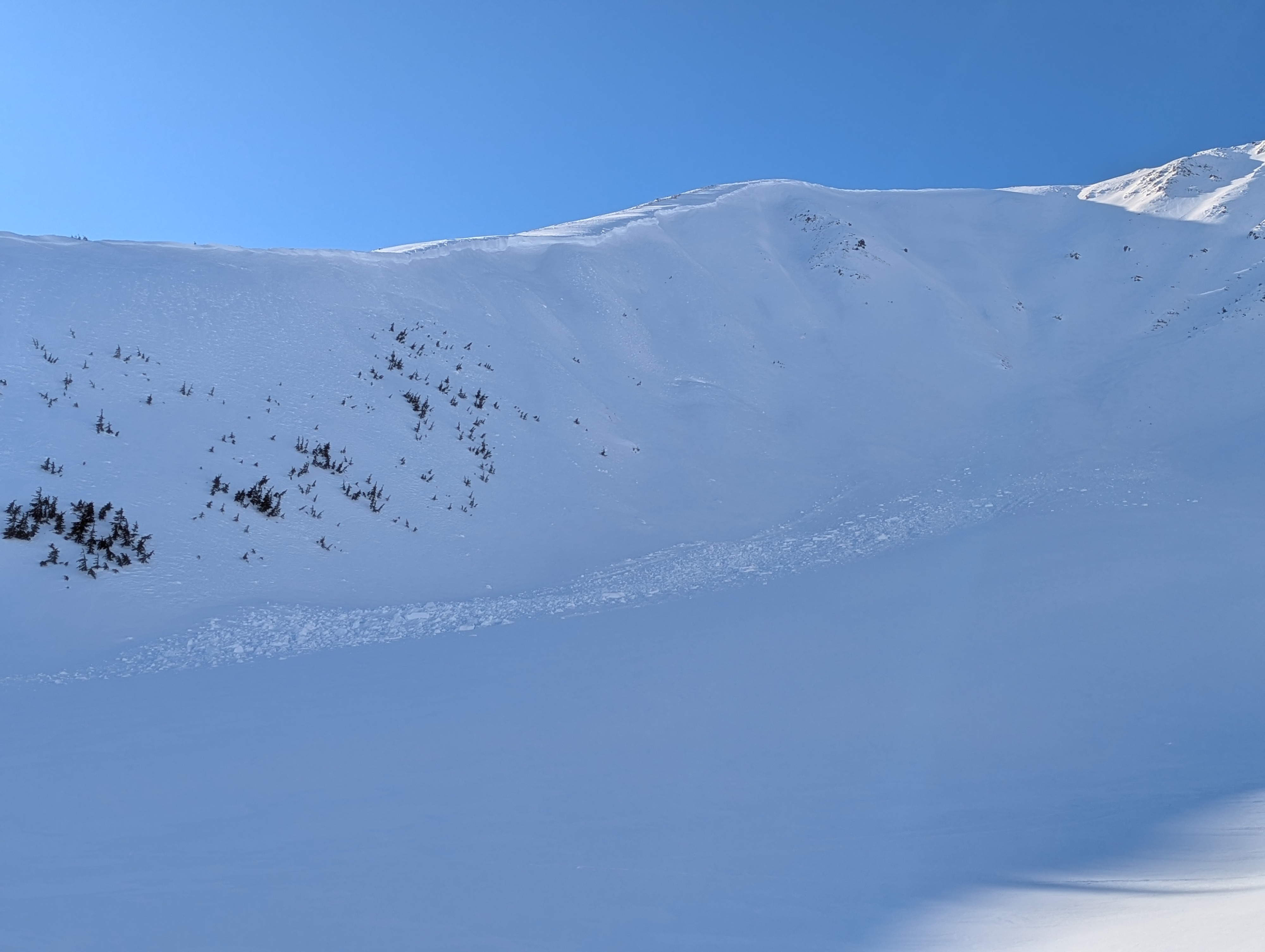
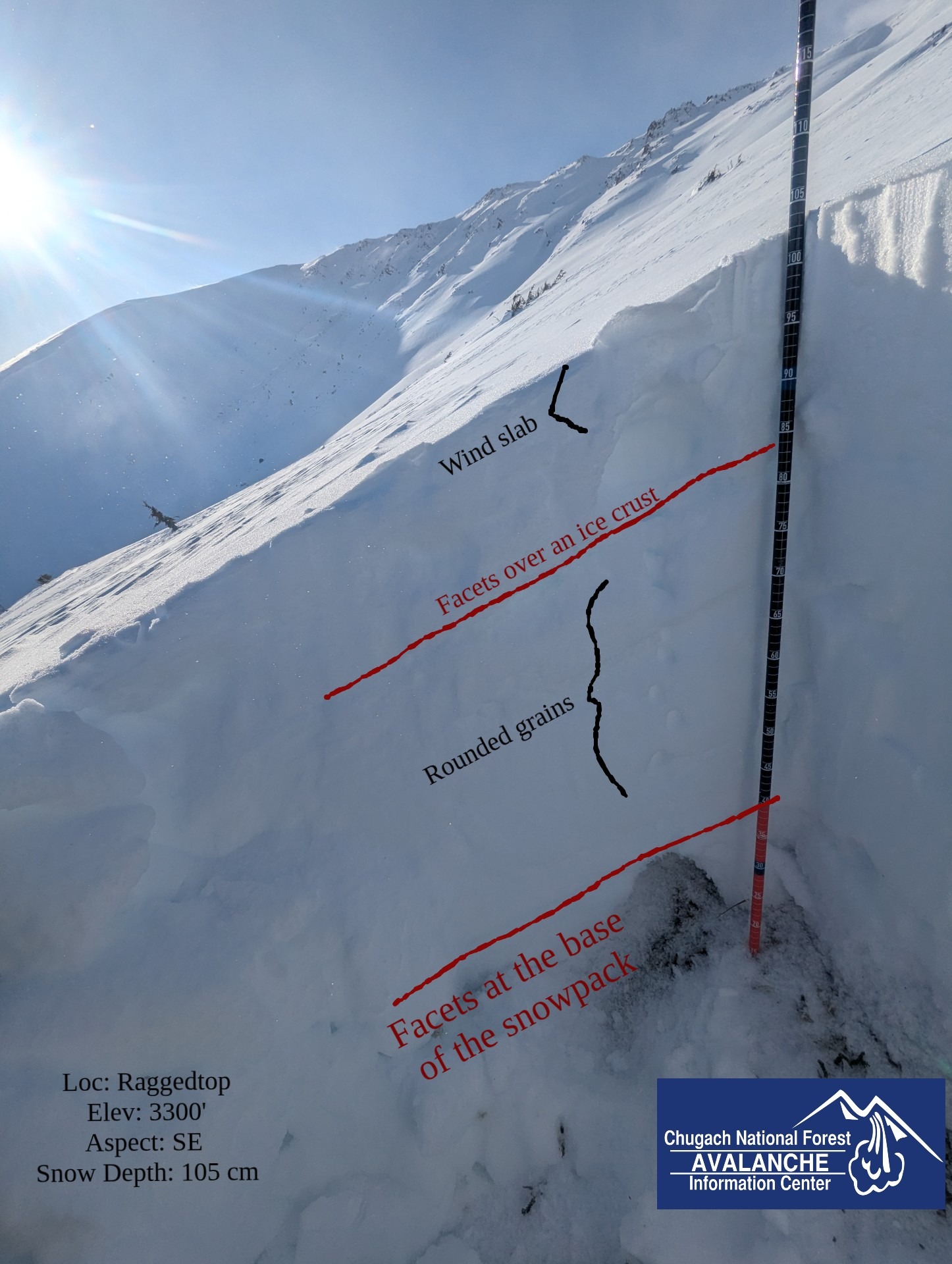
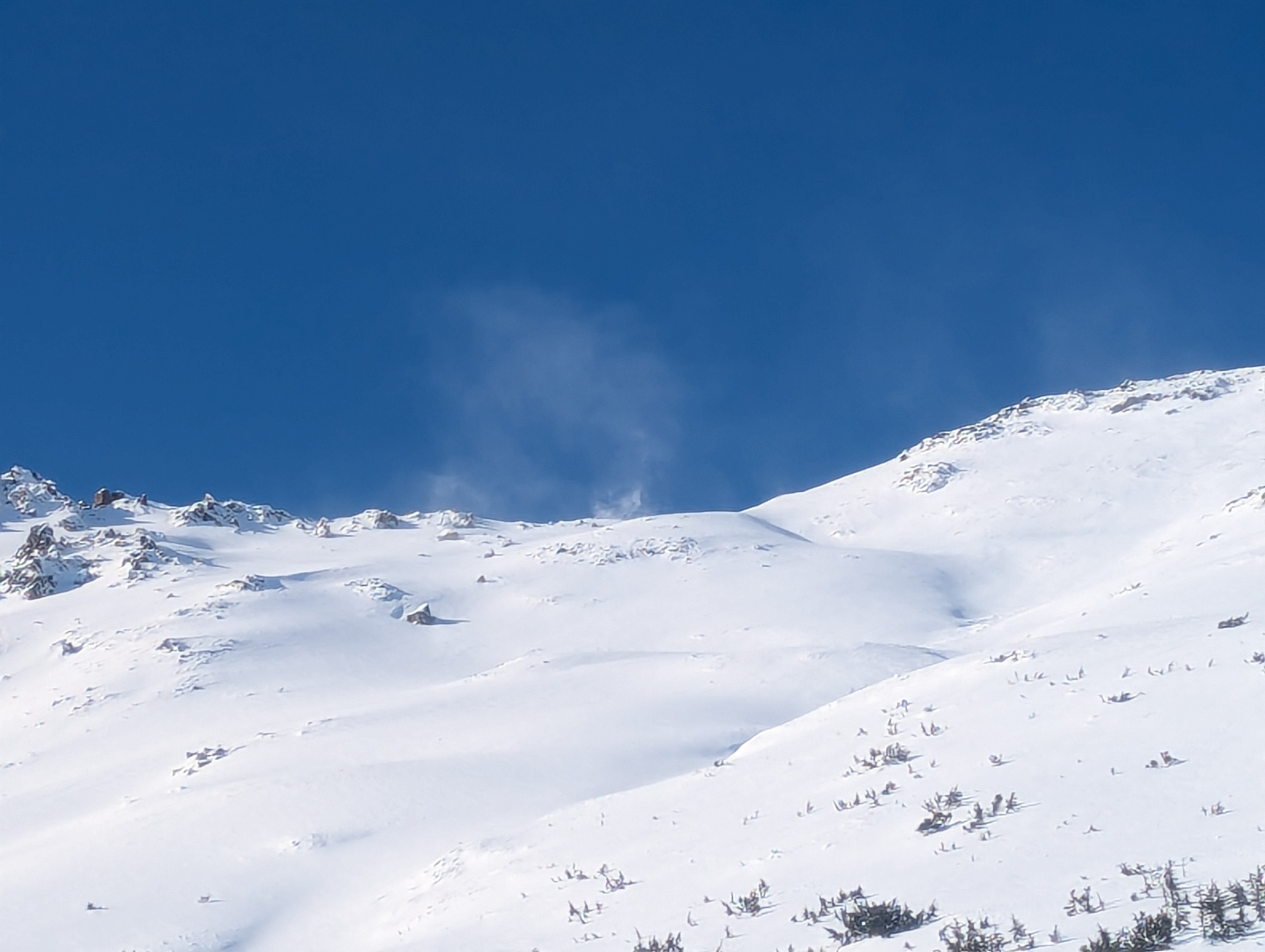
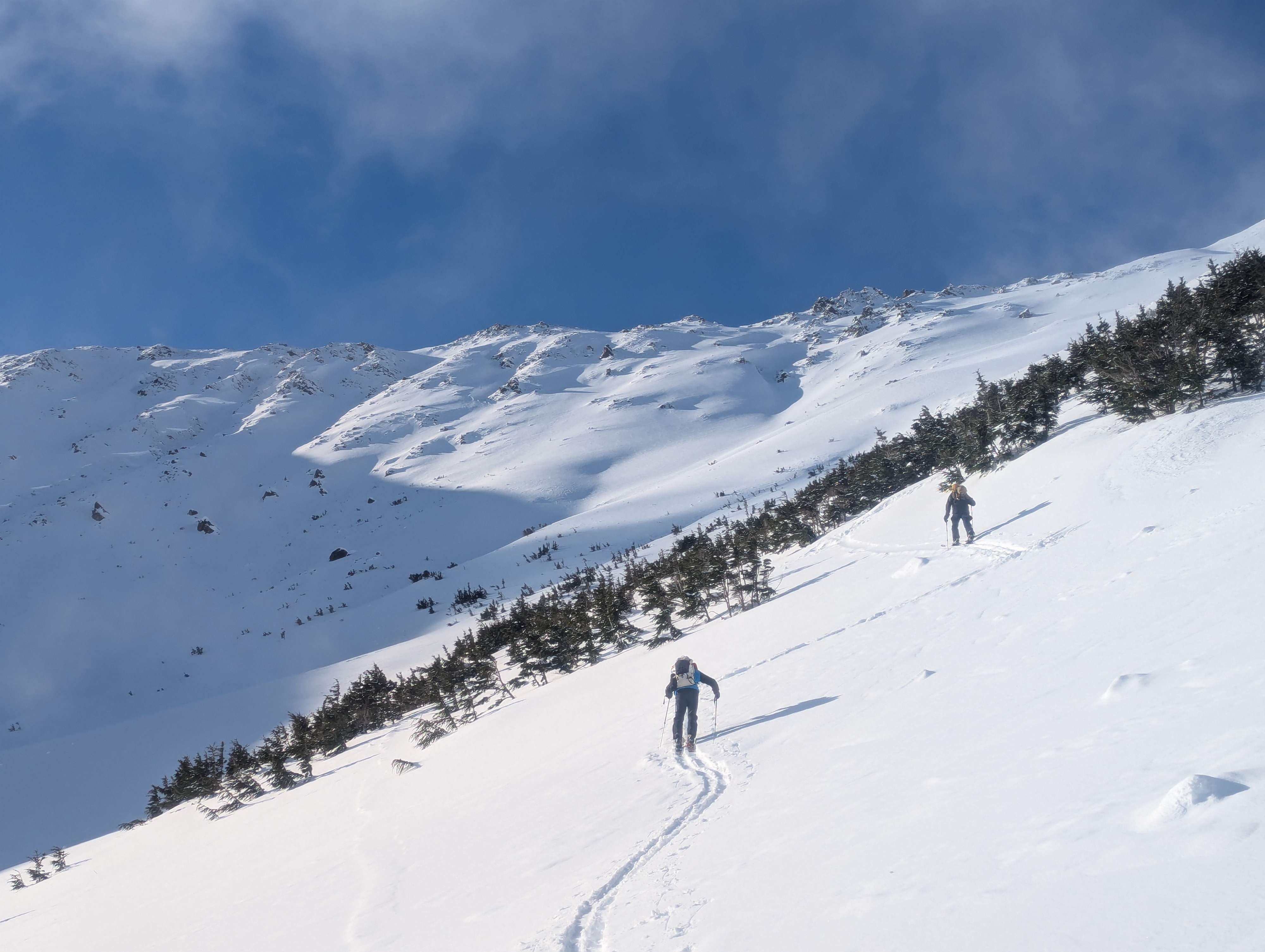
We toured up to Raggetop to get eyes on a recent notable avalanche and get some snowpack info from the area. We confirmed that the natural avalanche that was reported this weekend (~2/14) released on the December facets. We found relatively stable, yet thin, snowpack conditions up to treeline. In the alpine, we found unstable conditions, with touchy wind slabs and a reactive layer of facets over a melt freeze crust about 1' deep that was being loaded by wind-transported snow. We triggered a collapse, had unstable test results, and triggered a small avalnache on this weak layer. Despite the sunny weather, the strong winds in the alpine were loading start zones, and it felt like it would be easy to trigger an avalanche in many of the wind-loaded start zones in the area. In our pit at 3300', we found the December facets buried only 2' deep, and the snowpack structure looked like human-triggered and natural avalanches would still be possible on this buried weak layer. Especially from thin spots in the snowpack.
We triggered an avalanche on the descent just off the ridgeline in a wind-loaded pocket below some trees. It released as I skied through and was about 1' deep. I was able to arrest with my skis and not be carried by the avalnche.Weather
- Air Temp
- Teens
- Cloud Cover
- few
- Wind Loading
- moderate
- Snow Avail For Transport
- moderate amounts
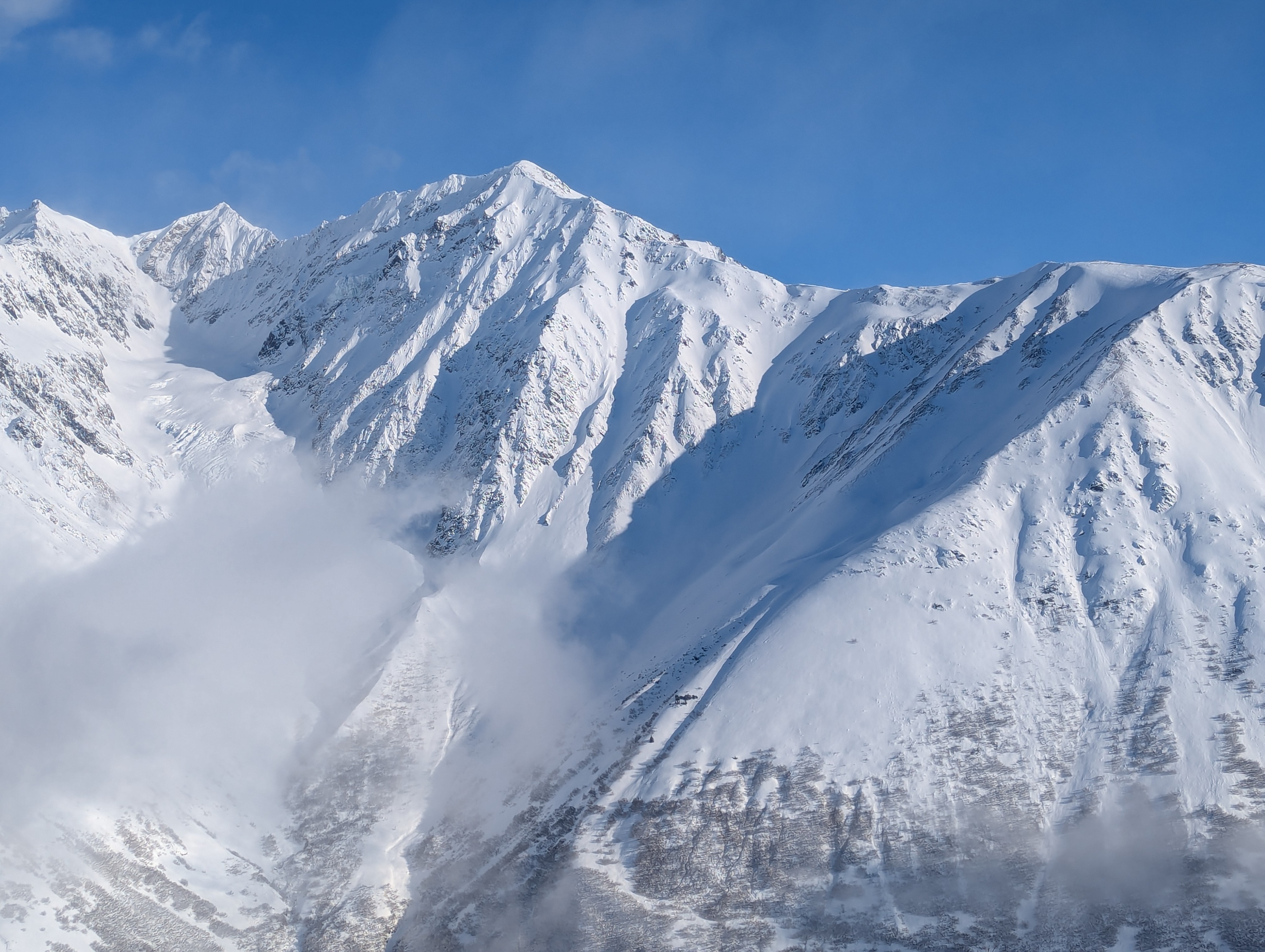
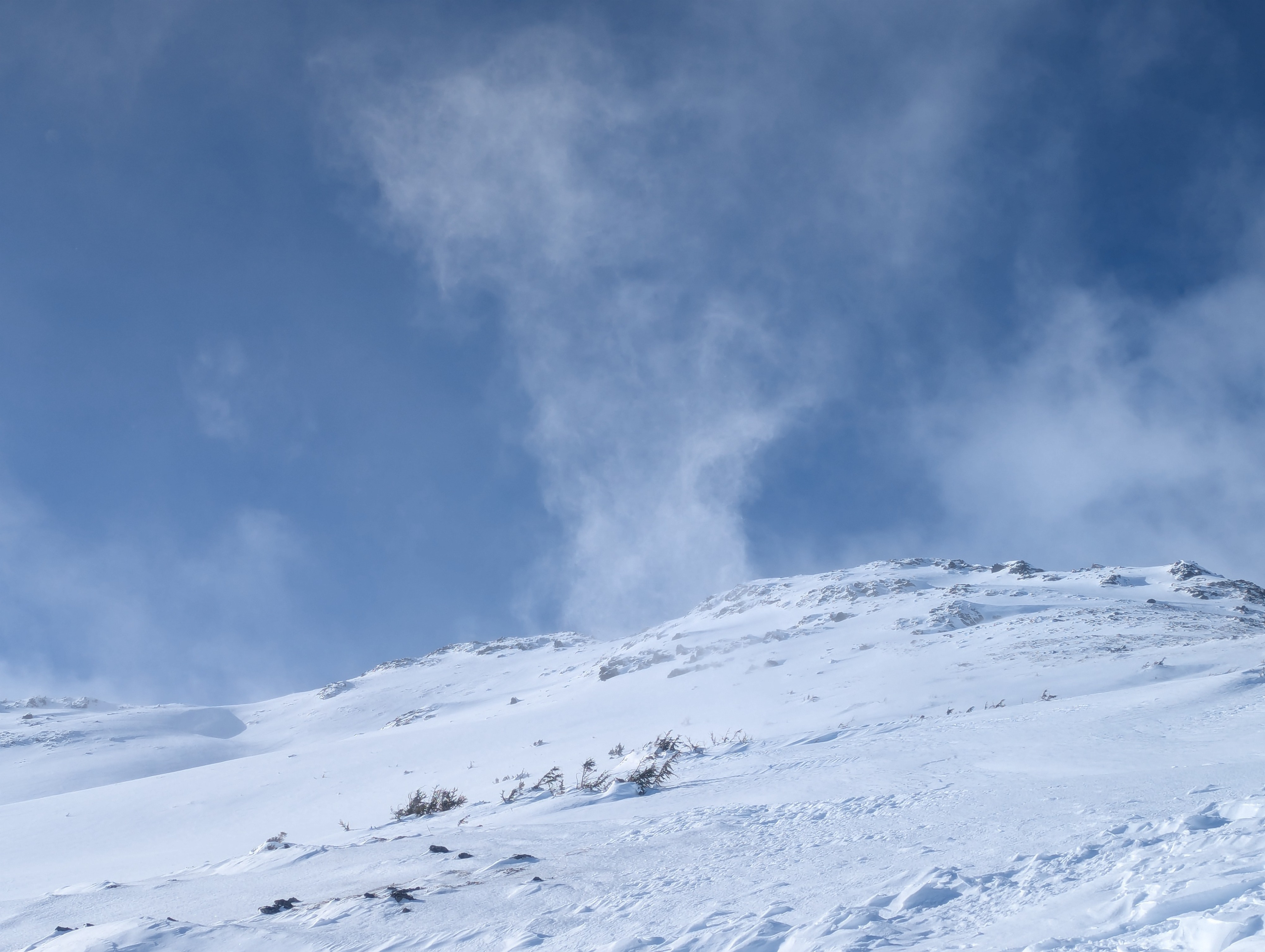
It was mostly clear with some valley fog layers moving around the area. Winds were strong at upper elevations and were transporting significant amounts of snow.
Snowpack
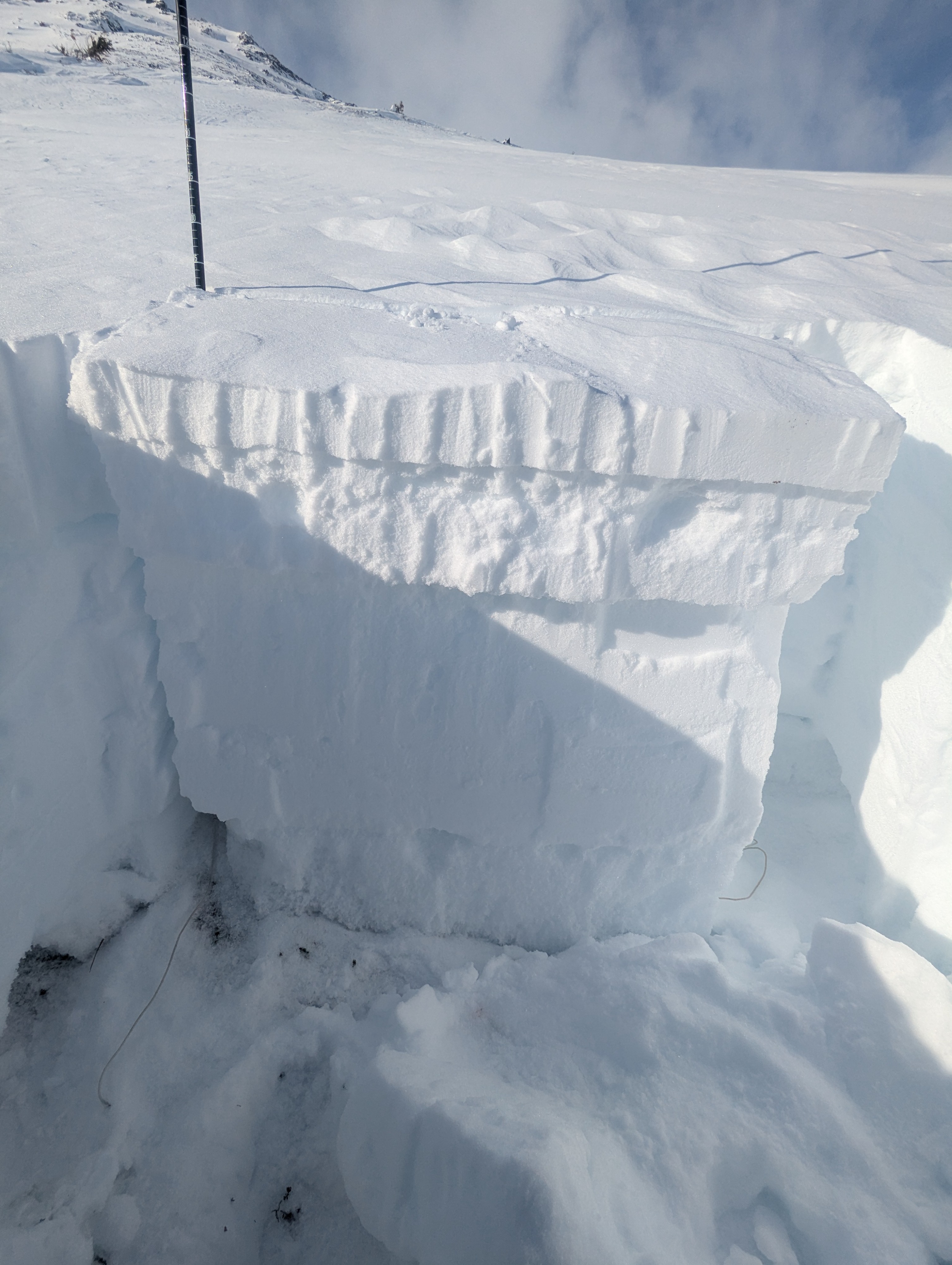
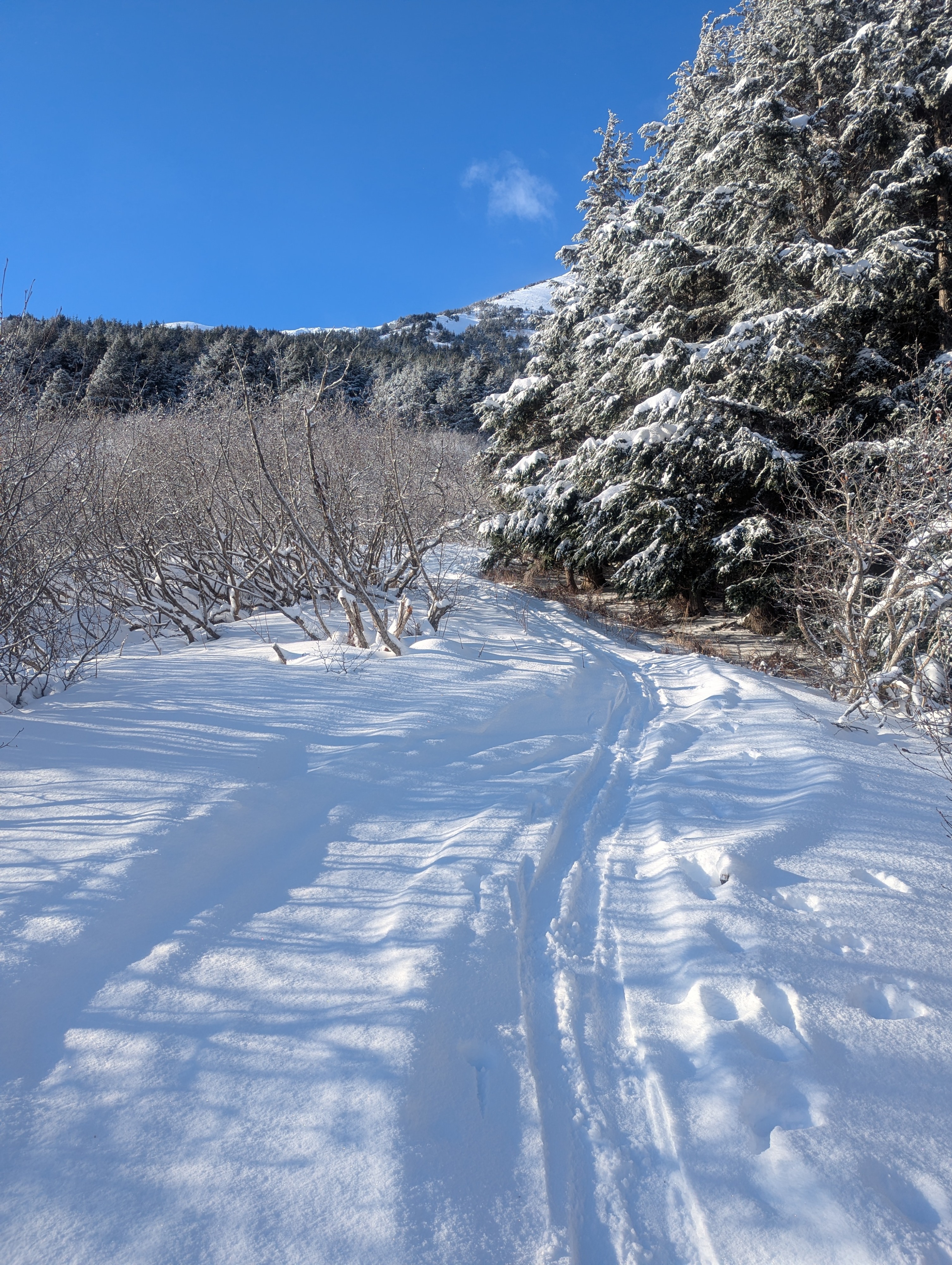
We dug two pits, one at 2500' and one at 3300'. The lower pit was on a NE aspect and had a stout 4" thick (10cm) melt freeze crust about 1.5' deep (50cm). There was a layer of facets forming on top of the melt freeze crust that could be a layer of concern moving forward (CT 12 SC, ECT N 13). The total snowpack depth was about 4.5' (135 cm), and this spot seemed representative of the treeline elevation band in wind-sheltered locations.
The upper elevation pit was in a wind-scoured spot just off the ridgeline. We heard a collapse as we were approaching the ridge and stopped to check out the snowpack. We found a similar setup to the lower pit, with a fresh wind slab on top of new snow, all sitting on facets over a thin melt freeze crust. Both the surface wind slab and facets over the crust propagated across the column on isolation in our ECT test (ECT P V). This is a strong sign that the layer was being loaded by the wind-transported snow and was unstable. In addition, the December facets were only about 2' deep (65 cm) in this location, and the structure looked very weak. Based on the view we had of the recent avalnache from this past weekend (~2/14) in Raggedtop Bowl and the snowpack setup we saw, I feel confident that this avalanche released on the December facets after a significant wind event. Similar large avalanches seem likely in this area as we are at the start of another NW outflow wind event.
Avalanche
- Size
- D1.5
- Type
- SS
- Aspect
- SE
- Trigger
- AS
- Elevation
- 3200 ft
I triggered the avalanche while descending through some small trees just off the ridgeline on a SE aspect. It pulled me off my feet, but I was able to stop with my ski edges and let the debris run by me.