
Quick report
I headed to the eastern edge of the zone today to check out how the new storm snow was behaving and to see if that new load was stressing the persistent weak layers deeper in the snowpack. I was pleased to find a lovely foot of storm snow that was generally dry and fluffy, especially above 3500'. Time lost to a stuck sled coupled with poor visibility limited the scope of observations, but there were a few things of note.
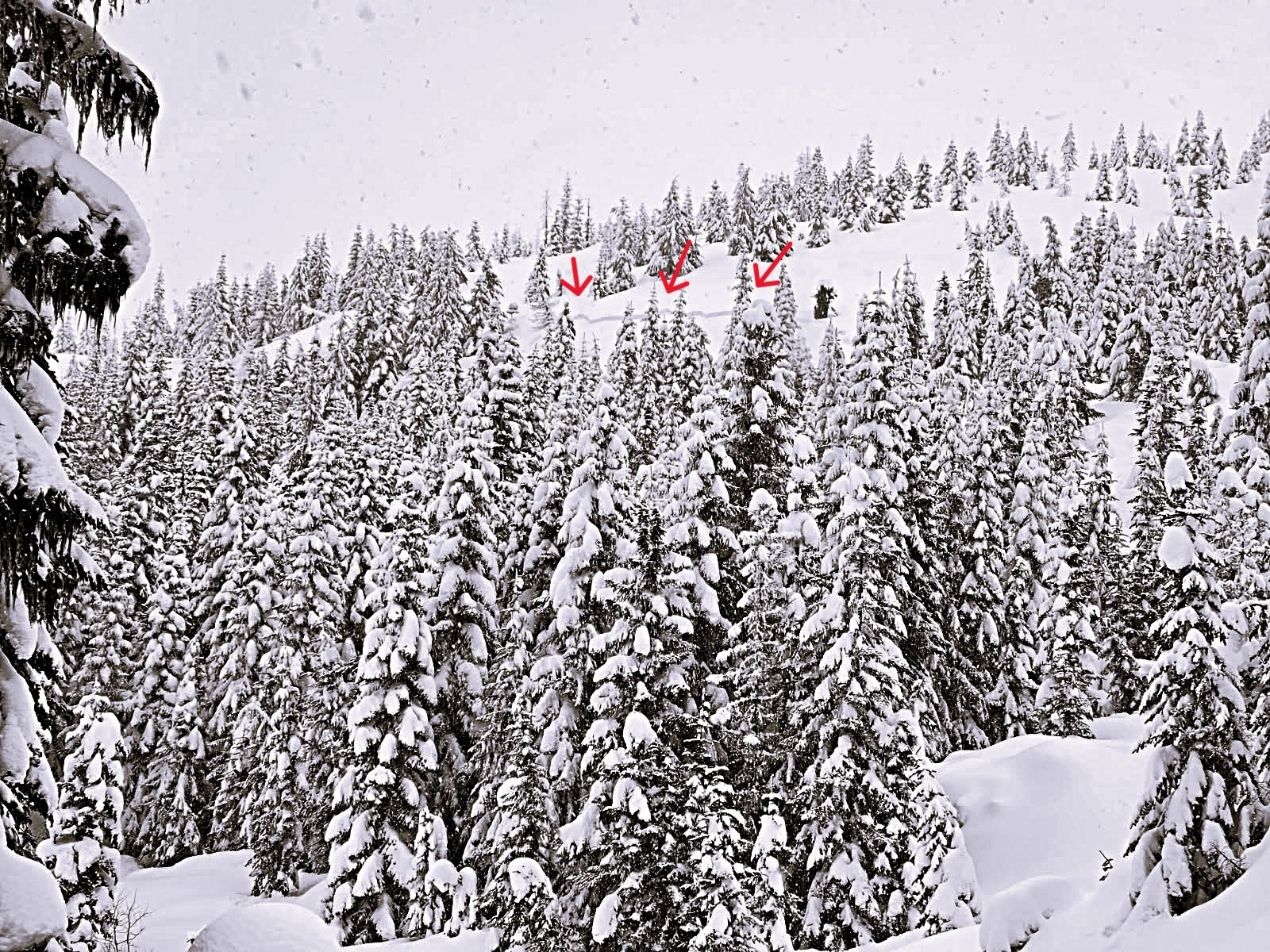
Surface hoar and weak grains at the 2/13 were a concern in a snow profile on a northeast facing slope, though large column tests did not propagate. Then on my way home, I observed a widely propagating natural avalanche on a sheltered west-facing slope that I suspect failed at the 2/13, further corroborating the concern. While the east wind event may have blown away weak grains on the surface in plenty of upper elevation and more exposed terrain, sheltered areas and openings in the trees could be harboring this tricky weak layer and demand some caution.
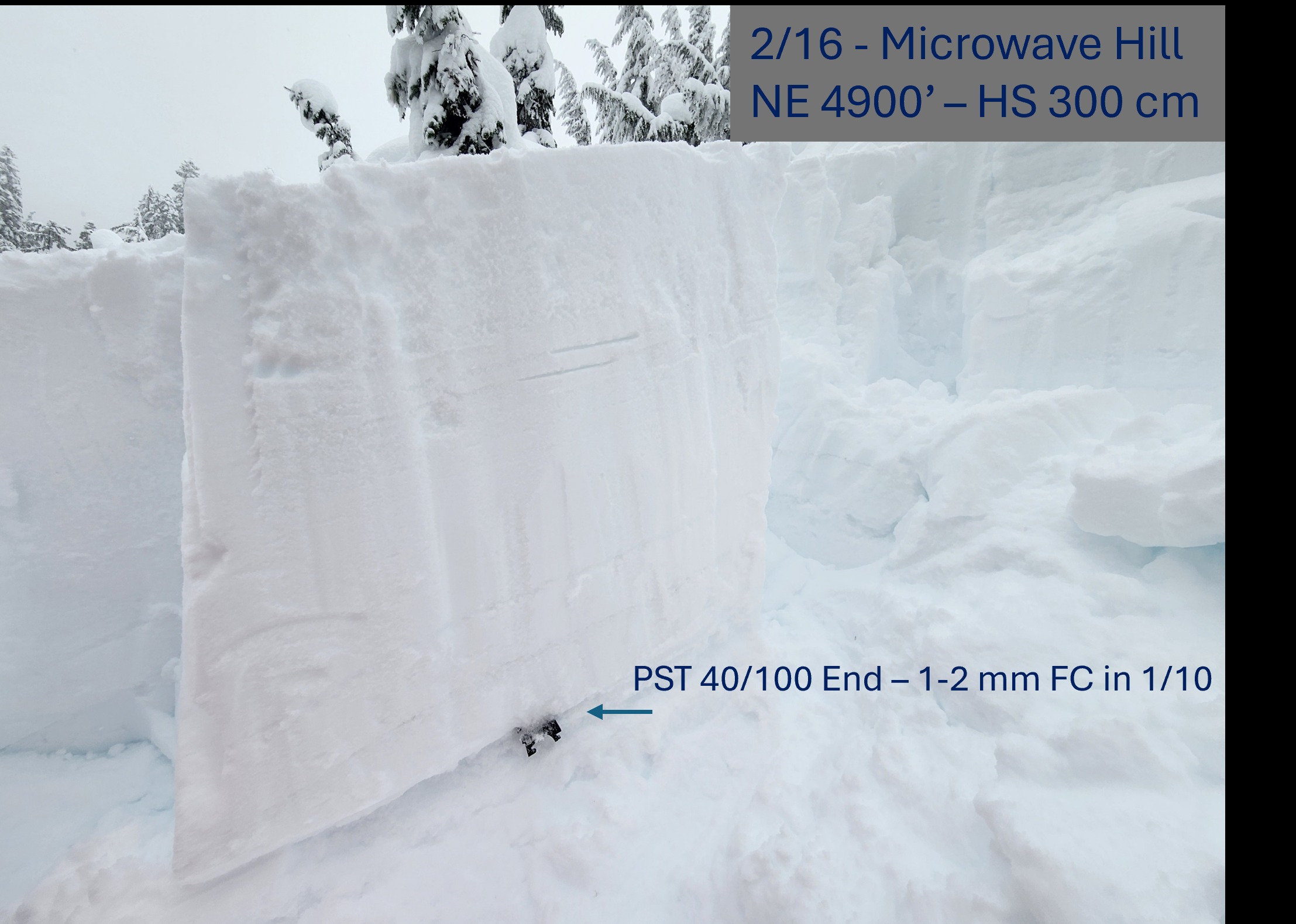
As for the weak layers buried deeper in the snowpack, the 1/10 was buried about 3 ft below the surface. It's still weak; very well-developed weak and sugary facets within that layer continue to produce concerning results in snowpack tests. It may be hard for a human to trigger an avalanche on a weak layer that deep, but the potential to find a thin spot on the slope or the possibility of a smaller avalanche from the storm snow acting as a trigger for a bigger one on the 1/10 was on my mind and dictated my travel.
Snow quality was generally excellent!
Though I only observed localized cracking in the storm snow, I observed a widely propagating natural storm slab on my way out at about 3:45 pm.Weather
- Cloud Cover
- overcast
- Wind Loading
- none
- Recent Snowfall
- 30-35
- Snow Avail For Transport
- moderate amounts
A lovely day in the snow globe on the east side of the pass. Winds were calm and it snowed most of the day, oscillating between S-1 and S-1.5. It didn't warm too much and the snow stayed dry and fluffy all day.
Snowpack
About 10-14" of new snow sat over the 2/13 interface. While the upper few inches that fell during the day were a bit denser, the bulk of the storm snow was actually pretty right-side up where I traveled. Minimal and localized cracking was observed in the storm snow. Ski pen about 12", boot pen about 22". Little to no wind effect was observed.
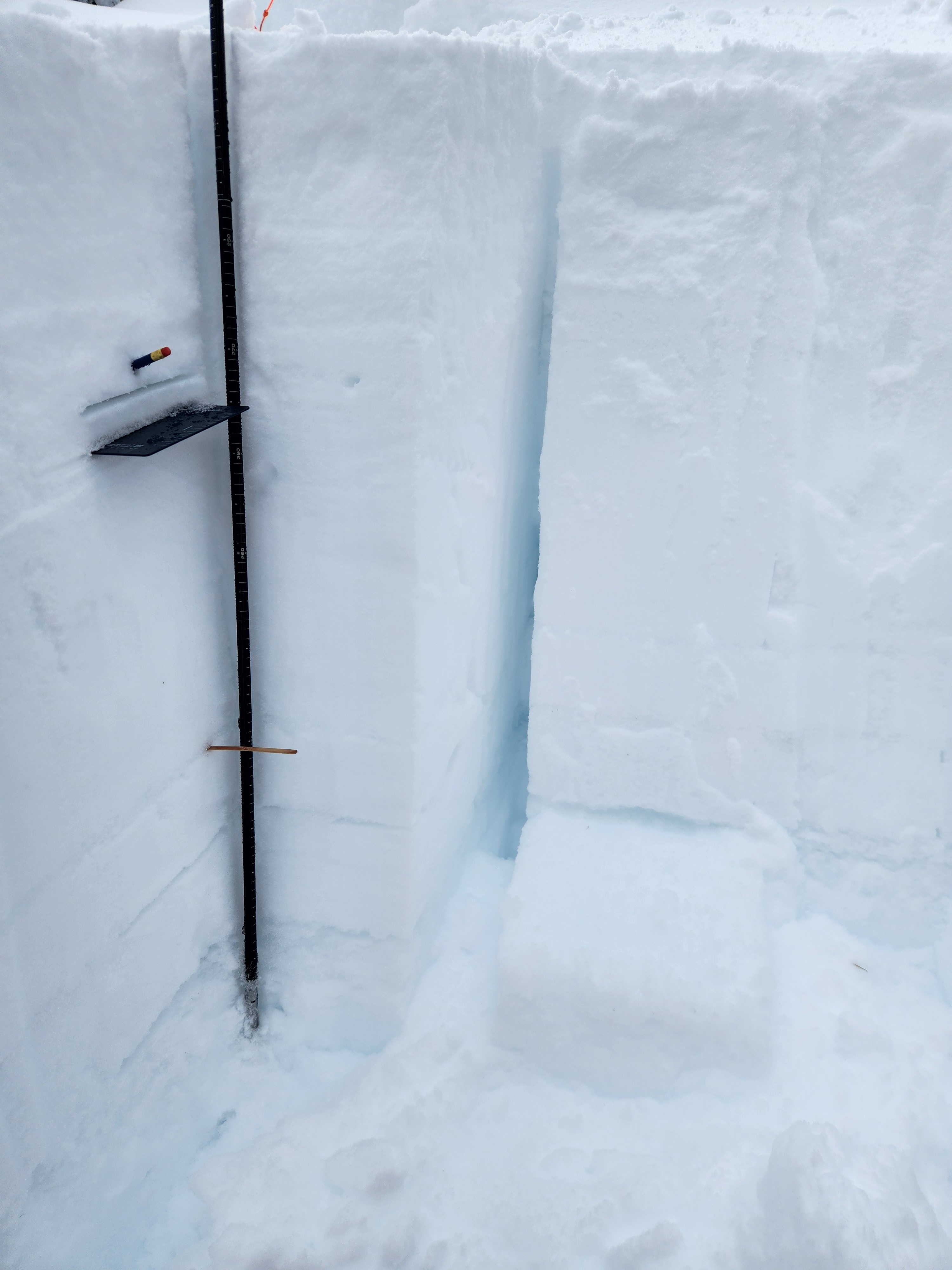
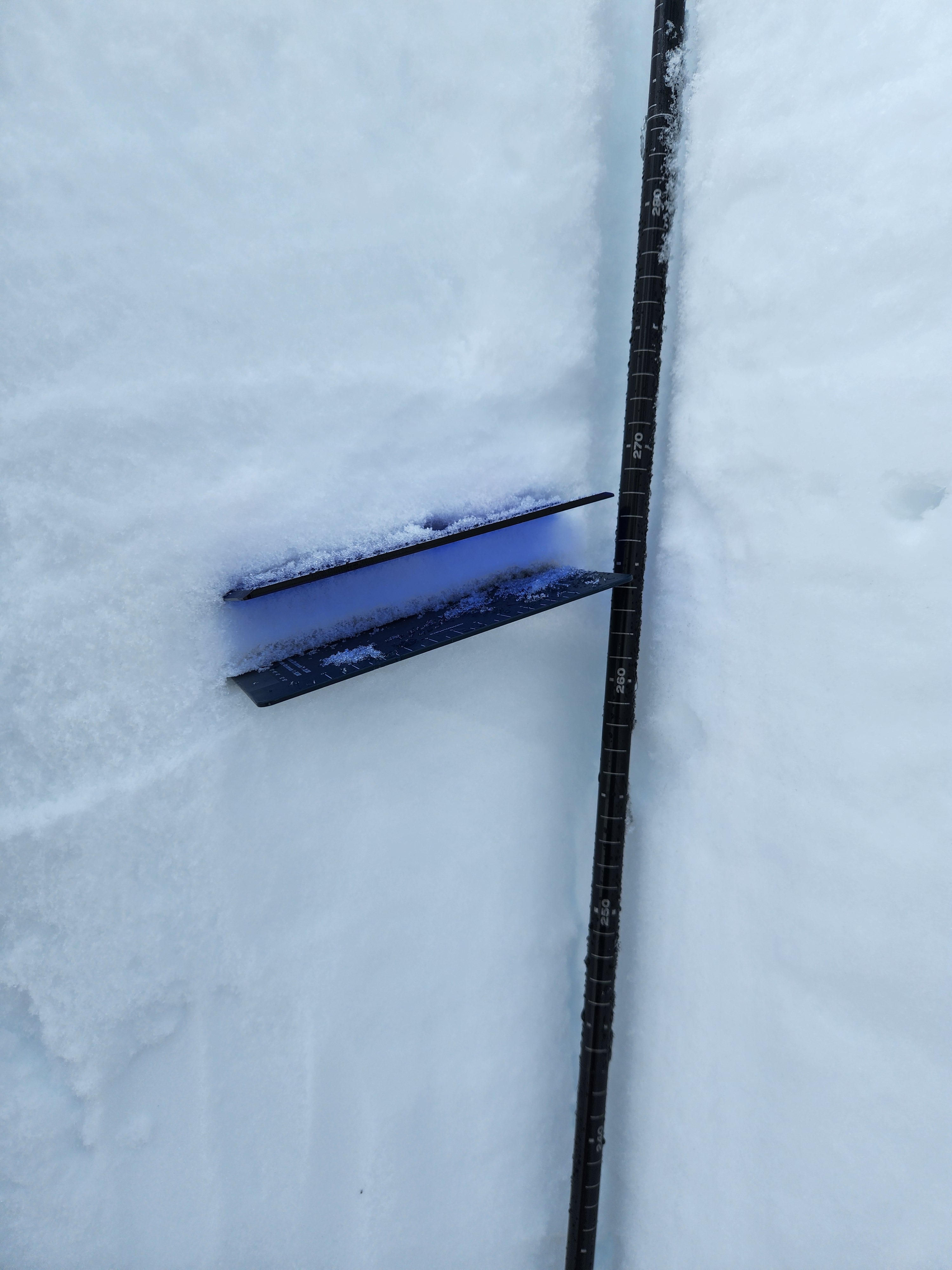
A stripe of surface hoar was clearly visible in the pit wall at the 2/13. Grains were 1-3 mm. While some were vertical, others had been blown down prior to the storm. Though my limited travel didn't provide a ton of evidence of widespread instability within the storm snow, the presence of weak grains at the new/old interface and a widely propagating natural avalanche on the layer didn't give much confidence in the upper snowpack.
I dug a pit on a northeast aspect at 4900'.
CT11 SC and ECTN13 down 35 cm on the surface hoar at the 2/13.
CT15 SC, ECTX, and PST 40/100 End down 94 cm in 1-2 mm weak and well developed faceted crystals in the 1/10 complex. These crystals are just below a thin zipper crust at the top of the complex.
The JDL was 1F RG/FCxr and unremarkable.
This combination of a mostly benign JDL and concerning test results in very weak snow just below the top of the 1/10 complex has shown up in quite a few of my pits around the zone as of late.
Avalanche
- Size
- D2
- Type
- SS
- Aspect
- W
- Trigger
- N
- Elevation
- 4450 ft
It was late in the day and I wasn't able to ascend to further investigate. The attached picture was the only vantage point available from the snowmobile trail. Based on what I found in my snow pit and the type of terrain (meadow/opening on a treed slope sheltered from wind), I suspect this failed on buried surface hoar or other weak grains at the new/old interface. The width of propagation, especially given the softness of the slab further suggests surface hoar or faceted crystals may have been involved.