
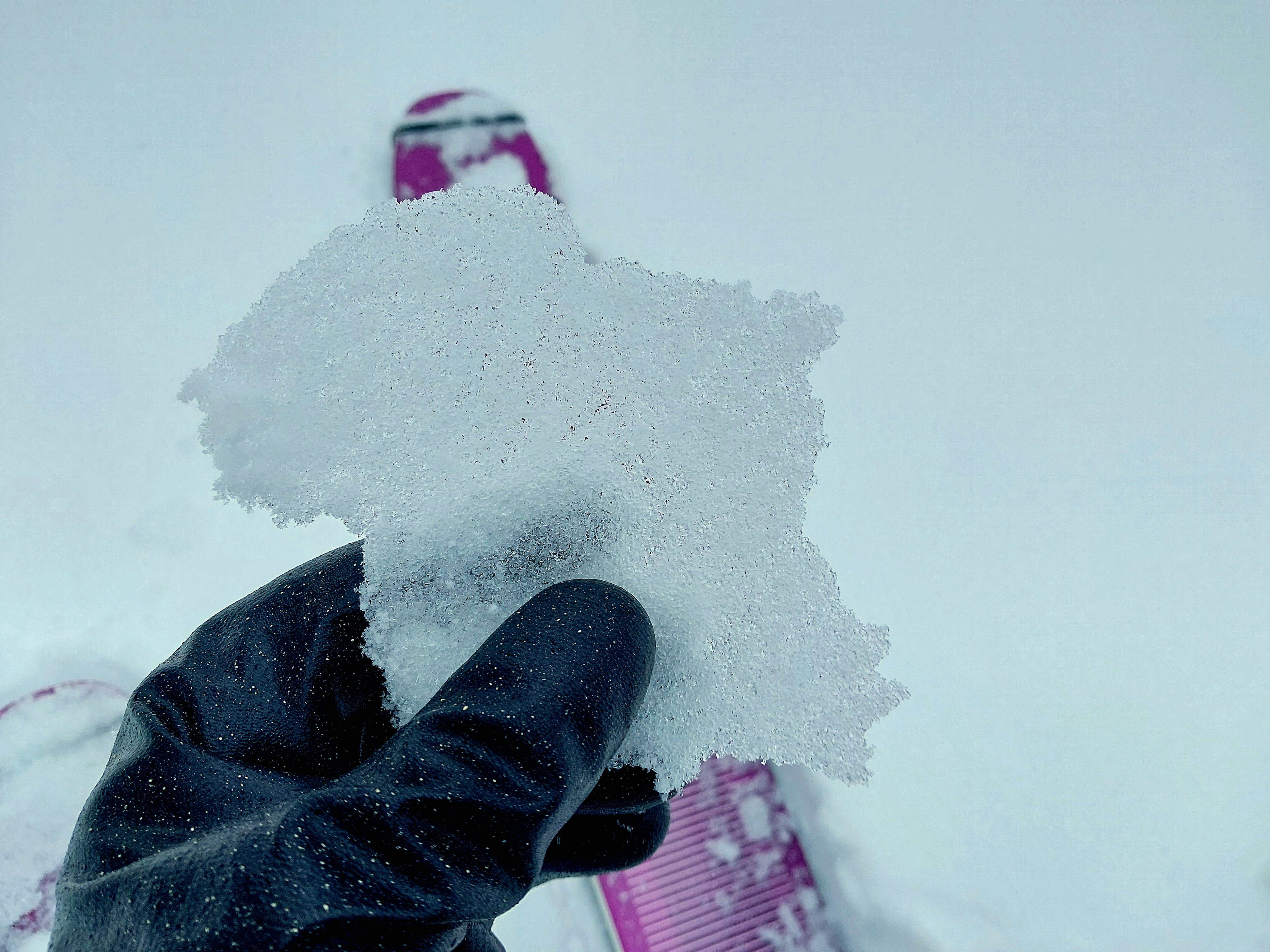
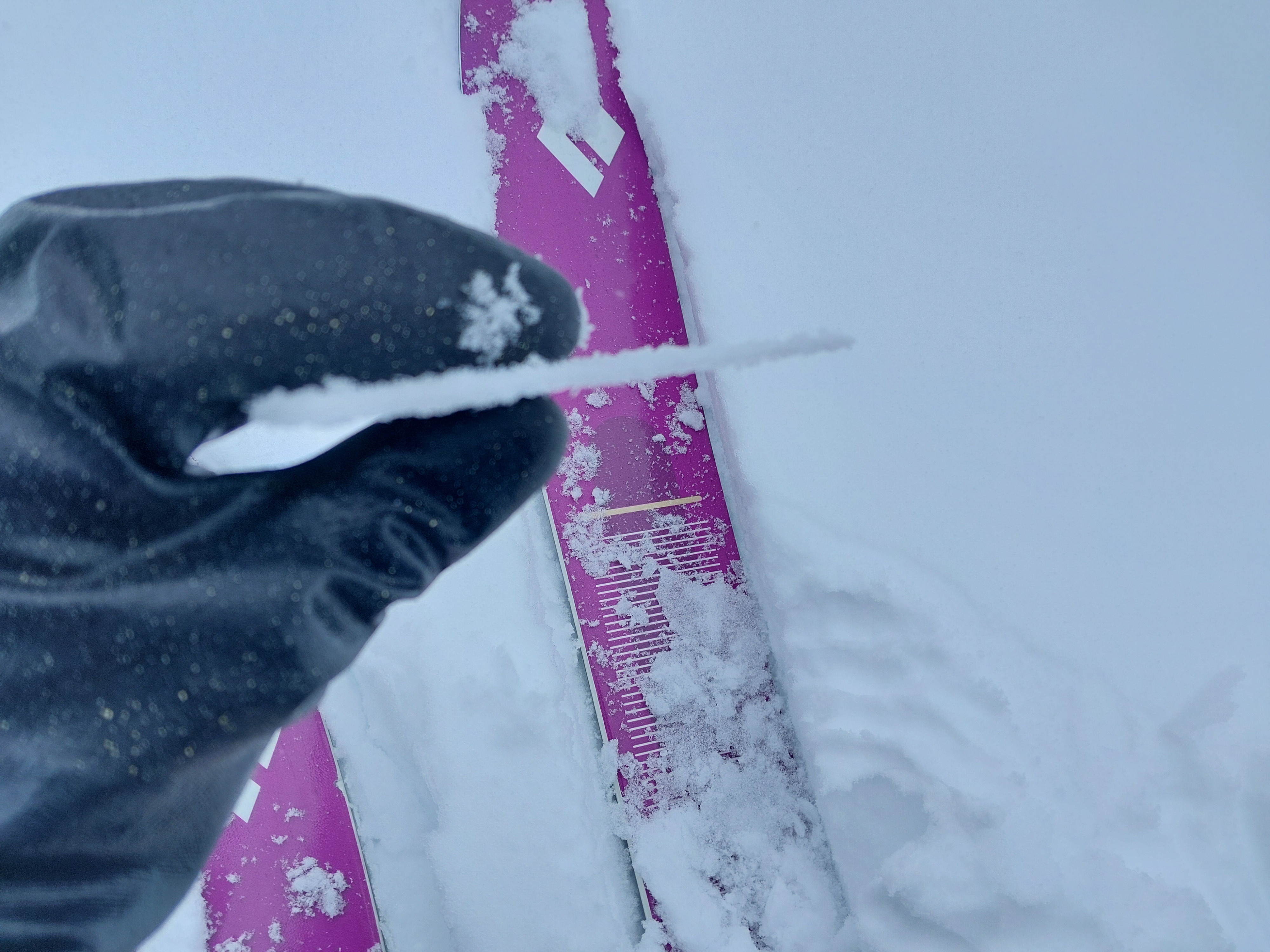
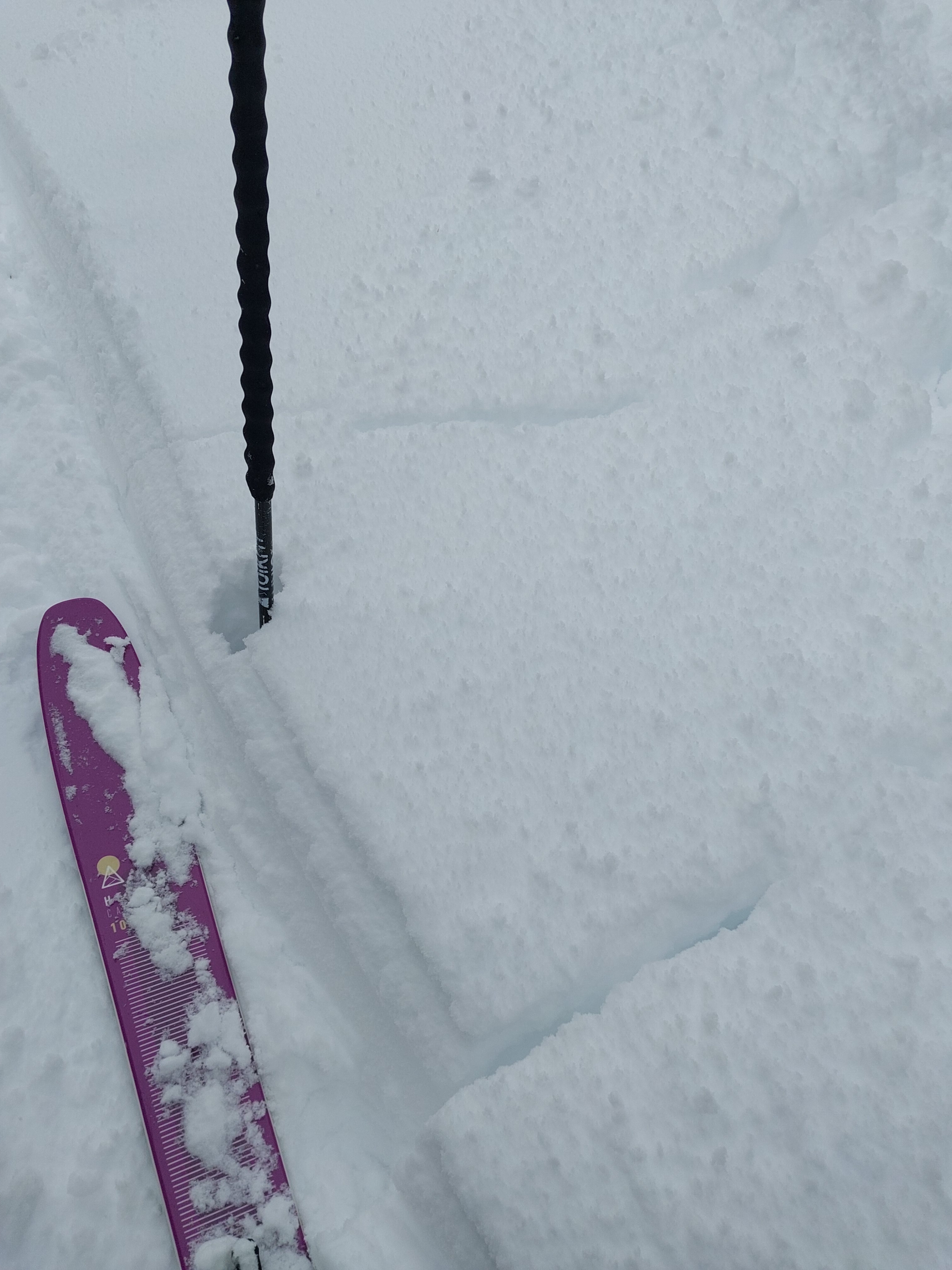
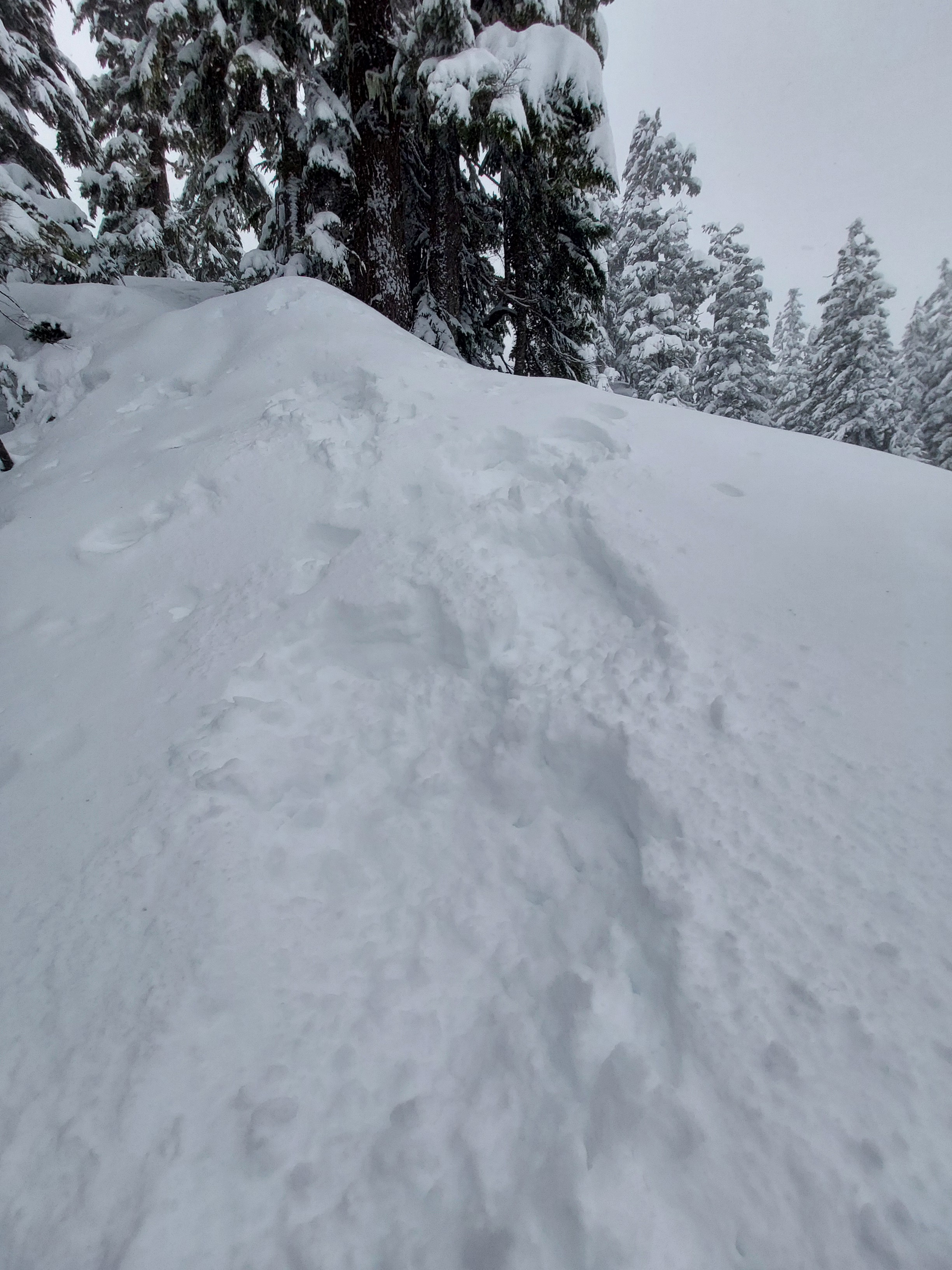
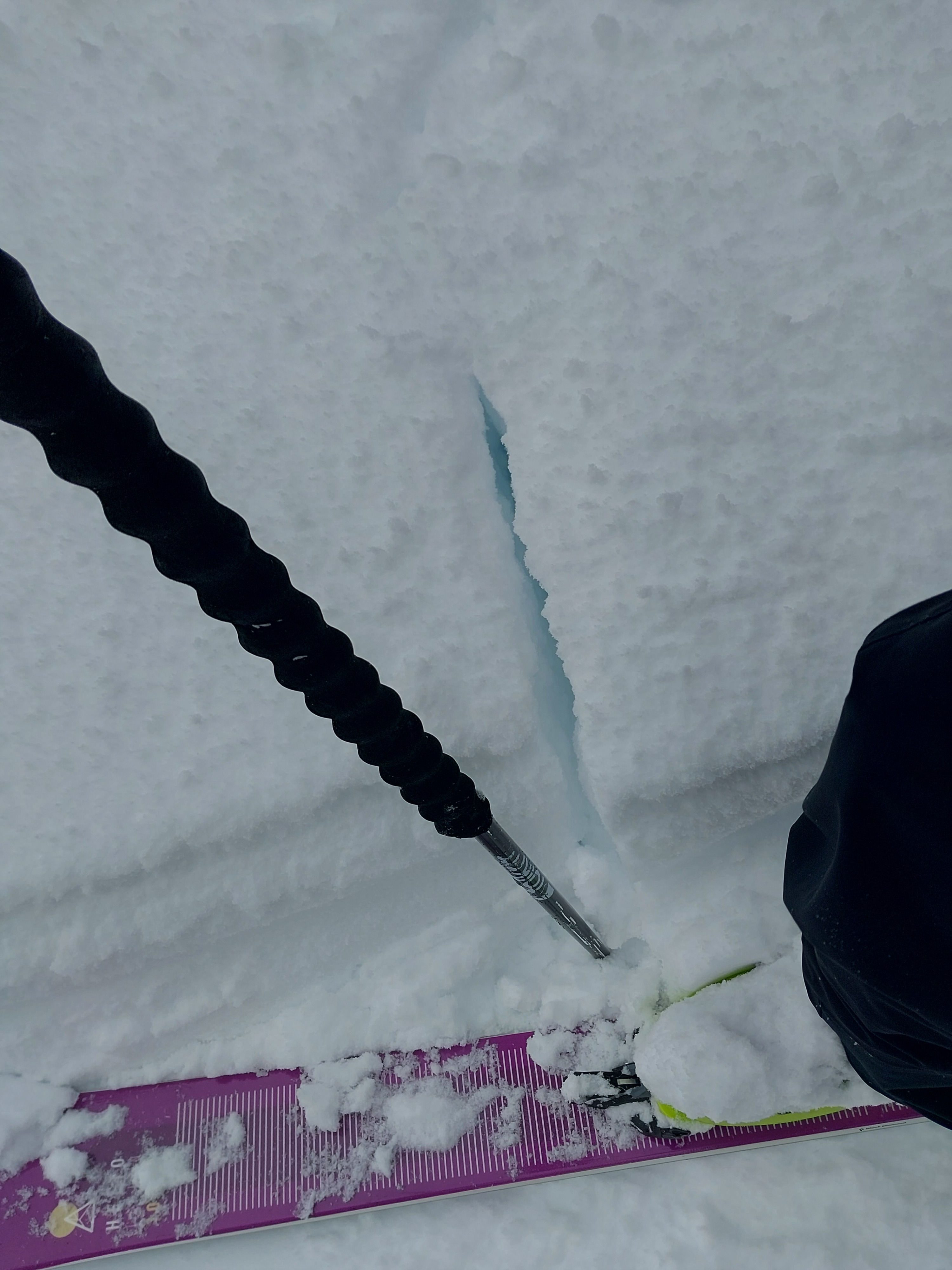
Quick report
- Cracking
- isolated
- Collapsing
- specific
We saw enough signs of instability and a poor snowpack structure to keep us making conservative terrain choices. Lots of weak layers (near-surface facets, surface hoar, and near-crust facets) in the upper snowpack. More warming temperatures and moist surface snow than anticipated.
Of most concern is a thick layer of facets and surface hoar, buried 30-35cm deep on 2/13-18, which rests on the 2/8 crust. Notably, the overlying snow is still soft, lacking significant slab quality, and test results were minimal at this interface. In 2 profile locations and 4 tests performed, only one (CTM(SP) indicated potential for human triggering of avalanches.
Weather
- Cloud Cover
- obscured
- Wind Loading
- none
- Rain Elevation
- 4500
- Recent Snowfall
- 2
- Snow Avail For Transport
- small smounts
Temperatures were near freezing all day, from the upper 20's to 30F. Light precip started as snow, followed by a period of freezing rain from 10:30-11:30. Light snow resumed with ~1cm over the freezing rain zipper crust by 3:30. Mostly calm with light East wind above 5,000ft
Snowpack
Surfaces
In the AM, all slopes held dry DF's and stellars. By late afternoon, a dusting of stellars covered a new, very thin crust, which formed during midday with freezing rain. Below 4,500ft, there was no crust, and surfaces were moist melt forms.
Snowpack Summary
The upper snowpack is weak with intermittent crusts. The top ~20cm is new snow (2/23) over another 8-10cm of recent, soft snow. On solar aspects, a thin layer of facets sits above the 2/8 crust, 35-40cm below the surface. On non-solar aspects, the facets are thicker (15cm), and feature the widespread 2/13 surface hoar in the middle of the layer. This rests on the weak, 2/8 crust, roughly 50cm below the surface. A thin layer of very weak facets is sandwiched between the 2/8 and the more stout 2/7 crust. On colder slopes, multiple layers of crust-facet sandwiches lie beneath this. At low elevations and on solar aspects a massive brick of stout mel forms, including the 2/7 crust begins 40-45cm below the surface and extends deeper than anyone would care to dig.
Profile
NE, 5340ft
HS 300cm, Boot Pen 50cm
↓22cm CTE(PC) on 2/23 interface
↓30cm clean, planar tilt test result on a 4F+ layer of rounds
↓35cm CTM(SP), ECTN15 on 1.0mm FCsf (2/18?)
↓43cm 2/13 SH, 4-6mm
↓50cm ECTN26 on 2/8 MFcr
↓52cm CT11 (SC) on 0.5-1.0mm FC between the 2/8 and 2/7 crusts
See profile graph
Profile
S, 4660ft
HS 197cm, Boot Pen 40cm
↓37-39cm 1F hard, 2/8 MFcr
↓39-42cm 4F+, FC, problematic layer for collapses
No sudden or propagating test results w ECT or CT