
Quick report
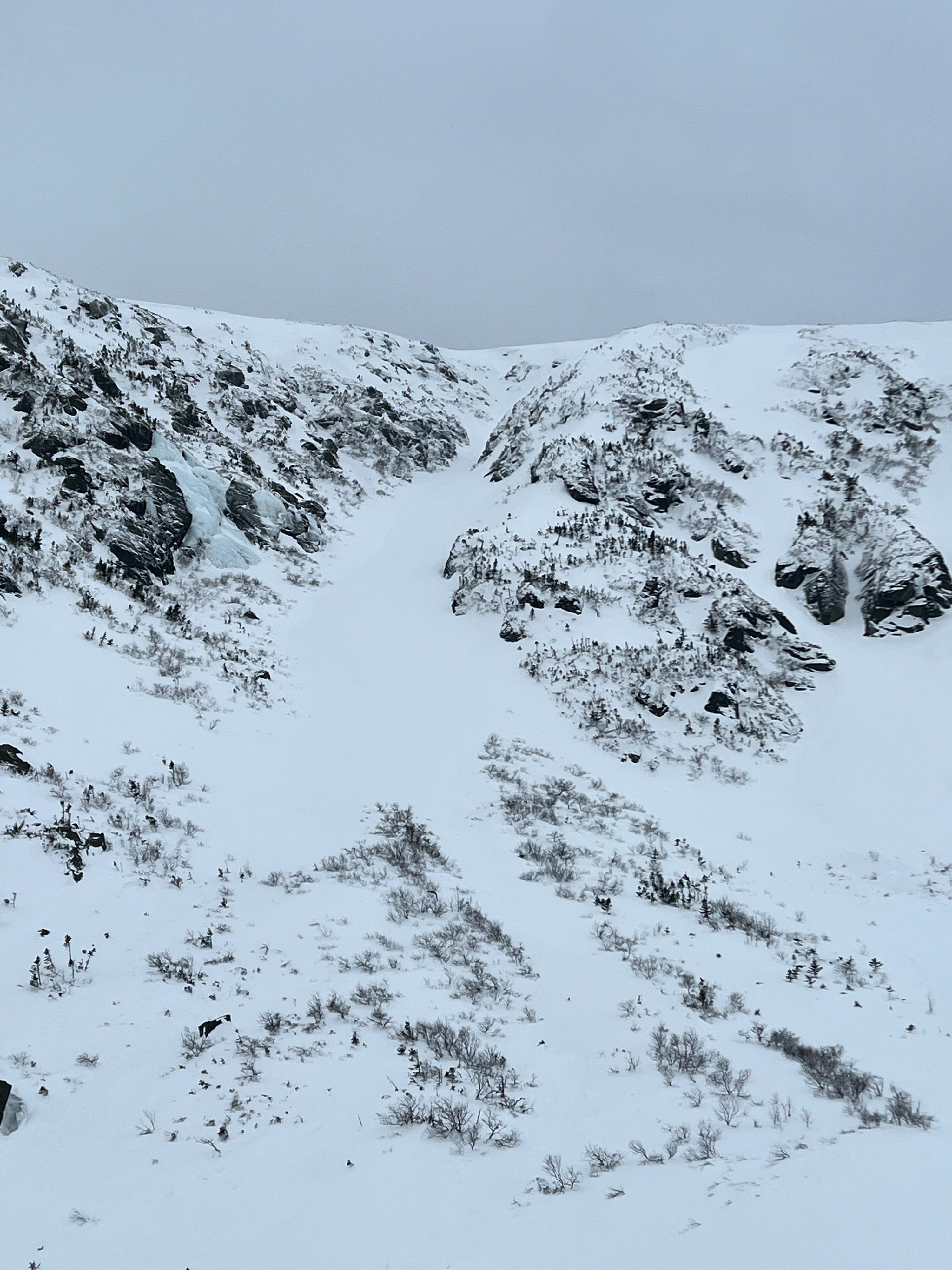
Found stubborn results in testing today in Tuckerman Ravine. Small near crust facets were found above and below the melt freeze crust from last Sunday's warm up and the weak layer above the crust was the surface for most failures in testing today. Believe these to be rounding facets and think that continued warm temperatures will promote bonding and heal these weak layers quickly as they are very thin.
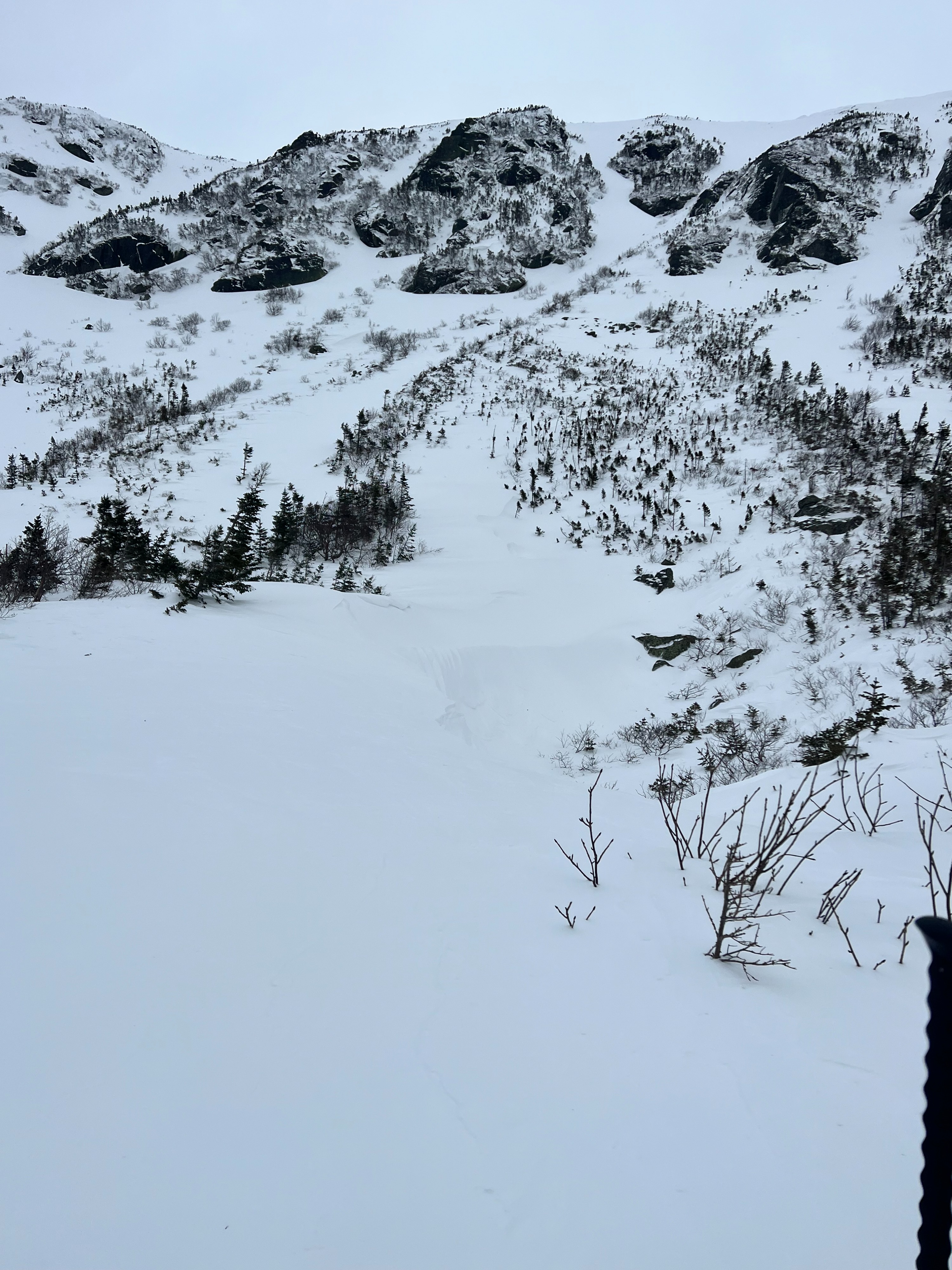
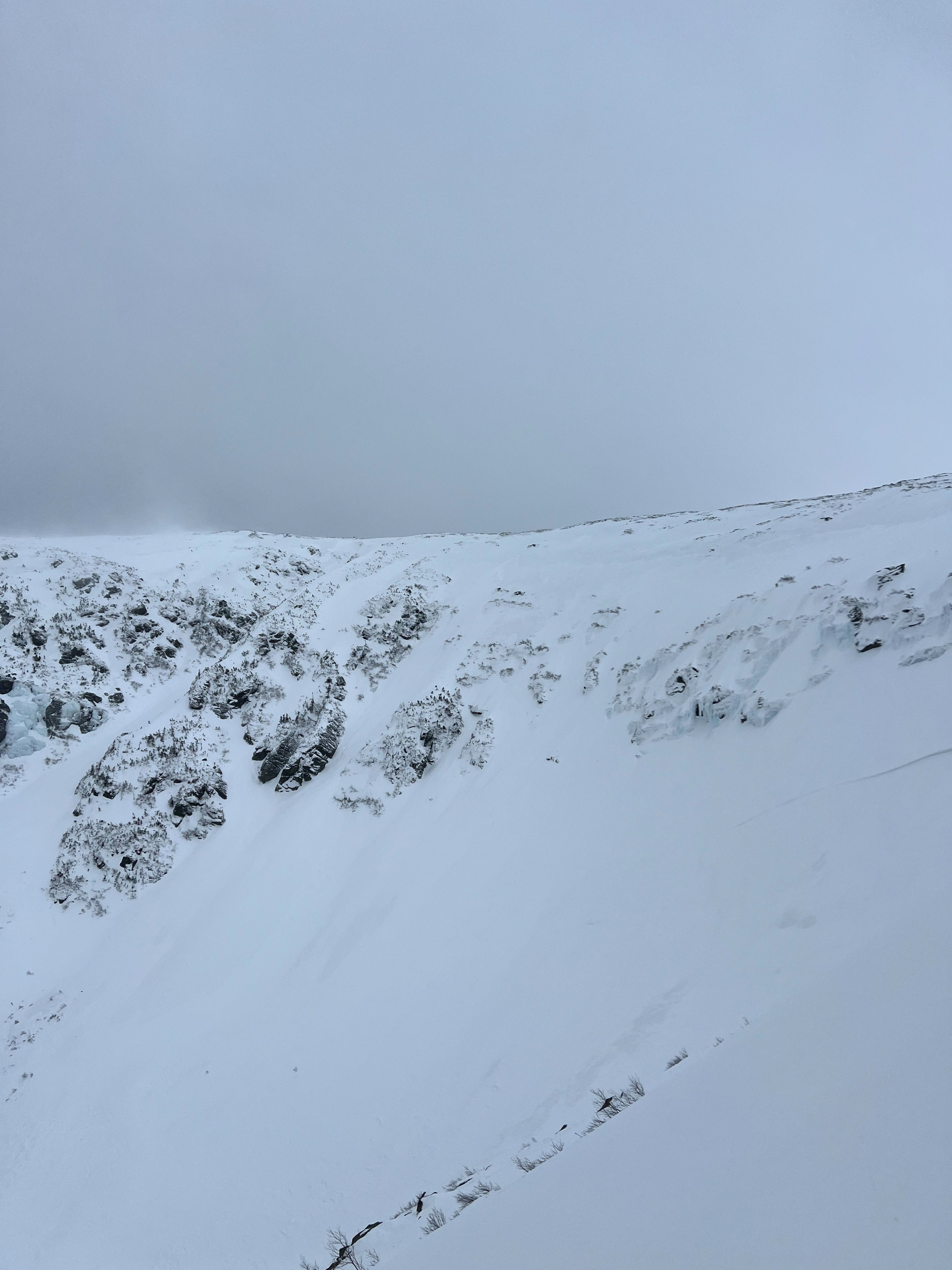
A lot of snow has been moved in the terrain, connection cache was completely buried. In Left Gully the start zone looks very scoured as does many others. Looking at south and southeast aspects the runs look to be very full and loaded with wind drifted snow. A small cornice was observed in Lobster Claw and the ridge line looks more and more connected.
Weather
- Air Temp
- 23
- Cloud Cover
- overcast
- Wind Loading
- light
- Rain Elevation
- Not Observed
- Recent Snowfall
- Storm total 20 in
- Snow Avail For Transport
- small smounts
Light winds and moderate gusts observed with some snow being moved occasionally
Snowpack
At lower elevations in Tuckerman Ravine the snow surface hand hardness was pencil hard and as we gained elevation it softened to 1F to 4F in some places. Snow depths of the wind drifted snow was often 1.5-2 ft. In wind protected places depths were greater with the deepest being 3.5 ft.
Preformed a few hand shears on the approach to my high point and they proved to be very stubborn and took decent force to get a result. As we gained elevation results were still stubborn, but they did become easier to initiate. Any results of the hand shears was on a thin weak layer between the newly deposited snow. The size of this reactive top snow ranged from 2 inches to 8 inches in depth.
In my snow pit I was curious to see if my results would mirror what I saw in hand shears and this was my initial layer of concern. I also noted a thick crust with small near crust facets located above and below and this facet layer was my second layer of concern.
I started with a CT and my results were CT22 PC down 66 cm. My ECTP29 down 66 cm. The ECT had a very subtle propagation on the weak layer that was difficult to observe. These results support the Moderate hazard that we had forecasted for the day. We discussed that these weak layers are very thin and with the warm temperatures will likely quickly heal. While all stubborn results, they did give pause and support not going any higher as the slopes above are steeper and more loaded.
While my pit results were all on the near crust facets, another pit near mine had results on that weak layer as well as the higher layer in the deposited snow that I saw in my hand shears.
Avalanche
- Type
- SS
- Aspect
- SE
- Trigger
- N
- Elevation
- 4600 ft
Natural soft slab avalanche across the Lip and the Headwall. The crown is largest on the lookers right side and was estimated to be 4ft in size here. Looking across the crown to the left the crown tapers until it becomes very thin in the center of the Headwall. Exact time when this released is unknown, but believed to have been sometime Wednesday 3/15 evening.