
Quick report
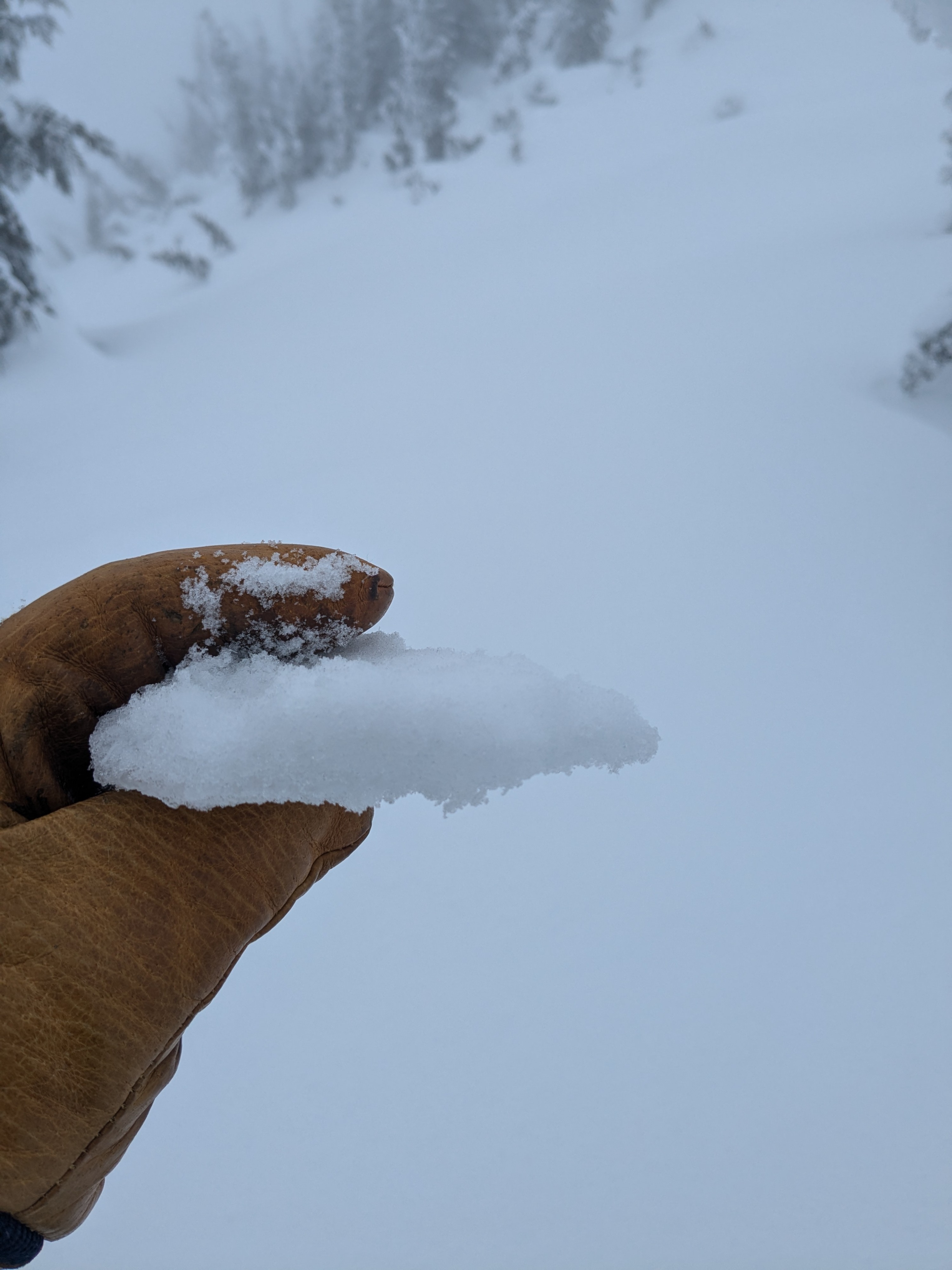
Minor sluffing of cohesionless snow on steep convex rolls above the12/7 rain crust. This was mostly at middle elevations.
Weather
- Air Temp
- 24F at Noon around 6,200 feet
- Cloud Cover
- obscured
- Wind Loading
- light
- Recent Snowfall
- Tr in last 24 hours
- Snow Avail For Transport
- moderate amounts
Obscured skies with generally calm conditions below 6,000 feet. By the time we reached treeline, we encountered moderate southwest winds lightly drifting snow onto leeward-facing slopes. While exiting the mountains around 3:30 pm, light snow showers began.
Snowpack
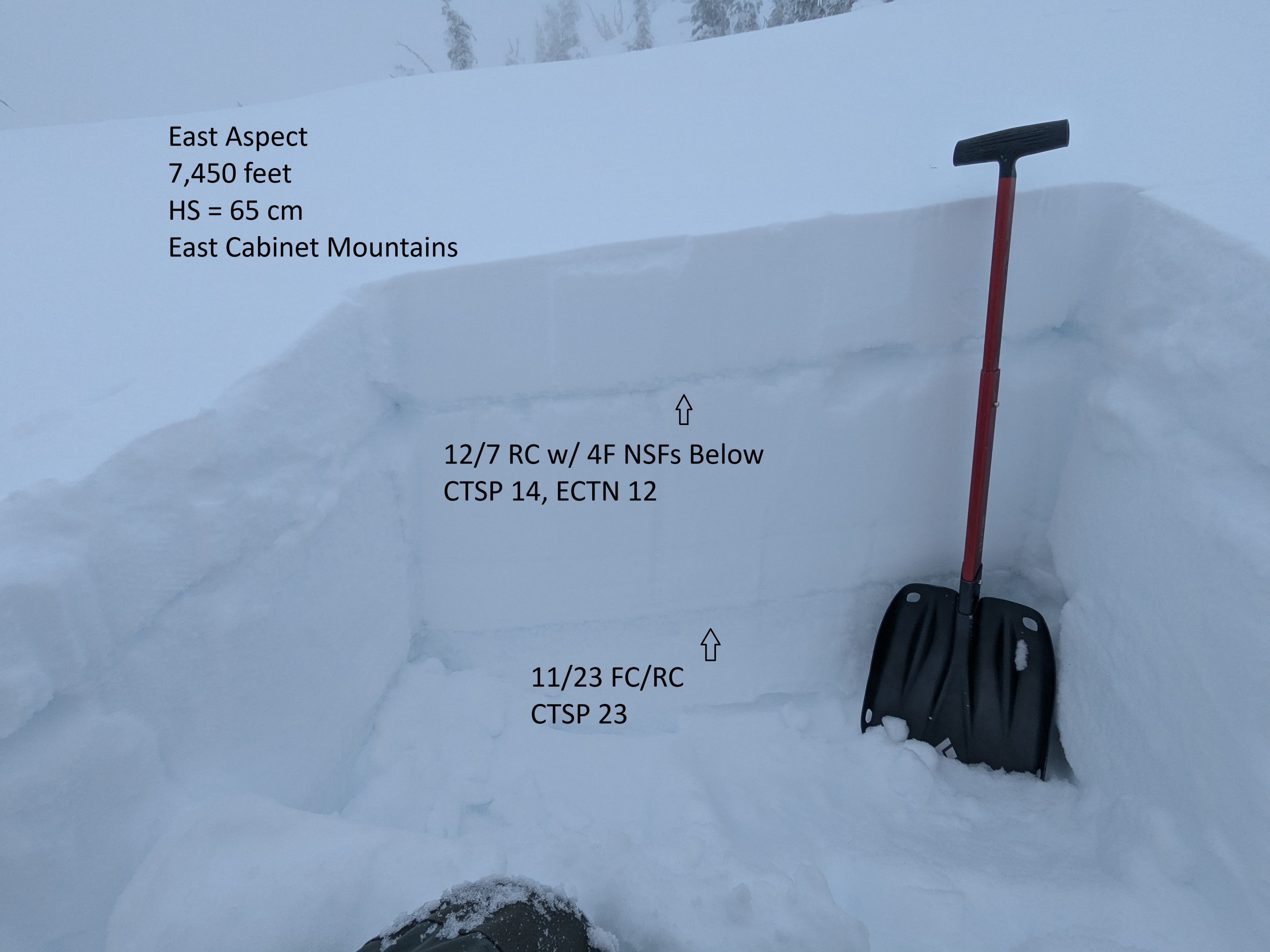
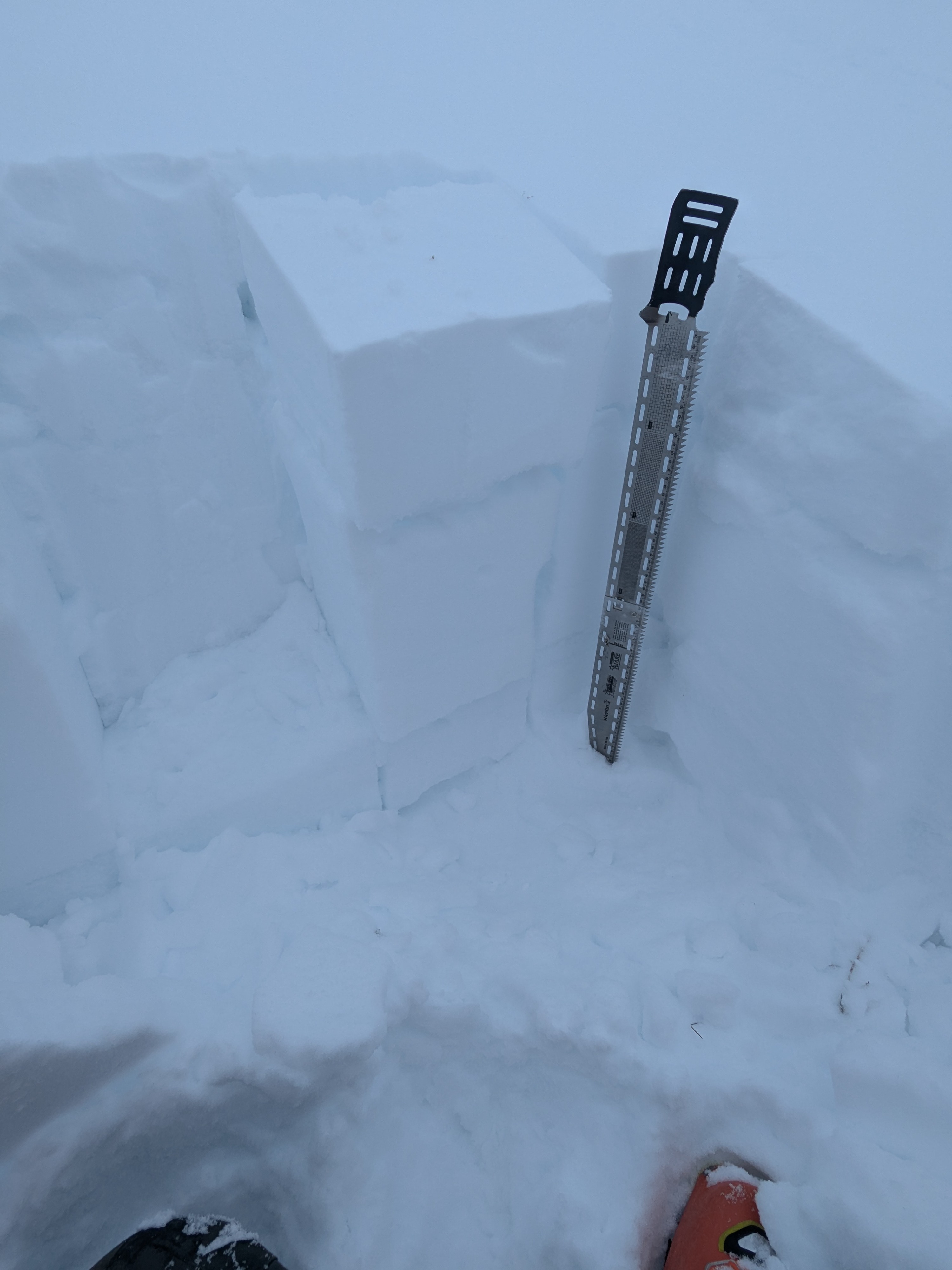
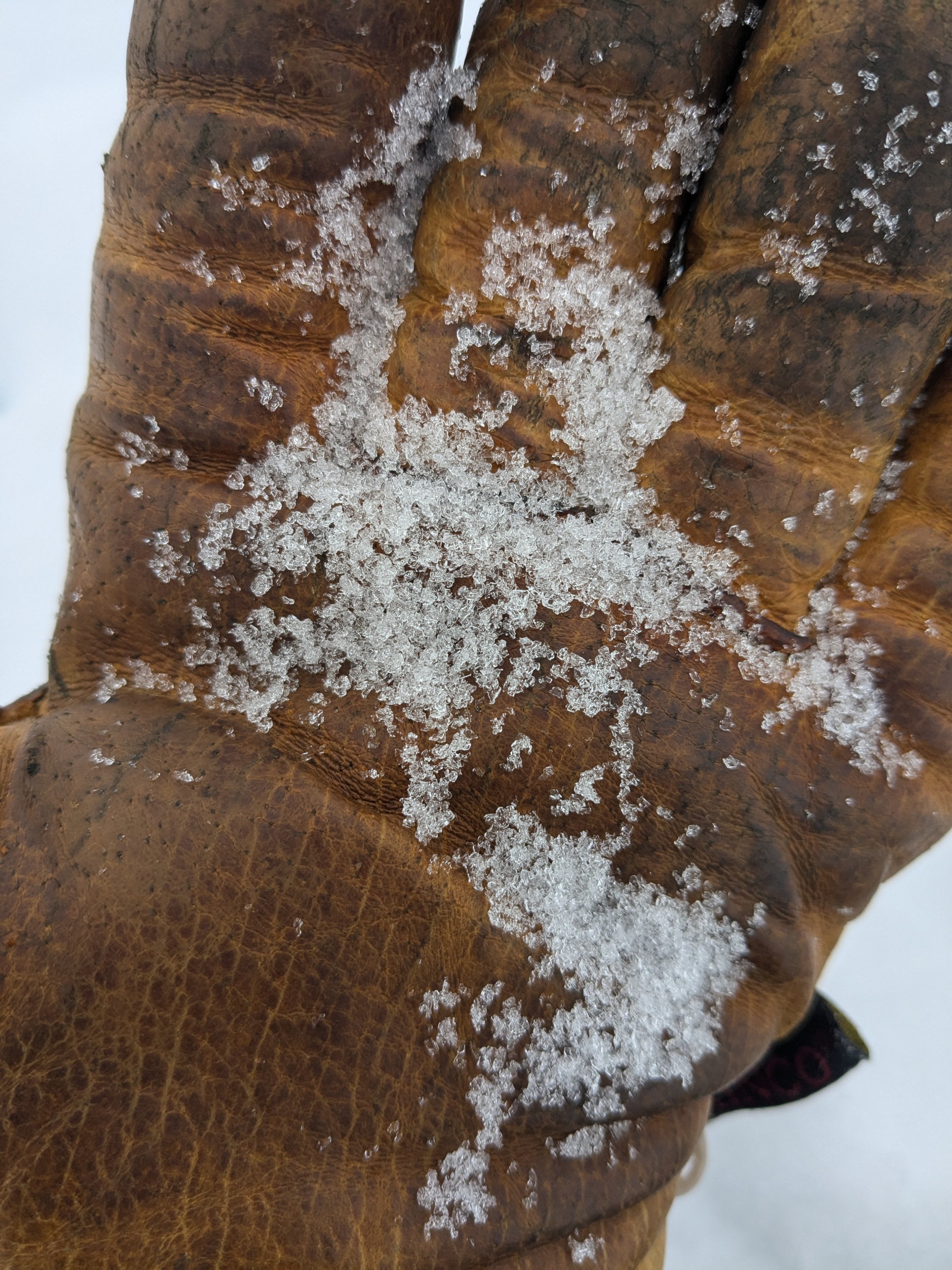
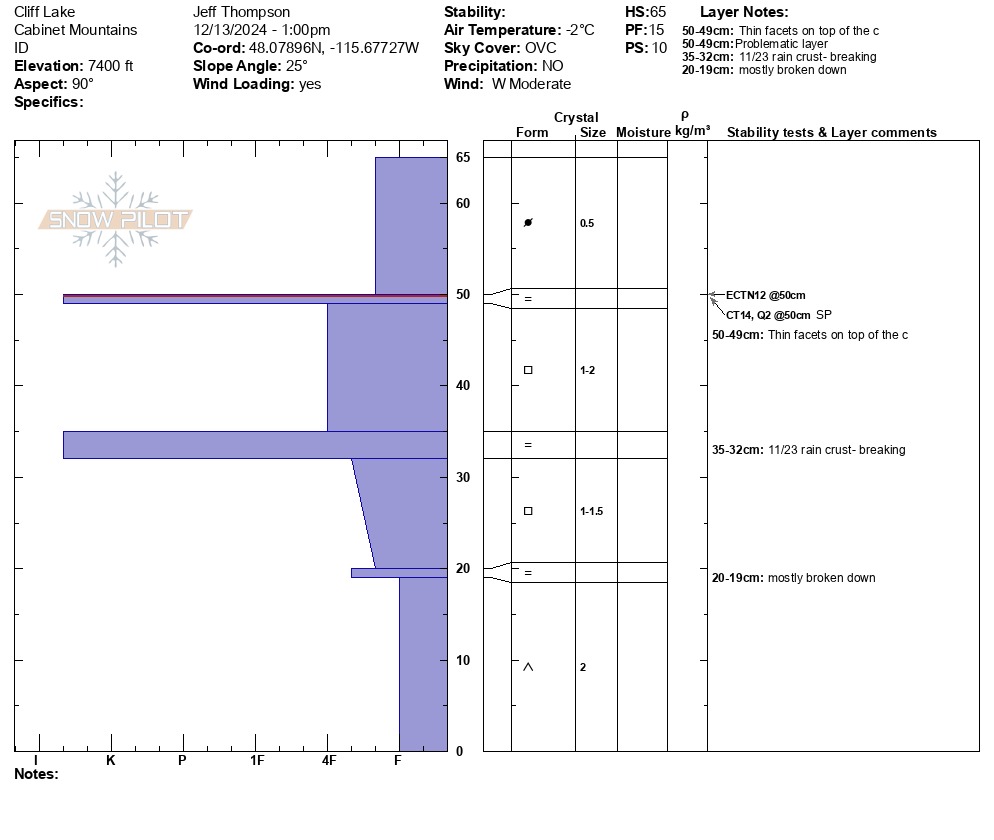
The snow surface was softer and more cohesionless at lower and mid elevations. At those same elevations, the 12/7 rain crust was 1 to 2 inches thick. As we climbed above 6,000 feet, the same rain crust became thinner and more breakable - even somewhat translucent upon visual inspection. Recent winds have left a variety of surface conditions on wind-exposed slopes and along ridgelines that ranged from styrofoam to a firm crusted surface to wind-stiffened. Leeward slopes ranged from soft snow in sheltered areas to a 1F- drifted slab on leeward slopes at higher elevations. We found generally good bonding above the 12/7 rain crust with ski pressure, but did observe minor loose sluffing above the crust on steep convexities. For our snowpits, we targeted shallower spots at upper elevations to simulate a rider finding the shallow-trigger spot on a slope. Our pit was around 65 cm deep and had well-developed facets at the bottom and around the 12/7 crust. These were the largest and most advanced facets we've seen in recent time this season. While our ECTs did not produce propagating failures, they did fail with easy force and our CTs produced SP results with easy-moderate force in NSFs around the 12/7 crust. The structure in shallower areas will struggle to support a big new snow load over a short window of time. Deeper areas of the same slopes yielded harder and more consistent snowpack layers at the middle and bottom of the pack (where depths were around or north of a meter deep), but those deeper places still harbor a weak, faceted upper snowpack structure that's likely to become problematic.