
Quick report
- Cracking
- isolated
- Collapsing
- isolated
We triggered a few very small dry loose avalanches. I got one localized collapse and shooting crack in an old hard slab.
Weather
- Cloud Cover
- overcast
- Wind Loading
- none
- Recent Snowfall
- 0
- Snow Avail For Transport
- small smounts
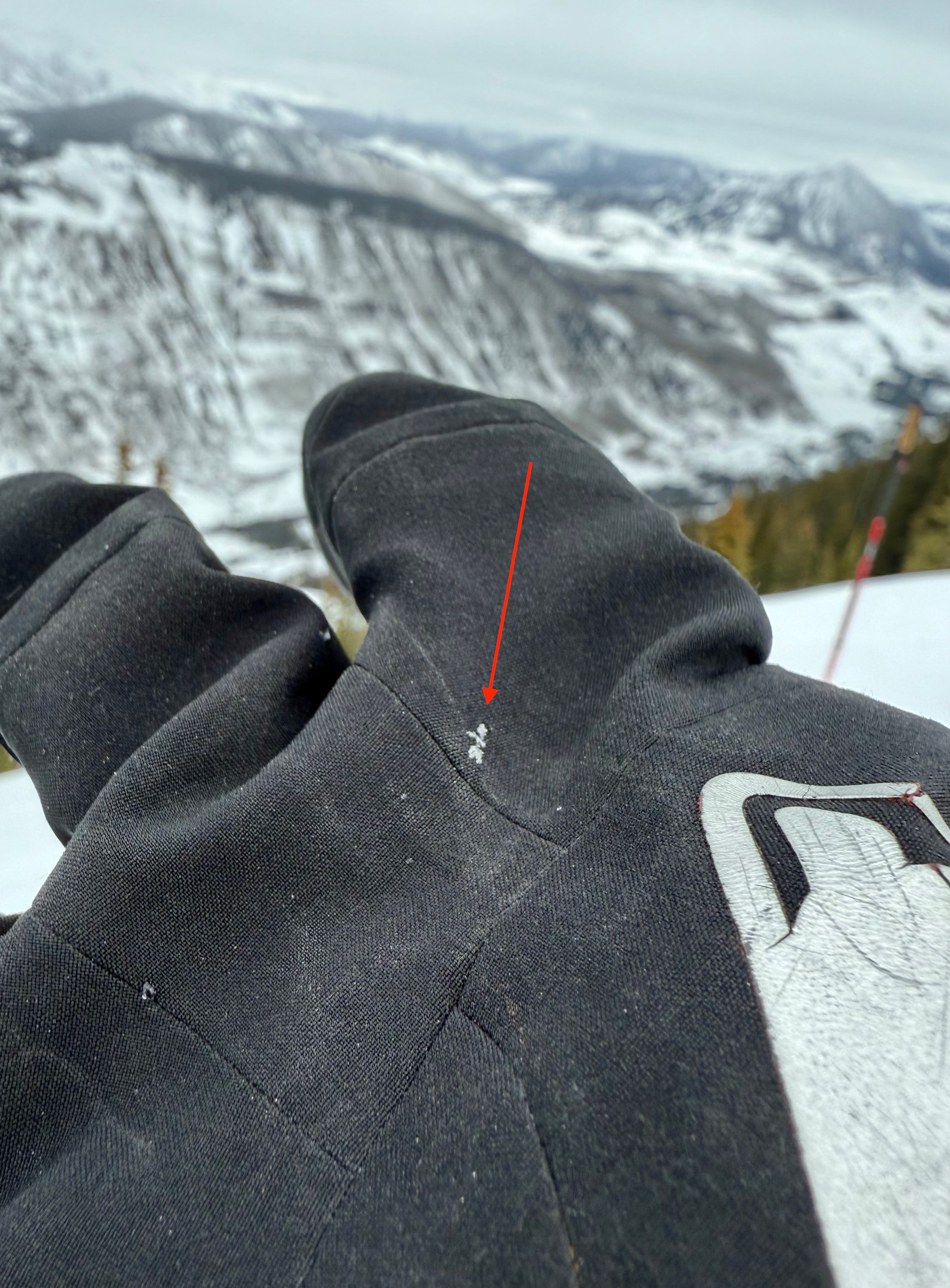
Mild temps and calm wind. A few snowflakes started to fall from the sky in the afternoon.
Snowpack
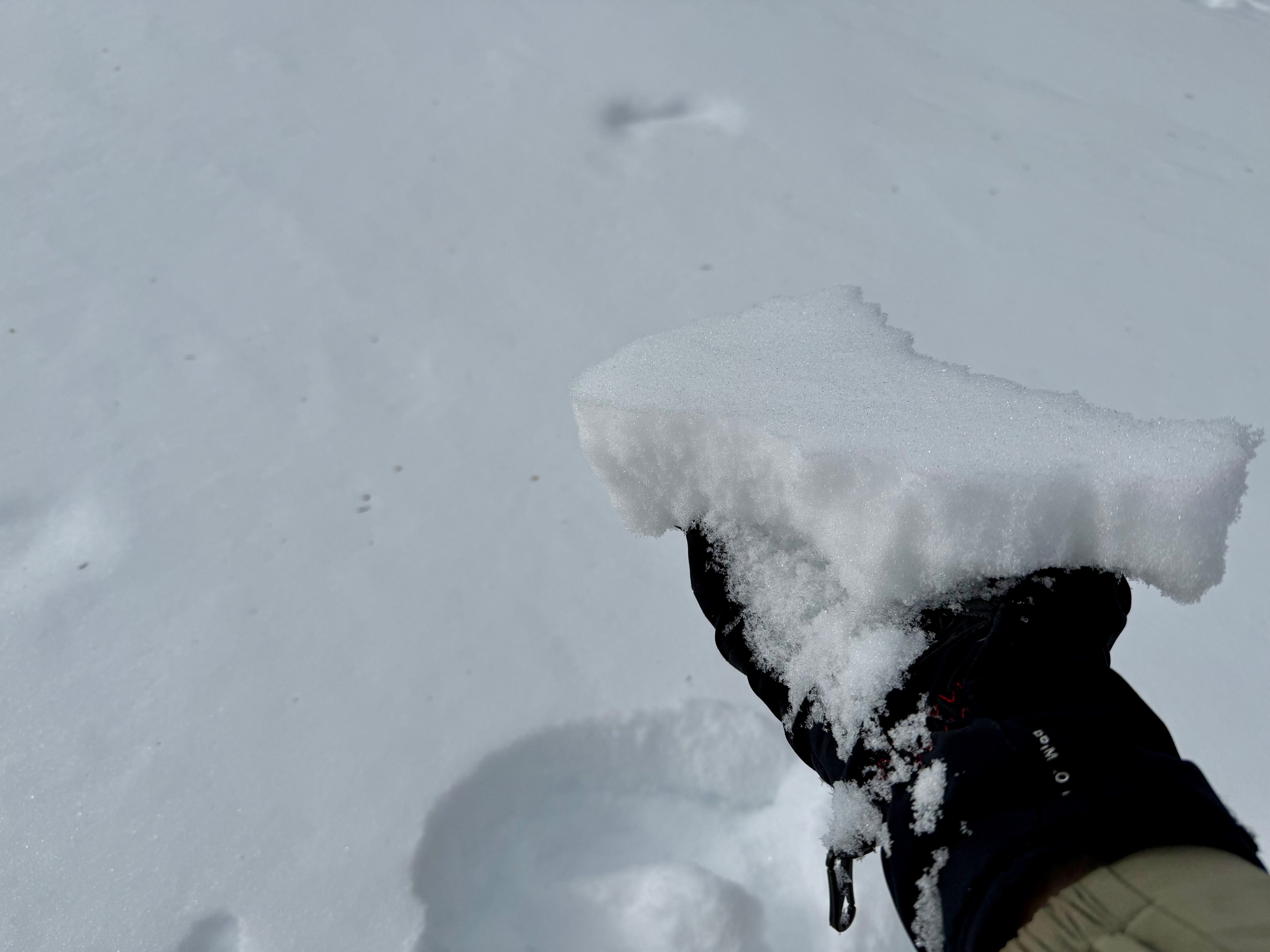
In wind-sheltered areas, how reactive the dry loose avalanche problem was best defined by the total depth of snow rather than by slope angle. Since all the steep avalanche terrain in this area avalanched back during the Gizzard Blizzard, the current snow depths are dependent on whether those slopes ran early during that avalanche cycle or late. The slopes that ran early have an HS of ~60 to 70cm. On those slopes, the surface of the snowpack still has some cohesion, and that is making loose, dry avalanches unreactive or difficult to initiate. The slopes that ran late during the Gizzard Blizzard or during December wind events have an HS of around ~30 to 40cm. Those slopes have well-developed facets on the snow surface, and the dry loose avalanche problem is reactive. So, a 40-degree slope can have a slightly deeper snowpack with a little bit of strength left at the snow surface, or it can be notably shallower with large-grained facets throughout the snowpack.
Most of the old hard slabs at the ridgeline already have ski tracks on them or near them. We did travel out to one area of the ridge that didn't have previous traffic, and I was able to get one localized collapse on an old hard slab that shot a thin crack along the wind drift.
Avalanche
A few very small skier-triggered sluffs.