
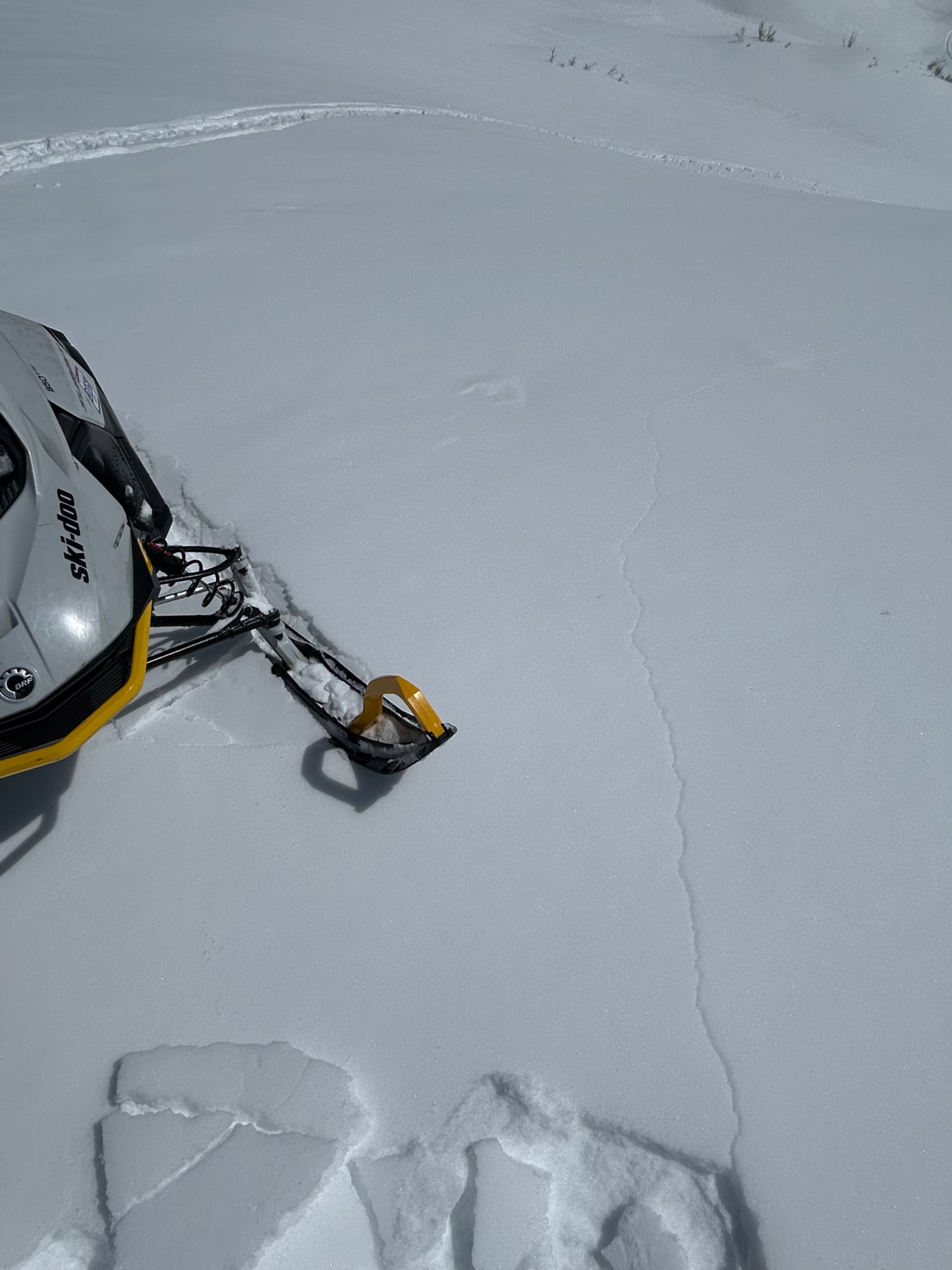
Quick report
- Cracking
- isolated
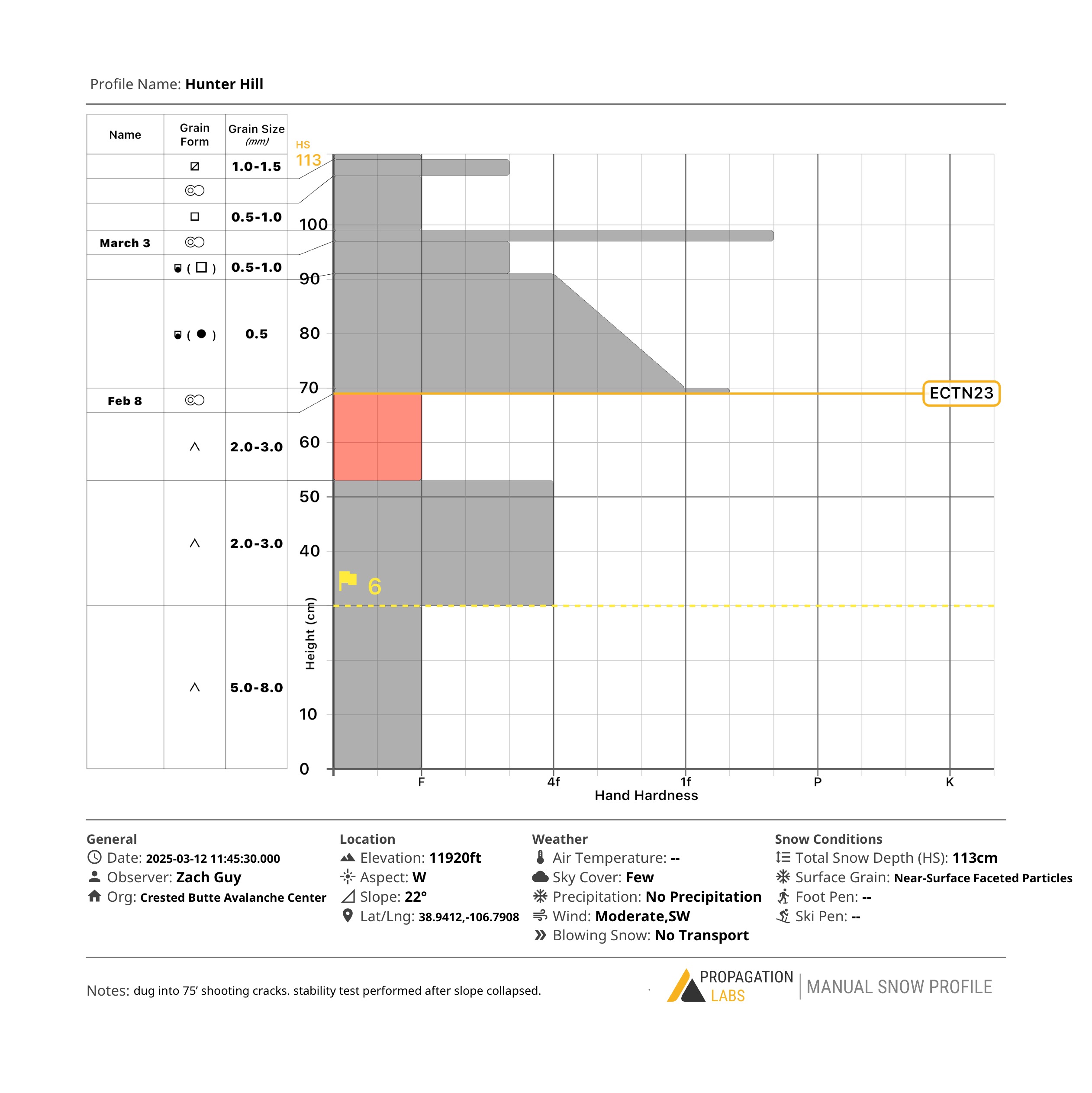
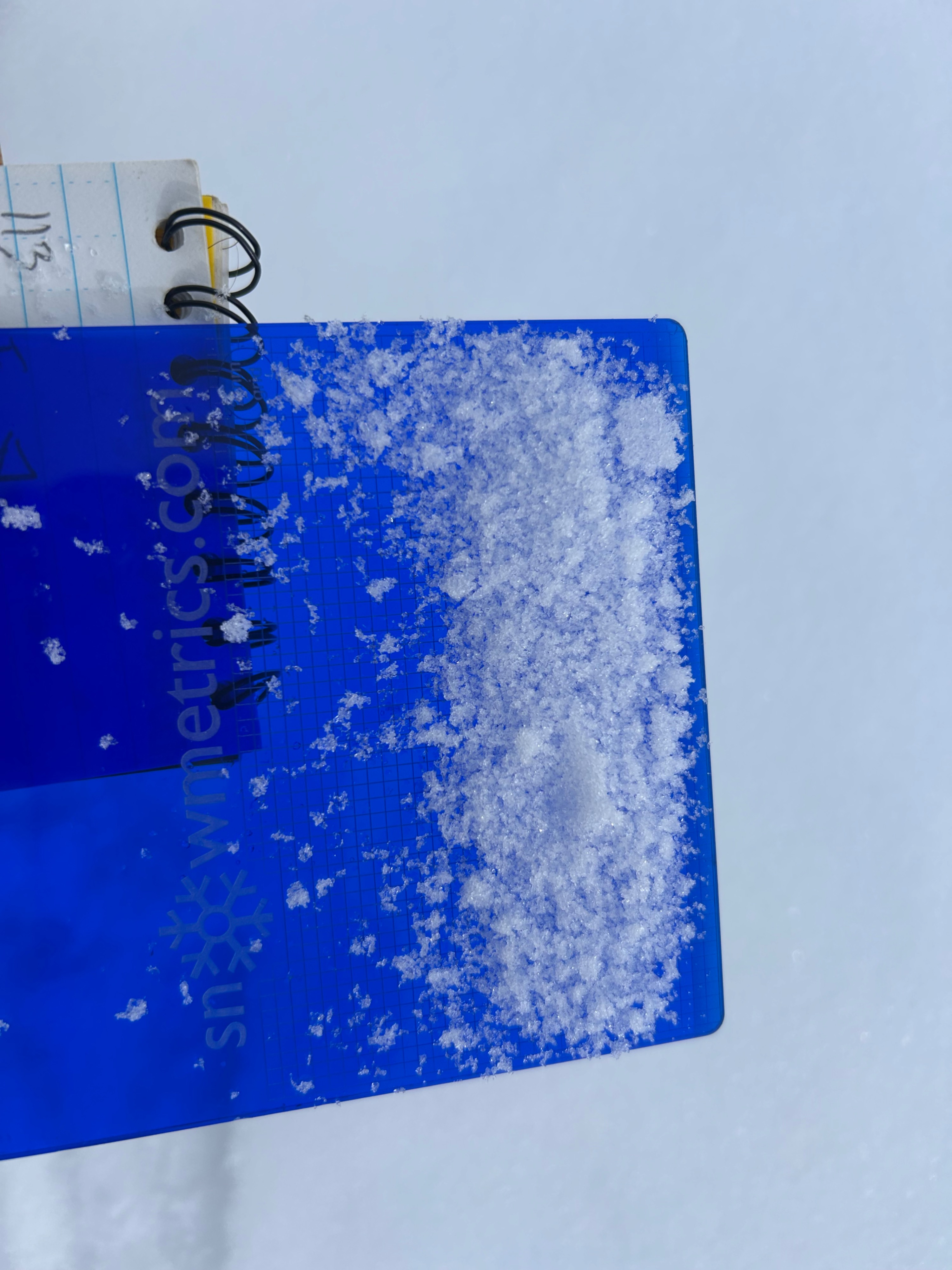
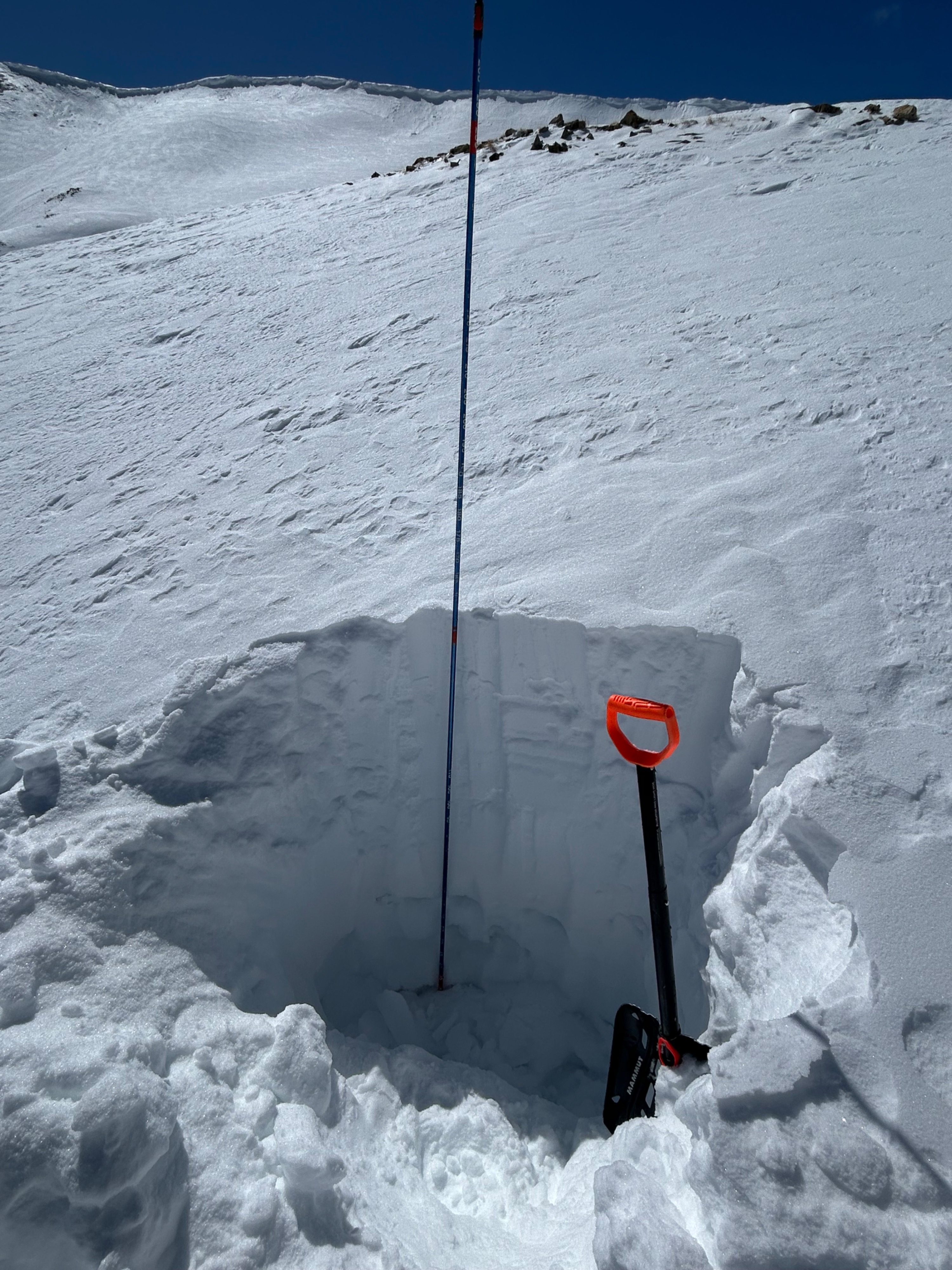
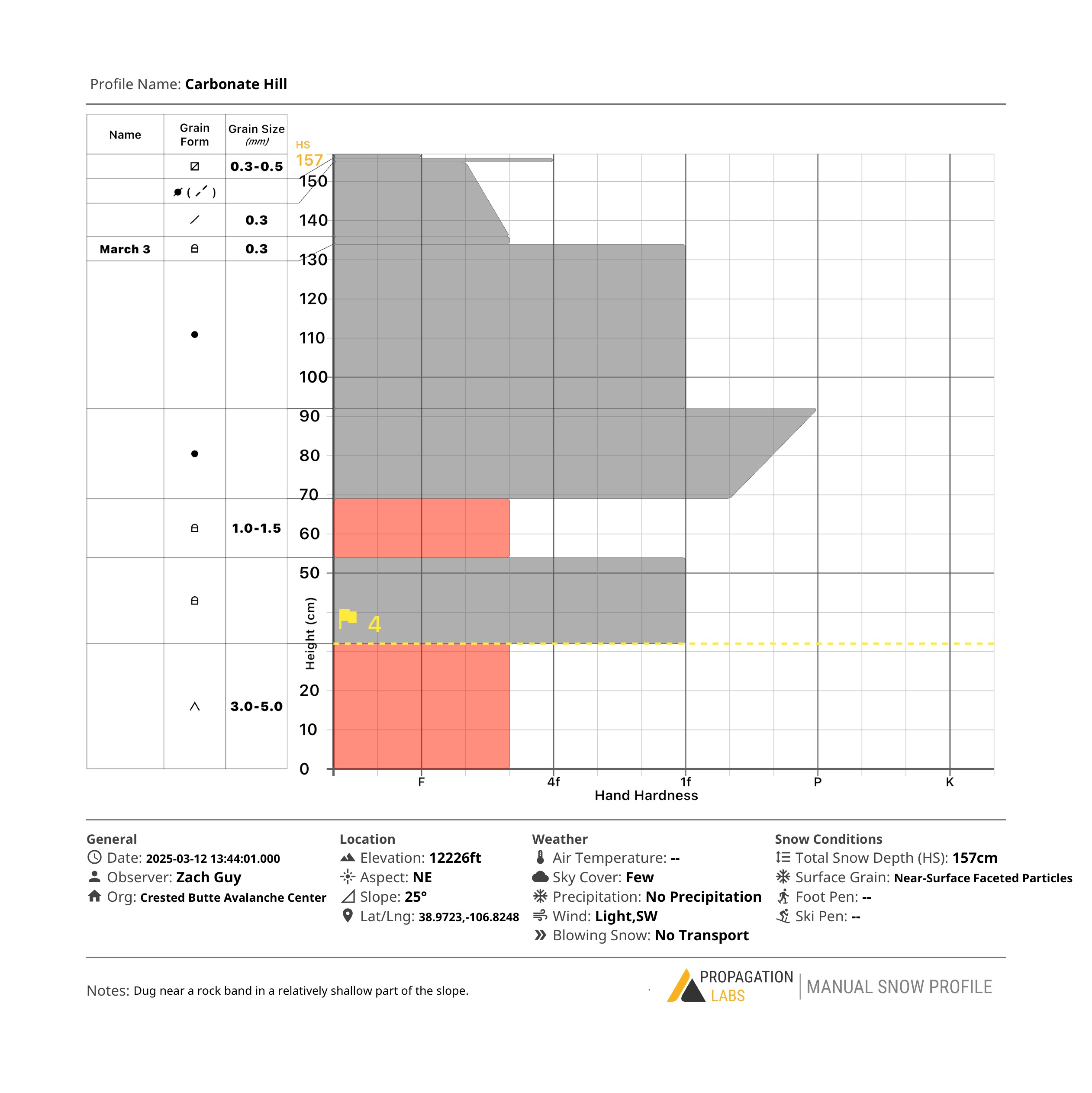
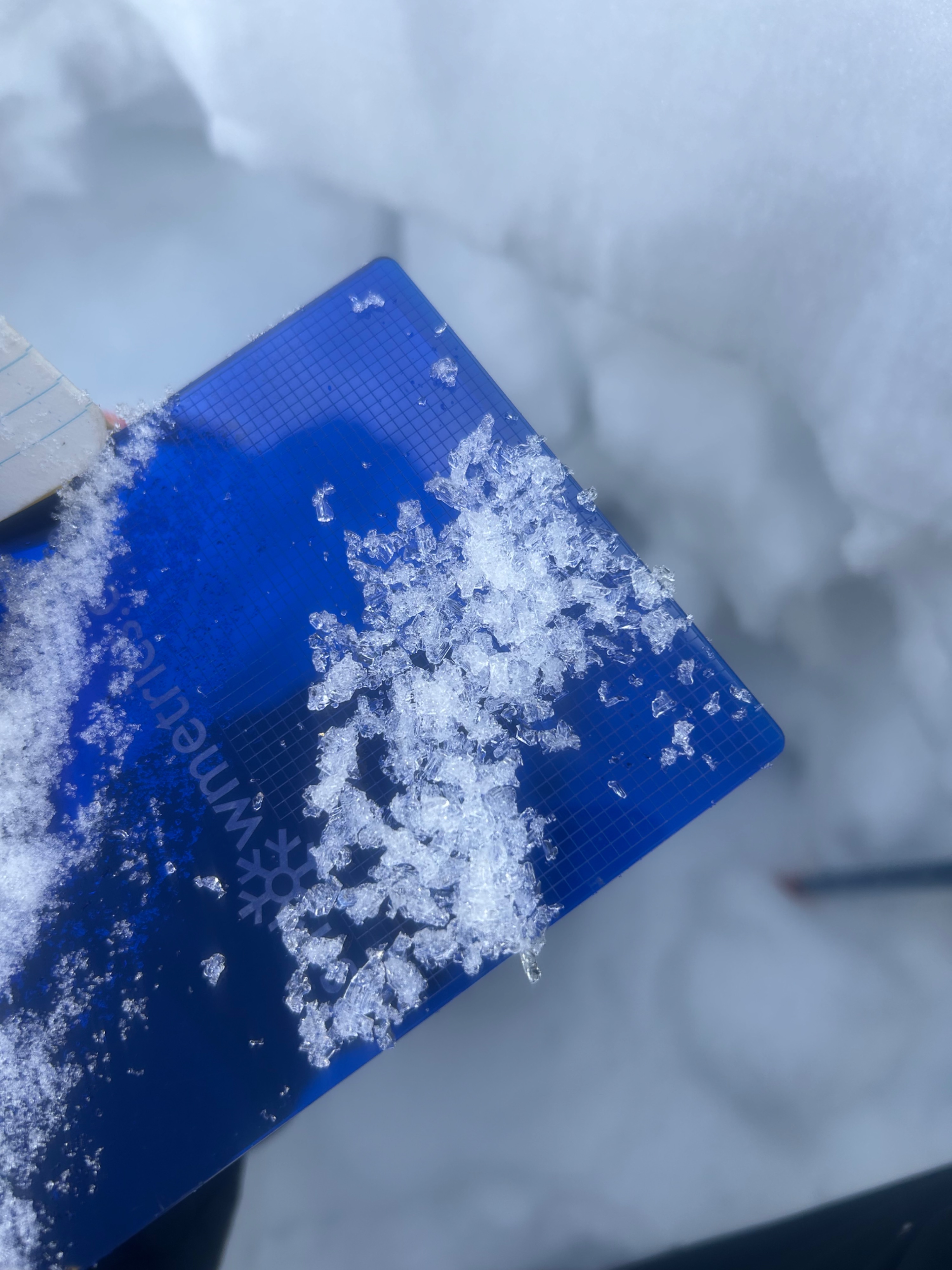
My obs were focused near and above treeline, where I found poor snowpack structure on the northern half of the compass. Slabs are thinner, weak layers are larger, and human triggering is more of a concern on windward aspects (W to NW). Human triggering appears to be quite difficult on leeward aspects because slabs are much thicker and harder (and more consequentia), though depth hoar still lurks at the bottom of the snowpack. The new gen persistent slab (3/3 interface) was a minor concern here due to a lack of significant slab (<25 cm) that was bonding with the small-grained interface. It was unreactive in pits and test features.
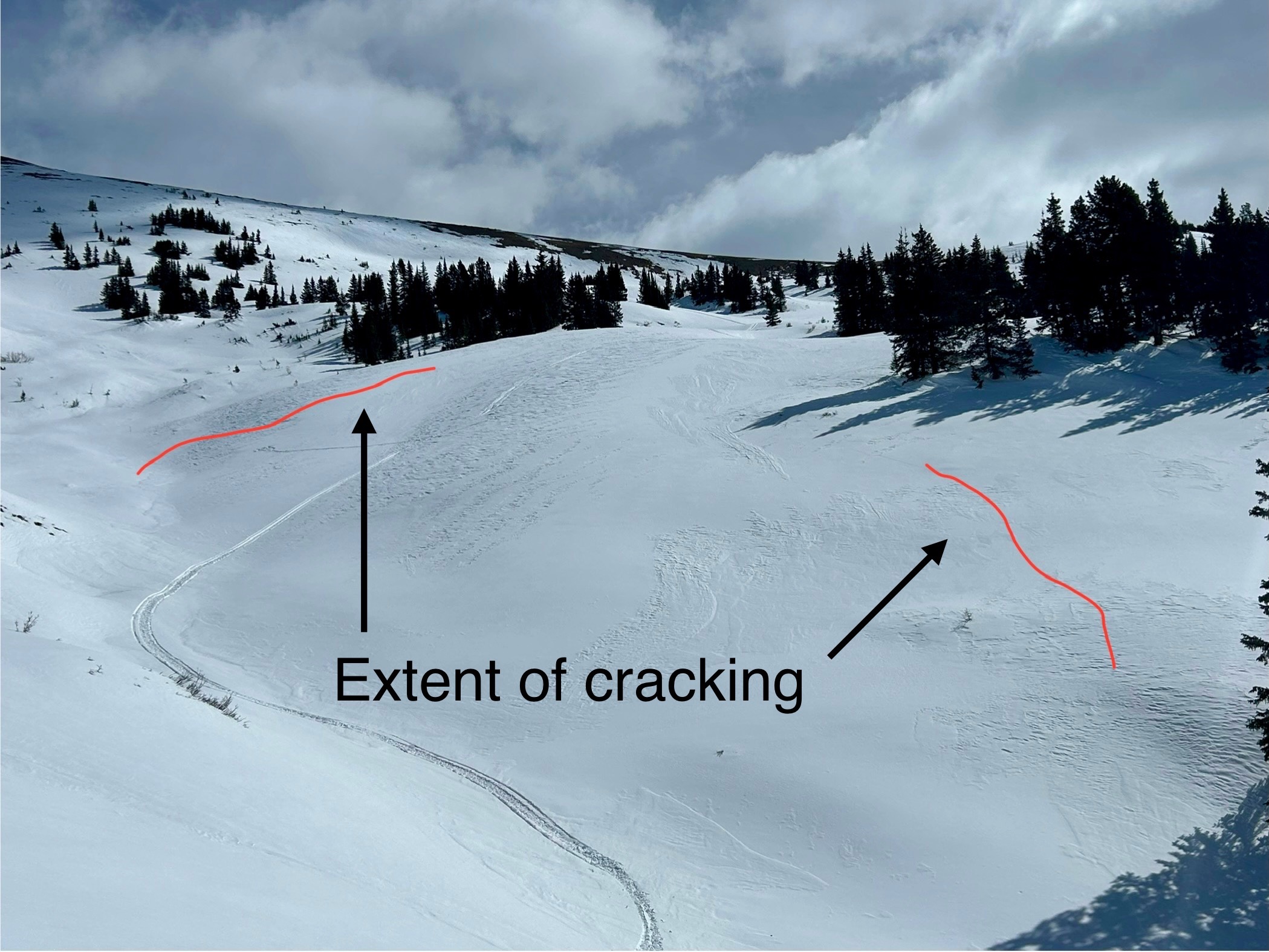
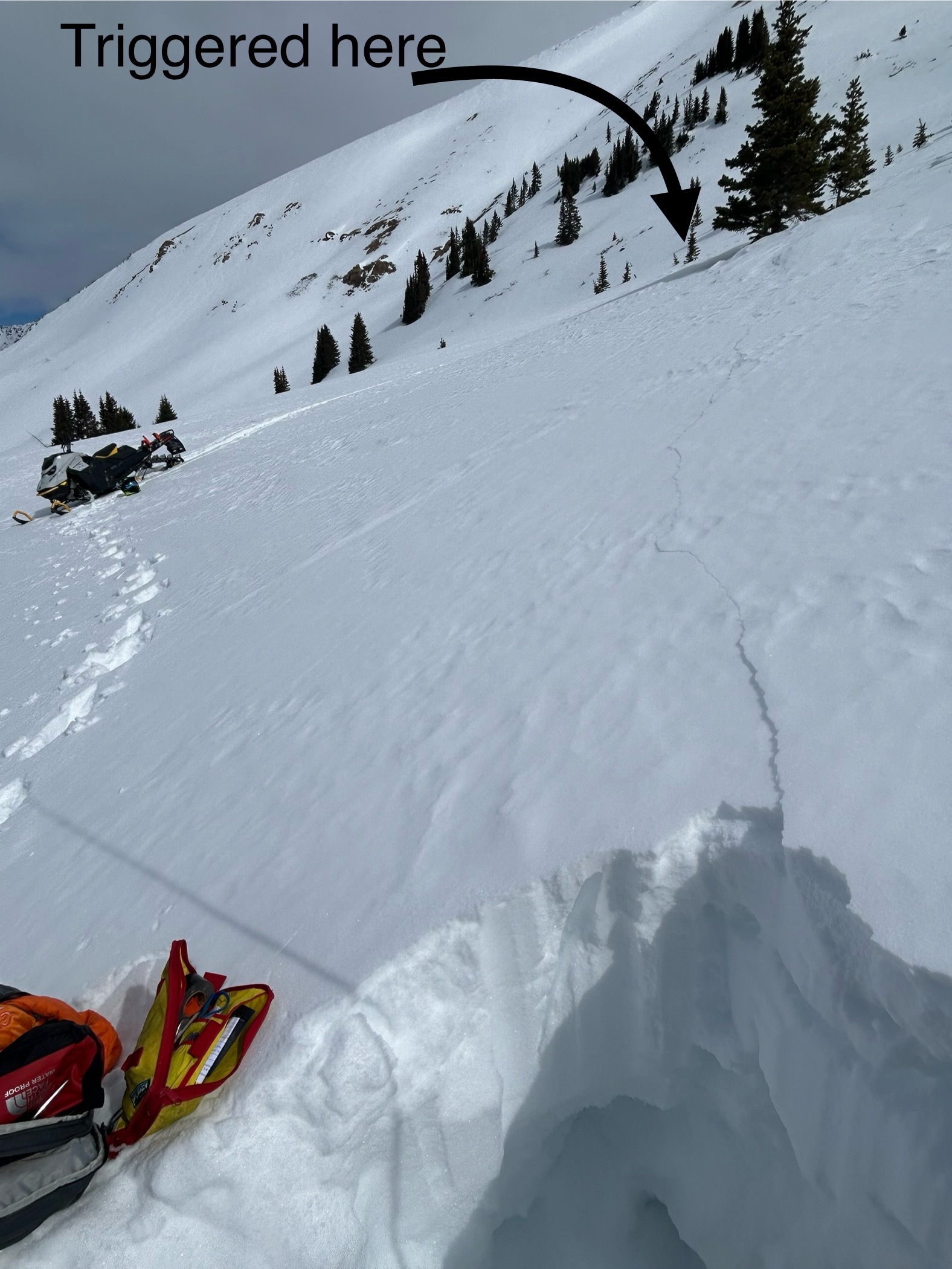
I covered a decent amount of terrain fishing for remote triggers or signs of instability from suspect features. I produced two slope-scale shooting cracks (probably associated with a collapse, but I didn't feel it or hear it on sled). These were on adjacent terrain features on west to northwest aspects of Hunter Hill between 11,700' and 11,900', and failed about 45 to 60 cm deep on depth hoar below the Cupid Slab.Weather
- Cloud Cover
- few
- Wind Loading
- none
- Recent Snowfall
- 0
Light to moderate SW winds, mild temps, partly cloudy.
Avalanche
- Size
- D1.5
- Type
- SS
- Count
- 4
- Aspect
- NE
- Trigger
- N
- Elevation
- 12100 ft
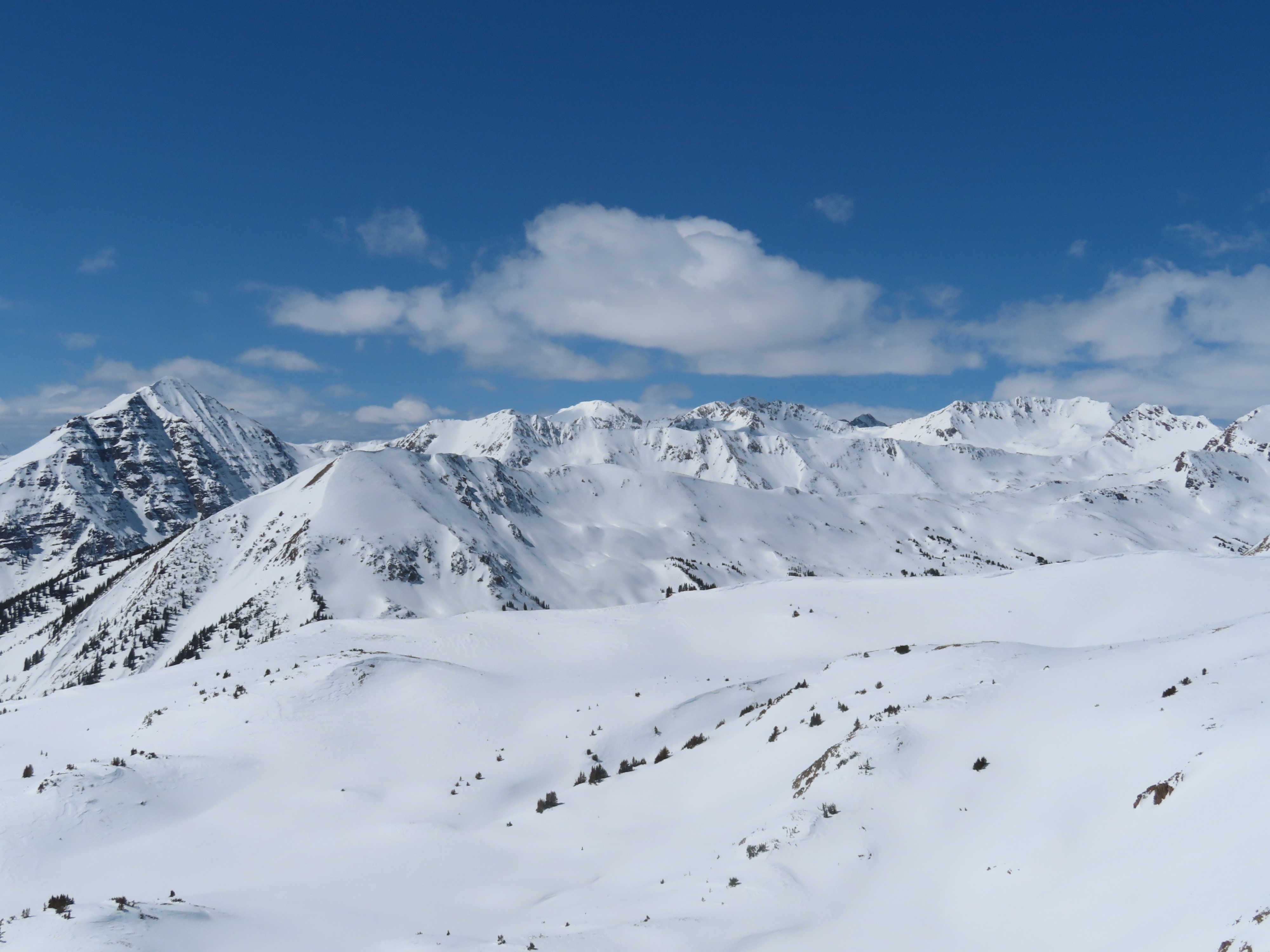
I had good views of the leeward terrain of the Southeast Mountains. Avalanche activity was relatively minimal compared to activity in the Northwest Mountains -just a few shallow wind-drifted slabs documented above, and activity on Double Top that might have broke deeper. There has also been minimal wet loose activity here in the past week.