
Quick report
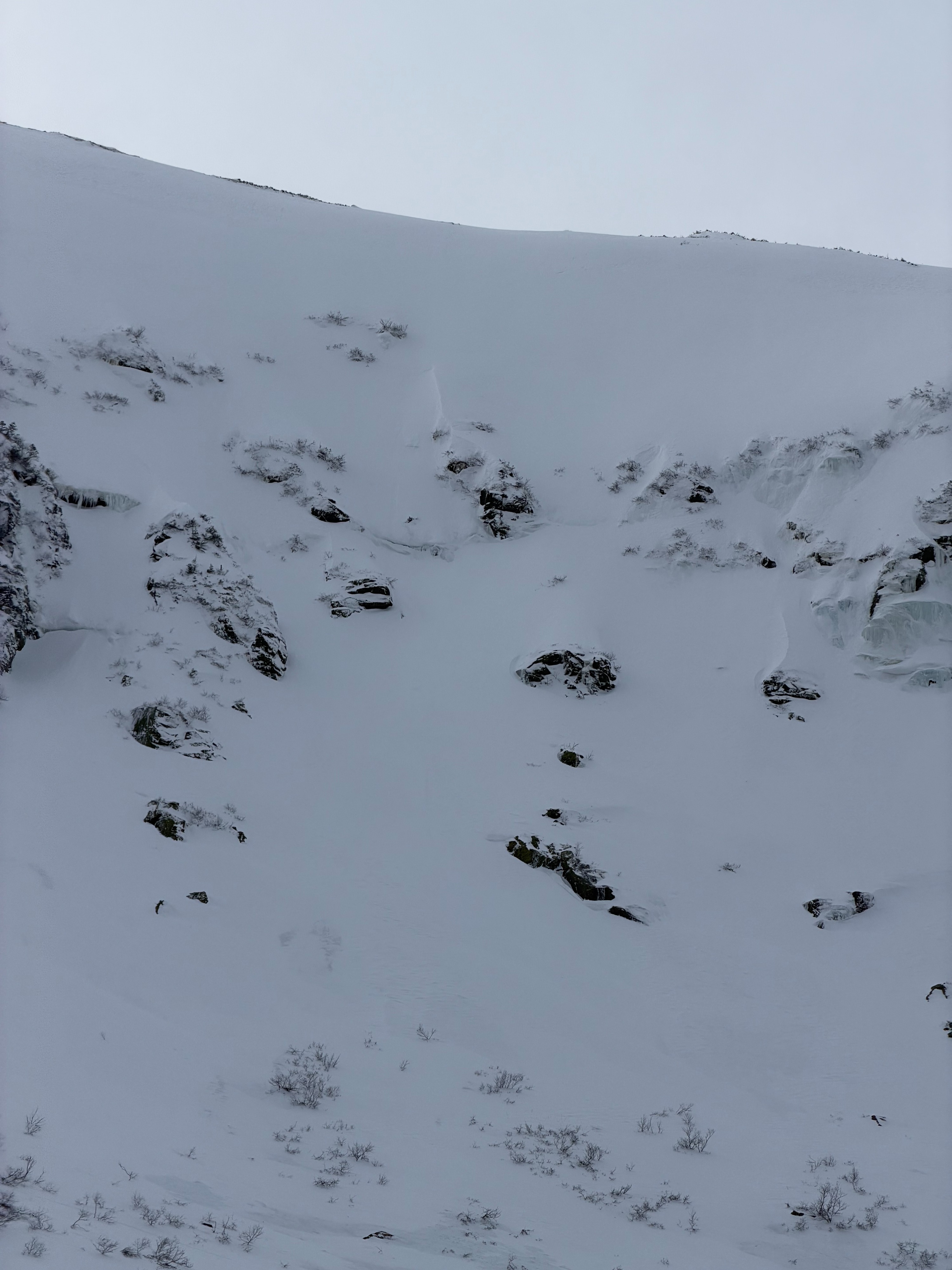
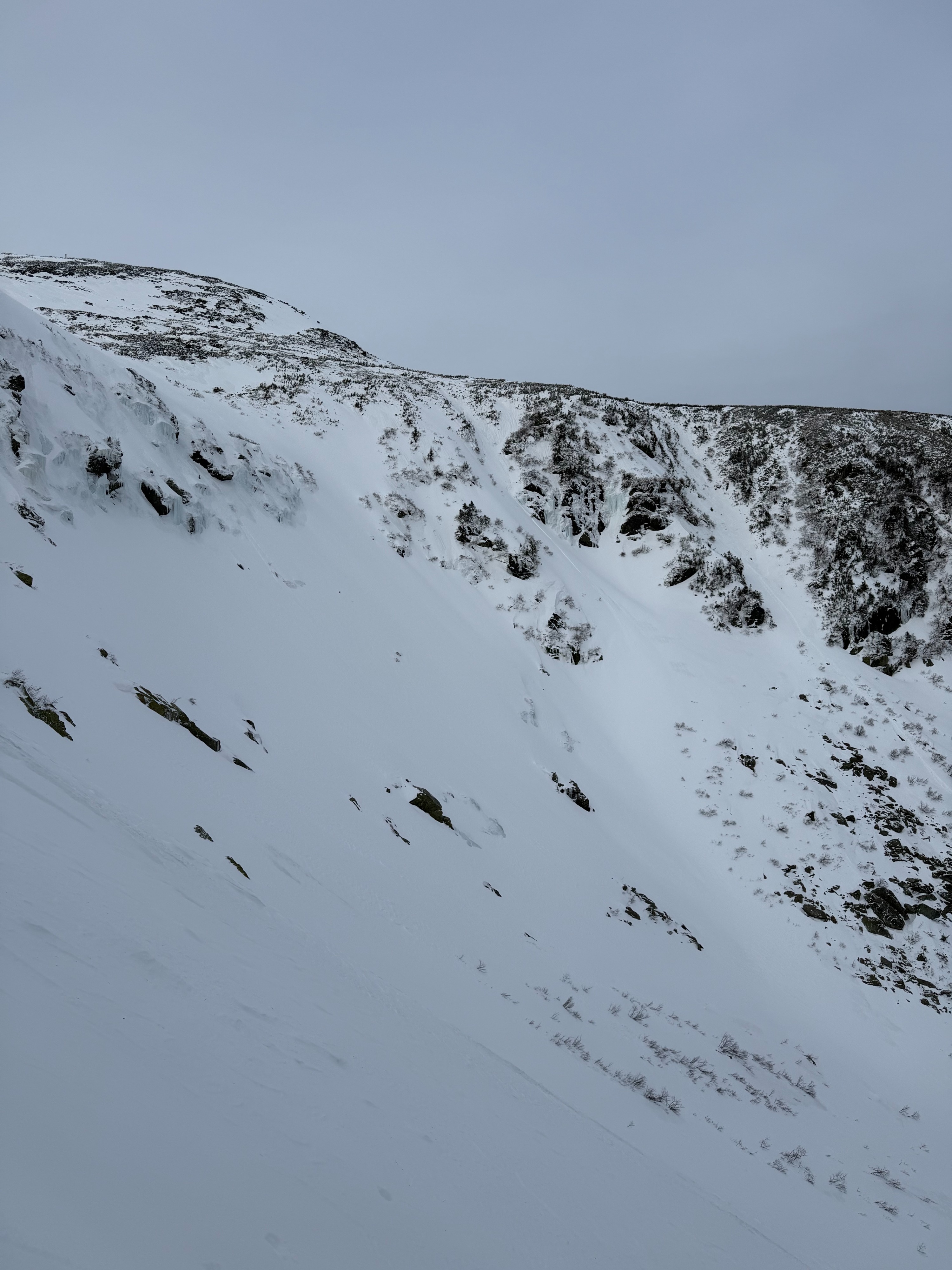
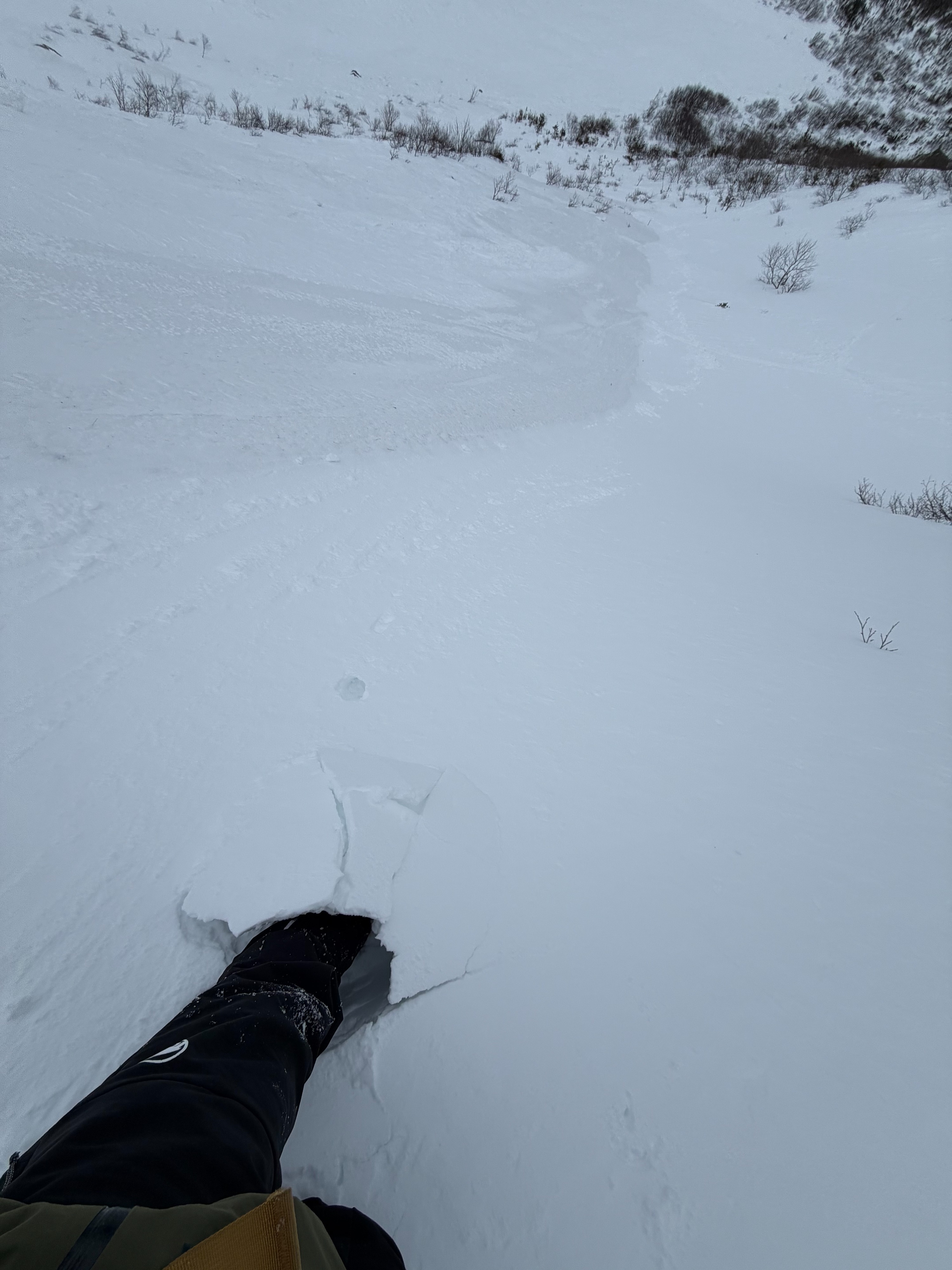
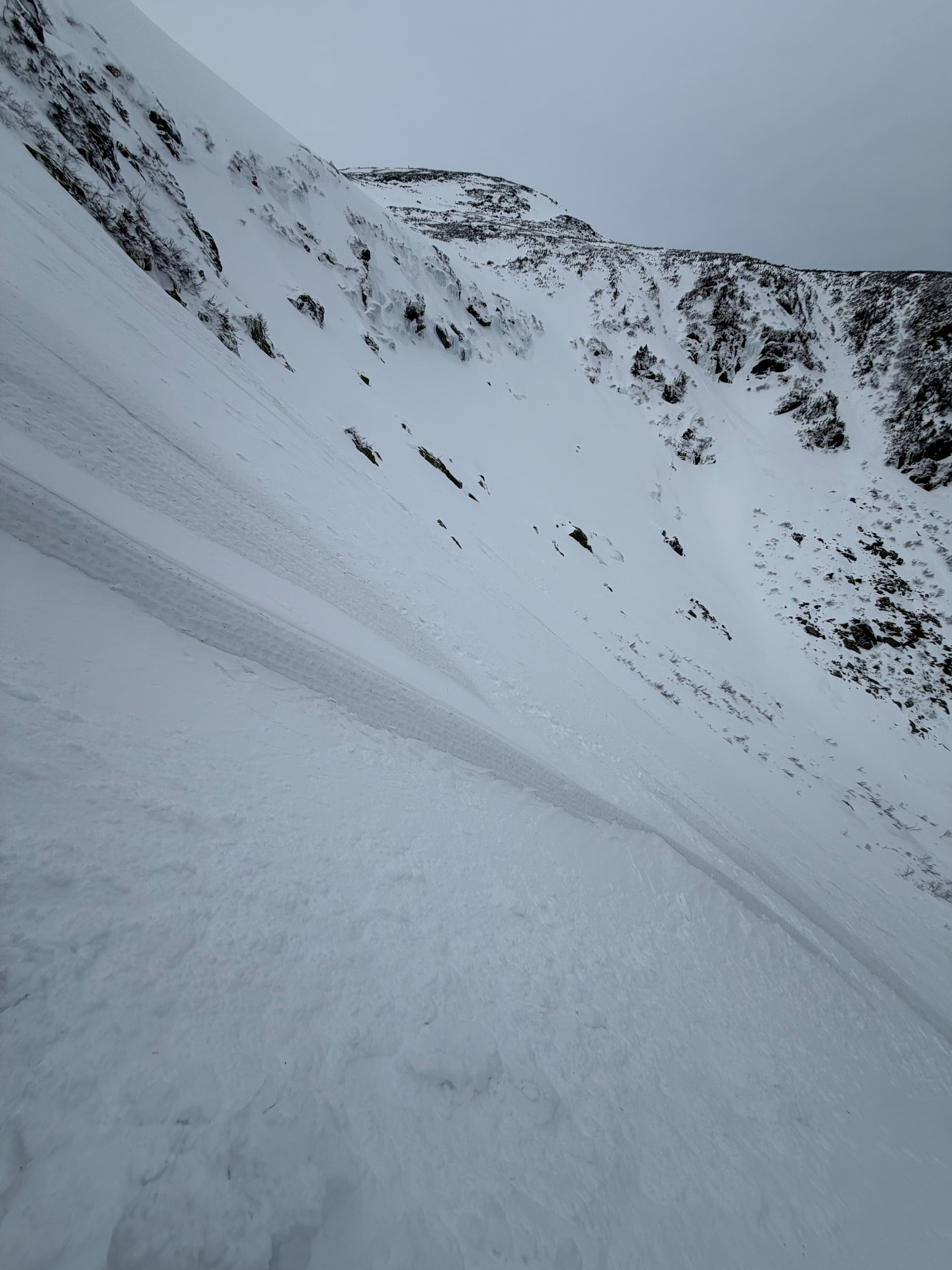
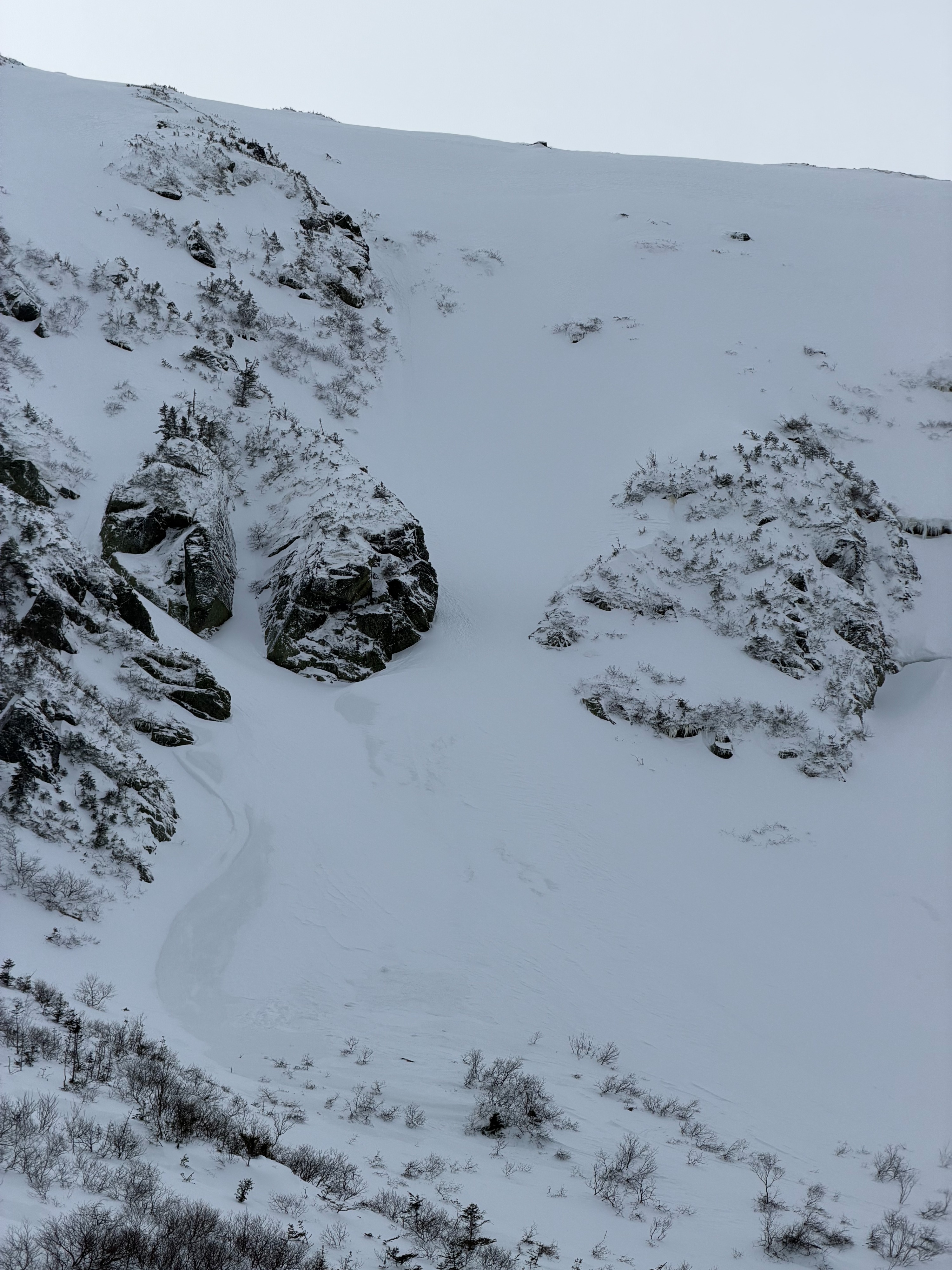
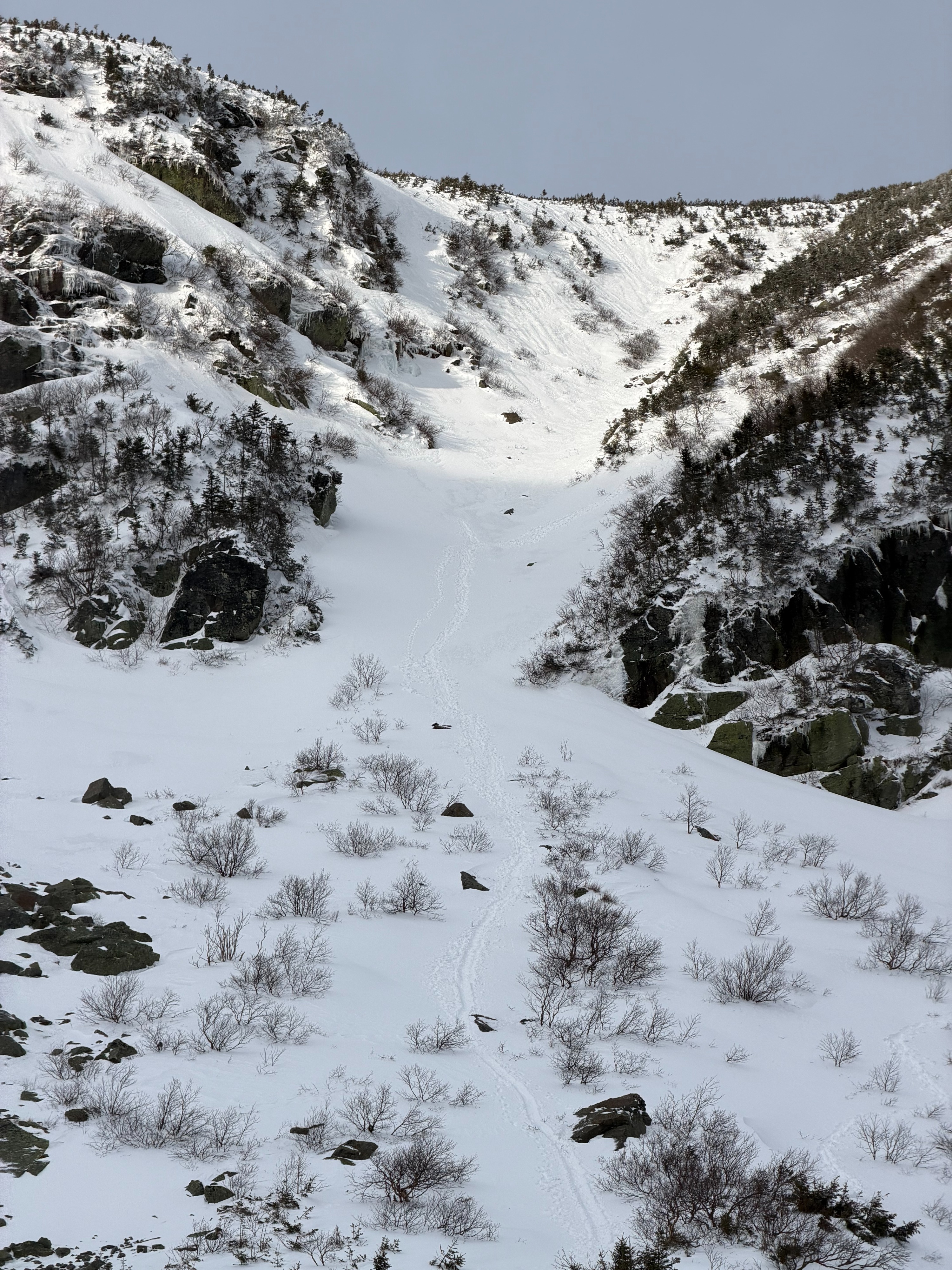
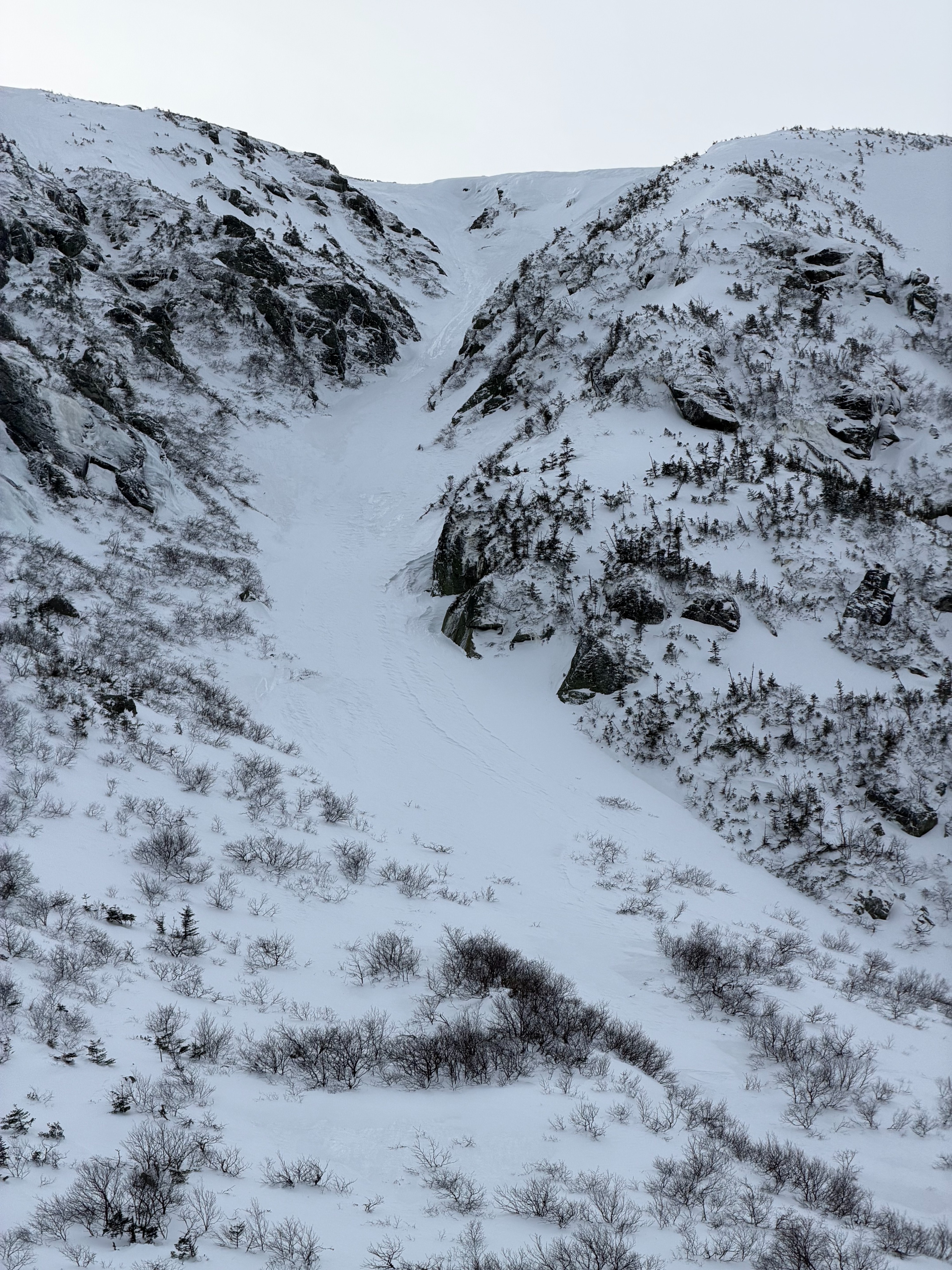
New wind slabs are scattered throughout steep terrain in Tuckerman Ravine on top of a hard, slick rain crust. These slabs are variable in depth, are not found everywhere, and are generally stable. In the most wind-protected areas, where drifts are up to ~2 feet deep, there would have been a greater likelihood of triggering a small avalanche. These areas were isolated in their distribution, though triggering even a small avalanche on a very hard, slick bed surface, could have a bad outcome.
Areas of new wind slab were easy to identify. They appeared bright white, smooth, and rounded, in contrast to the rain crust which appeared gray, highly textured, and firm.
Weather
- Air Temp
- 20
- Cloud Cover
- few
- Wind Loading
- none
- Rain Elevation
- 6288'
- Recent Snowfall
- 10
- Snow Avail For Transport
- small smounts
In the afternoon, we observed light winds from the west, temperatures in the lower 20s F and mostly clear skies.
Snowpack
The snowpack in eastern ravines is a mix of a slick, hard rain crust and deposits of softer wind-drifted snow (windslabs) in wind-protected terrain. A significant amount of exposed, slick rain crust is exposed above 5000' in elevation at the tops of most gullies in Tuckerman Ravine. This slick rain crust is also exposed in lower elevations where there was more exposure to extreme winds overnight. Identifying the new wind slabs was easy when comparing their smooth, white character against the hard, textured, and gray rain crust in many areas. Wind slabs are variable in depth from 10cm to 60cm, sitting on top of the 12/19 rain crust, and do not exist in many areas. Boot penetration was variable but generally not more than about 20cm.
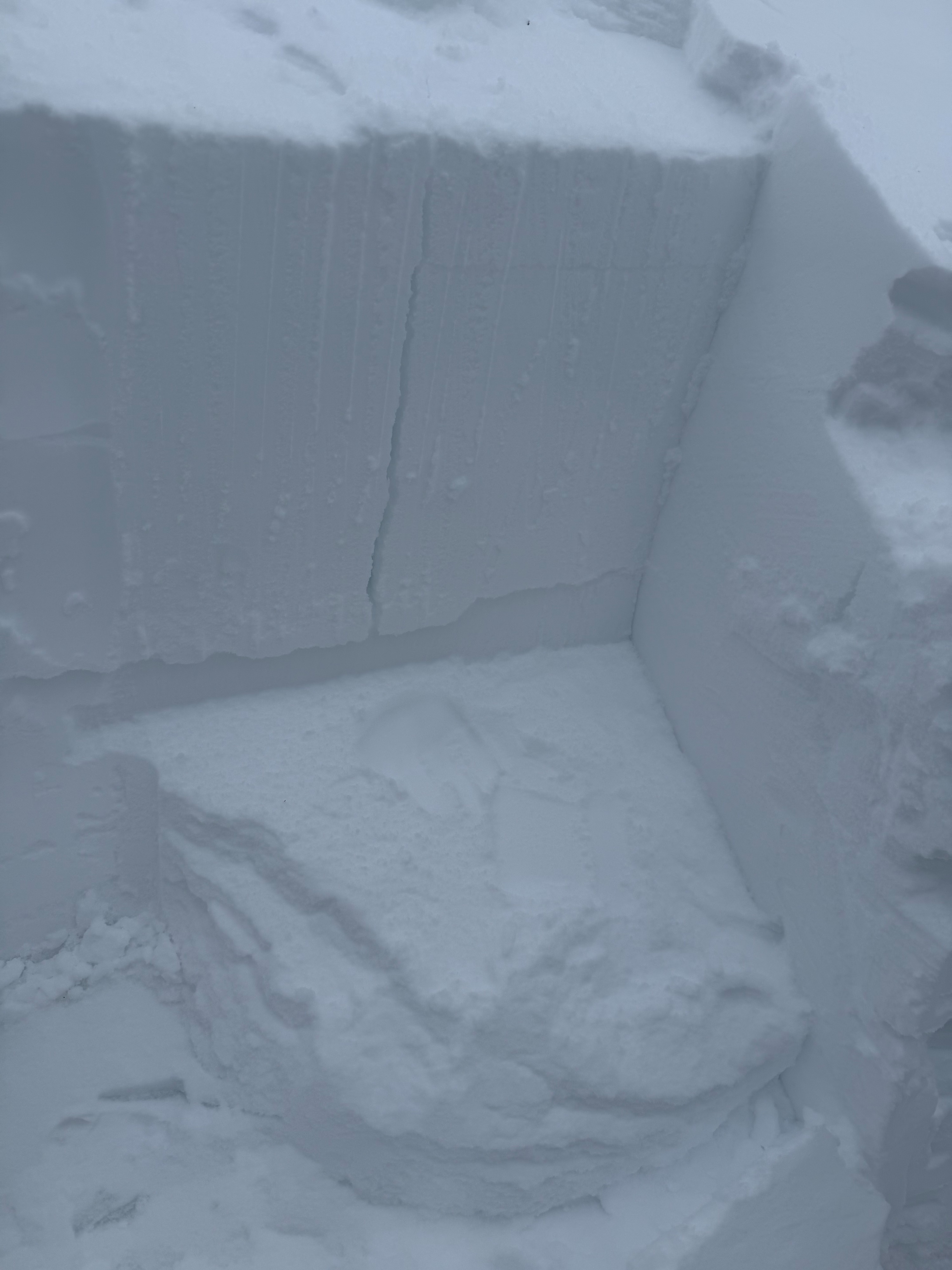
A snowpit in a sheltered area of Chute felt representative of the most wind protected areas in Tuckerman Ravine where you would be the most likely to find deep drifts. While this new snow is sitting on top of a slick rain crust, that interface was well-bonded, for now. However, there were 2 or 3 mid-slab density changes that produced some non-propagating failures during instability tests (ECTN11, ECTN21). In one of the mid-slab hardness changes, there was a notable layer of graupel, seemingly from yesterday's transition from rain - to wet snow - to dry snow. Please see the profile below for a visual representation.
Avalanche
No recent avalanches were observed.