
Quick report
- Cracking
- isolated
The southwest aspects and mid to upper elevations that we observed were primarily on windward slopes. Recent and ongoing snowfall is beginning to consolidate into storm slabs that did not adhere to the crust 30 cm deep. This crust prevented our activities from reaching the weak layer below it on the low angle terrain that we traveled, but when isolated the still unconsolidated snow below this crust showed potential for propagation.
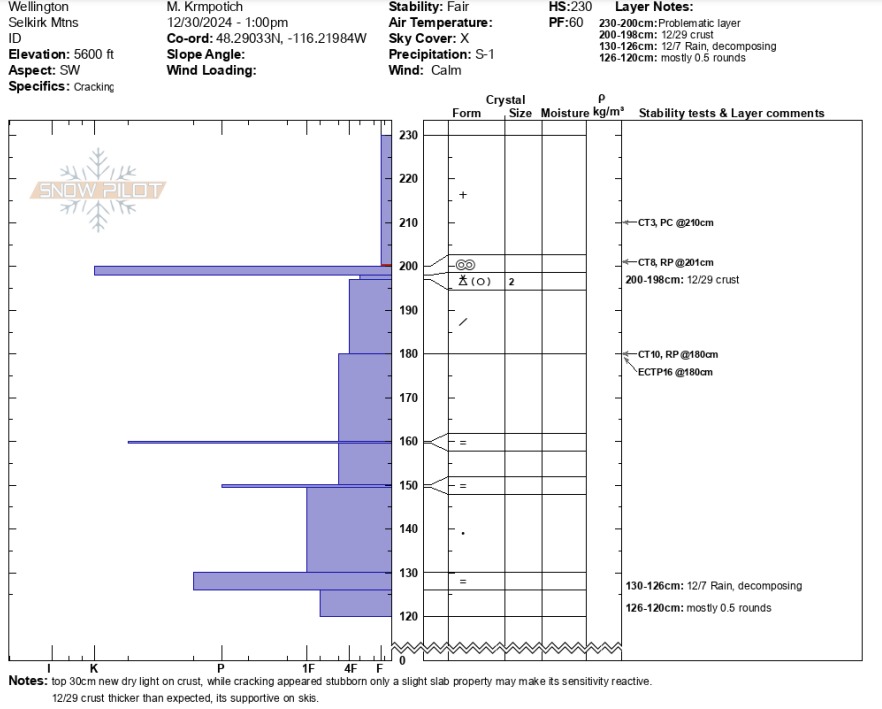
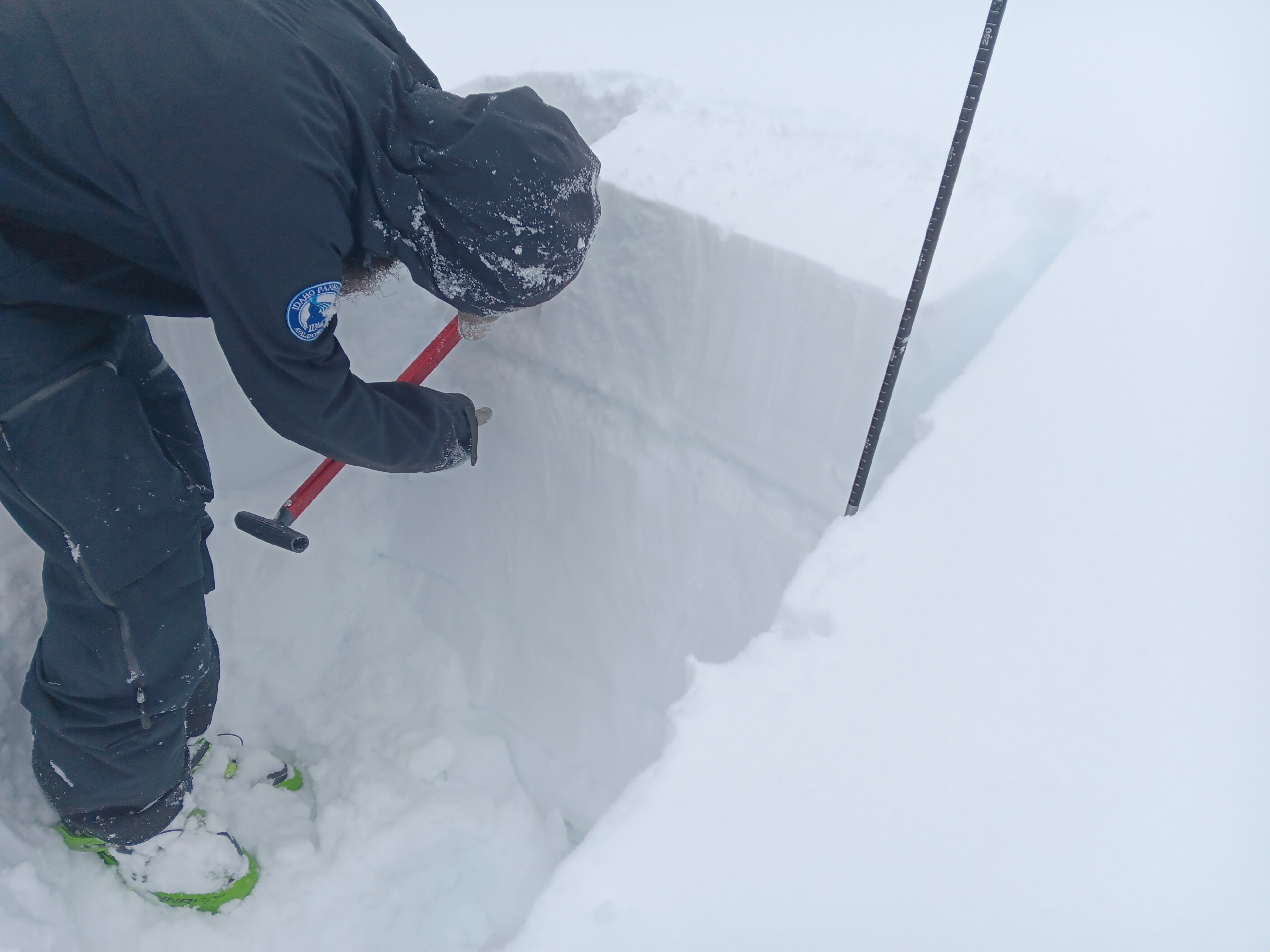
Low density light snow on top for riding conditions, ~ 15cm (6in) from overnight 29 - 30th. Found 12/29 crust supportive on skis. Its thicker and hard here than similar elevation in southern Selkirks - where there its was thin and easily breakable before new snow overnight 12/29-30th. This light new snow was cracking on top of 12/29 crust. While cracking appeared stubborn, a slight change in snow slab properties may make the new snow slab more sensitive on top of this most recent crust. We observed propagating test results, ECTP 16, down 50cm (~ 1.5ft) in within storm snow.
Noticeable cracking underfoot within the recent storm snow, but not widespread or shooting cracks.Weather
- Cloud Cover
- obscured
- Wind Loading
- moderate
- Rain Elevation
- 3000 ft and rising
- Recent Snowfall
- 25 cm
- Snow Avail For Transport
- large amounts
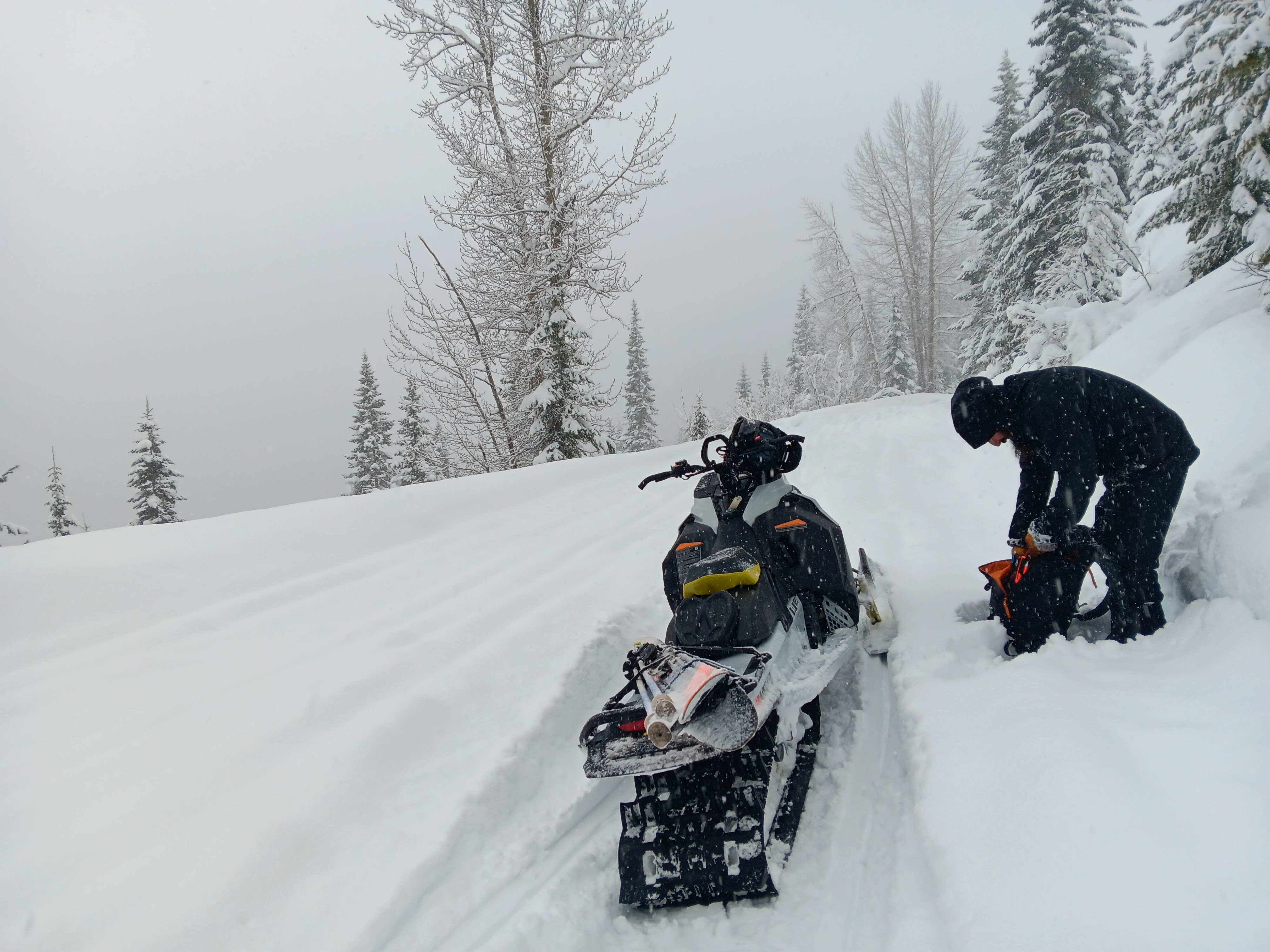
Sky completely overcast, in fog/clouds; moderate SW winds; snowing steadily throughout the morning, decreasing in the afternoon. Low visibility limited views of nearby steep terrain
Snowpack
At 4500’ in Wellington drainage we found 15cm (~6in) of new snow. Down 25cm (~10in) is a K hard, 1cm thick crust sitting atop soft wet faceted grains. We observed Resistant Planar (RP) CT results: down 20cm and down 27cm under hard crust.
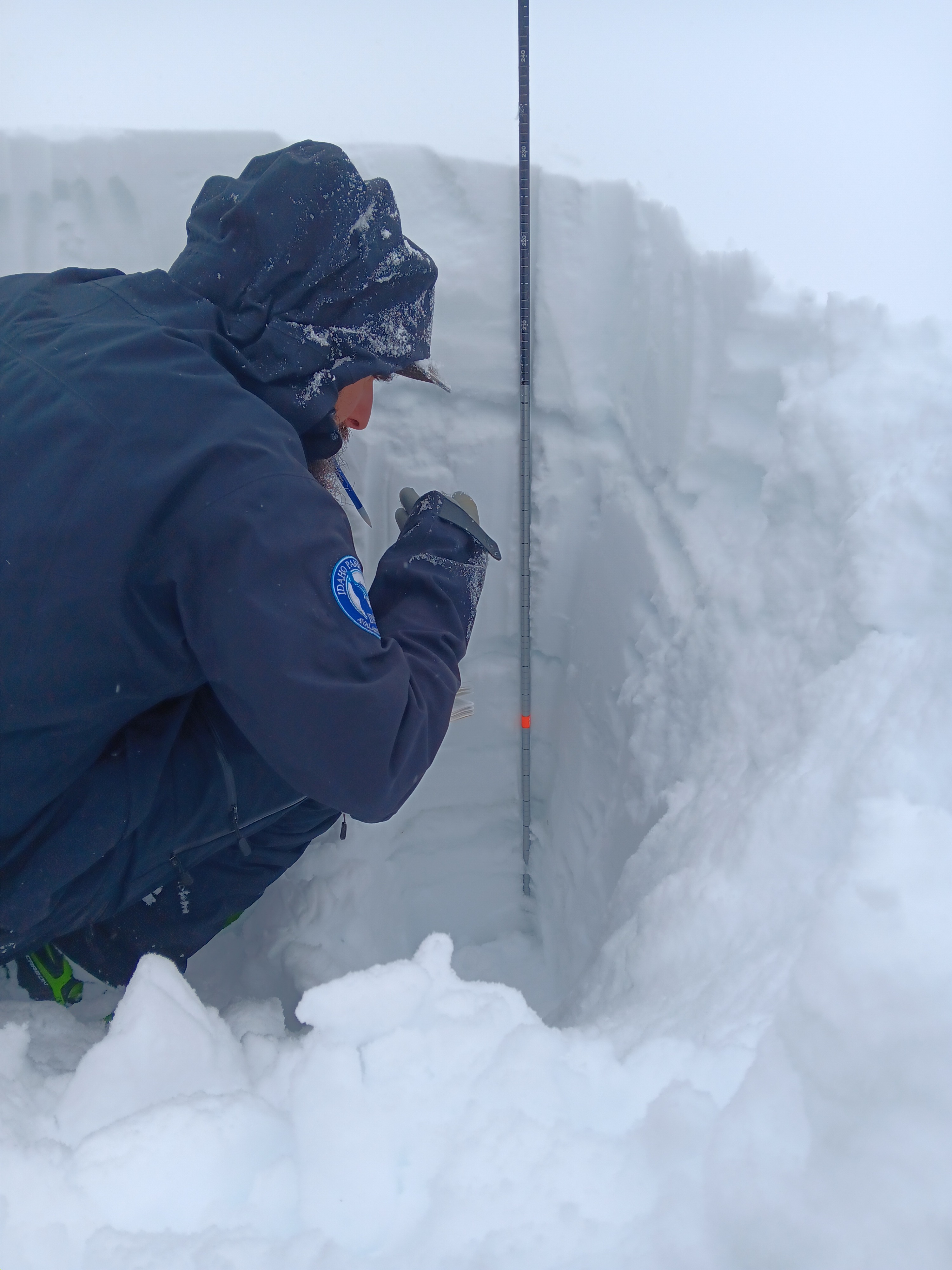
Snowpack of 230cm at 5700' on a SW aspect. The top 30cm of drier new snow sits over a 1-2cm thick supportable crust, (K hard 2cm thick crust likely formed afternoon 12/28, buried 12/29). Below this crust is a thin layer of 2mm grapel mixed with wet snow grains but no test results here. Compression tests resulted in breaking within the storm snow above the crust, we observed easy CT RP results here. We also got propagation (ECTP 15) within the older (but still recent, on a slight storm snow hardness change) down 50 cm. Approximately 70 cm down there is another thicker but more broken crust, with more, less intact crusts below these. 100cm down is 12/7 crust, its 5cm thick and P- hard but decomposing. Subtle softer grains below 12/7 crust appear mostly 0.5mm rounded grains.
When traveling on skis the unconsolidated storm snow was beginning to act as a slab, cracking, and easily slid off of the crust. While cracking appeared stubborn, a slight change in snow slab properties could increase new snow slab sensitivity.