
Quick report
- Cracking
- specific
- Collapsing
- Observed
Wind is the architect of avalanches, and they've been working overtime lately. The snowpack at Togwotee is notably different than the past two seasons here. Much more spatial variability is at play between some slopes being stripped entirely of snow (entire mountainsides up to the upper elevations). At the same time, other aspects harbor a 3-4 foot snowpack composed of new snow and well-developed weak old snow. With the capability of step-downs in the mix, these are the flavor of hard slab avalanches that can pull into very low-angled terrain. My layer of concern here is buried around 1 foot deep; you can feel an immediate change between fresh or winded snow and feel weak old snow either skinning or taking a sled off any older tracks. On leeward aspects (those not exposed to the recent wind) and loaded with snow from the past several days, this layer could be buried beneath a hard wind slab 2 feet or more deep.
Surface hoar growth seems rampant across all zones with cold temps, clear skies, and just enough light wind. [Surface hoar is the only type of weak layer that is added to the snowpack; it is essentially frozen dew on top of the snow surface that causes problems if it gets buried intact and not blown over by wind or cooked by the sun]. All in all, the current snow surface is faceting and will likely be buried by incoming snowfall Thursday/Friday of this coming week.
Avalanche
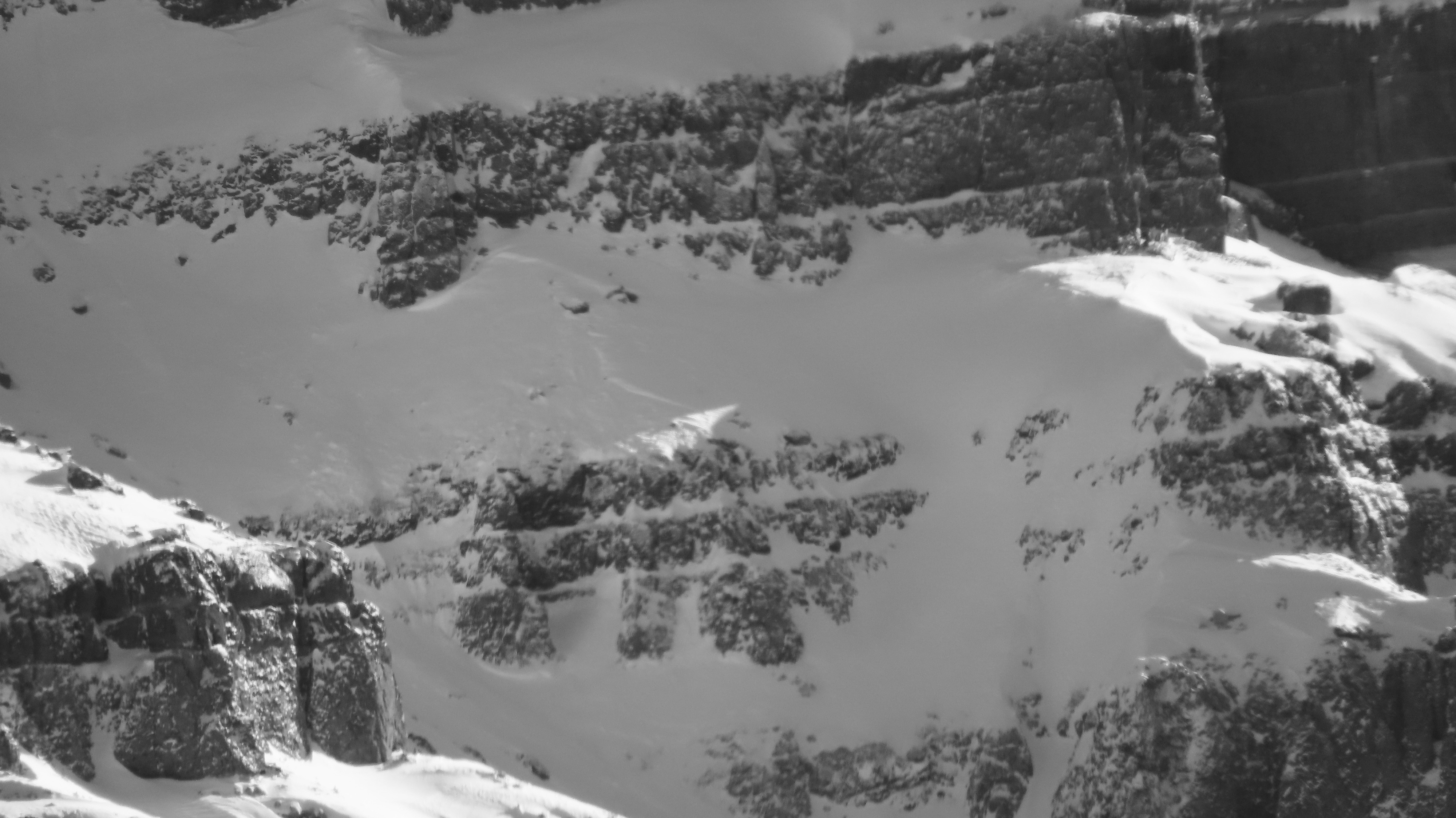
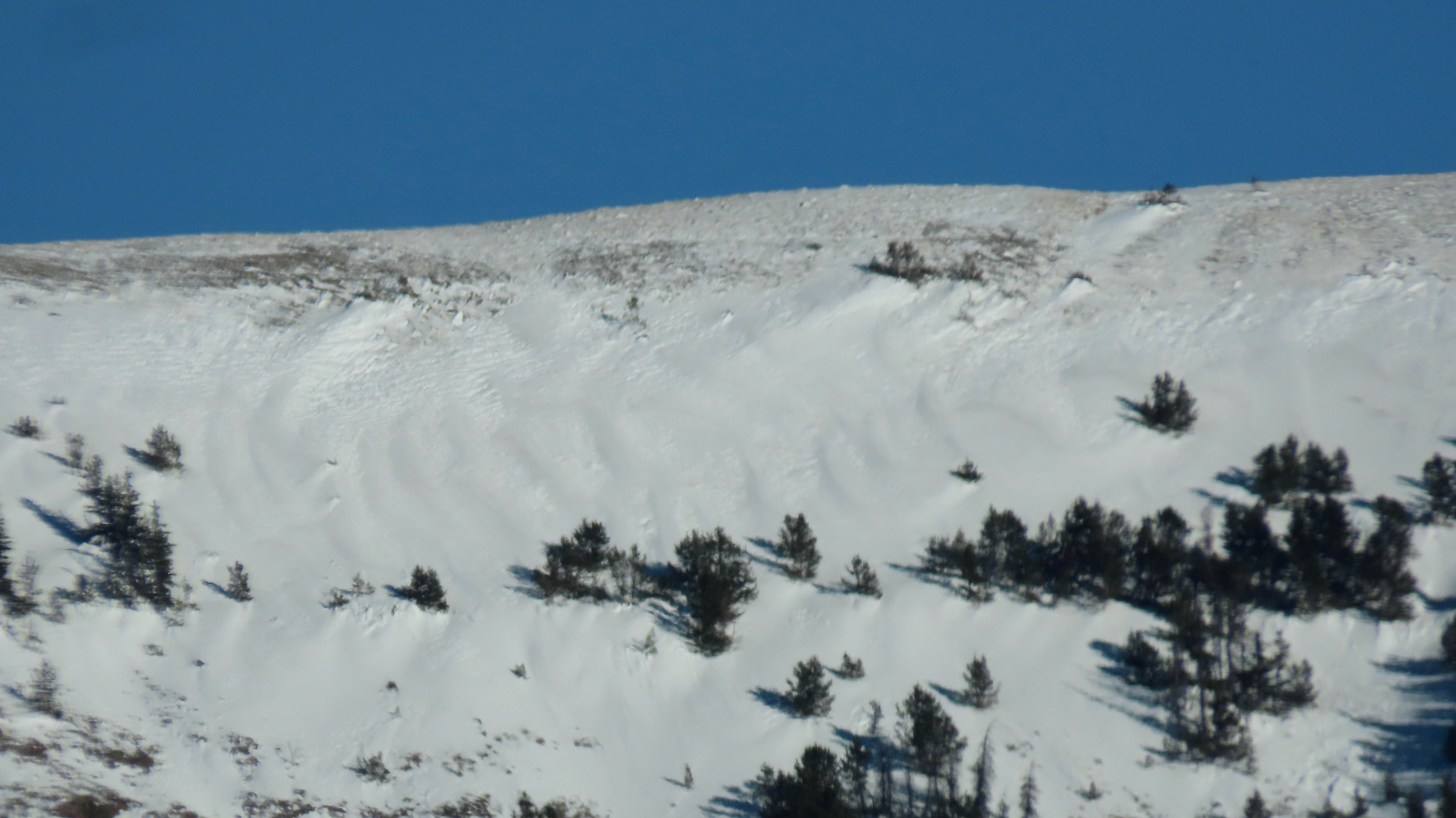
Noted several old crowns from the Thanksgiving storm and subsequent wind. I believe the first significant avalanche cycle has happened here. I don't think many were visible (either blown in or in terrain still harder to get to with low tide conditions) and only occurred within areas harboring enough older snow. Most of the activity here appears to be on the old/new snow interface with the capability of stepping down to layers of weak snow deeper in the snowpack.