
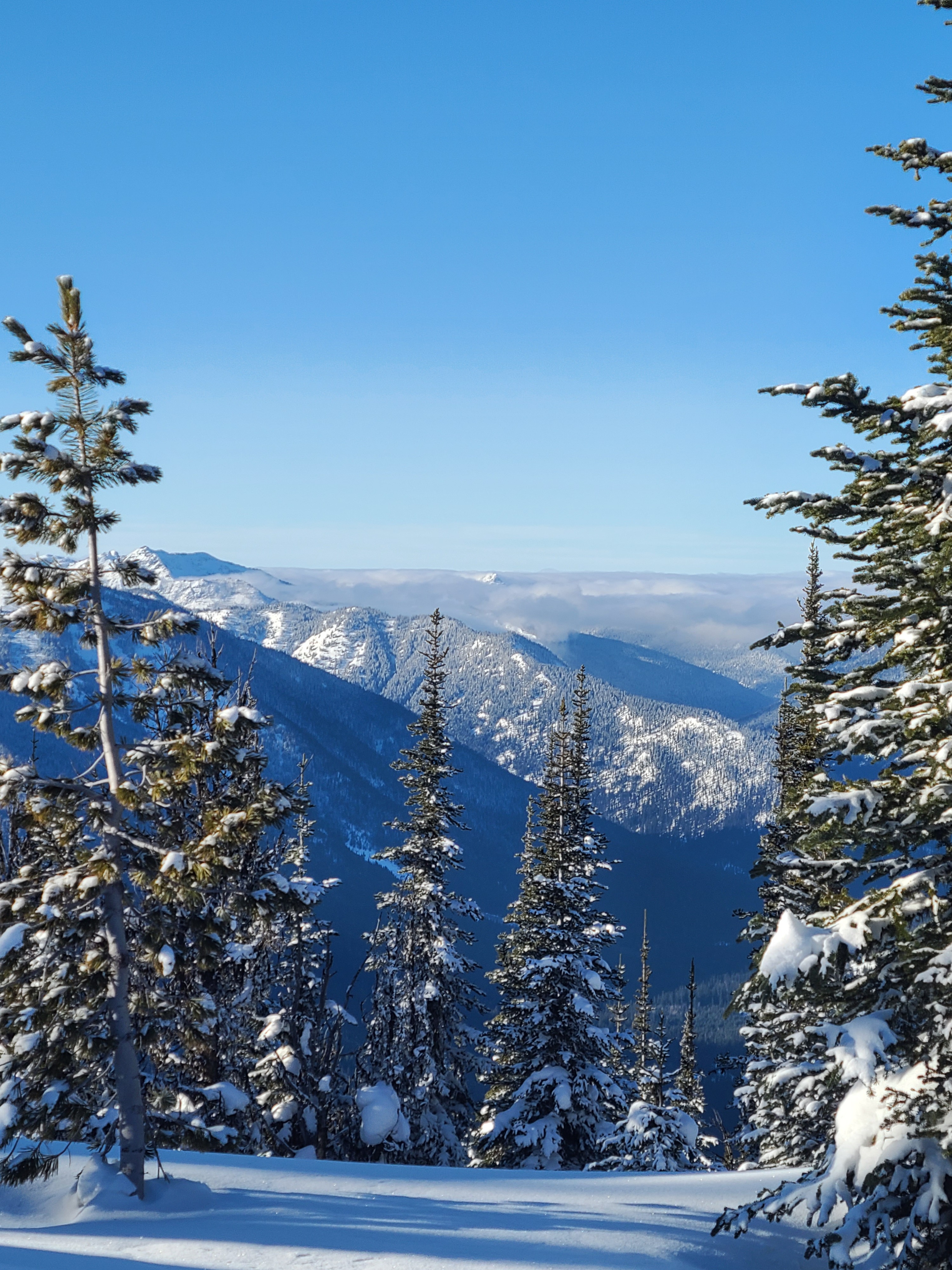
Quick report
- Cracking
- isolated
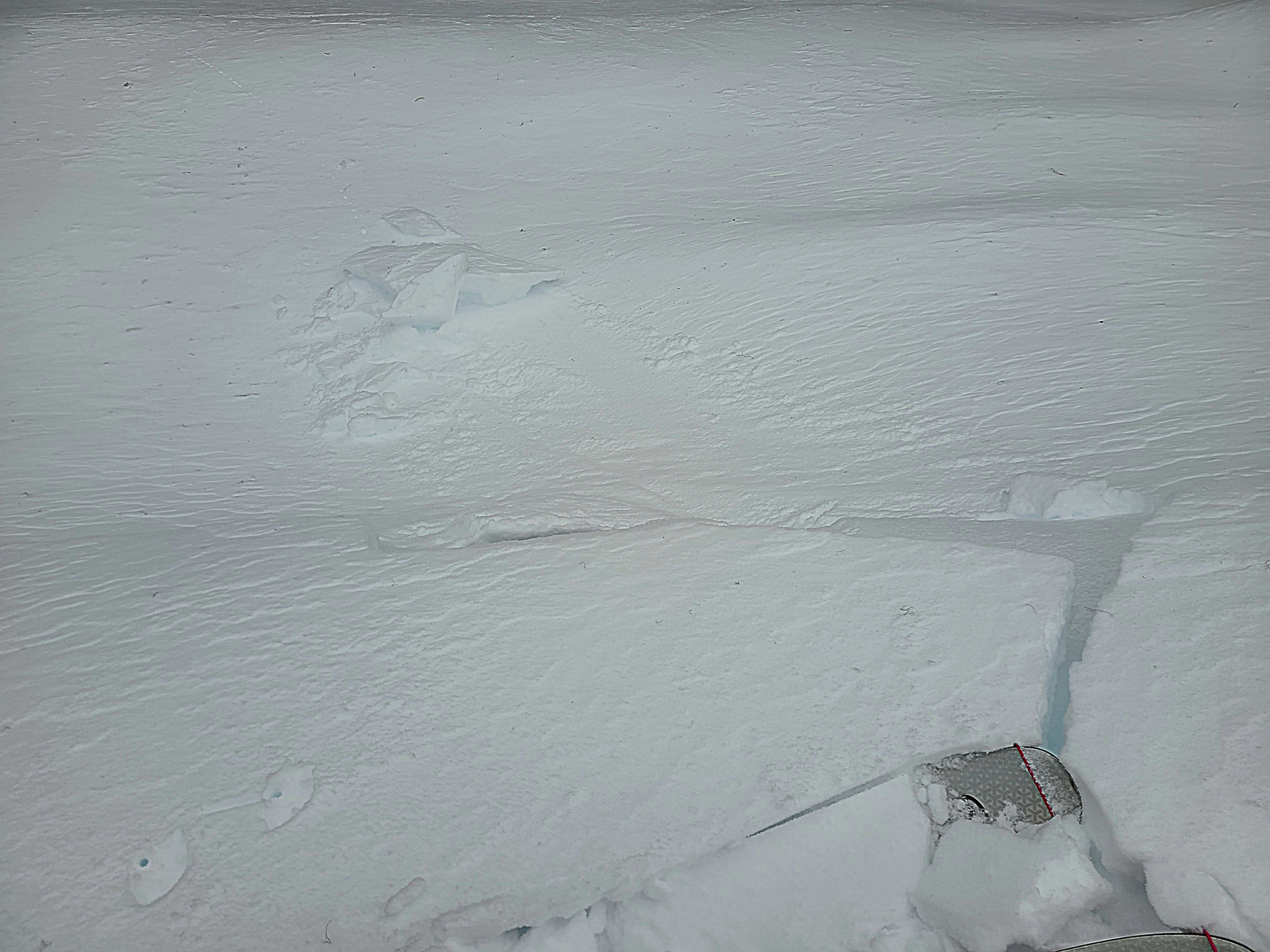
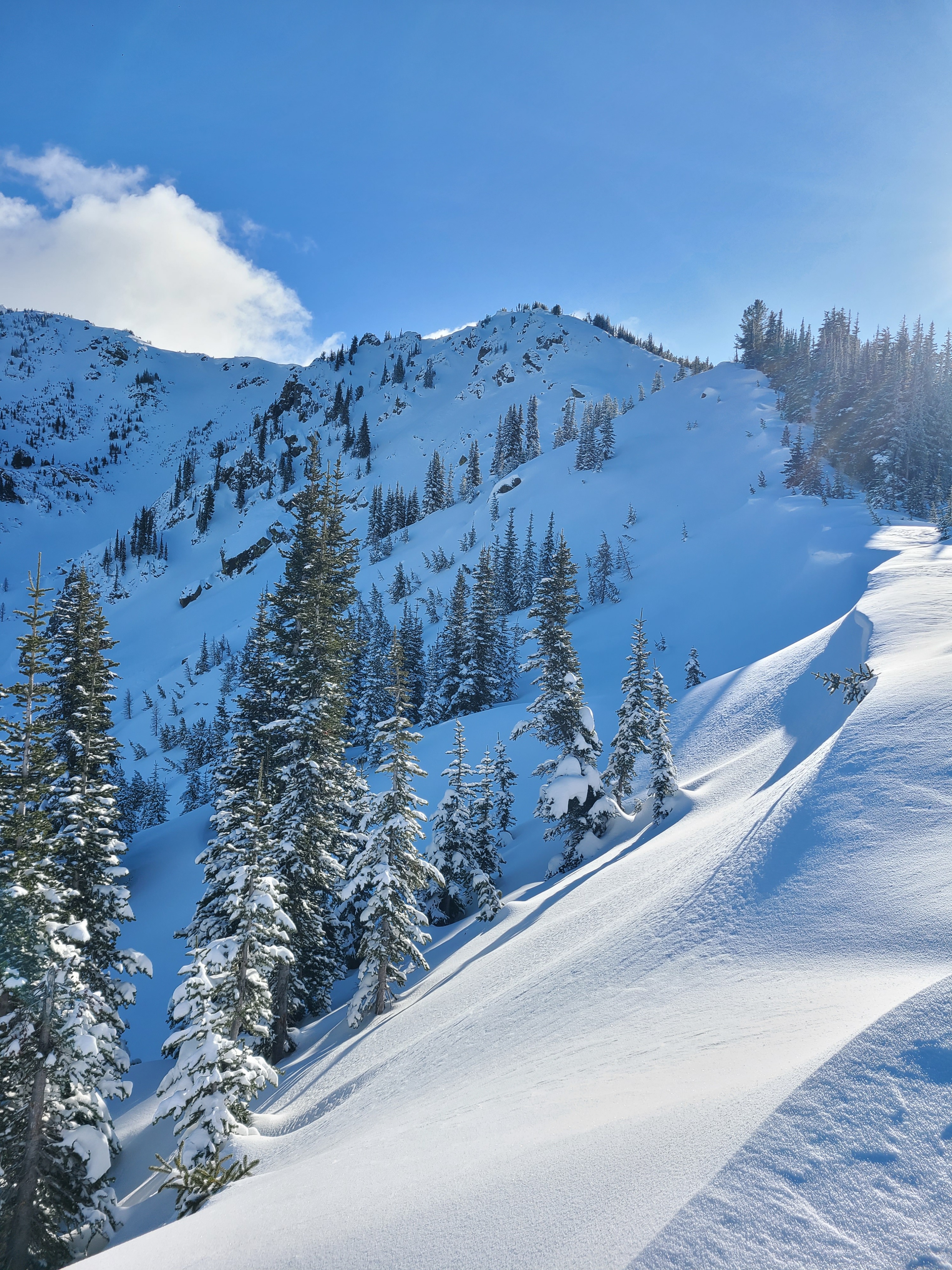
We started in cloud-covered skies and even experienced a few light showers before clear blue skies in the afternoon. Our goals for the day were to hunt down any surface hoar or weak grains buried by the recent snow. While we tried in many locations to find buried surface hoar, we found a layer of weak, faceted snow instead. This weak layer is buried 15cm deep, and while it produced some unstable test results, in most places, it just didn't have enough overlaying snow to be a problem. However, in isolated wind-loaded test slopes, we found small 10-15cm thick wind slabs that would fail on this layer. These signs of instability kept us on low-angle entrances to the bowls below corniced ridgelines.
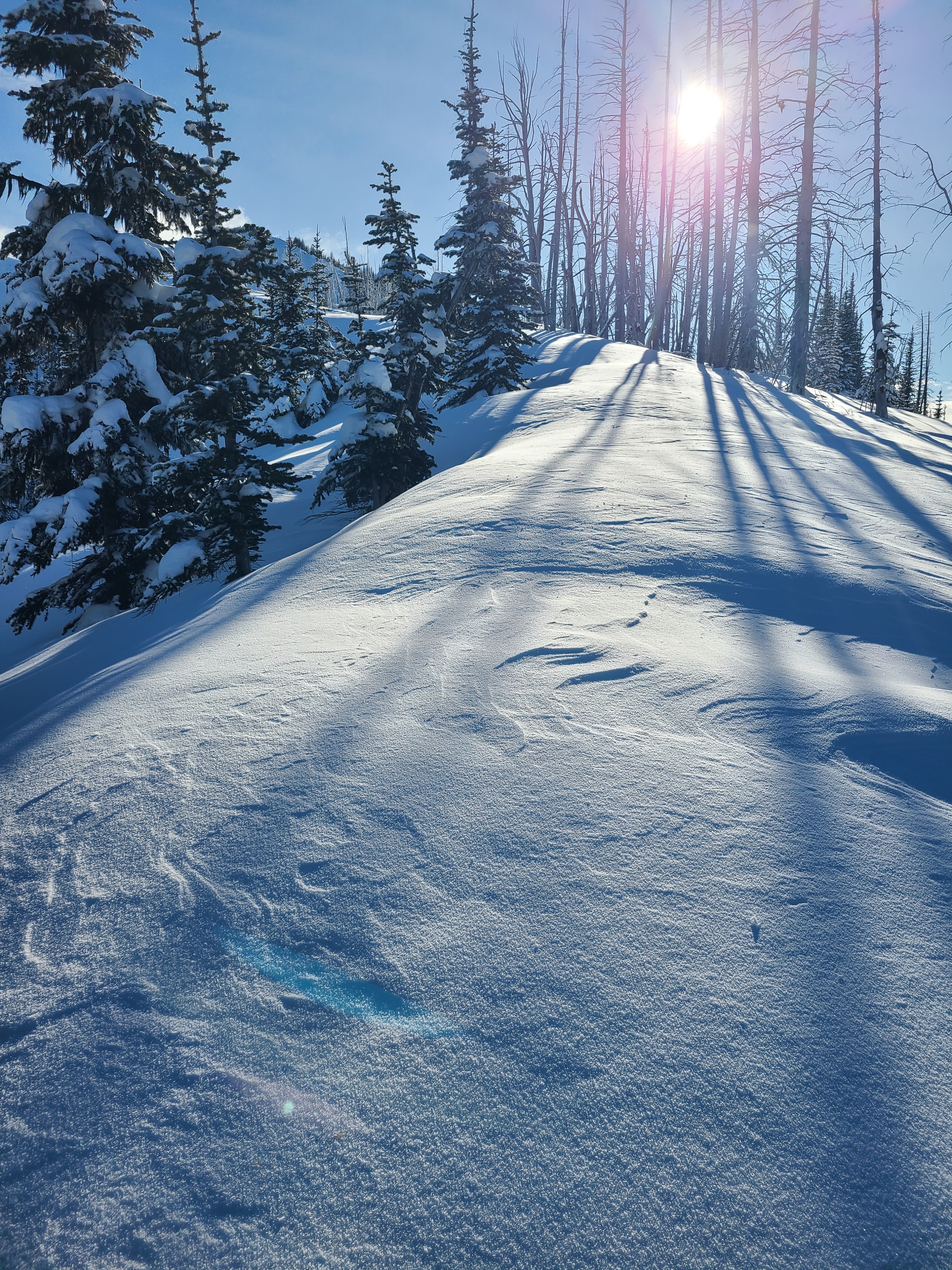
The theme of the day was wind-affected surfaces. Even in what we would typically consider sheltered terrain, we found stiff, textured, wind-blown snow. These surfaces were variable, with some areas nearly completely supportable to skis and others just a thin layer that still skied well.
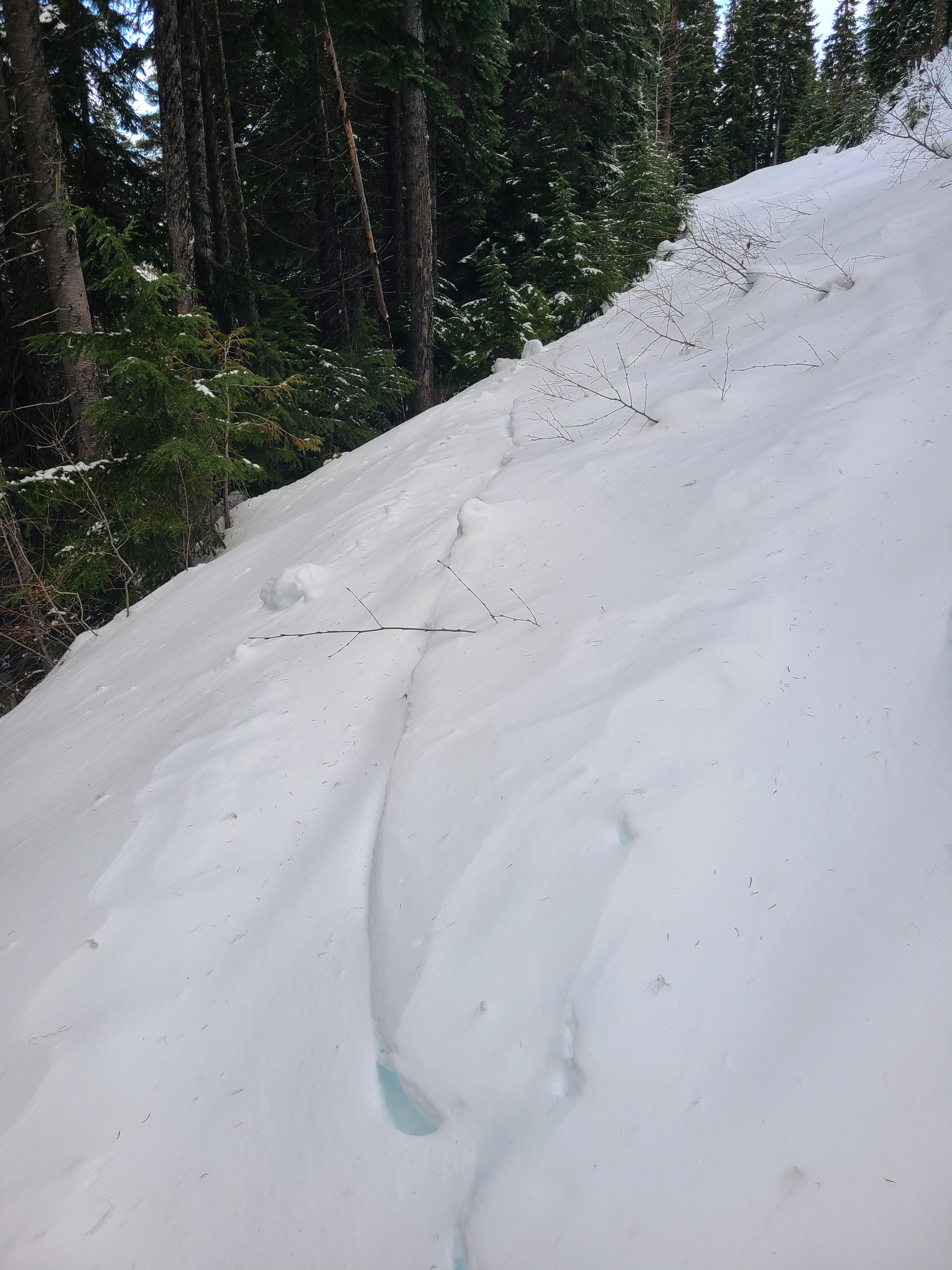
Travel is challenging at lower elevations, up to about 5000ft, with thick breakable melt-freeze crusts in open areas and re-frozen chunder in forested areas.
Steep wind-loaded test slopes produced isolated cracking.Weather
- Wind Loading
- previous
- Rain Elevation
- 5000ft
- Recent Snowfall
- 15cm
- Snow Avail For Transport
- small smounts
Overcast skies and occasional showers dominated the morning. Skies cleared abruptly around noon, and we enjoyed a bluebird afternoon with calm winds and mild temperatures.
Snowpack
The recent snow/rain line is between 4500 and 5000ft, with a breakable surface crust below 4500ft. This crust slowly becomes thinner as you gain elevation until around 5000ft when it disappears altogether. However, in many places, wind-pressed snow and wind crusts existed instead. There is also a new layer of surface hoar that formed overnight in sheltered open areas.
Where we left the snowmobiles at 4400ft, there was 5-6cm of snow over this melt-freeze crust. Travel was okay in open areas, but the crust was much more robust under the tree canopy, and just a dusting of snow existed over the re-frozen chunder. Thankfully, conditions improved quickly with elevation.
We dug a snowprofile on a north aspect at 6300ft. The total snow height was 170cm, which still seems thin for this area in January. The surface snow was comprised of surface hoar, grauple, and precipitation particles. We dug down 114cm to just below the Solstice Crust. We found a favorable snowpack structure, with the only concerning interfaces and weak snow in the upper pack. The recent interface (1/10) is a 2cm thick layer of weak, faceted grains that produced clean, easy shears in shovel tilt tests and failed suddenly in small column tests (CT5 CS). However, the overlaying slab wasn't thick or consolidated enough to produce propagating results in Extended Column Tests (ECTN9). Below this recent storm is 20cm of weak, older snow. Below this, the mid-pack is small, rounded grains that increase in hardness with depth down to the Solstice Crust.