
Quick report
- Cracking
- specific
At the start of our tour, we noticed about 1 inch of new snow had accumulated earlier this morning. Strong winds and blowing snow in the parking area gave us a good clue of what to expect on Andesite Ridge.
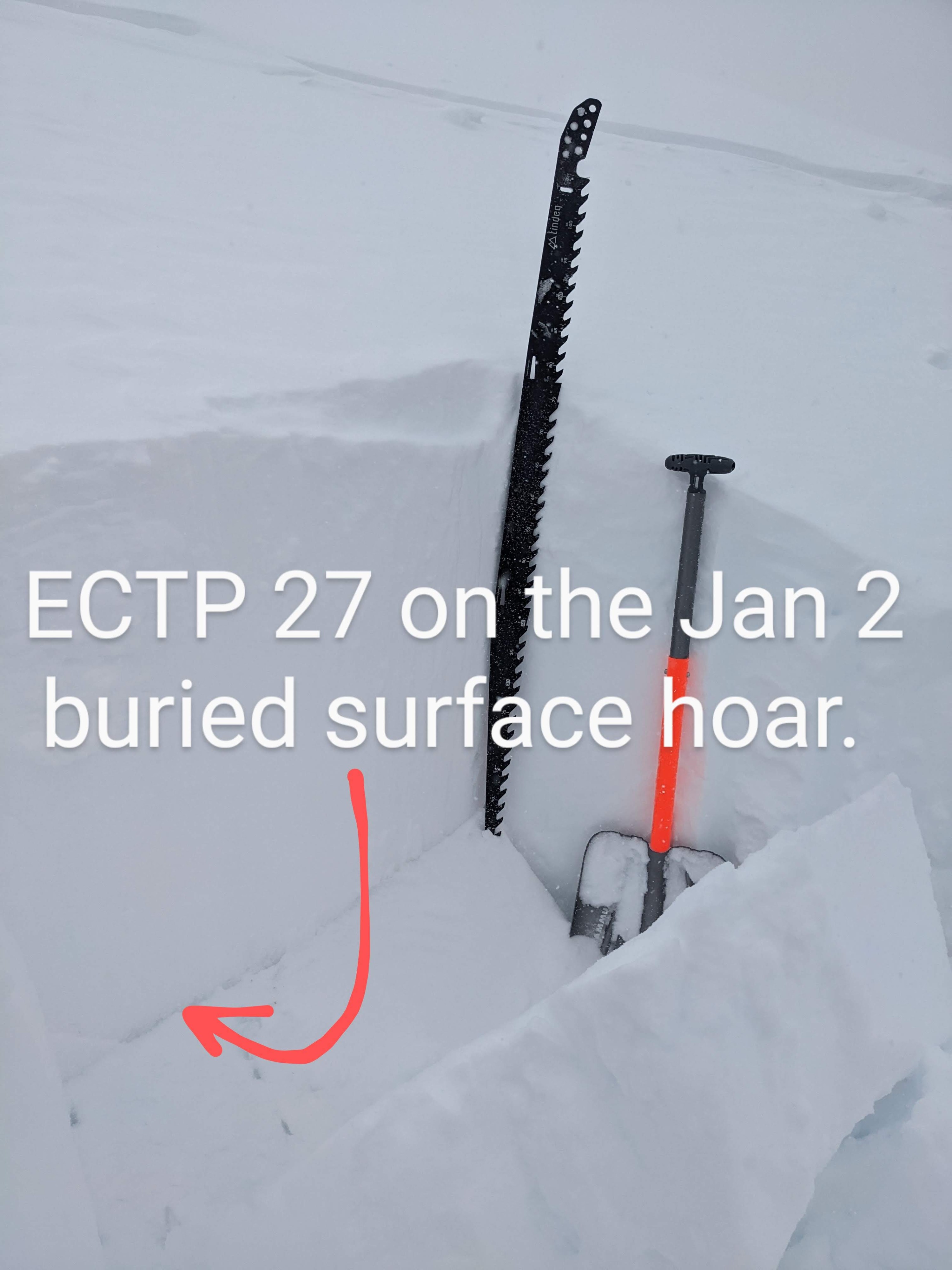
We skinned up through the sheltered below treeline terrain, looking for signs of instability on the Jan 2 surface hoar layer. We checked places where skinning had produced shooting cracks three days ago and new places where people had not already traveled. We did not trigger any cracks or collapses in these areas today. When we moved into near treeline terrain, we visited a place close to where we previously triggered a whumpf and dug 2 test pits. In one pit, tests produced unstable results (ECTP 27) on the buried surface hoar layer; in the other, we could not find the surface hoar layer.
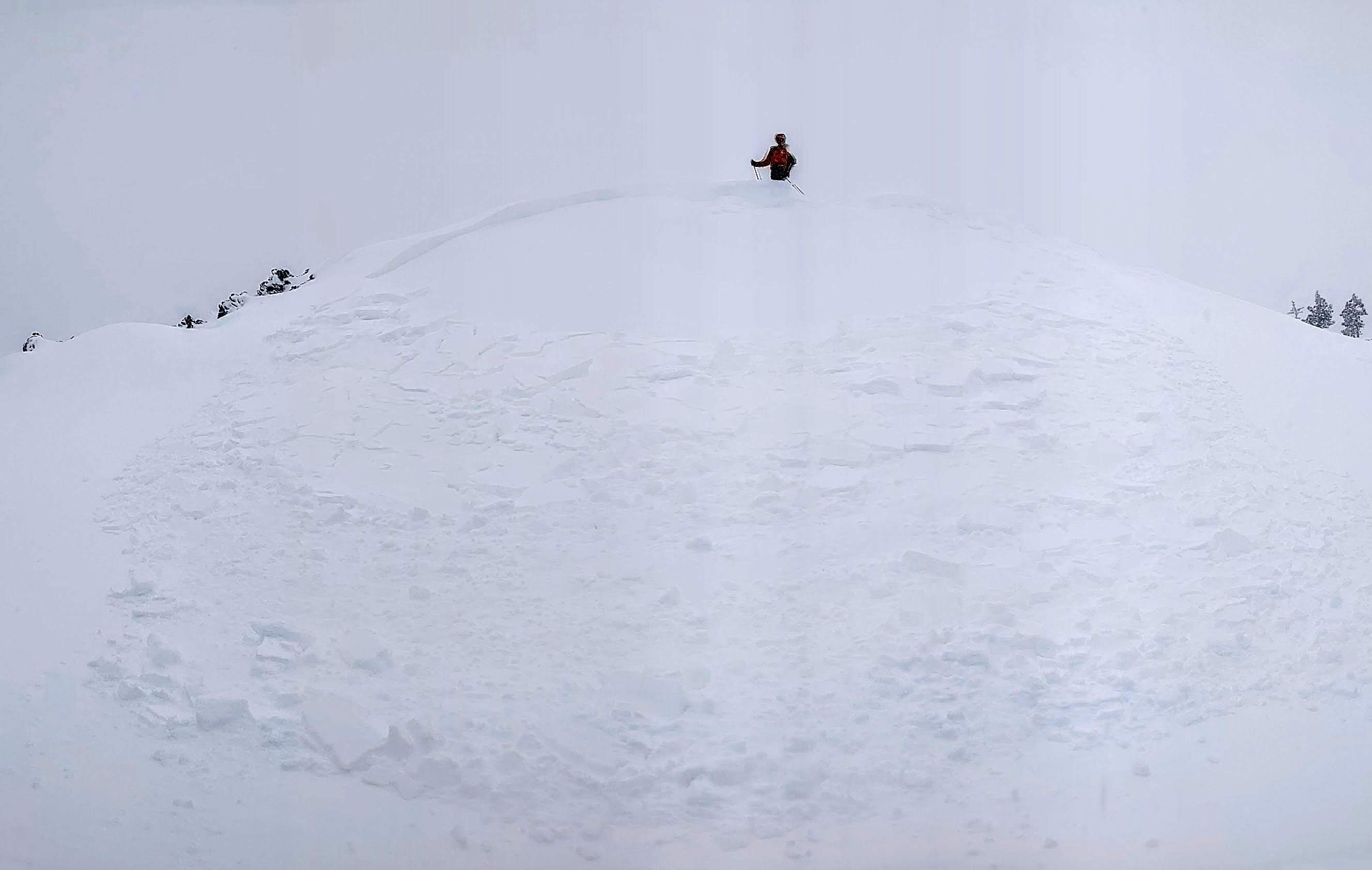
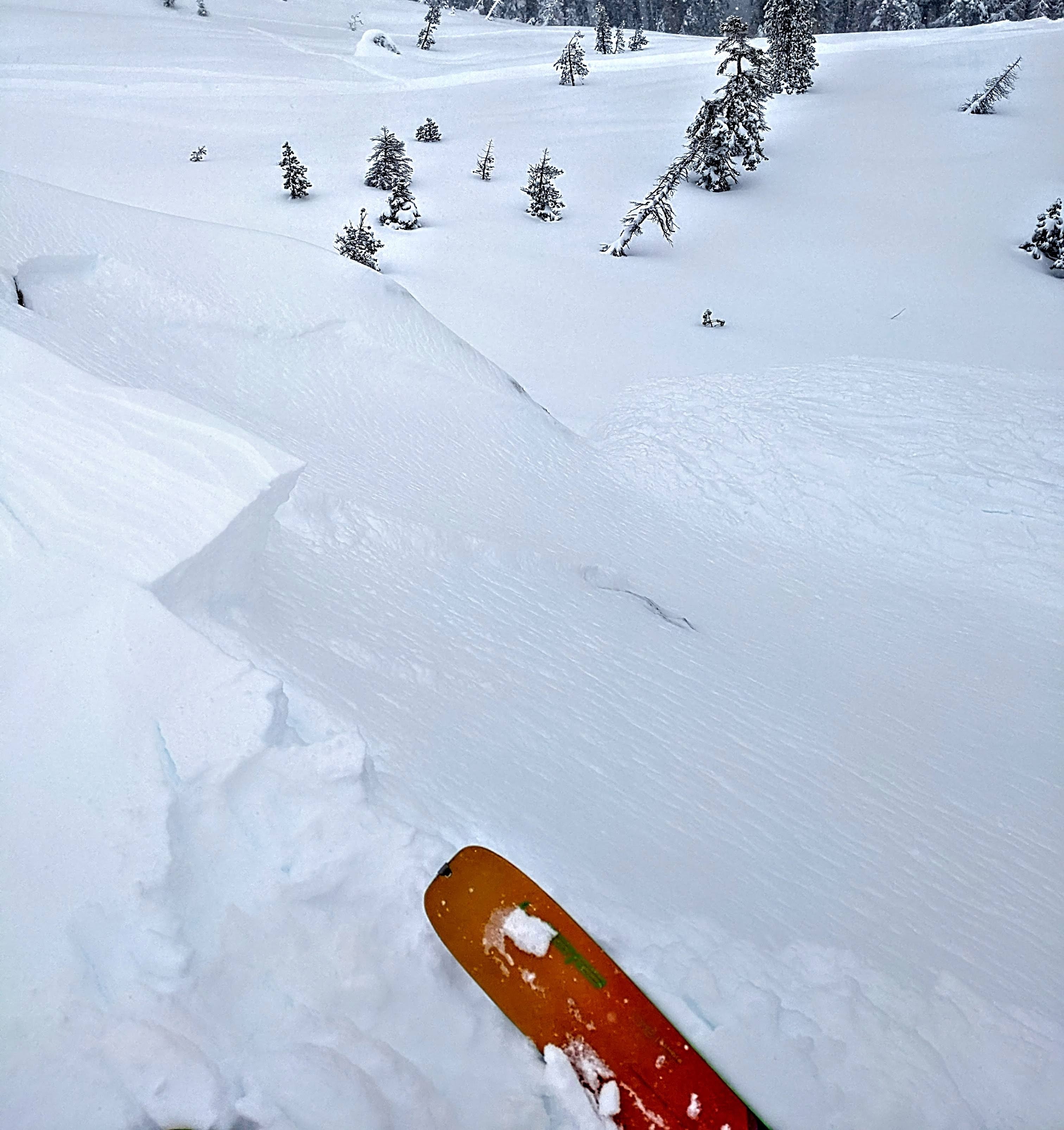
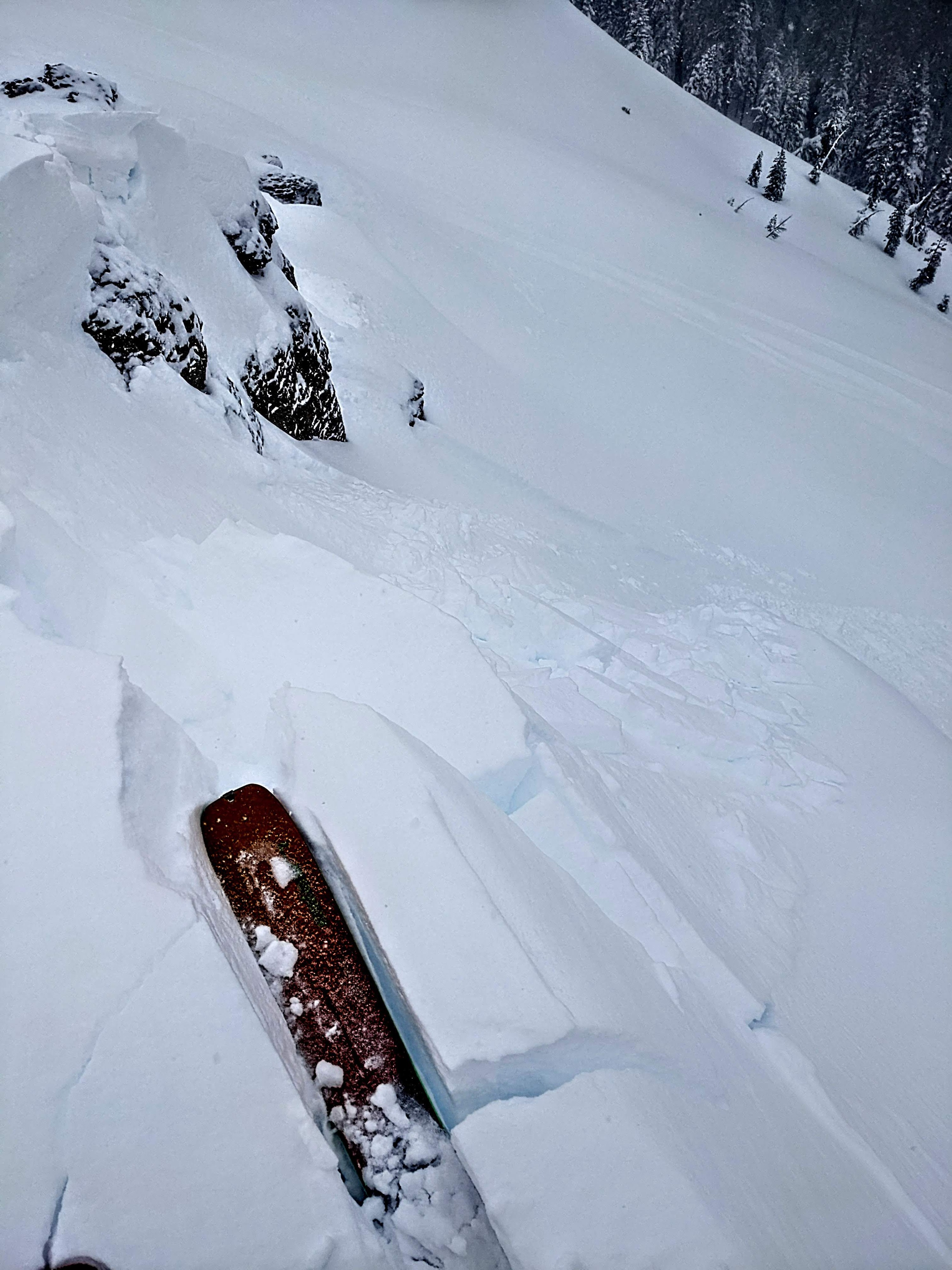
Higher on Andesite, we found blowing snow piling up on the leeward sides of the ridge. We saw cornices forming above many wind-loaded test slopes and larger wind-loaded slopes. Ski kicks released wind slab avalanches on almost all of the small test slopes, and we chose to avoid any of the larger avalanche terrain. We looked into the main avalanche path off the summit of Andesite, but we did not see signs that it had produced any avalanches yet.
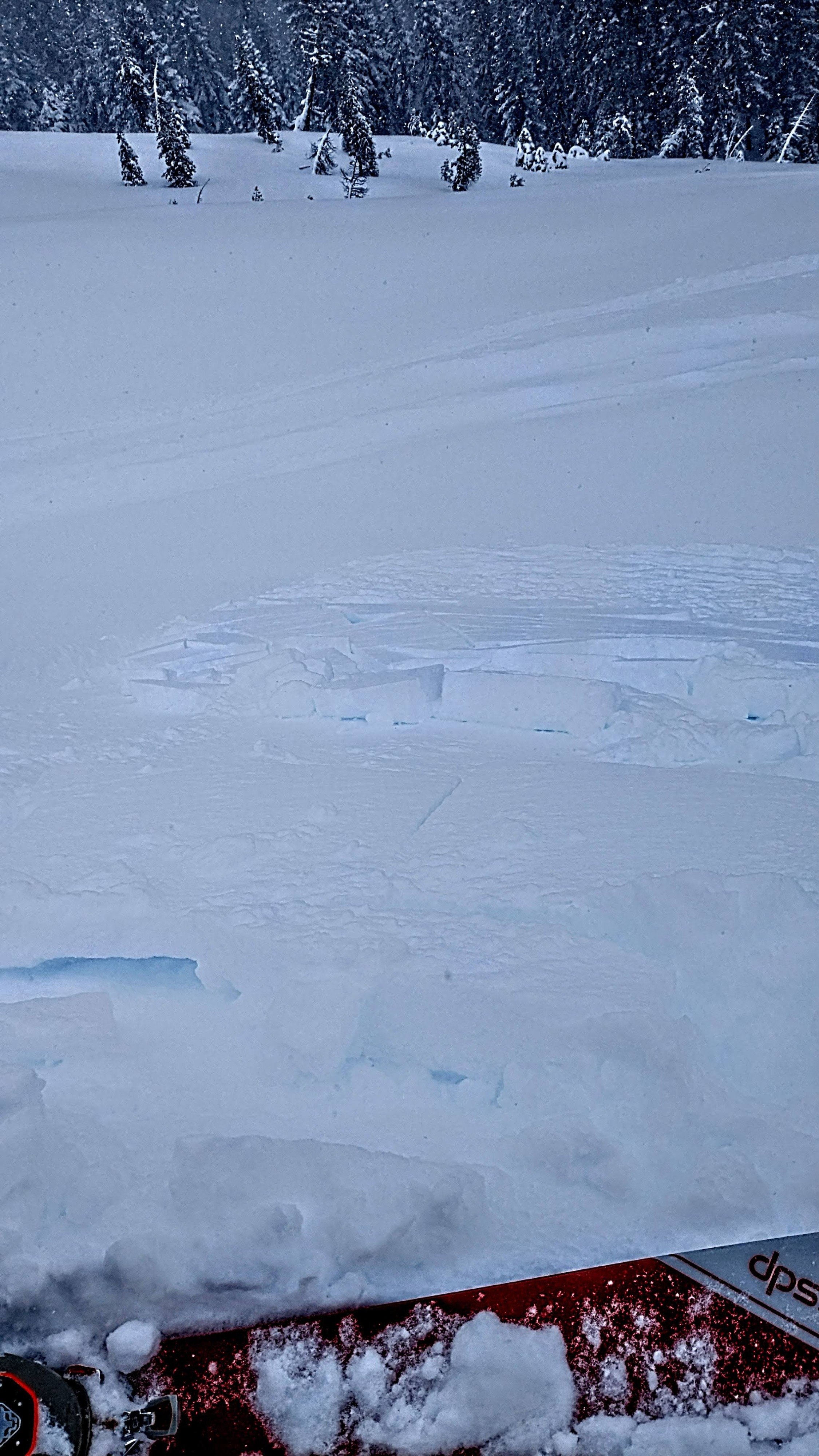
Ski kicks triggered several D1 wind slab failures on wind-loaded, E-facing test slopes in near and above treeline terrain on Andesite Peak. These failed at the interface between the more dense wind slabs and less dense snow below them. The wind slabs measured between 6 and 16 inches deep.Weather
- Air Temp
- 30
- Cloud Cover
- overcast
- Wind Loading
- intense
- Rain Elevation
- 6500
- Recent Snowfall
- 10
- Snow Avail For Transport
- moderate amounts
Snowfall rates topped out at about 1 inch per hour in the morning. Snowfall rates decreased after noon. The wind remained strong during our tour, and we experienced moderate to intense wind loading along exposed ridgelines.
Avalanche
- Size
- D1 R2
- Aspect
- E
- Trigger
- AS
- Elevation
- 8100 ft
Ski kicks above several E-facing, wind-loaded test slopes triggered D1 wind slab avalanches. These avalanches failed at the interface between the newly formed wind slabs and less dense snow below them.