
Quick report
- Cracking
- widespread
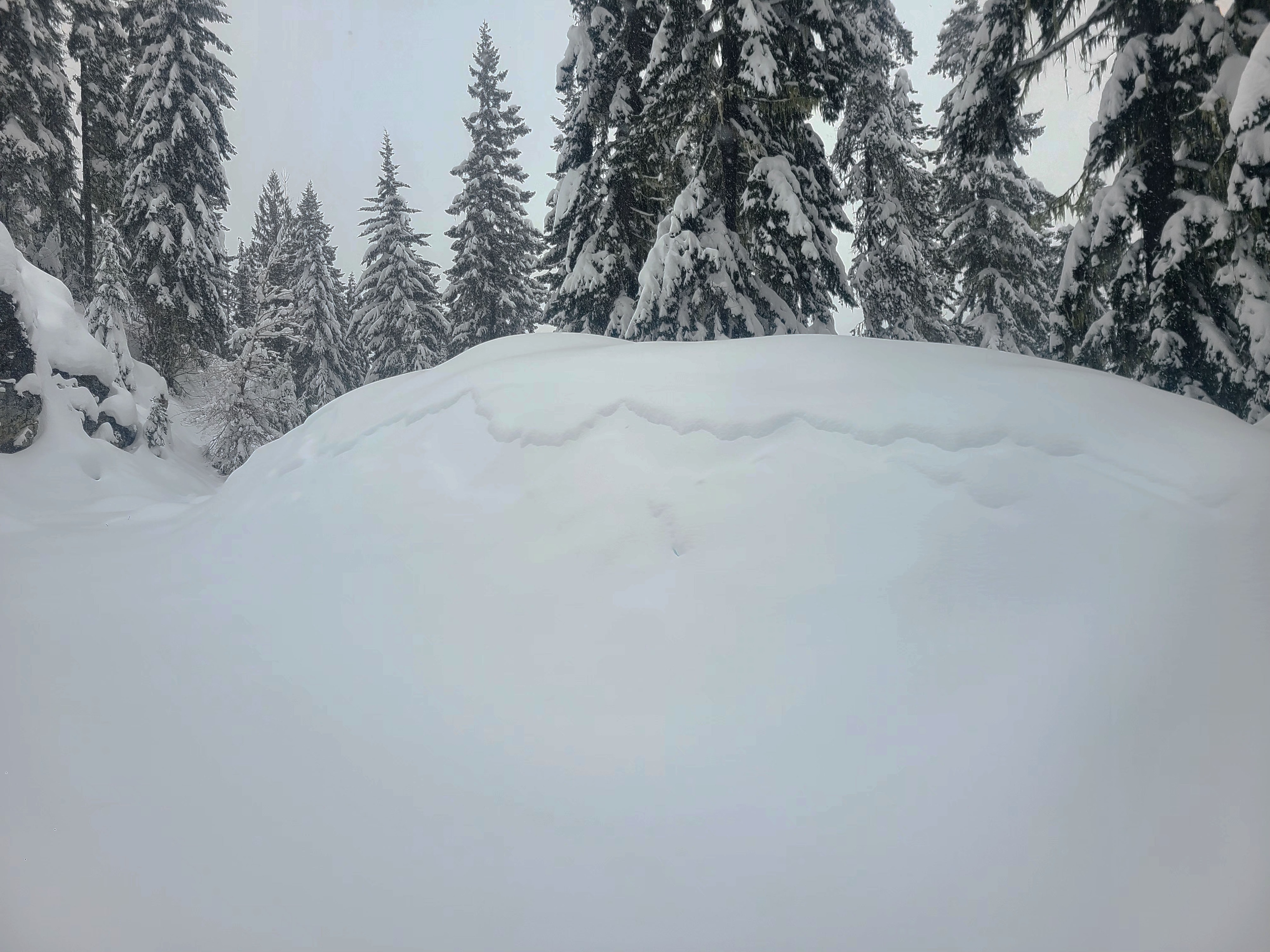
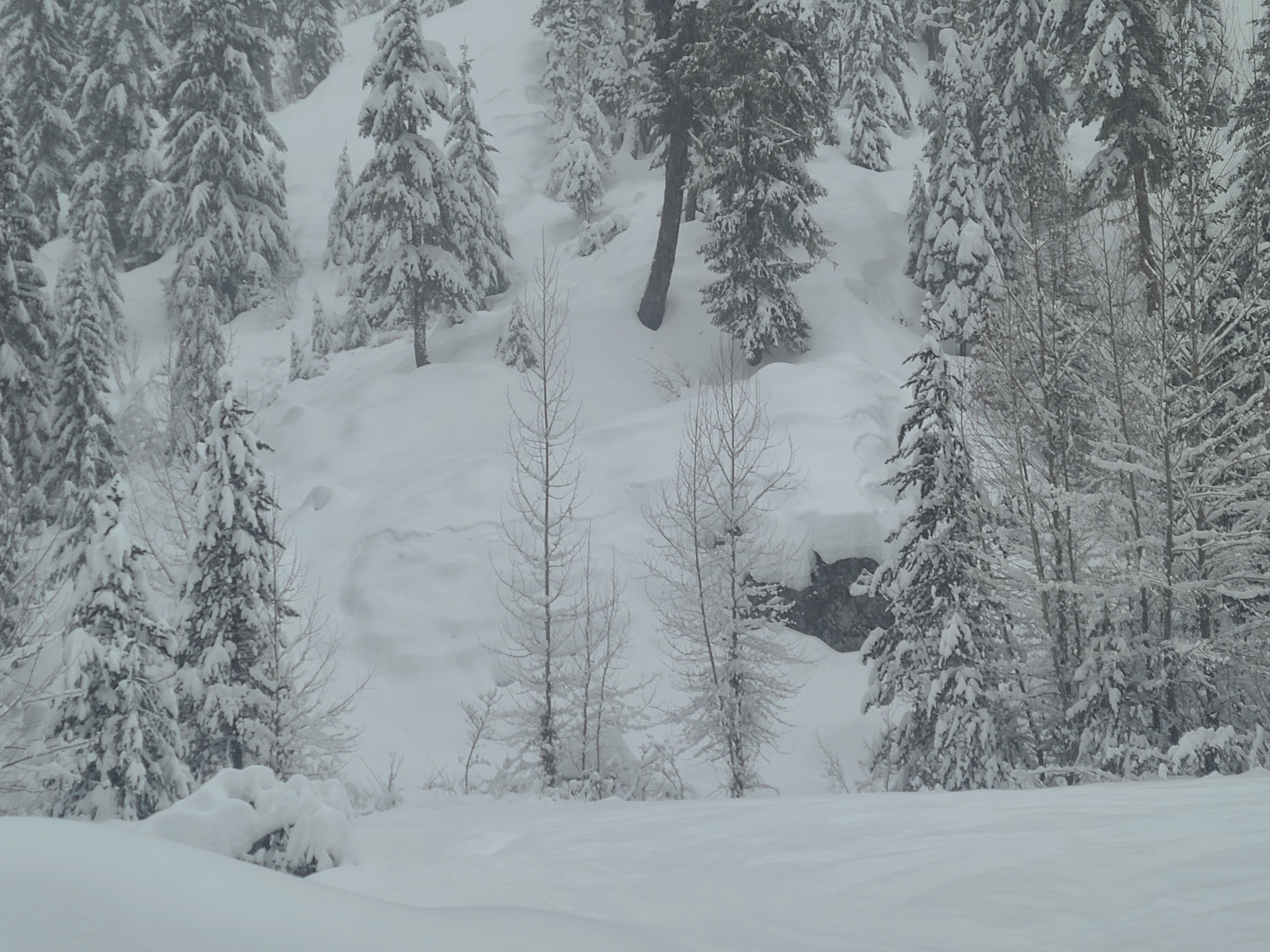
I didn't get far today, but it wasn't necessary to travel great distances to find widespread evidence of unstable snow. As far as you could see, small crowns dotted every convex slope on road cuts and in the forest. Some of these were already filling back in with new snow. Trail breaking was deep, but the low-density new snow skied well in the low-angle forest.
A small but widespread natural avalanche cycle likely occurred during peak precipitation on 1/17. While the new interface (1/16) was still quite reactive, it seemed to be a notch less sensitive than yesterday, as indicated by the many small crowns on all steep, convex features.Weather
- Air Temp
- 19
- Cloud Cover
- overcast
- Wind Loading
- none
- Recent Snowfall
- 25cm
- Snow Avail For Transport
- large amounts
Temperatures were in the teens, which felt pleasantly balmy after the deep freeze and subzero temperatures from early the week. Light to moderate snowfall in the morning with little wind in the morning hours. Winds were just beginning to increase as I left around midday.
Snowpack
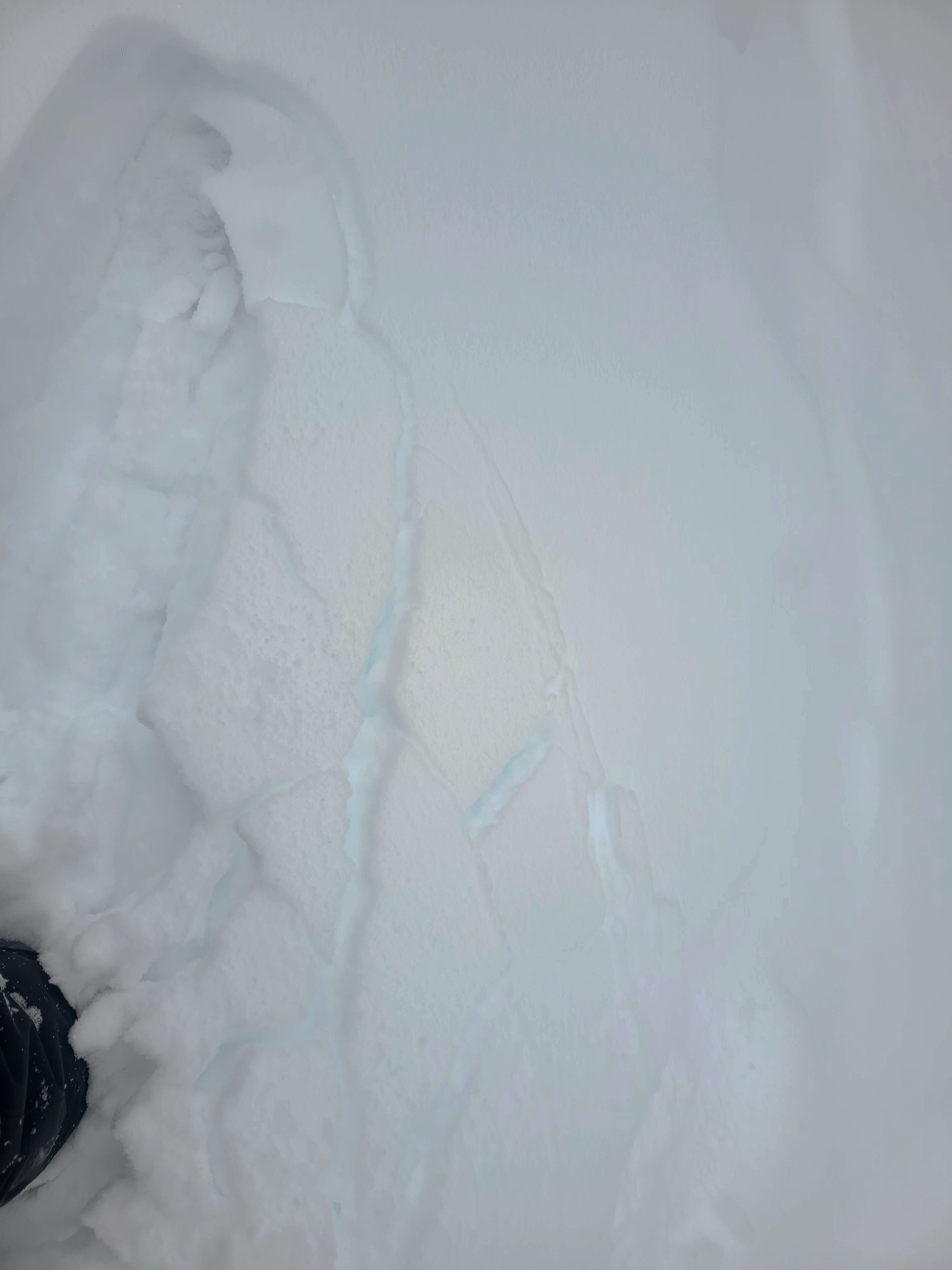
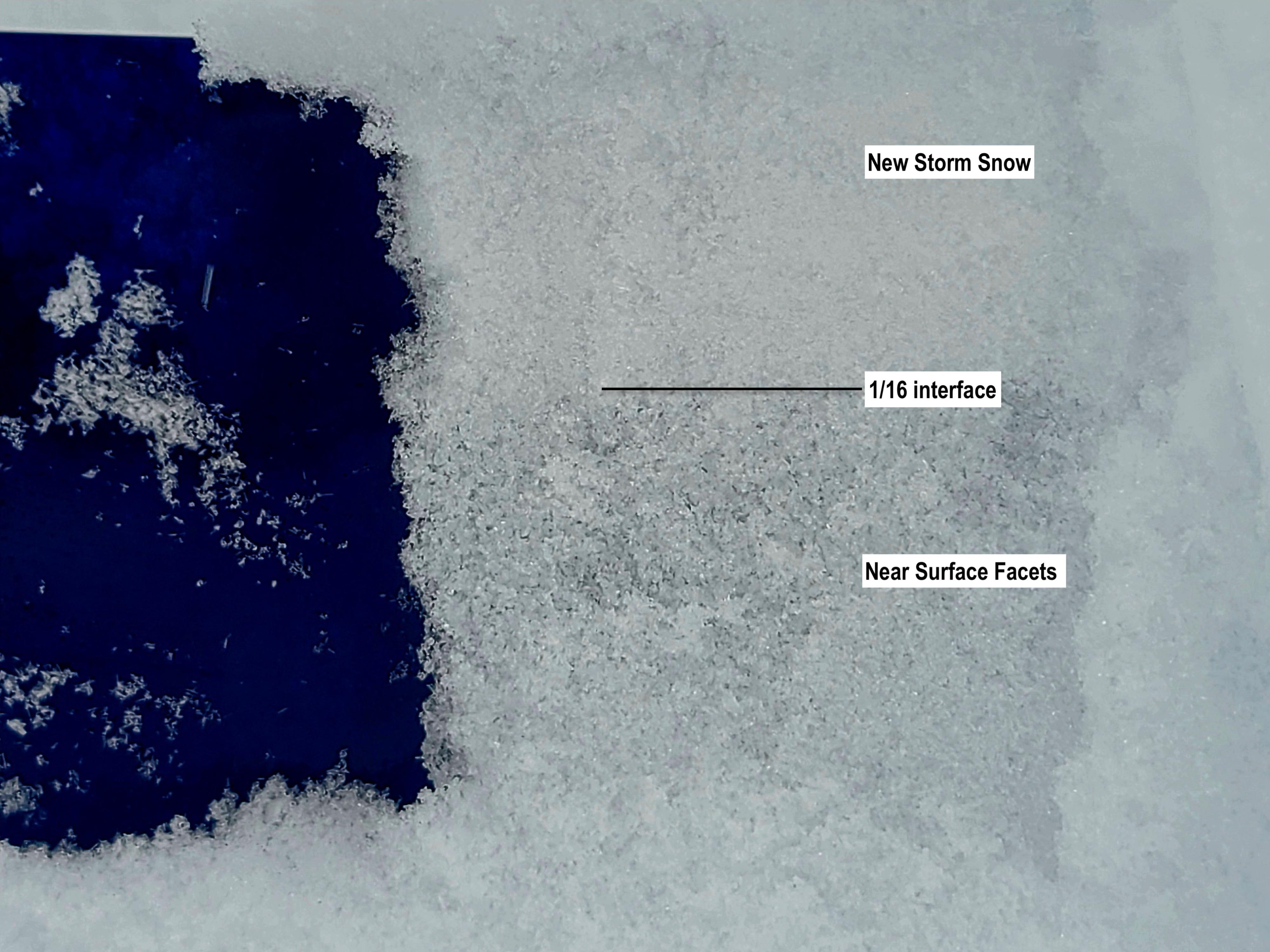
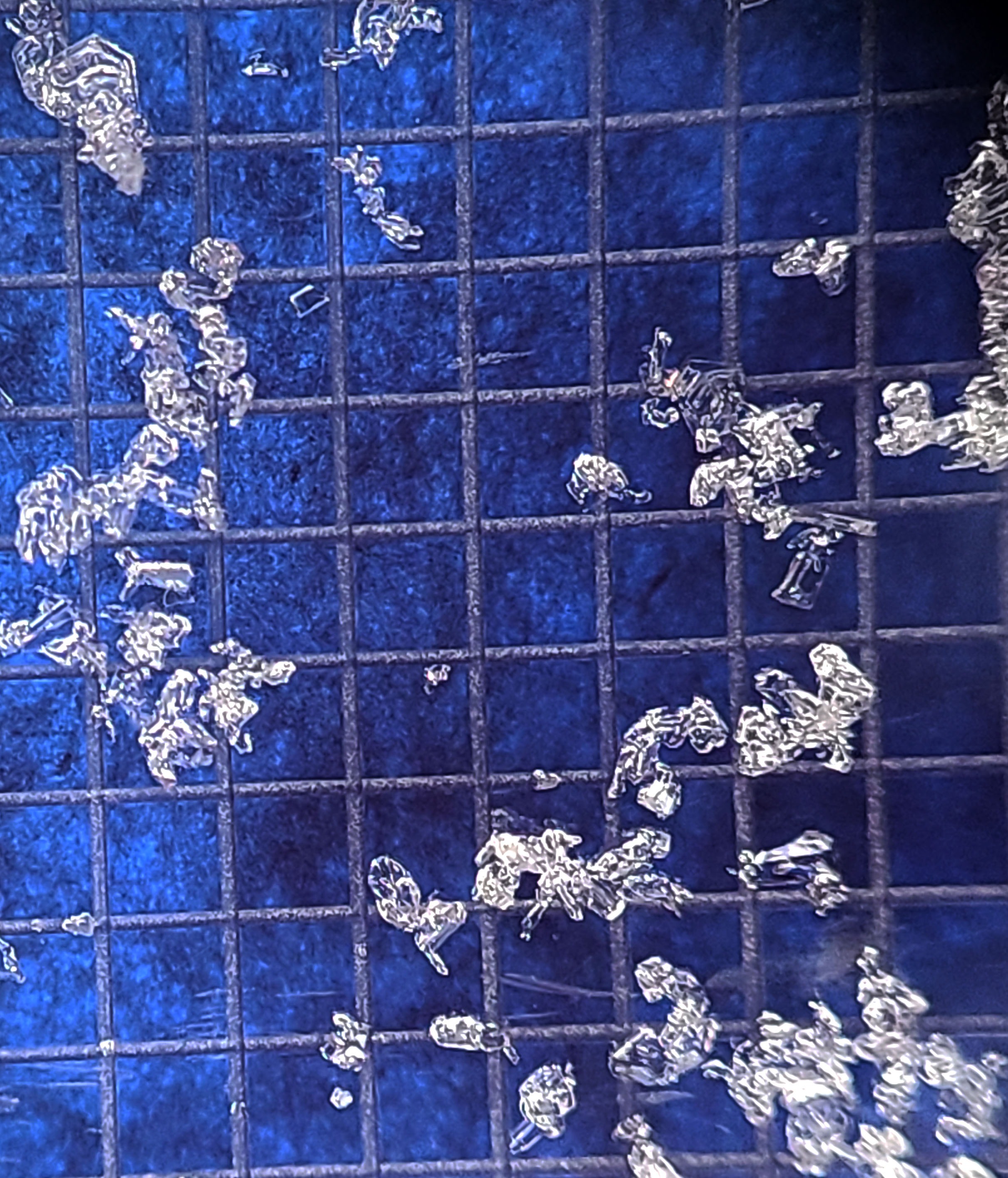
25cm of new snow rests over a 2-3cm layer of weak, near surface facets (1/16). Despite the very soft slab properties, this layer was reactive to touchy on test slopes. It was also challenging to find a steep test slope that did not already have a small avalanche on it. Hand shears on this layer consistently failed on isolation
I did not get a chance to investigate the Solstice Crust interface, as the signs of instability kept me traveling well within the forest canopy.
Avalanche
- Size
- D1 R3
- Type
- SS
- Aspect
- E
- Trigger
- N
- Elevation
- 3000 ft
As previously stated, every convex feature held a small crown. These avalanches were all very small, but some had surprising propagation for such a soft overlaying slab.