
Quick report
- Cracking
- specific
- Collapsing
- specific
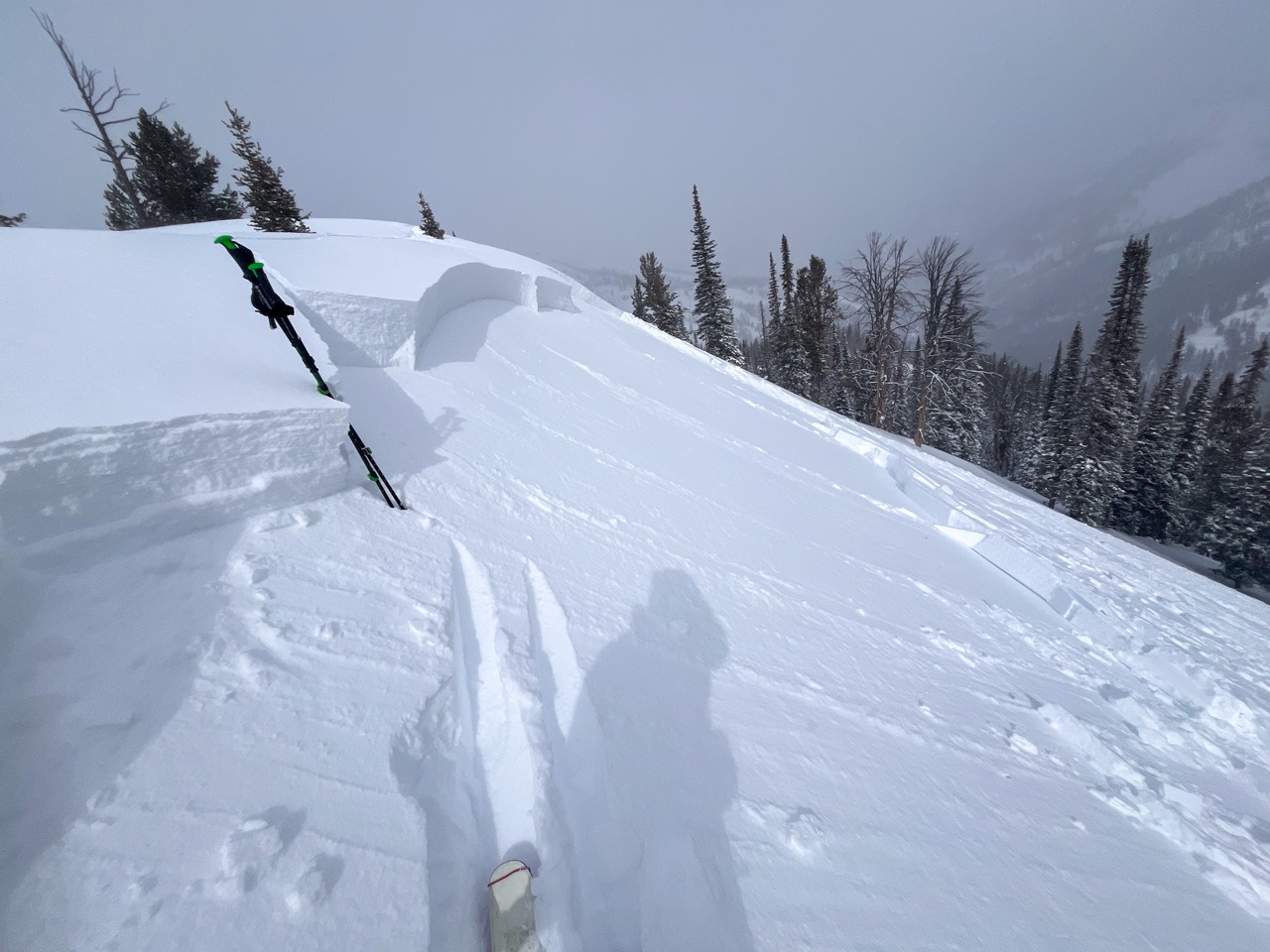
Wind-drifted slabs and cornices were sensitive. The bond at the recently buried (2/25) interface was fair to poor. I did not encounter problems on slopes sheltered from the wind.
Cracking and collapsing confined to recently wind-loaded terrain and cornices on an exposed ridgeline.Weather
- Air Temp
- 10 F
- Cloud Cover
- overcast
- Wind Loading
- previous
- Recent Snowfall
- HST = 15-35 cm, Today< 1 cm.
- Snow Avail For Transport
- moderate amounts
Overcast and lightly snowing during my tour. Very little accumulation. Light wind with occasional strong gusts from the W and WNW. Minimal additional loading, mostly just sifting snow this way and that. Obvious previous wind-loading from yesterday's storm.
Snowpack
HST
18 cm at the mouth of Smiley Ck
26 cm at 7,800'
35 cm by 9,000'
(2/25) new/old interface
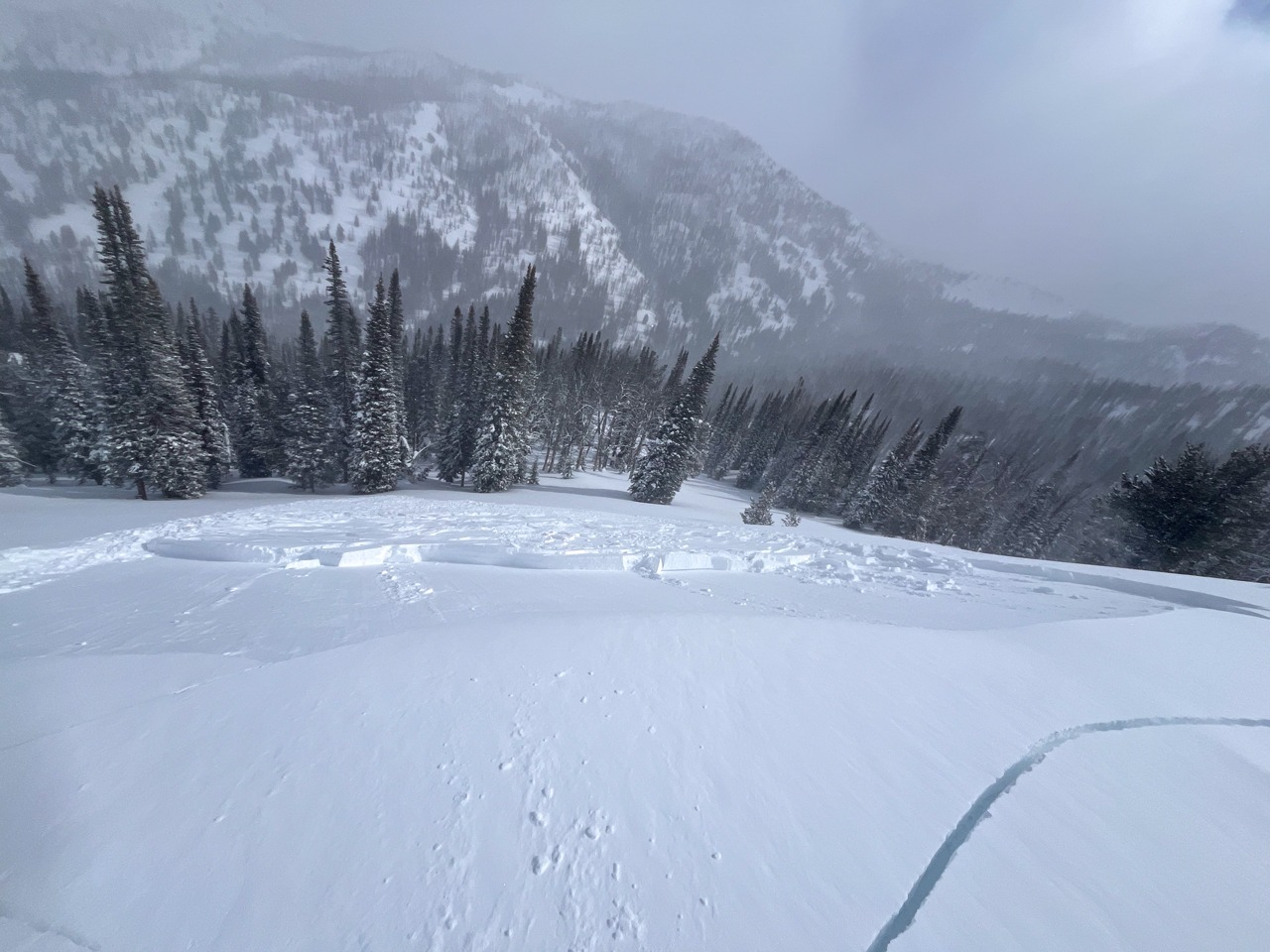
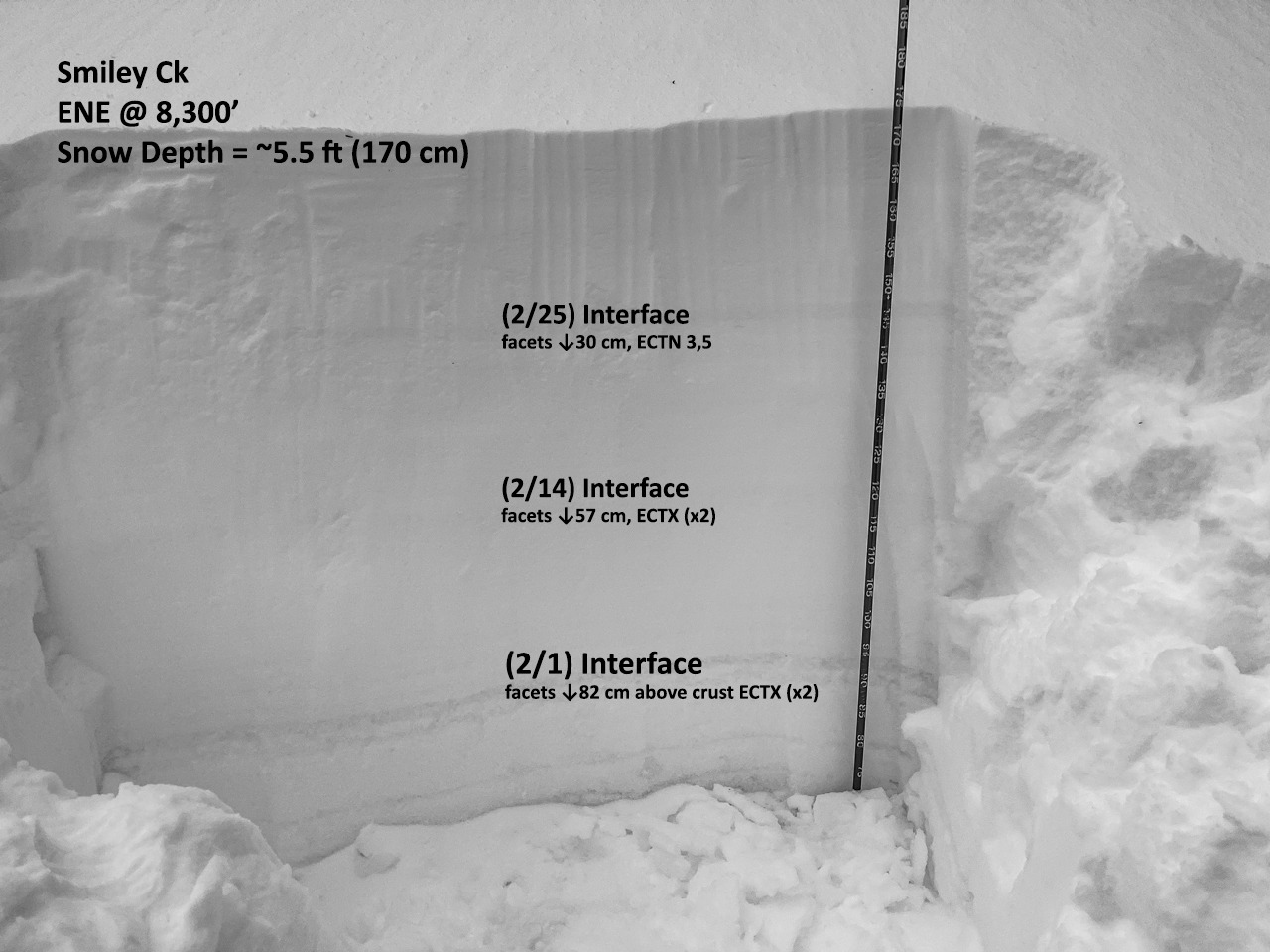
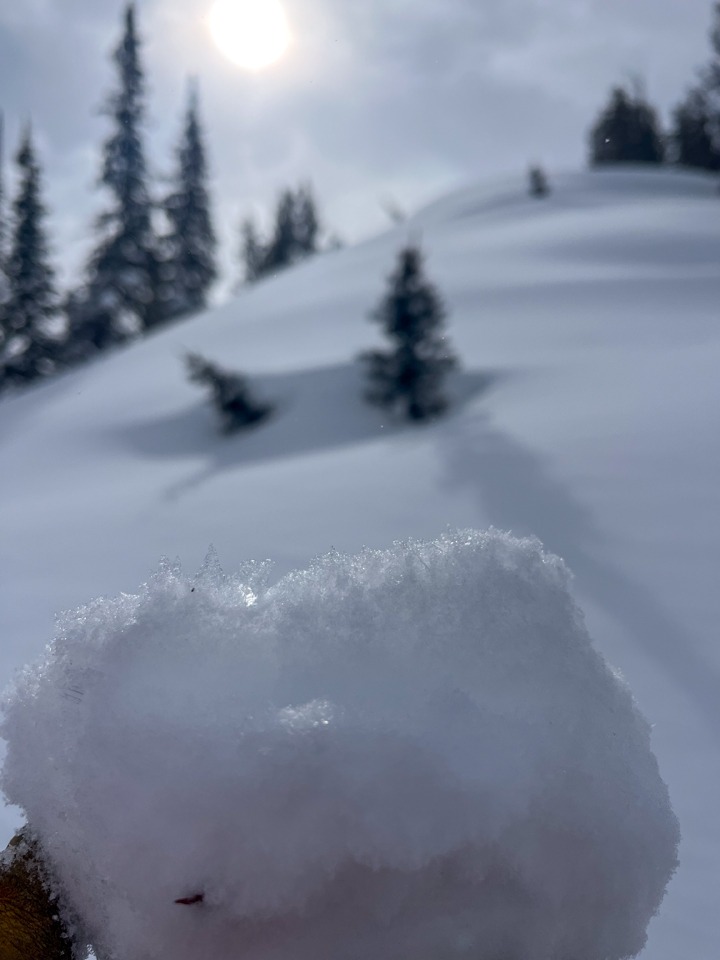
The bond at this layer looked fair to poor in the places I looked. A noticeable 2-3 cm layer of near-surface facets produced ECTNs on a mostly shaded aspect (see photo). These would have crossed the column and made for touchy conditions if the slab were stronger. I did not get any cracking or collapsing on wind-loaded, steeper SE aspects where the 2/25 was icy and strong. The weak layer at the location of the triggered avalanche was a small facet + thin (5 mm) crust combination. I also found rough but planar shears on buried surface hoar on a N aspect at 9,000'. Sensitive slabs required wind-loading.
(2/1)
I only tested this layer in one location. ECTXs down 82 cm. ENE @ 8,300' (see photo). The overlying slab is 1F to P at the base.
Avalanche
One remotely triggered D1 (see photo). Five other D1 natural avalanches along a similarly loaded ridgeline; likely cornice triggered. No other notable natural avalanches were observed in my vicinity. I had decent visibility within the Smiley Ck drainage and fleeting/poor visibility beyond that.