
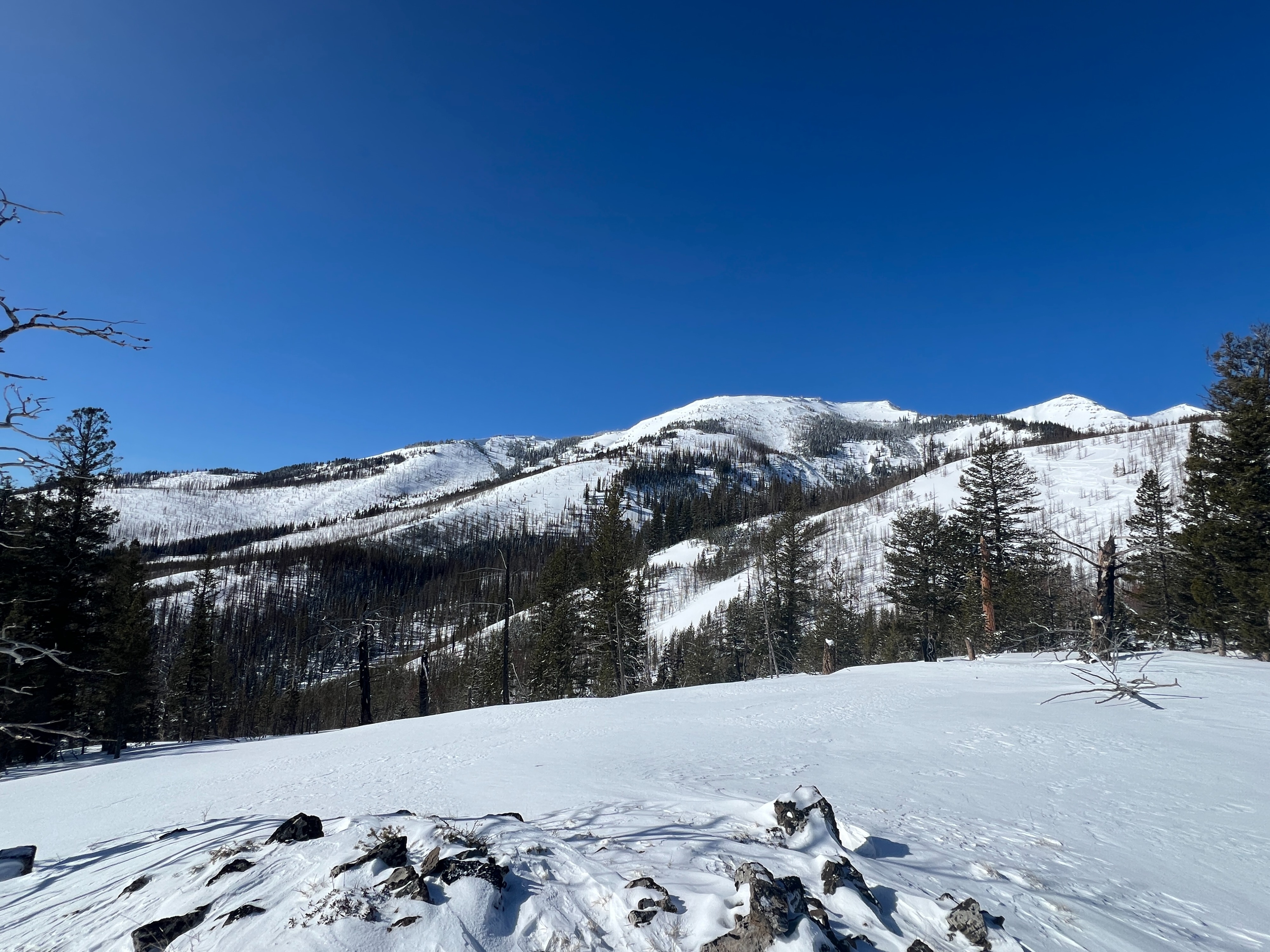
Quick report
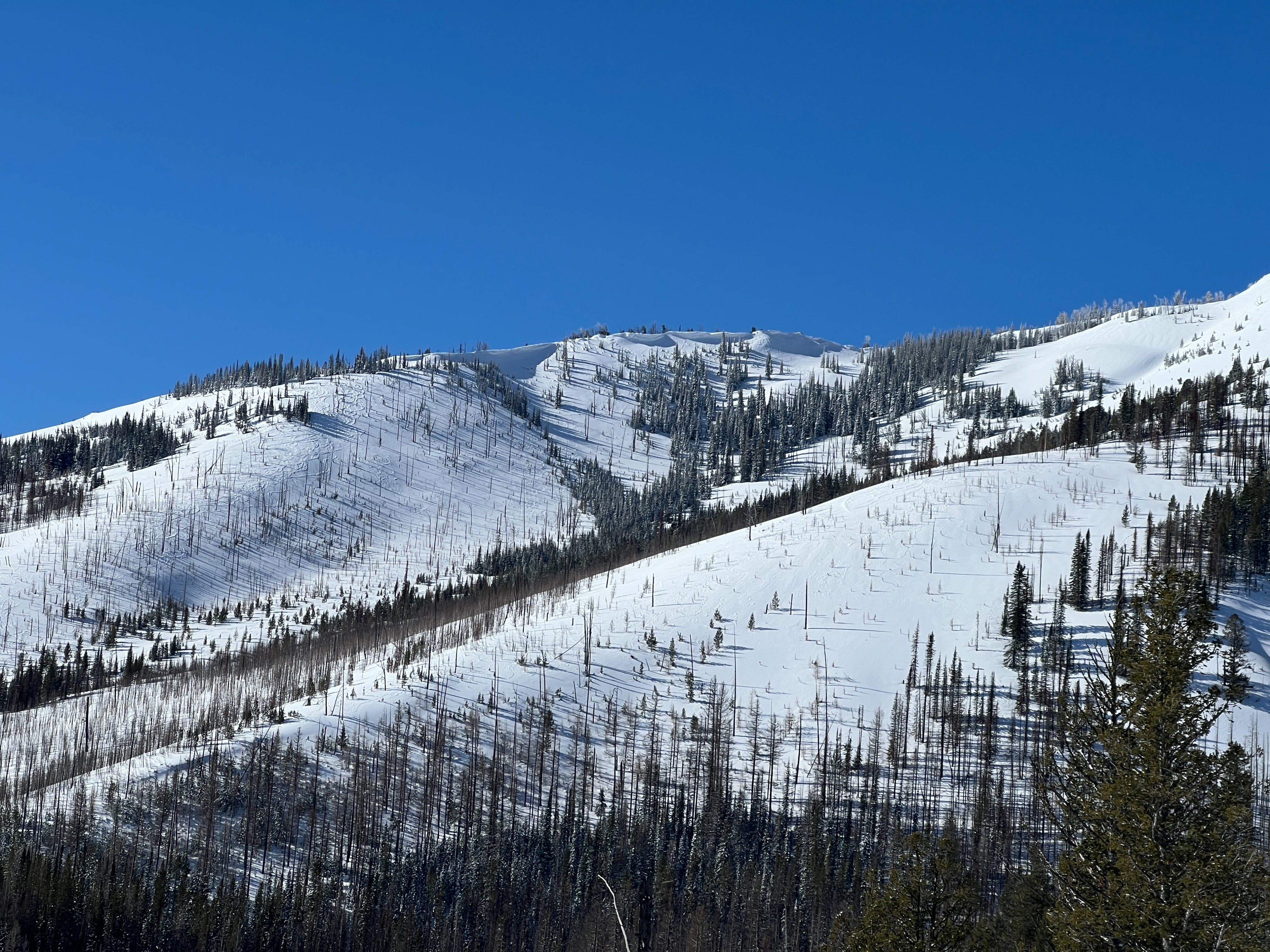
I did not see any new natural avalanche activity. I dug several snowpits today that told different stories. Two of my snowpits were on more northerly aspects along Middle Ridge. The snowpack was deep, mostly right side up with non-alarming snowpack test results. The other one was on an East aspect below Shelter Ridge at a lower elevation with a shallower snowpack. Although my snowpack tests did not show alarming results, the structure in these thinner areas remains poor. See snowpack Obs section below for more information.
East and Southerly aspects were picking up quite a bit of heat and sun and I would expect there to be a Melt Freeze Crust on these aspects tomorrow. Although we did not see any wet loose avalanches, I would bet they will be active tomorrow during the heat of the day with direct sun.
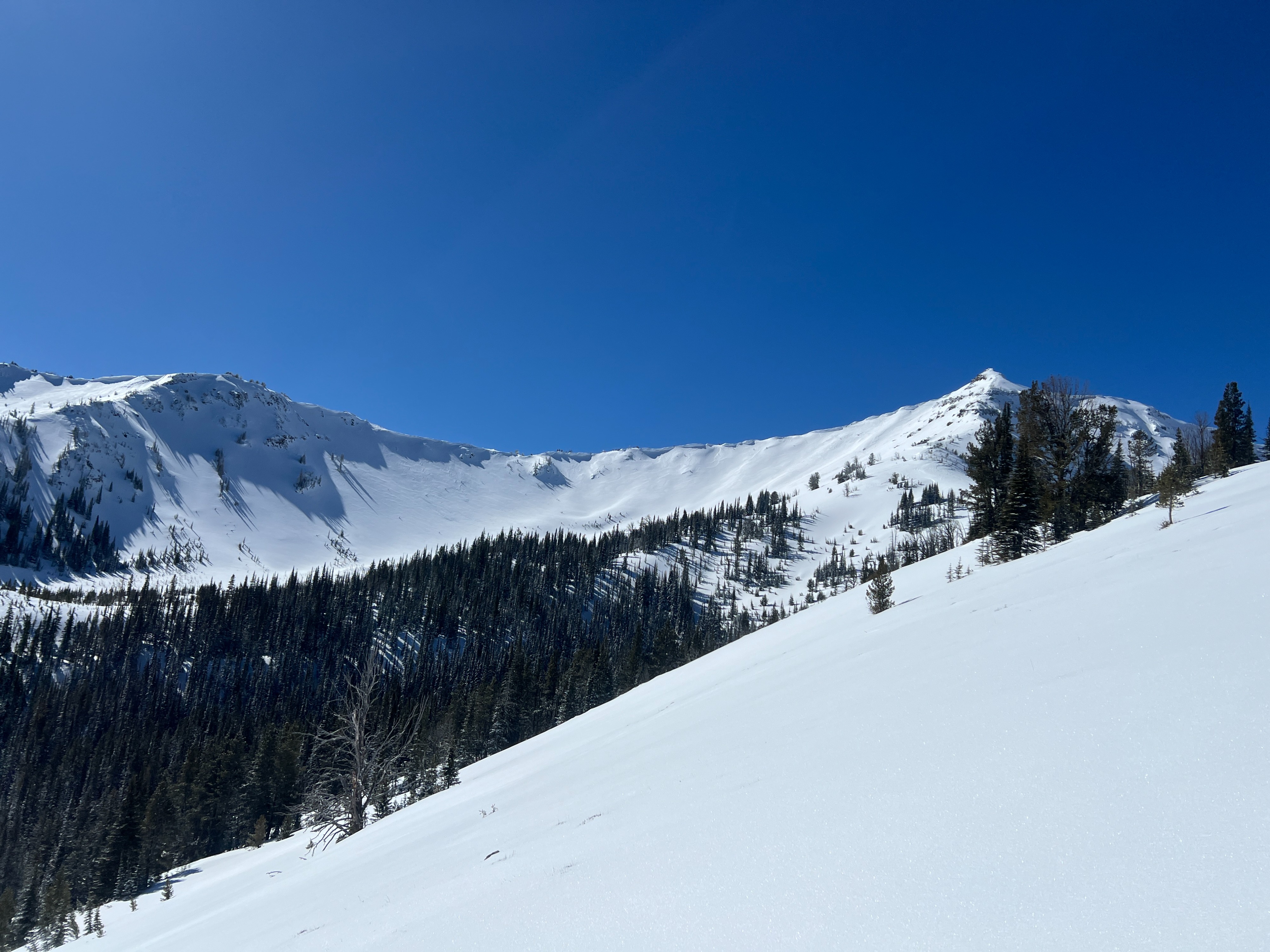
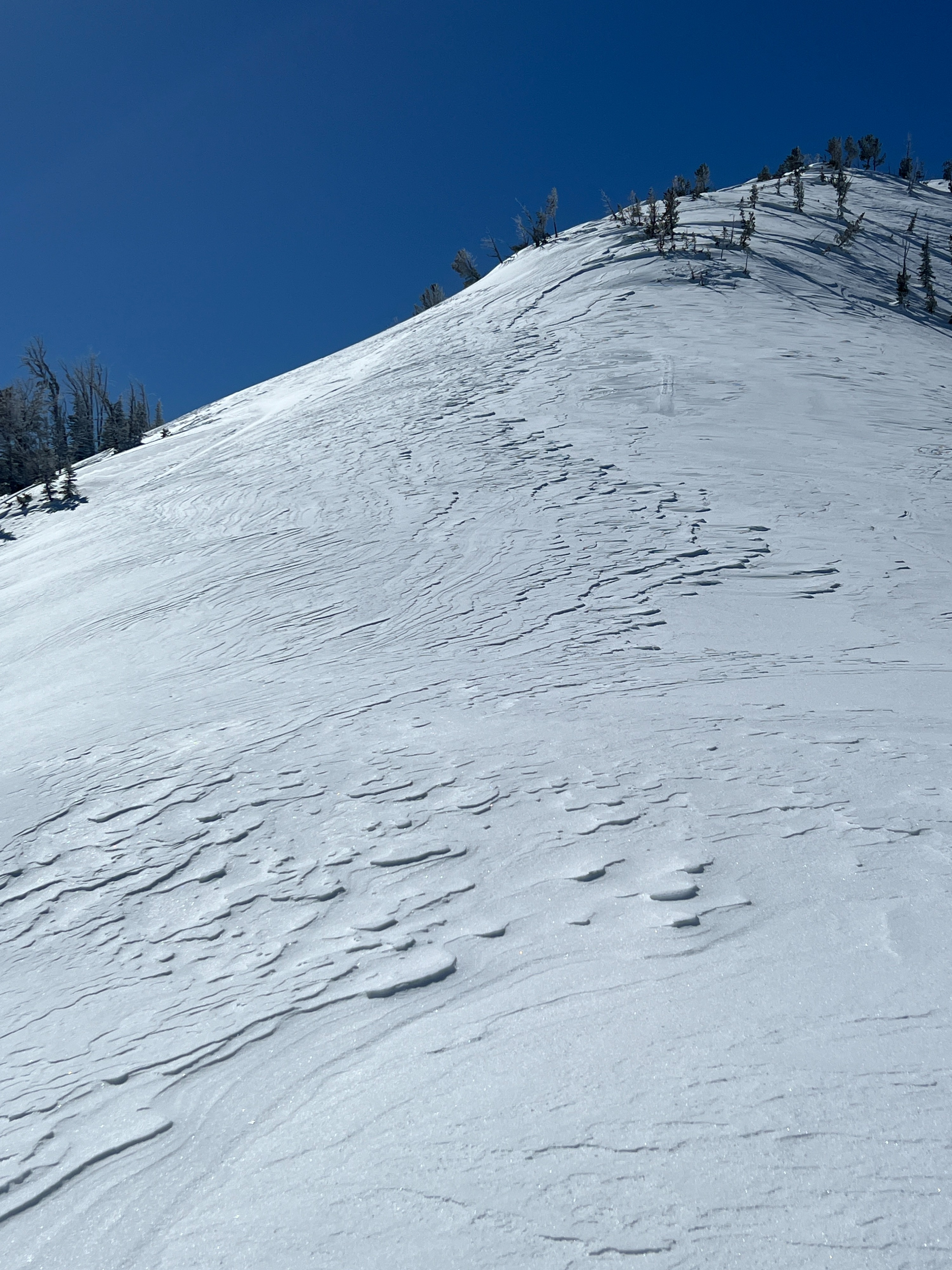
There was lots of evidence of wind stripping and loading in the upper elevation terrain. We did not travel anywhere where I found a windslab bigger than 10'x10', but I would be weary of it near upper ridgelines.
Lots of VERY large cornices out there. As our temps continue to climb through the weekend they will become weaker and need to be treated with respect. Give em a (wider than you think you should) berth.
Weather
- Air Temp
- 25-30
- Cloud Cover
- few
- Wind Loading
- light
- Snow Avail For Transport
- small smounts
Light NW wind. Temperatures just below to around freezing. Few clouds with much solar input today.
Snowpack
Pit 1: 7700' North (Middle Ridge) Height of Snow (HS): 240cm/94". In this pit, the 2/1 Rain Crust was around 160cm/ 63" deep. I conducted an Extended Column Test that failed, but did not propagate (ECTN13 down 30cm/1') at a storm interface. My compression test showed resistant planar results on this layer as well (CT15RP) as well as a CT27RP 65 cm/ 26" on a layer of 2-4 mm graupel. See attached photo of this pit.
Pit 2: 8050' NW (Middle Ridge) HS: 280cm/110". The surface snow in this location held 2mm Near Surface Facets. The 2/1 Rain Crust was found 155 cm/5feet from the surface and had some small grained facets below the crust. I tested this interface with a Propagation Saw Test with my saw completing the cut through the whole length of the column without failing. I found the graupel layer in this pit to be 65cm down and tested it with the PST as well, with a result of 98/100END. I conducted an Extended Column Test with a result of ECTN14 and a Compression Test with a result of CT17RP both down 35cm. Both of these results were on .25mm Decomposing Fragments that sat above a 1cm wind packed layer.
Pit 3: 7500' East Aspect below Shelter Ridge. This snowpit showed a more alarming snowpack structure. HS: 120cm/60". There was a thin Melt Freeze Crust on the surface in this location with a couple inches of moist snow below the crust. The buried graupel was found 35cm from the surface here, and failed but did not propagate in an ECT (ECTN21). The concern I have with this thinner snowpack structure is the 2/1 Rain crust is closer to the surface at 65cm/just over 2 feet down. There is some weak snow around this crust and these facets should not be trusted.