
Quick report
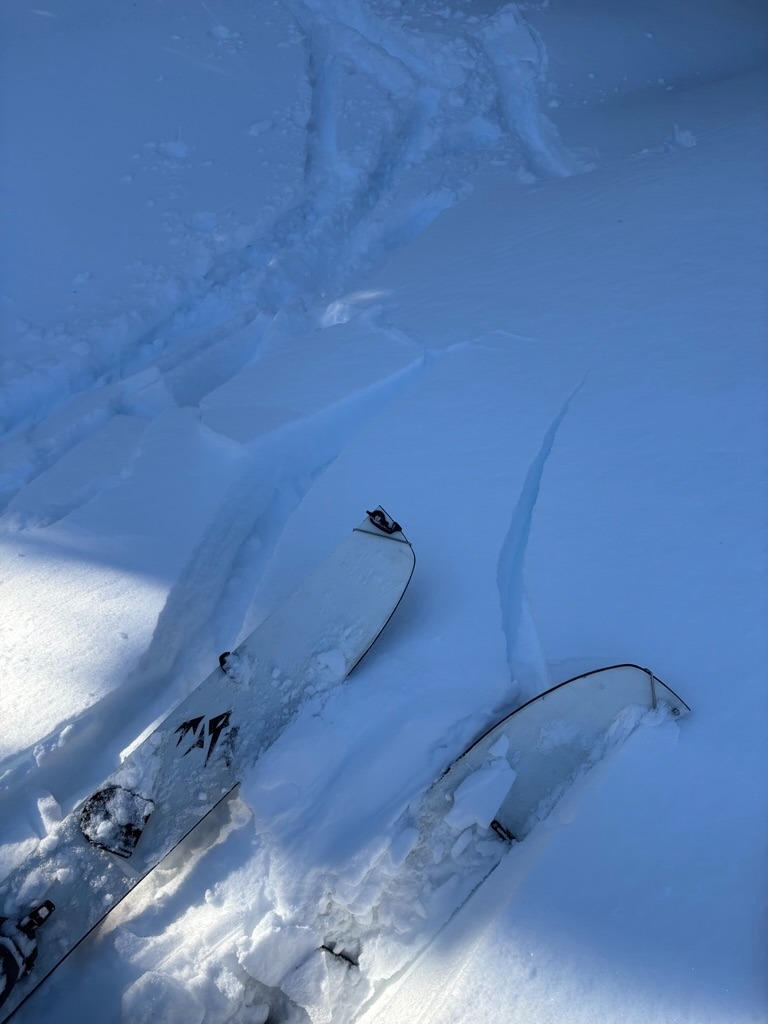
- Cracking
- specific
- Collapsing
- isolated
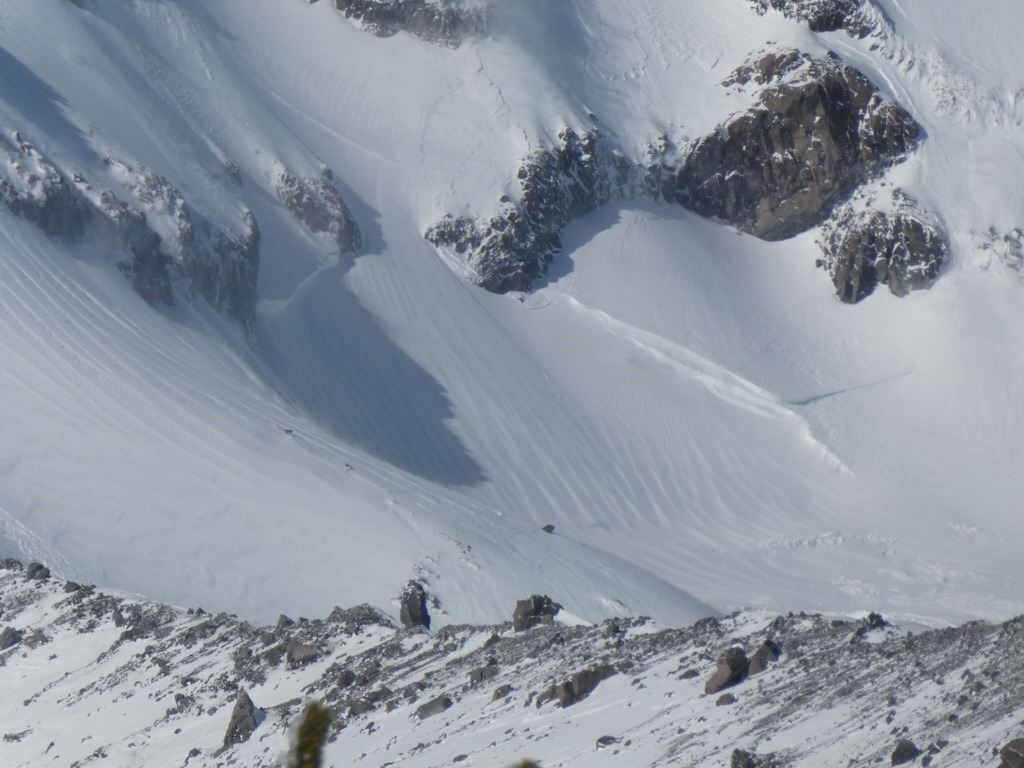
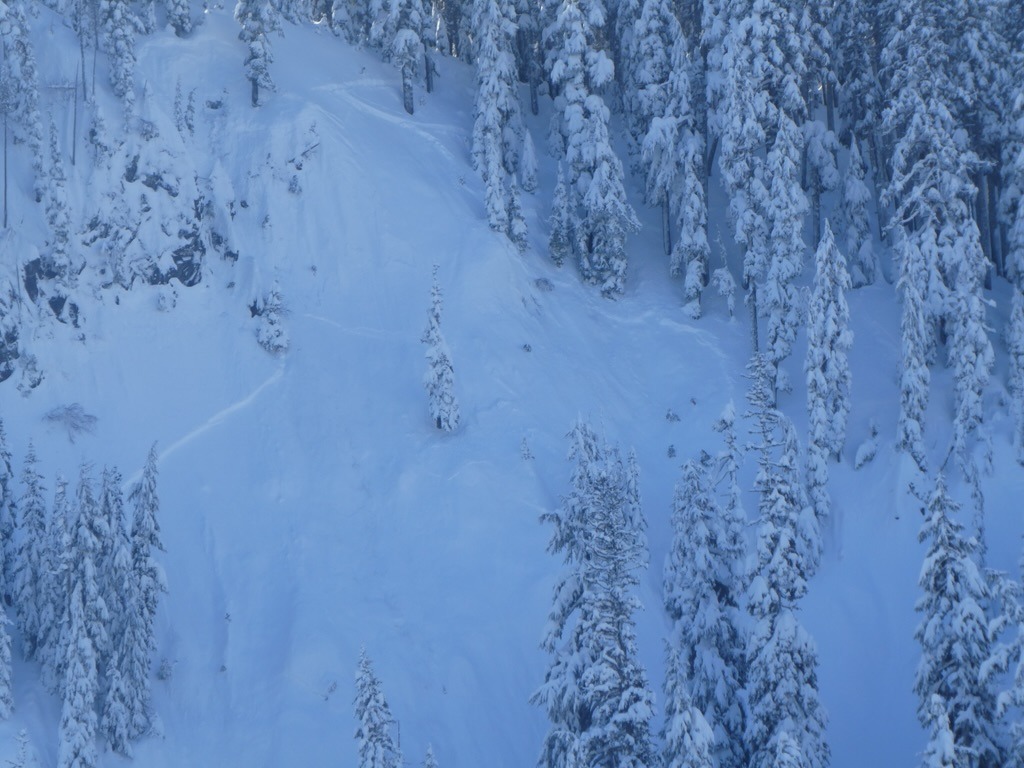
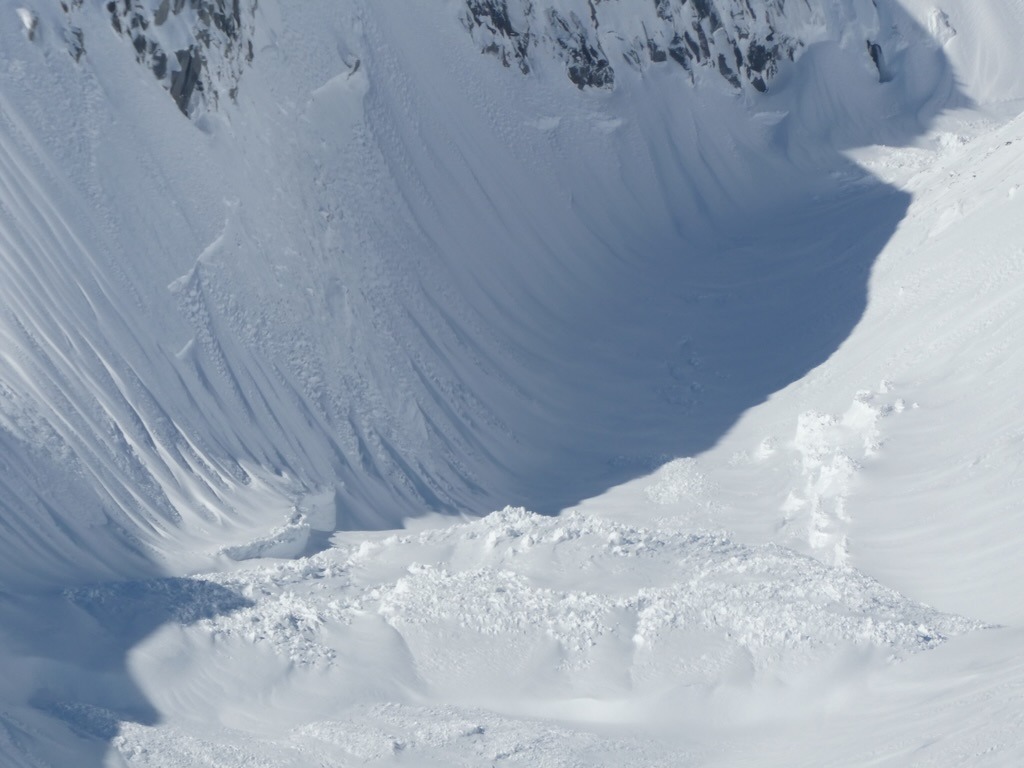
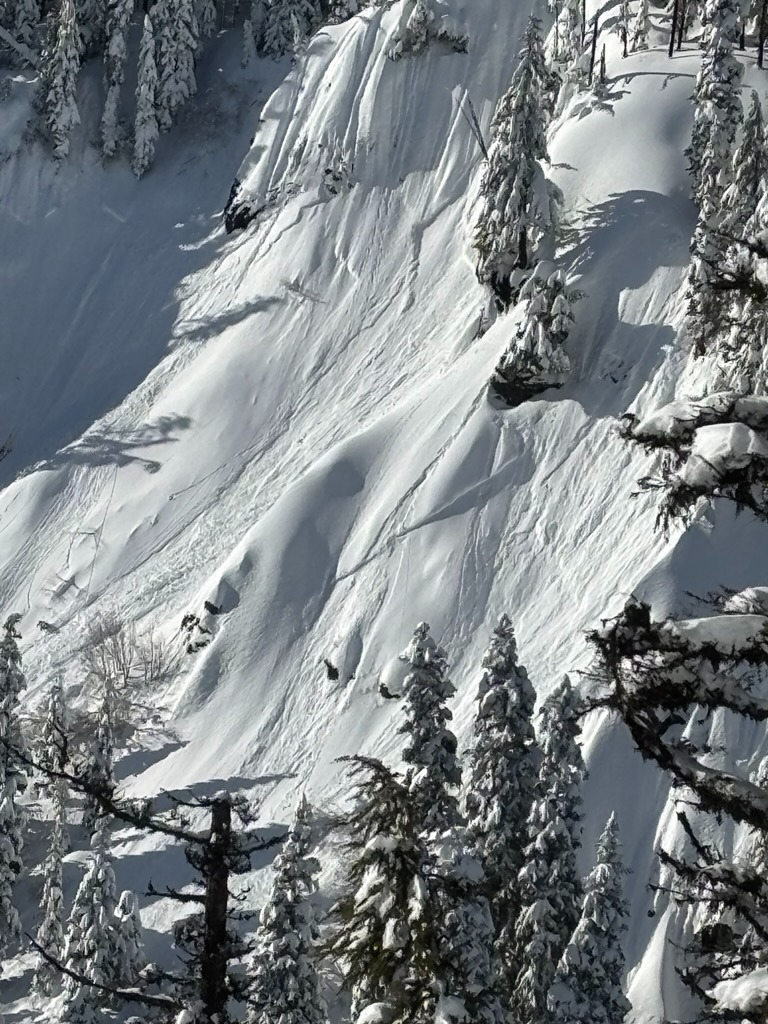
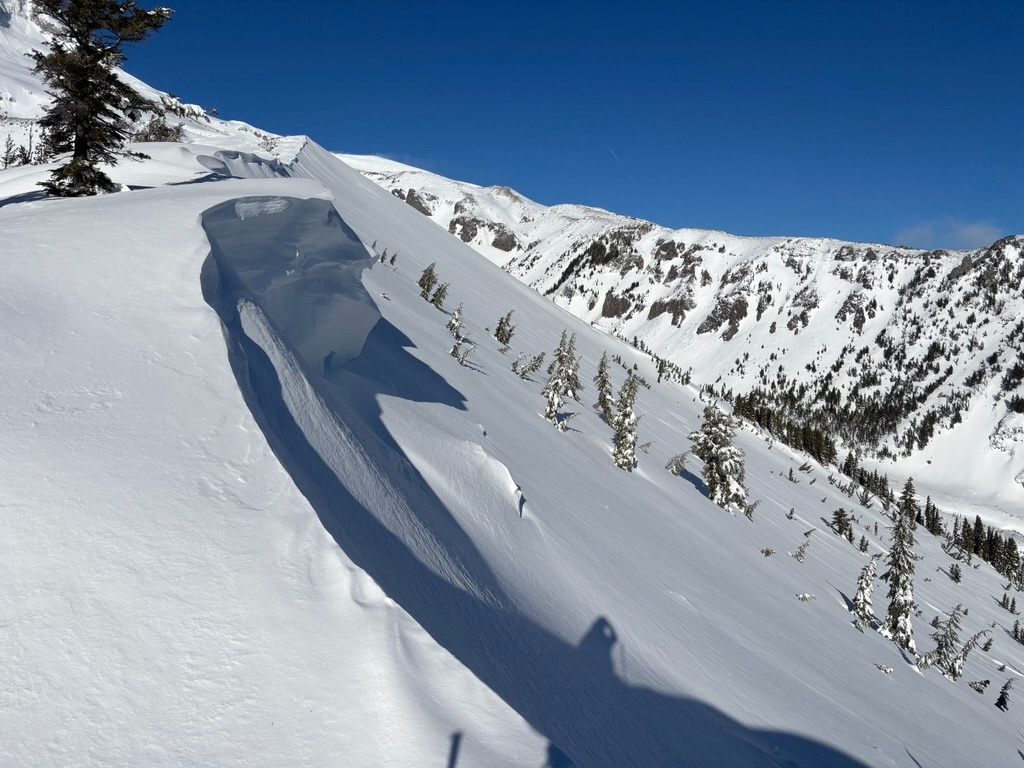
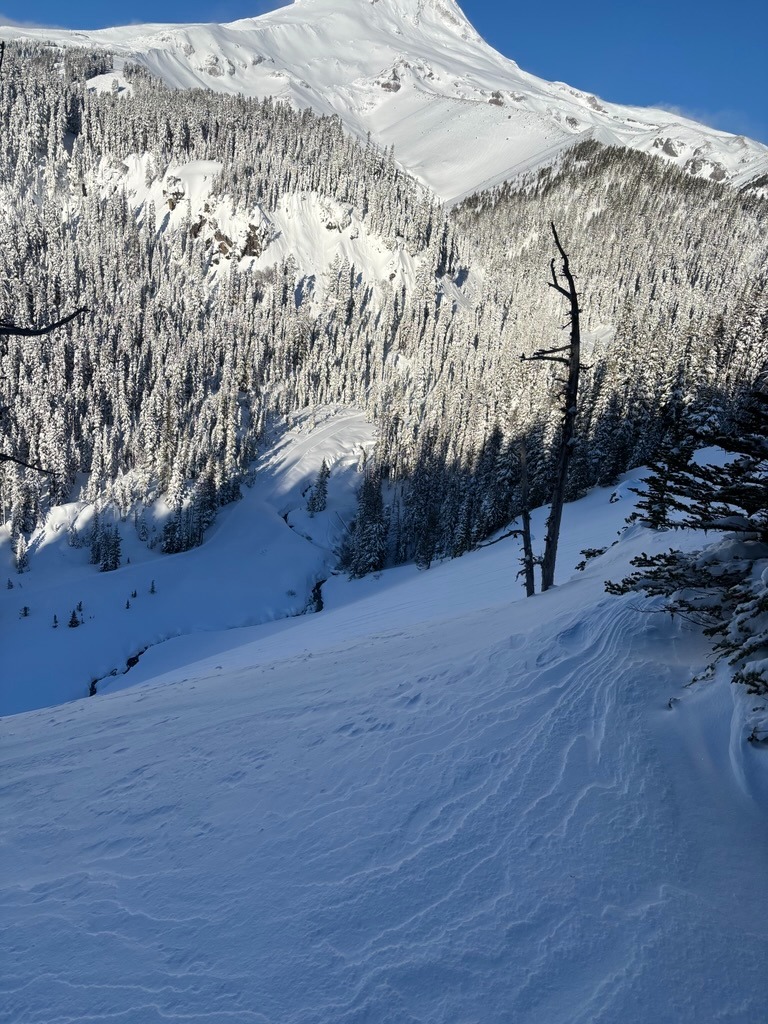
The recent storm cycle plastered the Mt Hood zone. Travel is laborious and the deep snow immersion hazards are real. While we found the storm snow settling out nicely, that was not the case in wind-loaded terrain. Wind slabs ranged in size and sensitivity depending on elevation. Below 5800 ft, we found 1-2 ft thick softer slabs to be reactive along lee aspects. As the terrain opened up around 5800 ft, these slabs became denser and more stubborn. We also observed a few large natural D2's and one very large D3 avalanche in heavily loaded alpine terrain. These avalanches likely released during our heavy snowfall & loading on 12/29.
Instability was confined to wind loaded slopes.Weather
- Air Temp
- High 20's
- Cloud Cover
- scattered
- Wind Loading
- moderate
- Rain Elevation
- 3000
- Recent Snowfall
- 25 cm
- Snow Avail For Transport
- large amounts
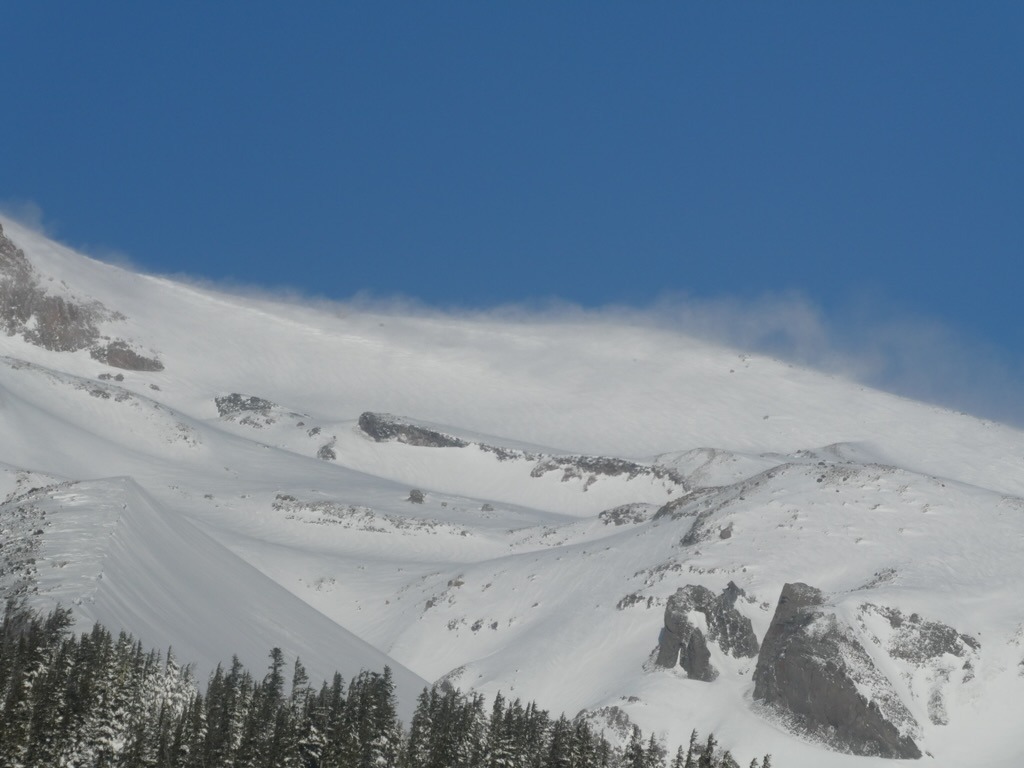
NW winds were light around 5-6000 ft, but that was not the case above 8000 ft where we saw heavy drifting.
Snowpack
Beyond surface wind slabs, we found a deep snowpack (250-300 cm) and a couple of potential failure points above the solstice crusts.
Solstice Crust: Sits 4-5 ft below the surface. In the one spot we dug at 5200 ft, E aspect we found the solstice crust well bonded to the new load above.
The 12/27: This thin crust was from a brief warm-up on 12/26. This layer sits 55-60 cm below the surface and likely extends to 6500 ft. This thin crust will be worth watching in the coming days.
New storm snow: We received a couple of notable SP failures within the new snow (in the upper 1-2 ft) on preserved stellars with small columns, but these layers failed to propagate in longer columns. I suspect they should settle out in the coming days.
Avalanche
- Size
- D2 R2
- Type
- SS
- Count
- 3
- Aspect
- NE
- Trigger
- AE
- Elevation
- 5300 ft