
Quick report
Valley fog and increasing high clouds kept the pass much colder than expected. This resulted in generally safe avalanche conditions. Instead of avalanche concerns, we were most worried about travel issues. Breakable crust, bulletproof tree bombs, frozen avalanche debris, icy slopes, and open creeks made travel slow and arduous.
No cracking or collapsing.Weather
- Air Temp
- 27
- Cloud Cover
- overcast
- Wind Loading
- none
- Recent Snowfall
- TR
- Snow Avail For Transport
- none
Valley fog kept us mostly socked in today. There was a little clearing around noon, but views were still limited.
Snowpack
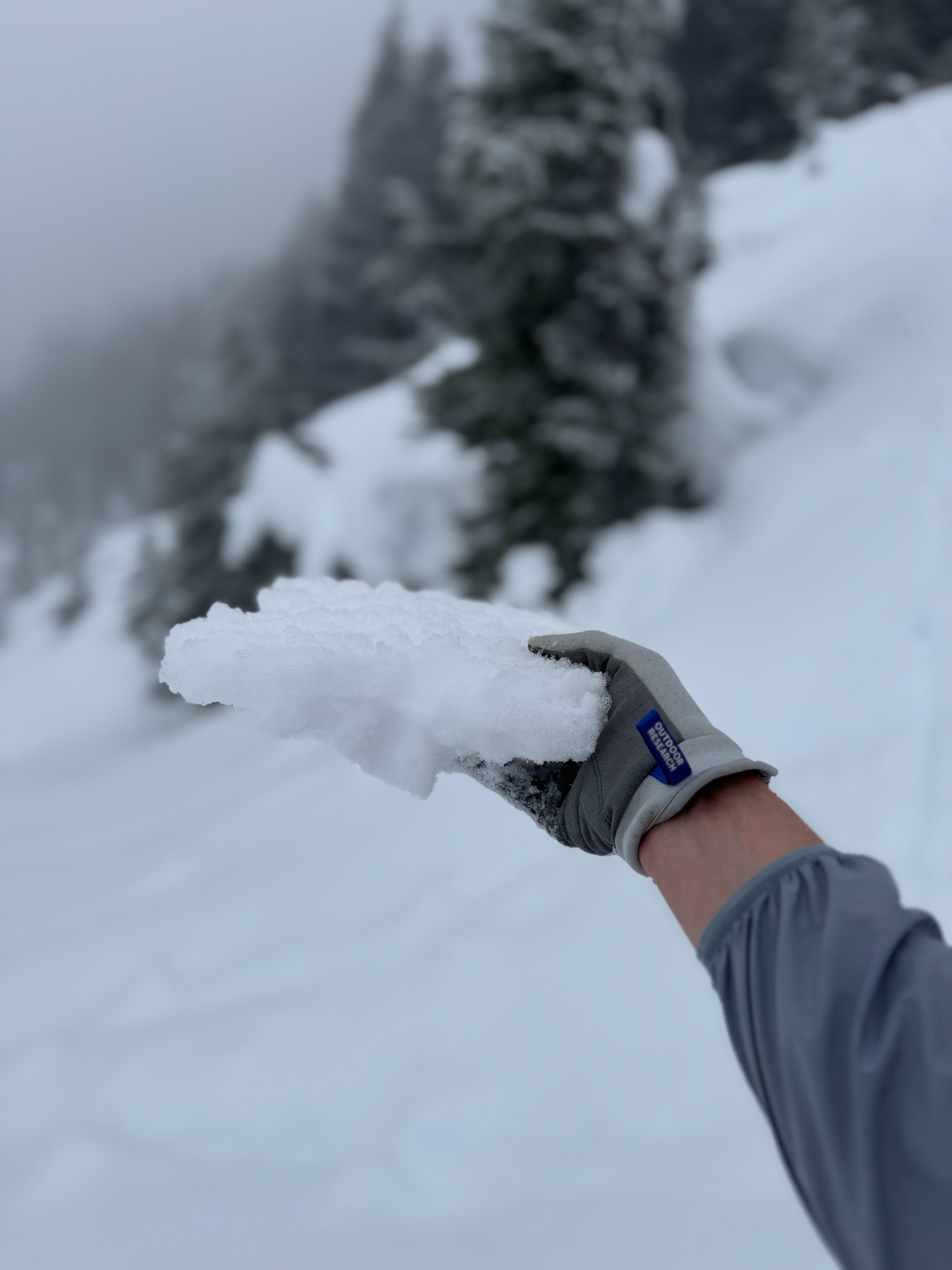
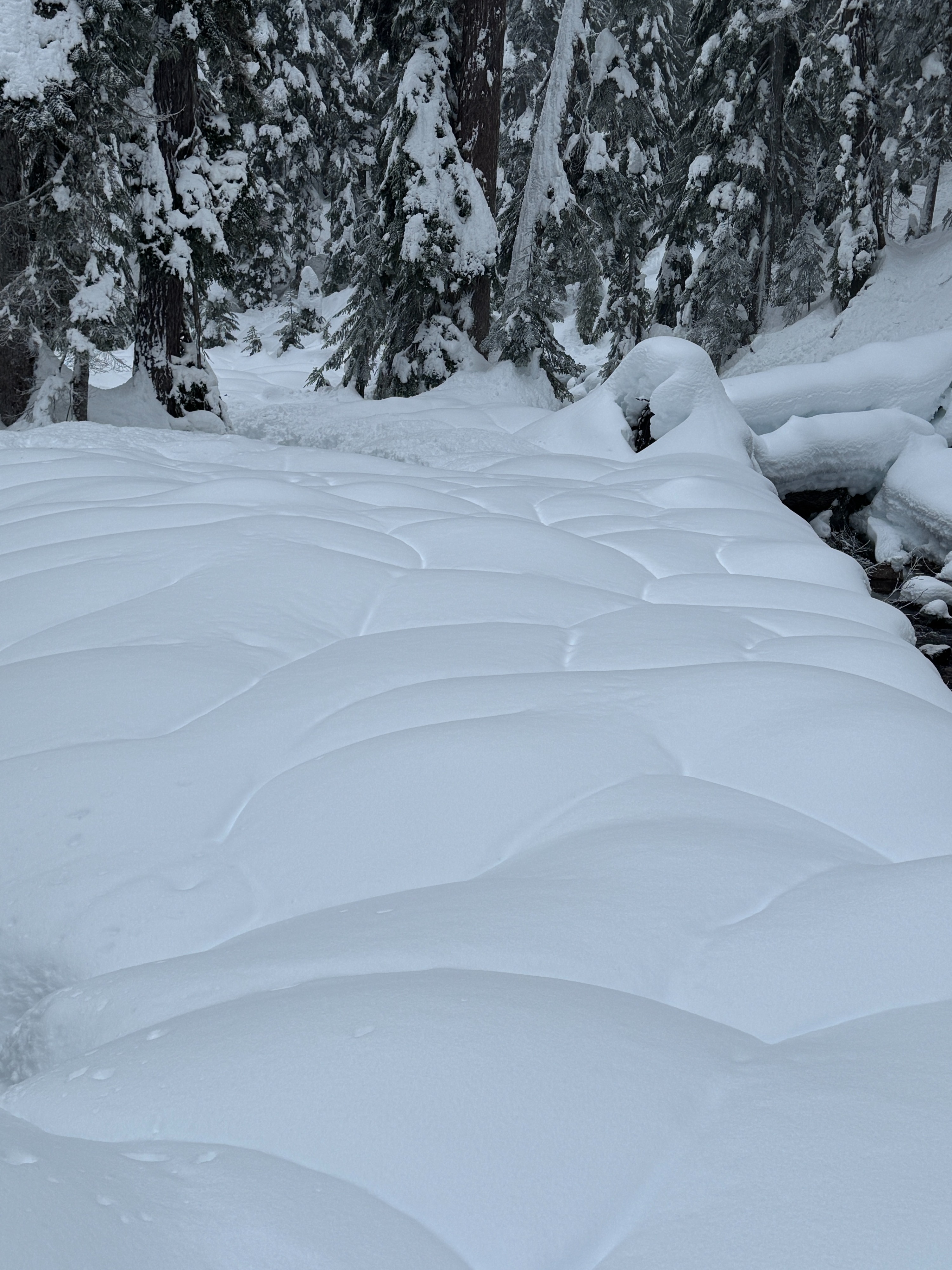
A 1-2" (2-5cm) crust caped the snow surface from the road to our highpoint around 4450ft. A the upper end of this range the crust was stronger and more pronounced. While strong, it was neve ski supportable and easily broke as we traveled. Underneath the crust, soft moist snow still exists. We didn't do much digging below the surface, so can't speak to the upper snowpack layers.
Other items of note:
Most of the snow has fallen out of the trees. These treebombs are now frozen solid and will stop you in your tracks. They make for very icy travel in the trees.
Even though the snow has fallen out of the trees, its still hanging on most of the cliffs. Plenty of snow is still left to fall down if conditions warm.
Runnels along the surface below 4000ft suggest rain on snow at lower elevations from Sunday. Not surprisingly many creeks are still open and creek crossings area challenge.
Avalanche
- Size
- D2 R2
- Type
- SS
- Count
- 6
- Aspect
- E
- Trigger
- N
- Elevation
- 4600 ft
It's hard to tell the exact age of every avalanche we saw. While I've seen bigger cycles, this one was impressive. Debris piles litter many slopes, even at lower elevations. Most of these slides likely occurred on Sunday 1/5, but some still appear fresh and may have released on Monday 1/6.