
Quick report
- Cracking
- specific
- Collapsing
- specific
It was a loud day in the mountains, and not from all the motorized users in the area. Fraglie weak layers below a cohesive slab is a dangerous recipe to get into trouble. While natural avalanche activity has tapered off, human triggering remains likely on all steep slopes across all elevation bands. Maintain a conservative mindset and evaluate all steeper slopes first before committing.
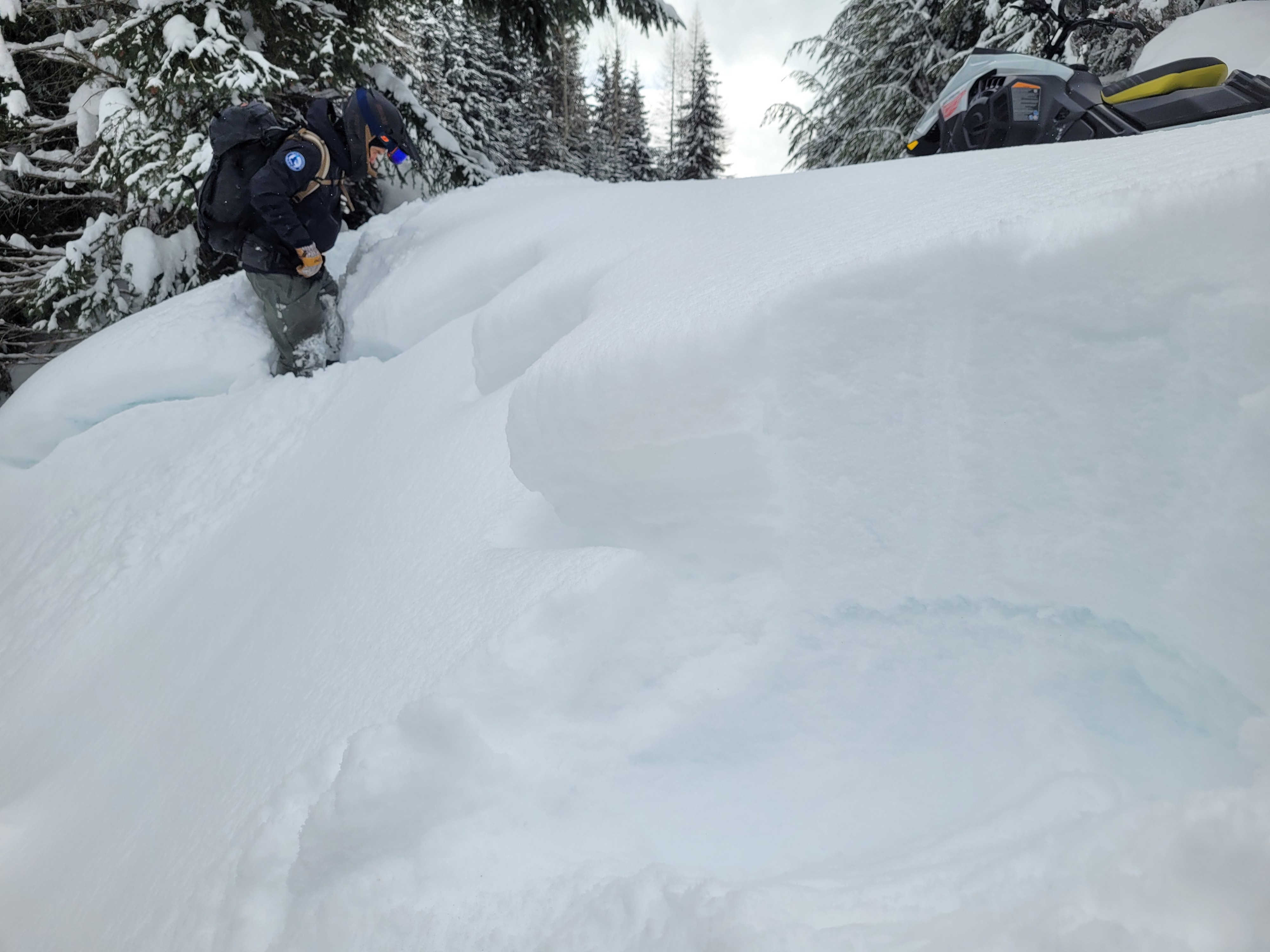
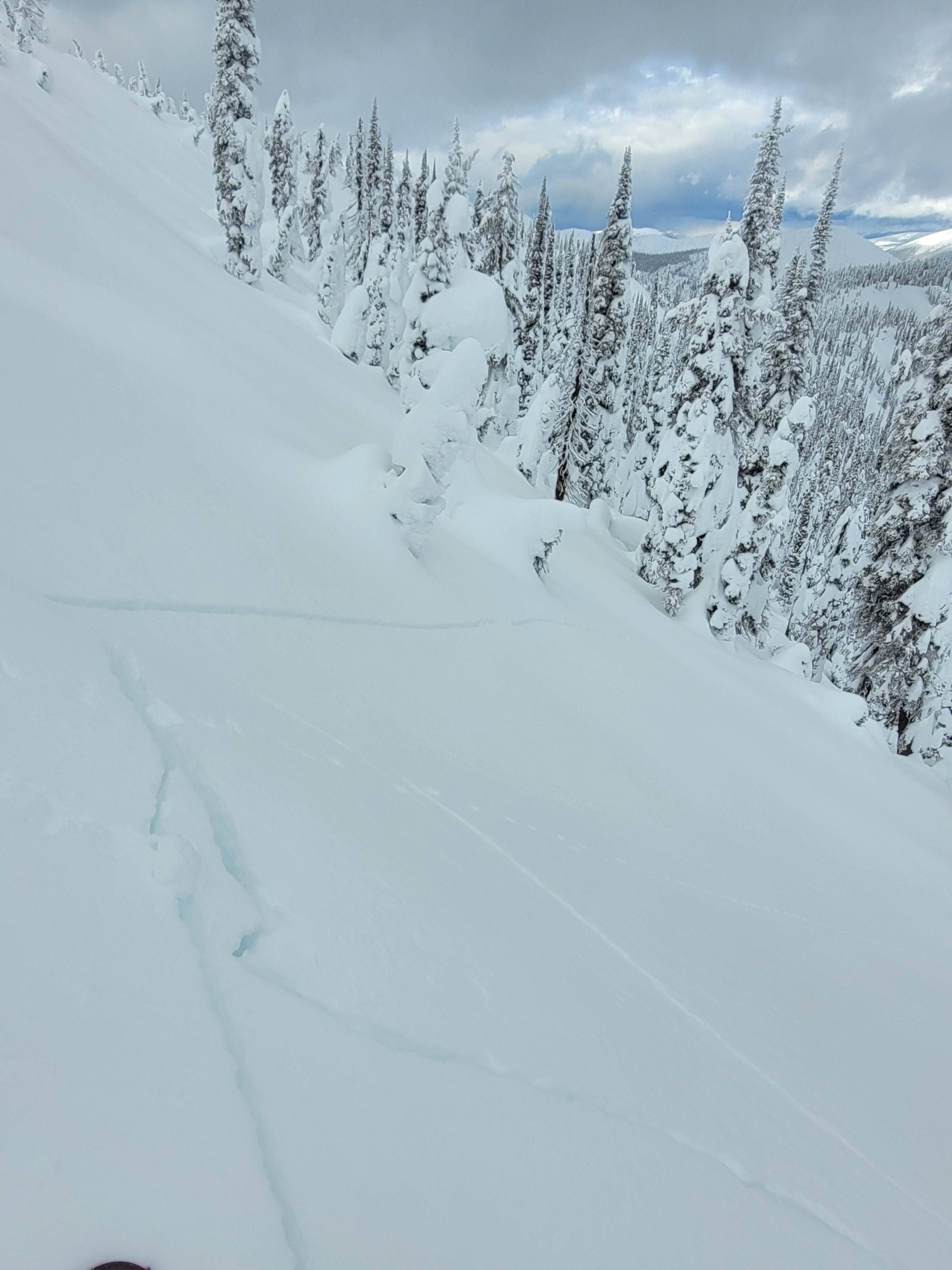
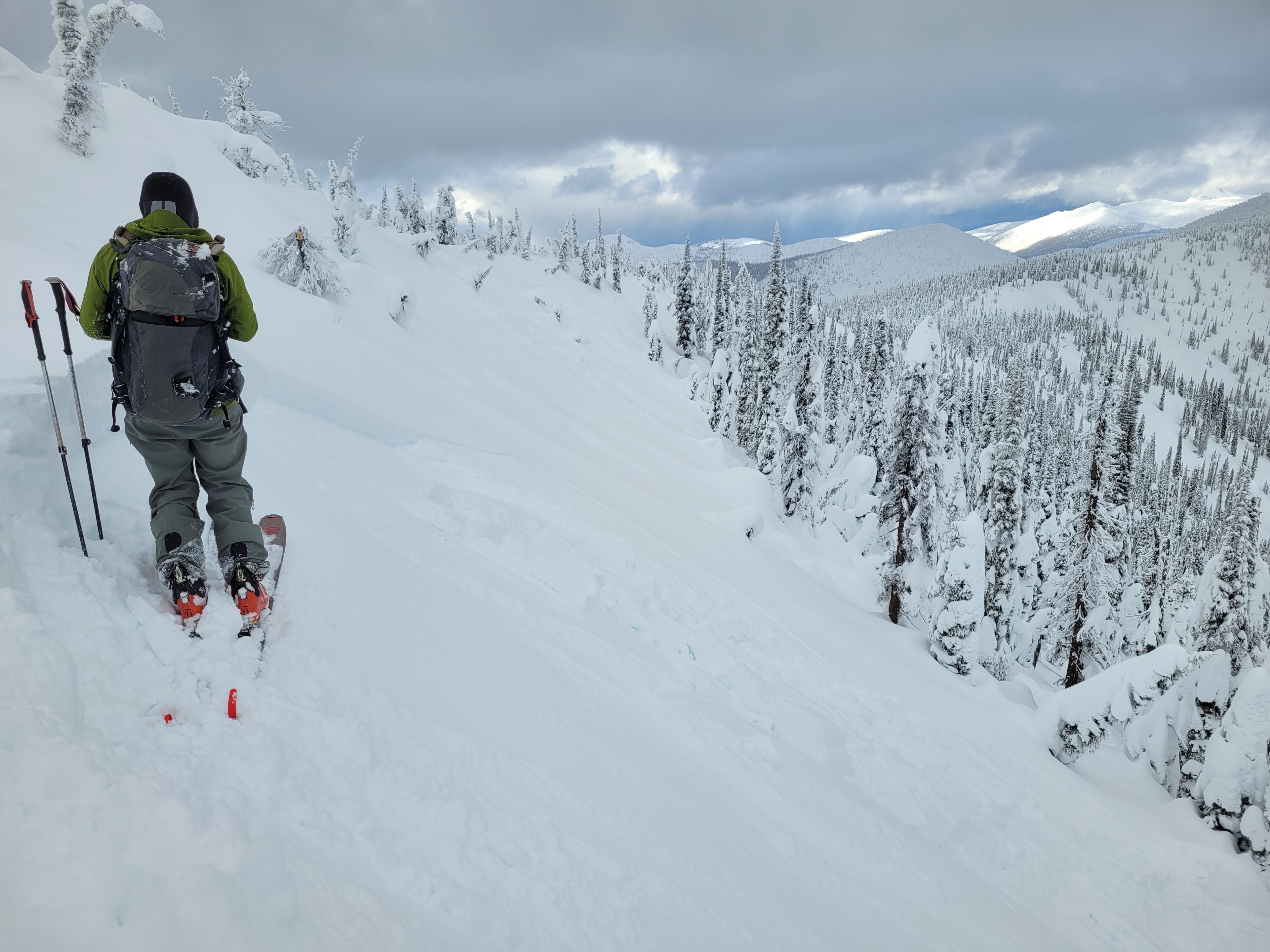
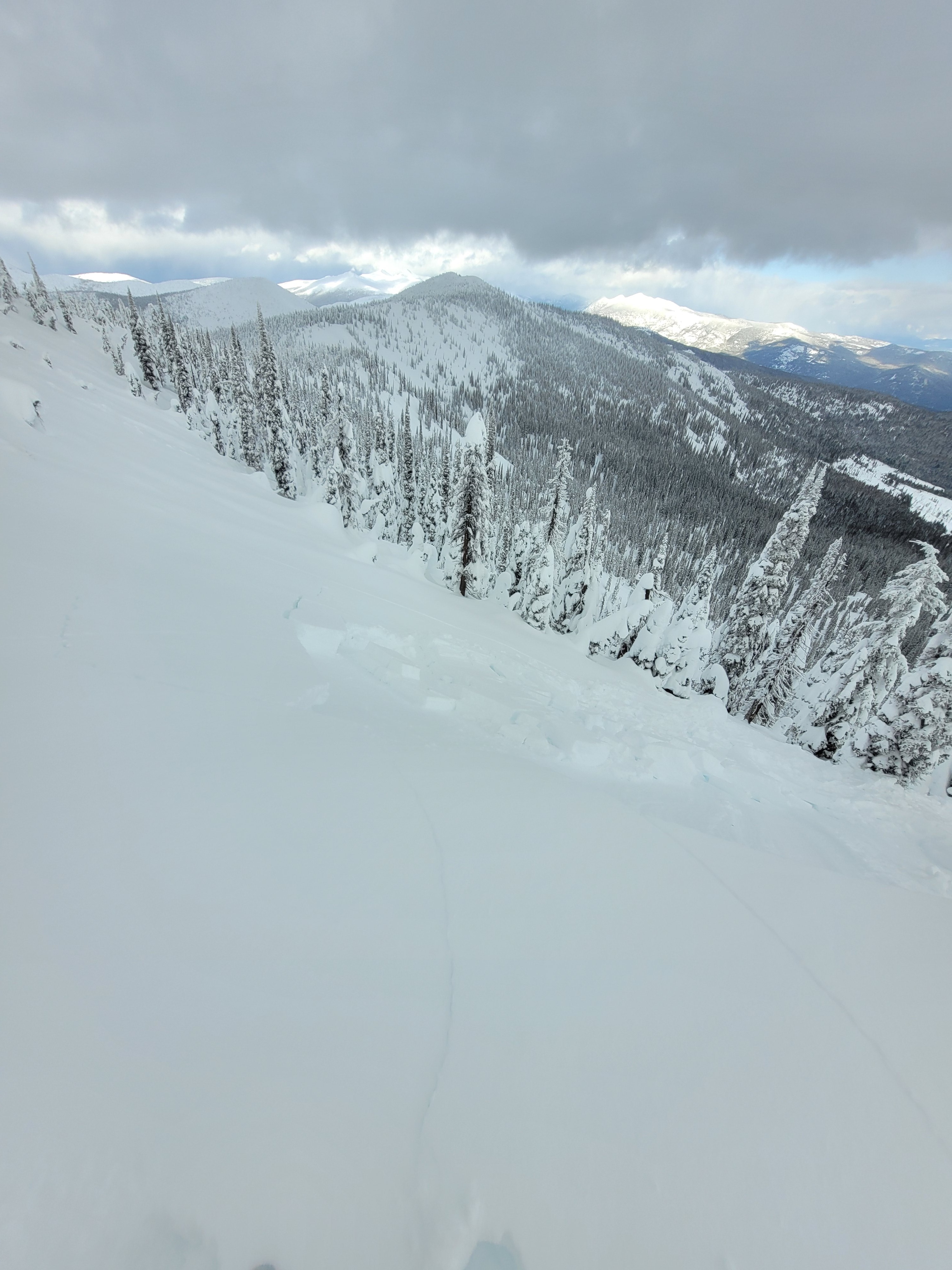
Numerous loud, rumbling collapses on northerly-facing slopes with most producing long-running cracks. While descending a southeast-facing slope, numerous rumbling collapses on slopes nearing 30 degrees and a faceted crust below.Weather
- Cloud Cover
- overcast
- Wind Loading
- moderate
- Recent Snowfall
- 10
- Snow Avail For Transport
- large amounts
Mix of overcast, broken, and partly sunny skies. Snow flurries most of the day till around 2 pm. Then S1+ snow on the cruise out. Moderate westerly winds producing snow plumes off higher peaks, but minor drifting along ridglines at 6,300 feet.
Snowpack
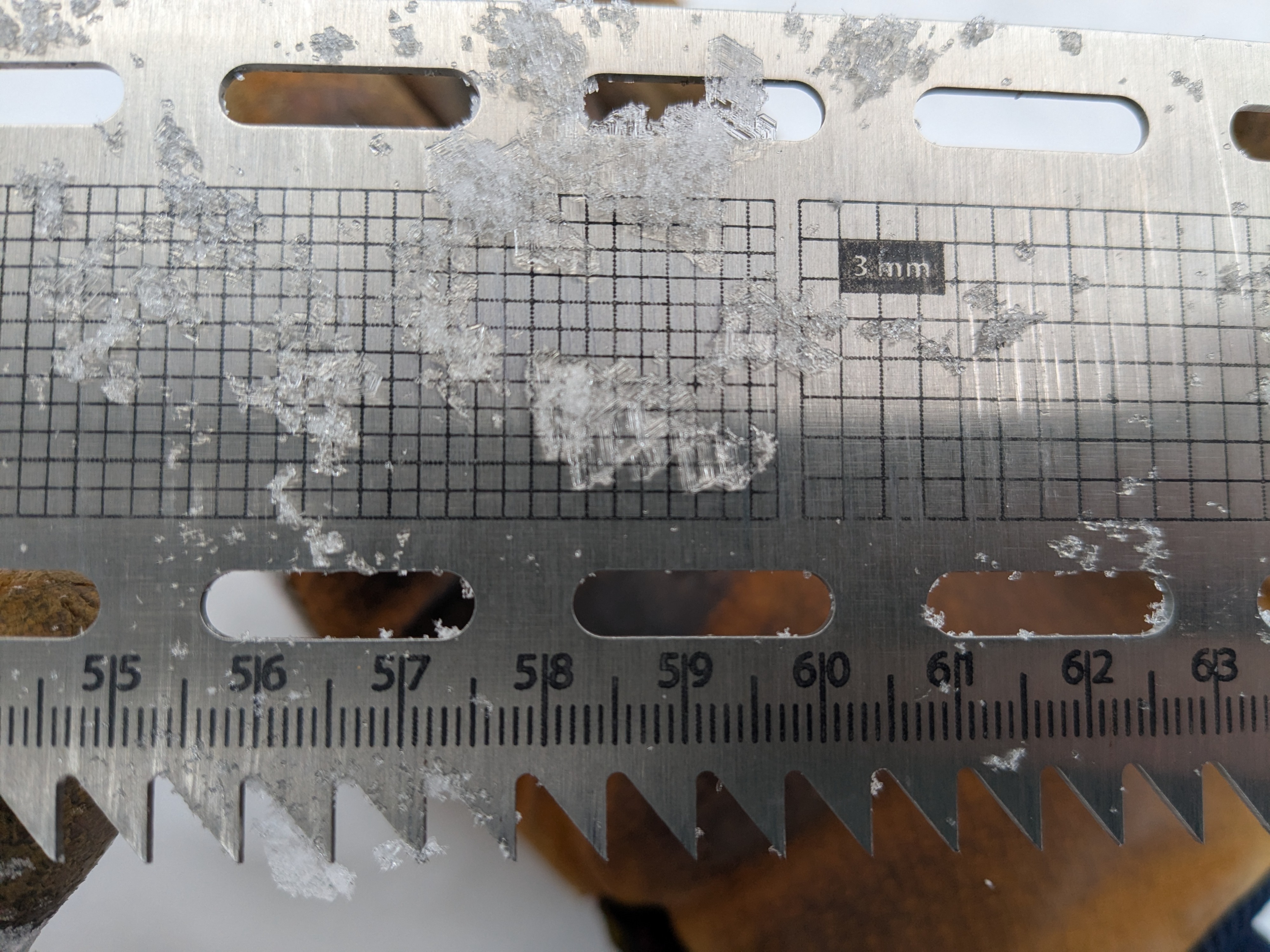
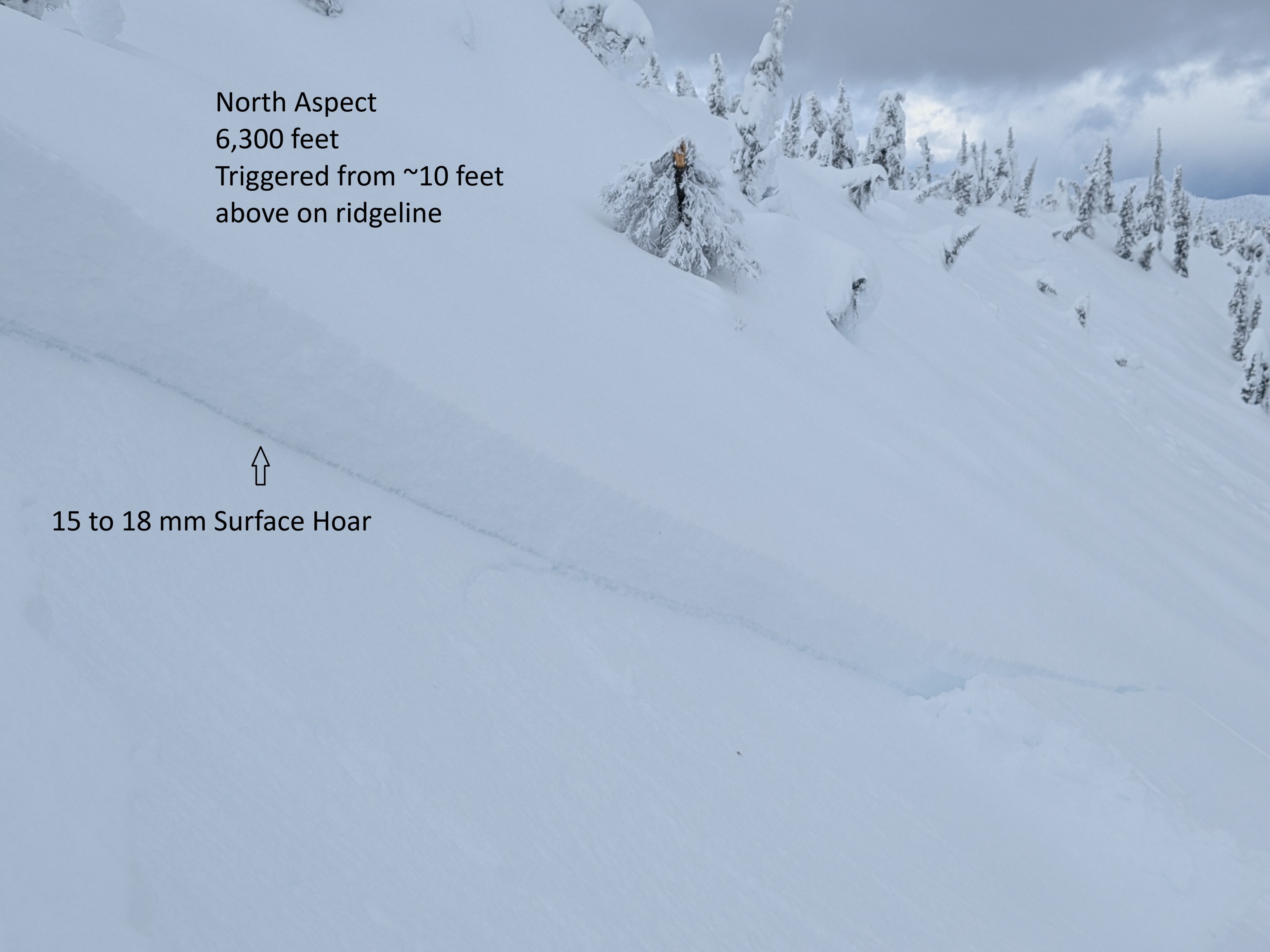
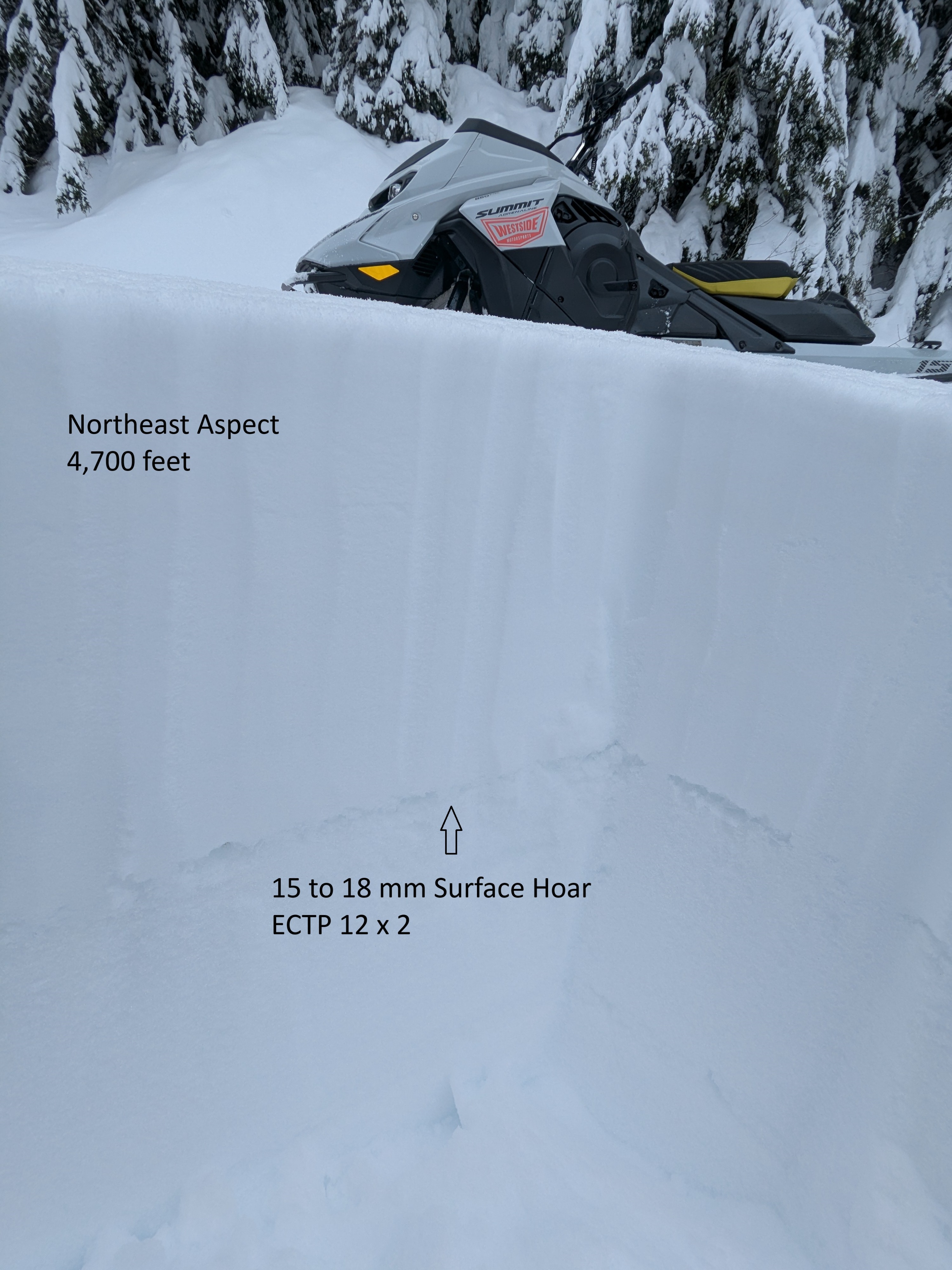
Weak, collapsible snow layers exists on most slopes in the form of large surface hoar on top of F to 4F surgery facets. These weak layers are now buried 1 to 2 feet deep depending on elevation and recent wind-drifting. We started encountering evidence of natural and rider-triggered avalanches around 4,700 feet. By the time we climed higher in elevation, audible collapsing emerged. By the time we gained the ridgeline at 6,300 feet and started walking above drifted slopes, we triggered long-running cracks and one avalanche pushing size 2 from about 10 feet back on the ridgeline. Our snowpit slightly lower down around 5,800 feet provided constrasting results. Approaching that pit location, we observed a loud collapse. Digging deeper, we found an extremely obvious layer of fragile surface hoar below an approx. 18 inch slab. Despite the notable hard over soft layering, we only observed non-propagating results in ECTs with moderate force, and PST cut lengths were about half the column length. While this is not what we expected, a very worrisome snow structure looms in many locations to not place too much emphasis or trust in one data point - test results can vary in unknown or unexplained ways. The same snowpack structure in our pit location was the same structure where we triggered long-running cracks and the said avalanche. While descending a southeast-facing slope, we experienced numerous audible collapses on any part of the slope that nudged slightly steeper than 30 degrees. Below the storm snow on sunny slopes is a 1 to 2 cm crust, with F hard facets below. As this crust continues to be incrementally loaded, the potential of natural slides could increase as well rider-triggering.
Avalanche
- Size
- D2
- Type
- SS
- Count
- 8
- Aspect
- NE
- Trigger
- AS
- Elevation
- 6200 ft
Many avalanches up to size 2 that likely ran during a period of high PI overnight Friday or Saturday morning. Those visible were on northerly and easterly-facing aspects and failed in well preserved SH around 2 feet deep. A few distant crowns above treeline looked deep and wide breaking. We also triggered several loud collapses, cracks, and one size 2 slide while walking along the ridgeline - approx. 10 or so feet away from crowns and cracking.