
Quick report
- Collapsing
- isolated
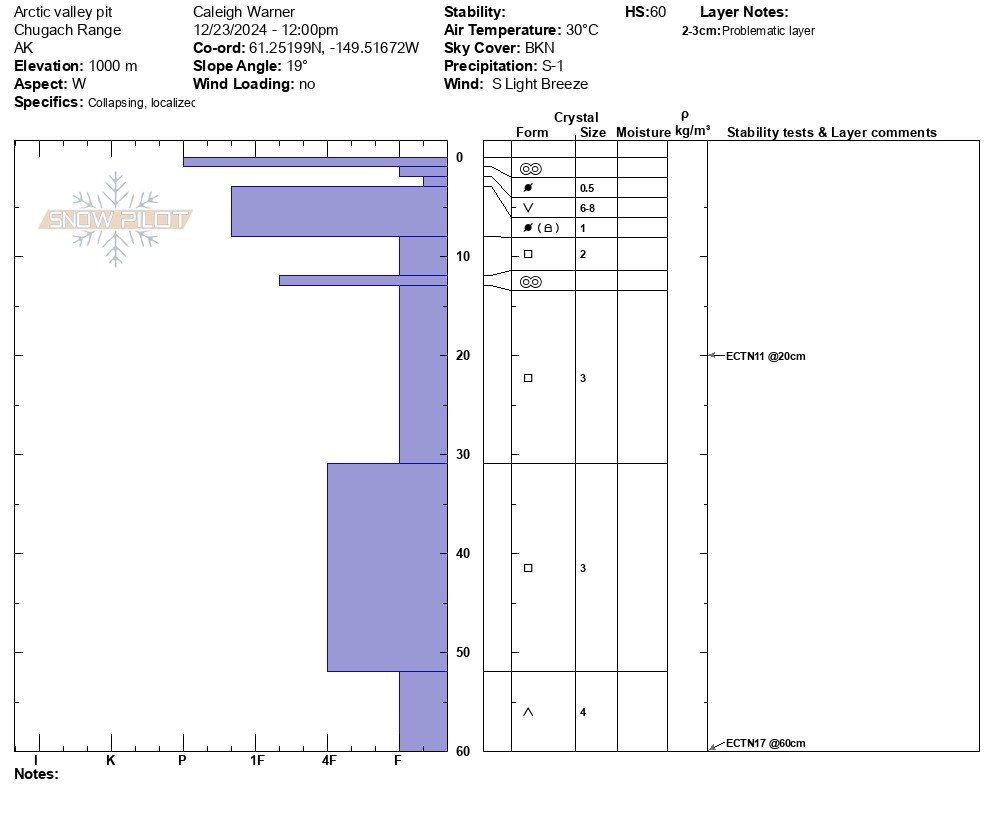
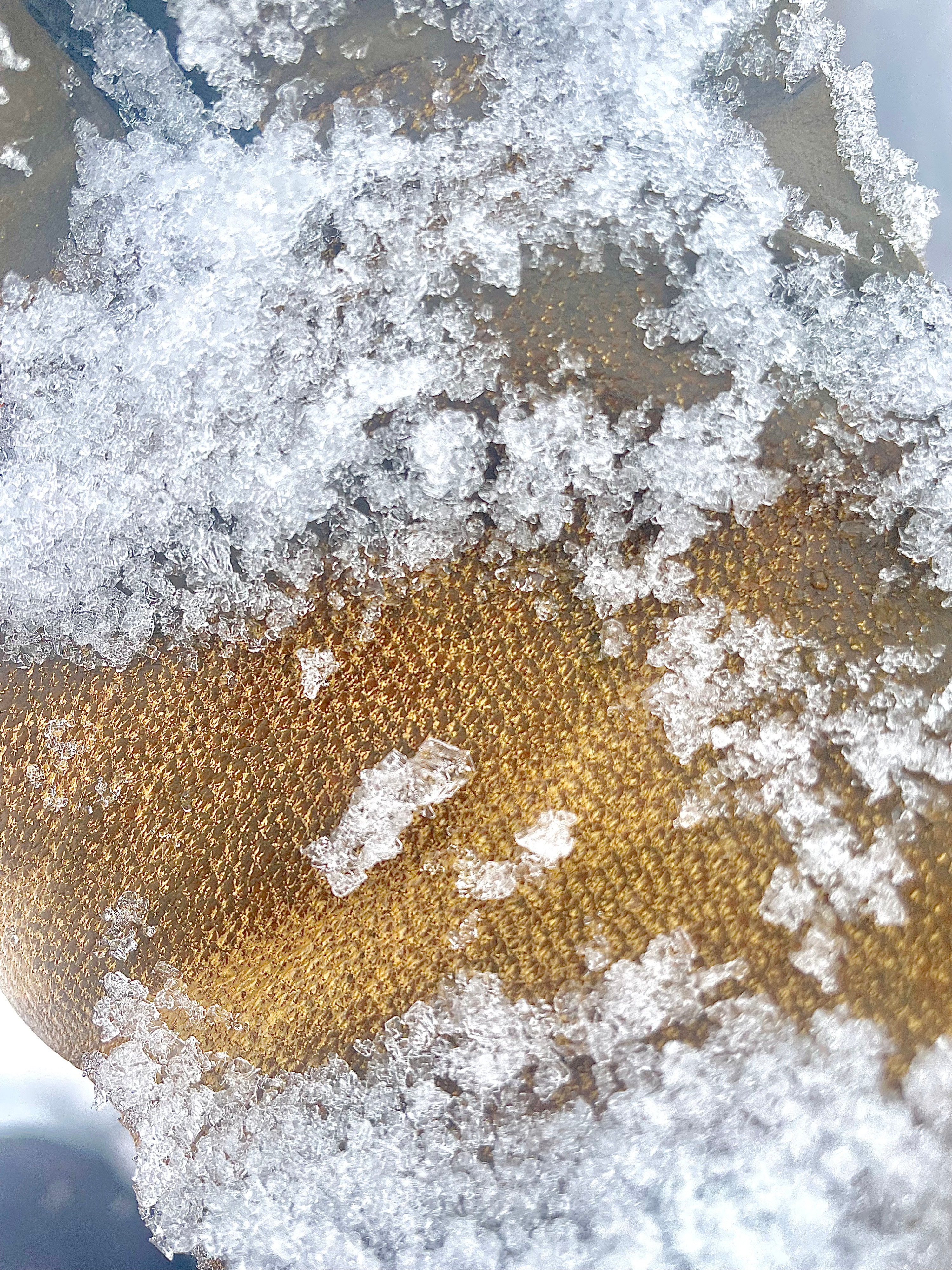
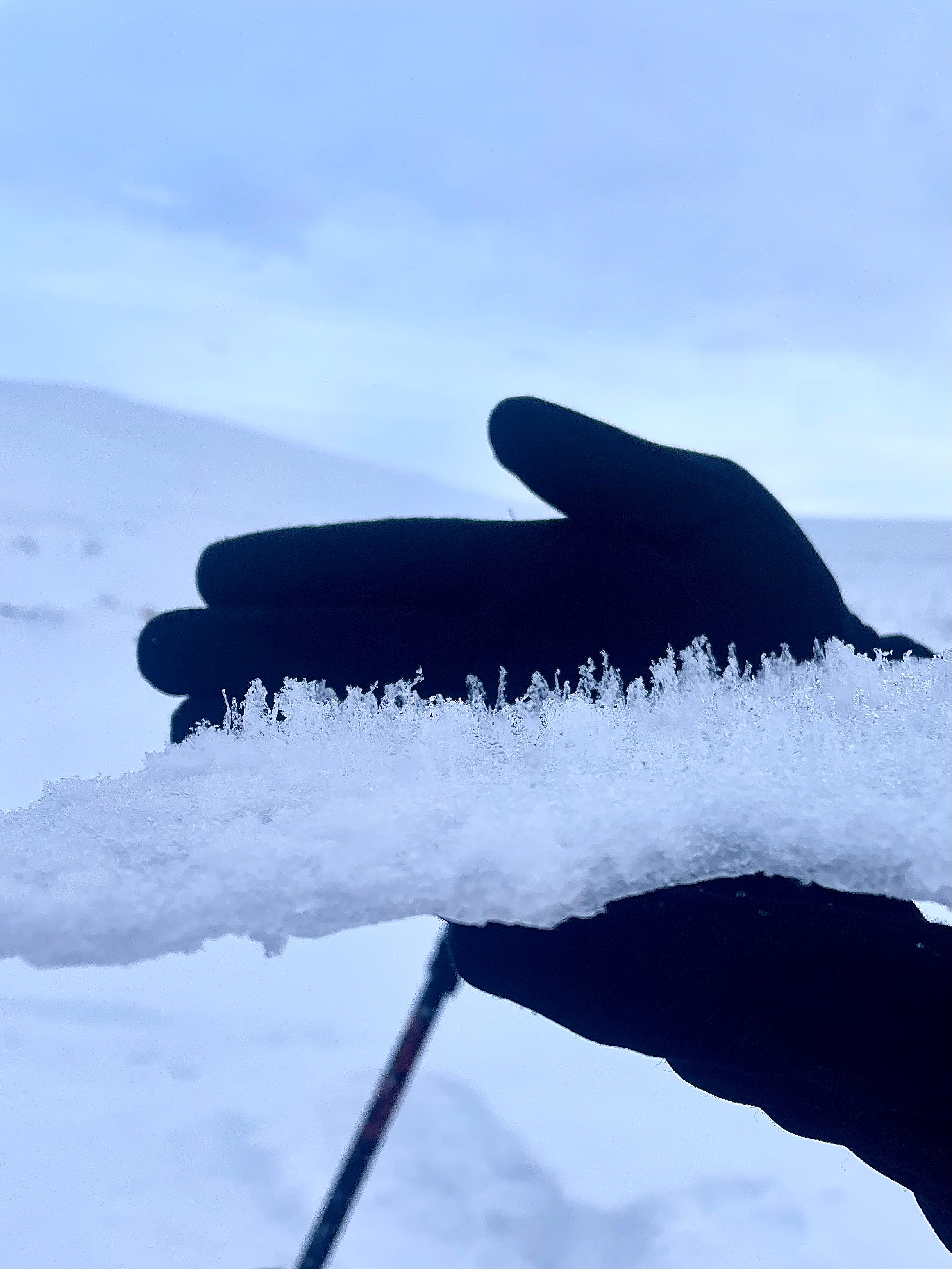
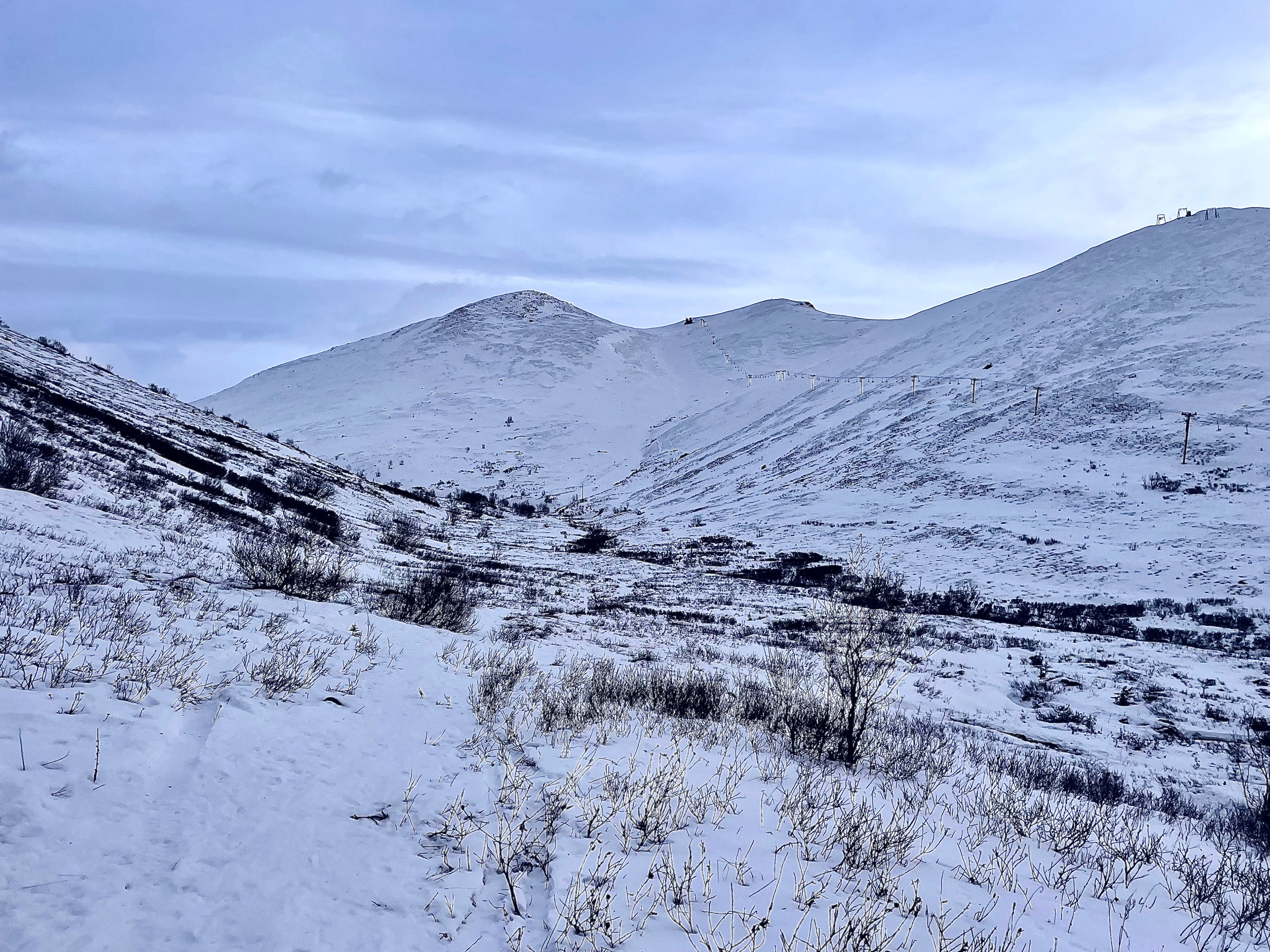
We observed a widespread melt-freeze crust on the snow surface from where we started our day at the trailhead until just beneath the ridgetop at ~3700 feet. Snow coverage in this region remains thin, with sparse patches of old wind-drifted snow and exposed vegetation where the wind has scoured the snow away. On our descent, the firm surface conditions made for fast skiing until the crust became breakable ~ 3300 feet. We found patches of deeper snow in leeward terrain features and dug two snowpits in old wind-drifted snow. In both snowpits, we found a well-preserved layer of buried surface hoar. Our snowpit test results suggested that this persistent weak layer failed with moderately strong force where there was a sufficient slab on top of it. This weak layer exists in isolated terrain- near ridgetop elevations and in leeward terrain features where snow exists. This will be an interesting layer to track this season, for now, we believe the likelihood of triggering an avalanche remains low in the Chugach State Park.
In areas where the snowpack was shallow, we observed collapsing.Weather
- Air Temp
- 30
- Cloud Cover
- broken
- Wind Loading
- none
- Recent Snowfall
- nil
- Snow Avail For Transport
- none
We started the day with mild temperatures, light winds, and occasional strong gusts. Around 1 pm visibility declined and it began to snow lightly.
Snowpack
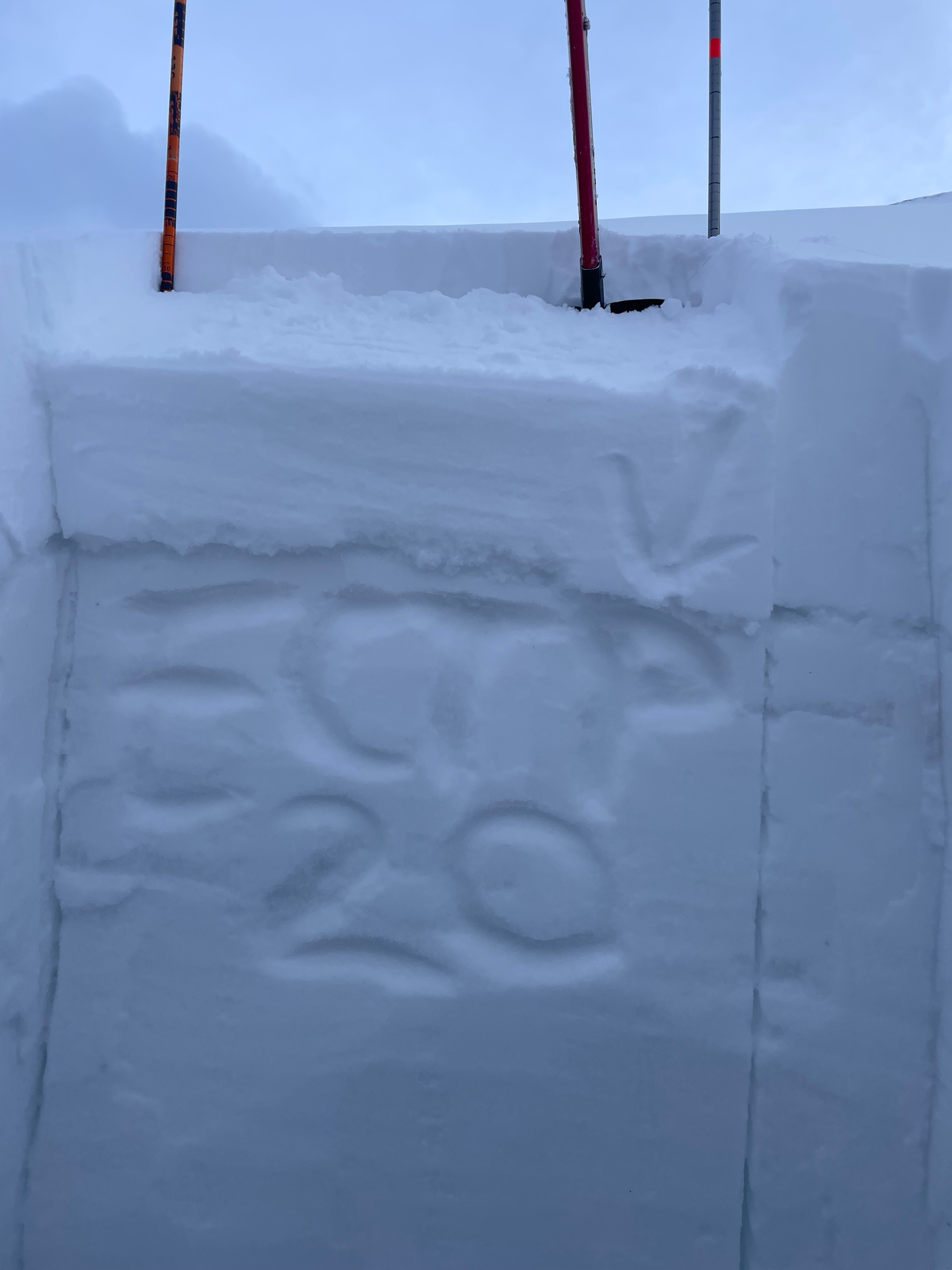
In two snowpits we observed poor structure at 3300' and at 3650' due to the presence of two persistent weak layers including a well-preserved layer of buried surface hoar near the surface of the snowpack and basal facets at the ground. At 3650' we performed an ECT test that had propagating results 27cm beneath the snow surface on the layer of buried surface hoar after applying moderate force, our results were ECTP20 and our PST failed upon isolation.