
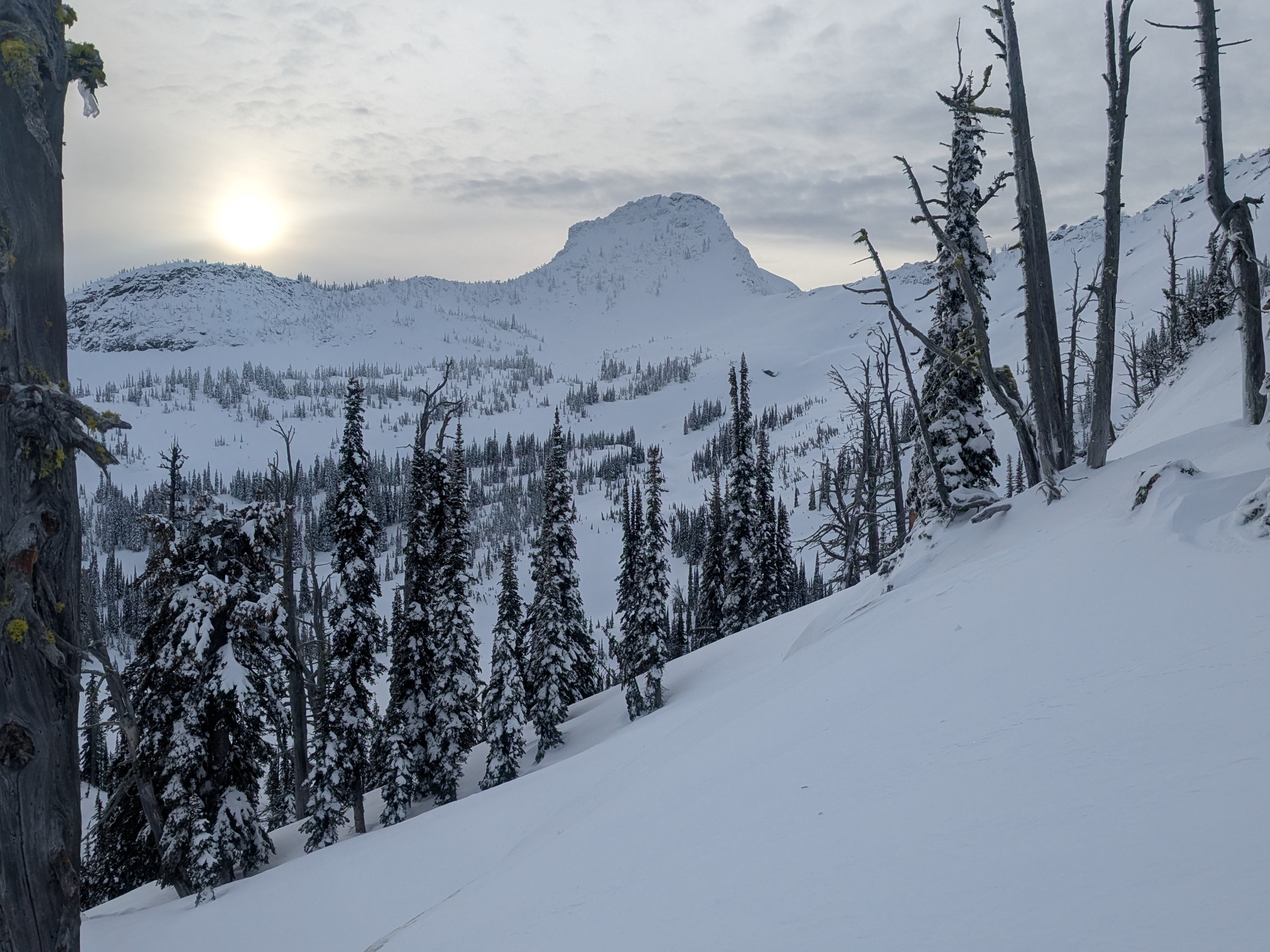
Quick report
- Cracking
- specific
- Collapsing
- specific
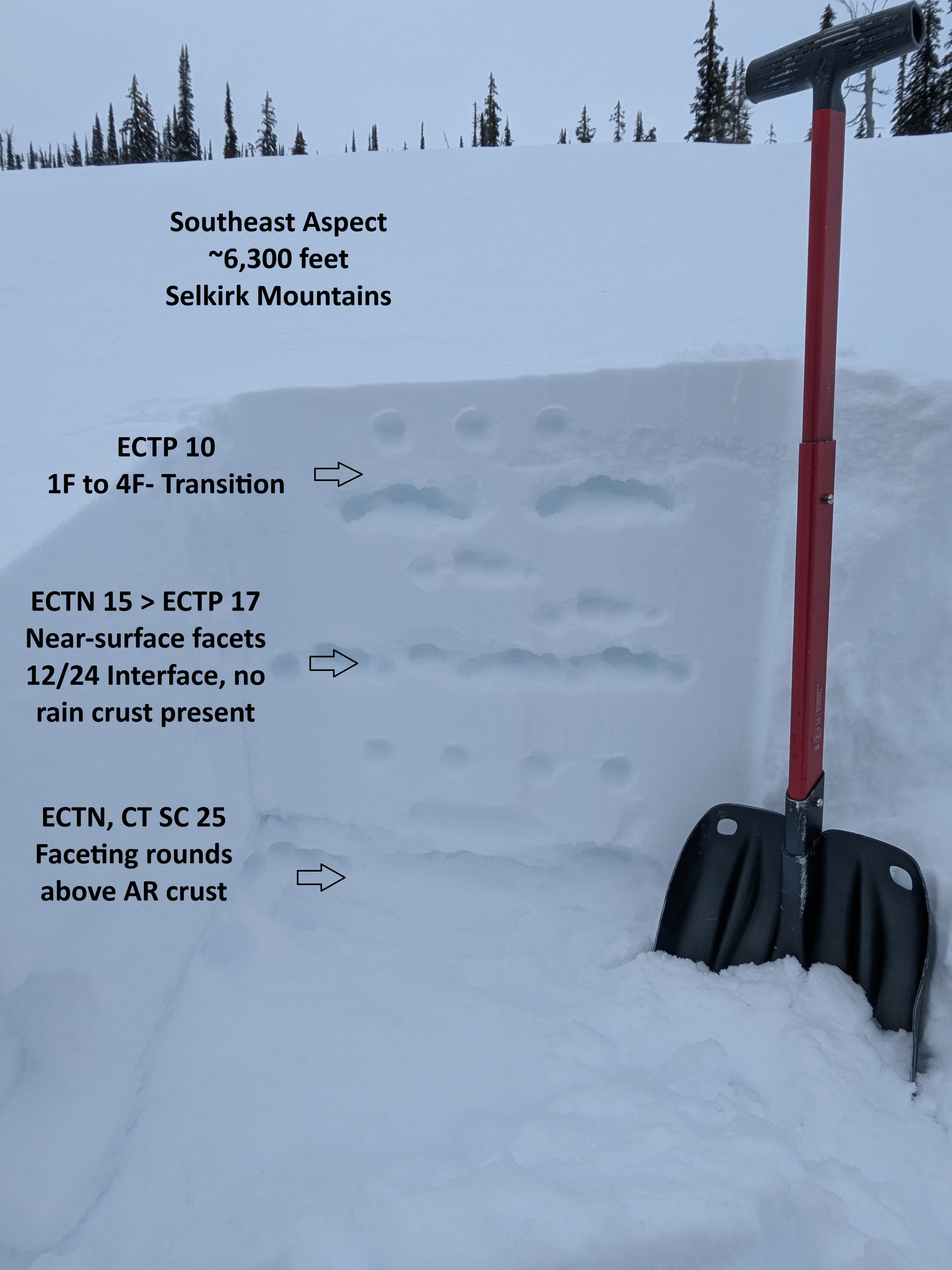
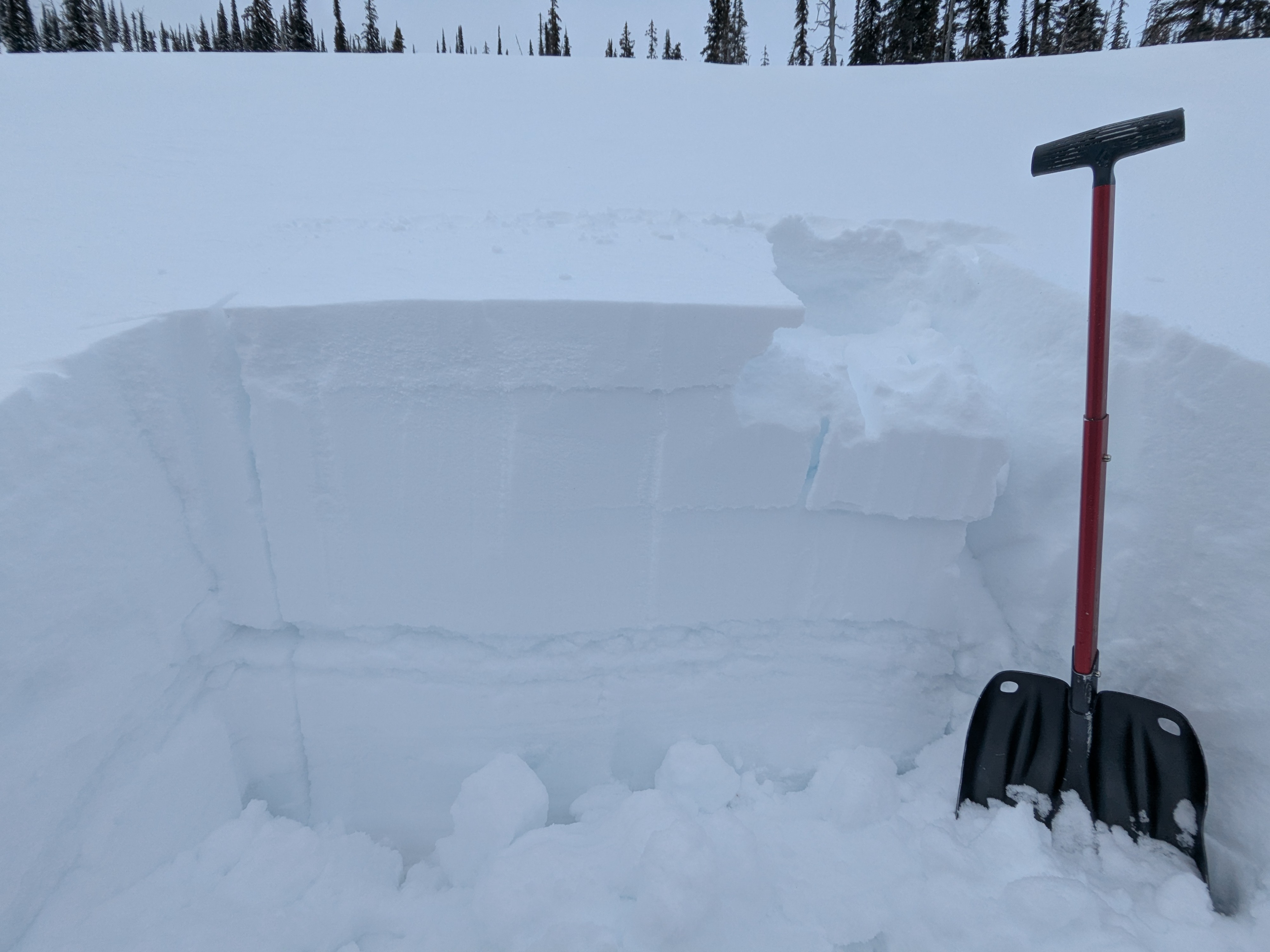
Ongoing moderate winds and stronger gusts continue to transport the recent snowfall into dangerous slabs on leeward-facing slopes and terrain features. Stiff over soft layering, propagating failures in tests, recent large avalanches, and loud rumbling collapses are all indicators to travel with a conservative mindset and use mindful evaluations of which slopes to travel on. Conditions are slowly improving at lower elevations, but route selection is still a challenge to access upper elevations areas.
Loud, rumbling collapse below the ridgeline on a southeast-facing slope around 6,800 feet. Lots of surface cracking once we climbed above about 6,200 feet.Weather
- Cloud Cover
- few
- Wind Loading
- moderate
- Recent Snowfall
- 20 to 35
- Snow Avail For Transport
- large amounts
Mix of sun, high clouds, and mid elevation fog. Winds were stronger than expected and effectively moving snow at mid and upper elevations. Brrrr day in the mountains...or maybe because it's been so mild this season.
Snowpack
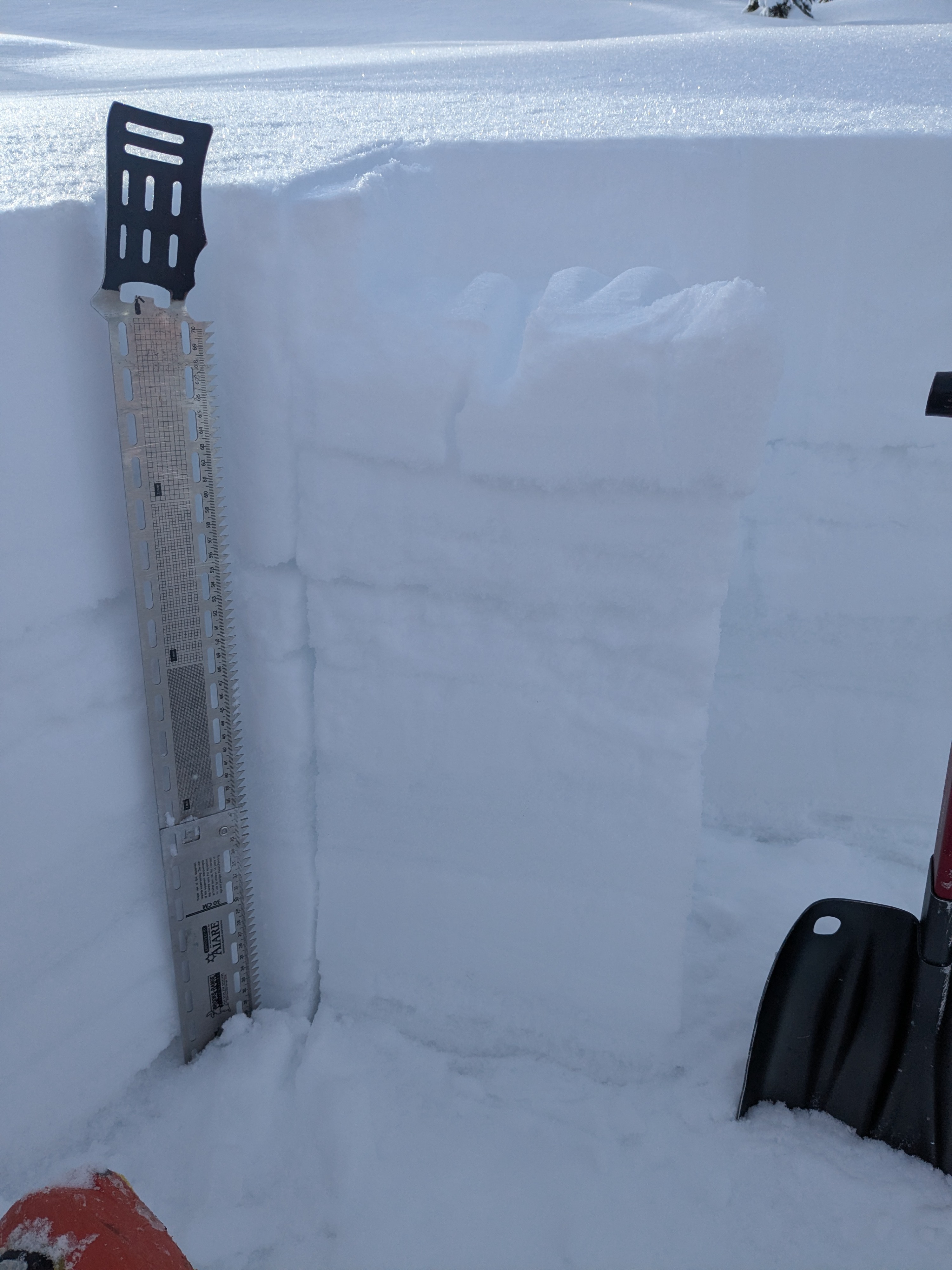
Snowfall over the Christmas holiday period delivered some much needed snow and coverage to the Upper Pack area. Travel conditions have improved but overall the snowpack is still shallow for this time of year. Due to overall shallow snow depths, the snowpack is still exhibiting signs of weakening versus overall strenghtening. Faceting around crust is ongoing and surface layers are quickly eroding from the cold, clear weather conditions. Wind transport has built concerning surface slabs in start zones and gullies, and the presence of recent natural avalanches supports the idea that the snowpack needs more time to adjust and find equilibrium. With each storm, more slopes are becoming connected and this is helping up the size of potential avalanches. Cronice formation is evident on most ridgelines and this adds another element to travel decision making. Thanks to the abundant rain earlier in the season, it has left basal layers mostly stout and less likely to fail in an avalanche. This means snowfall around or above the early-December AR events is where you are likely to trigger an avalanche. The bad part is those layers are well within the realm of rider and even more so, machine trigger depths. At mid and upper elevations, our persistent weakness concerns are likely to linger for some time till those layers get buried deeper or we enter an extended period of high pressure like last January. Only time will tell how this evolution progresses but for now, digging down and evaluating is the best and easiest course of action to avoid an unexpected avalanche encounter.
Avalanche
- Size
- D2
- Type
- SS
- Aspect
- N
- Trigger
- N
- Elevation
- 6400 ft
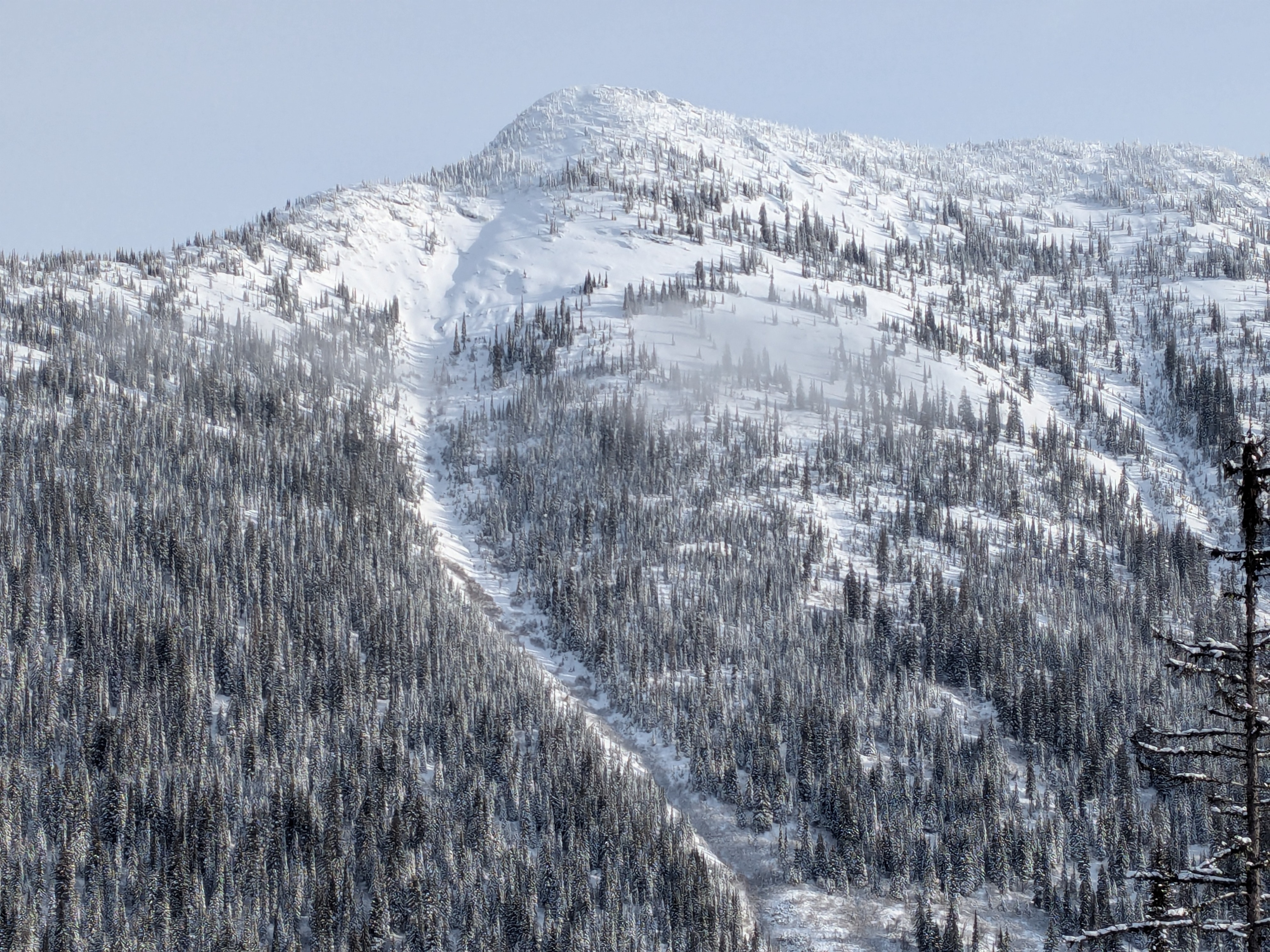
Fresh slab avalanche that likely ran yesterday on a north-facing slope around 6,400 feet.