
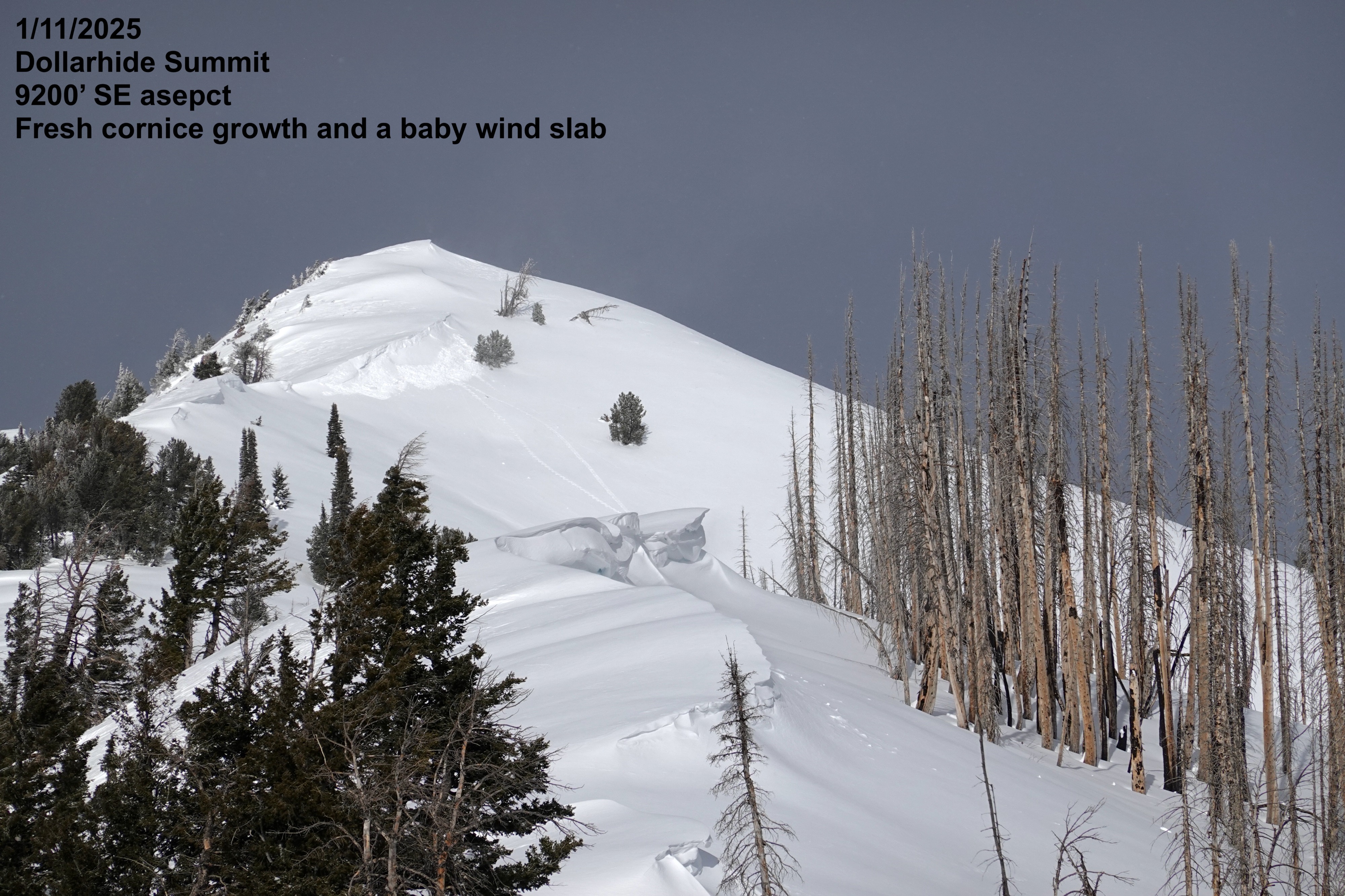
Quick report
- Cracking
- isolated
We found generally stable conditions on the slopes we travelled on today (primarily NE, E, SE, S and SW). Given the current avalanche problems, we kept a close eye on the terrain we rode through and were connected to, despite the lack of obvious signs of instability. We crossed very close to a variety of smaller - lower angle avalanche terrain and stuck to one-at-a-time protocols with eyes on each other.
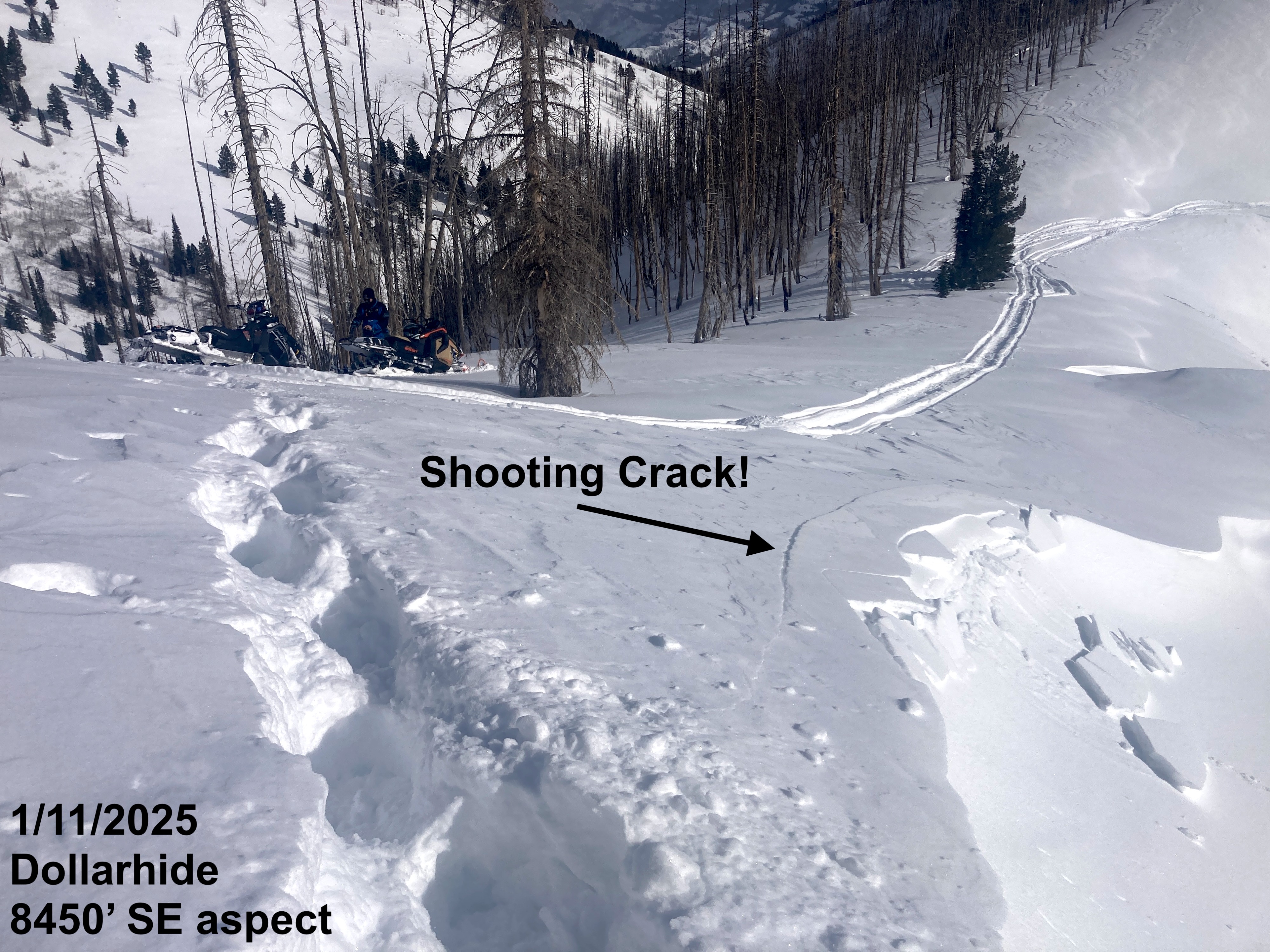
Triggered one small (20 foot) shooting crack in an obviously wind-loaded pocket.Weather
- Air Temp
- 20s
- Cloud Cover
- scattered
- Wind Loading
- light
- Recent Snowfall
- 5 - 10
- Snow Avail For Transport
- small smounts
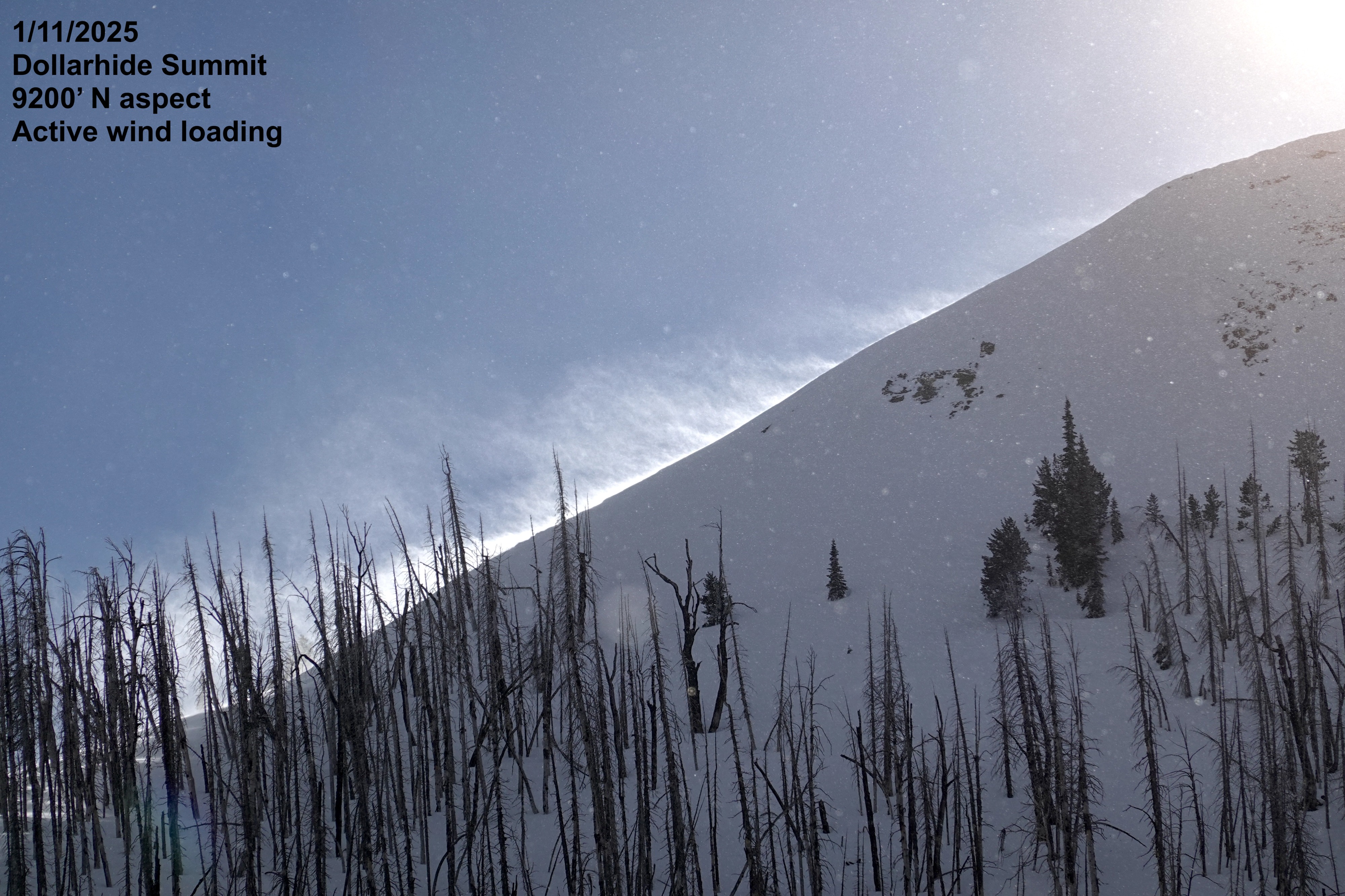
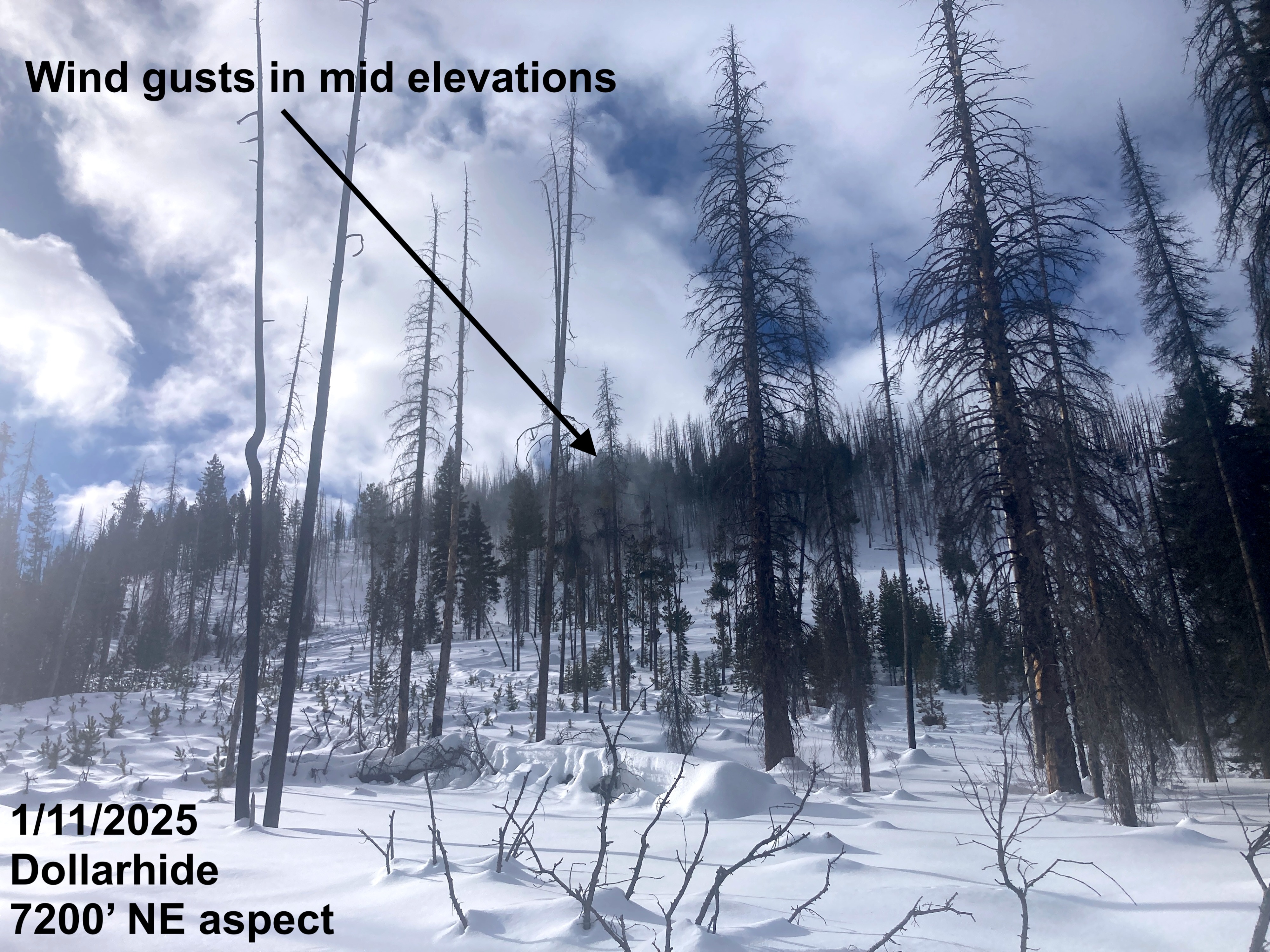
Moderate wind gusts observed transporting snow as low as 7200 feet in the trees.
Snowpack
We found wind-affected surface snow in most open areas above 6500 feet. This was mostly relegated to surface texture but was forming very subtle soft slabs and drifts near ridgelines. We dug a quick pit on a SE aspect at 8450 feet and found an unreactive persistent slab setup (ECTX x2 and PST95/100 END on basal facets). 12/13 and 12/7 crusts are included in one big crust-facet complex making up the bottom foot (30cm) of the snowpack with the weakest snow found right near the ground. Sitting on top of the crust-facet complex is a 1.5 foot (50cm) thick slab that is right-side up (softest on top).
Avalanche
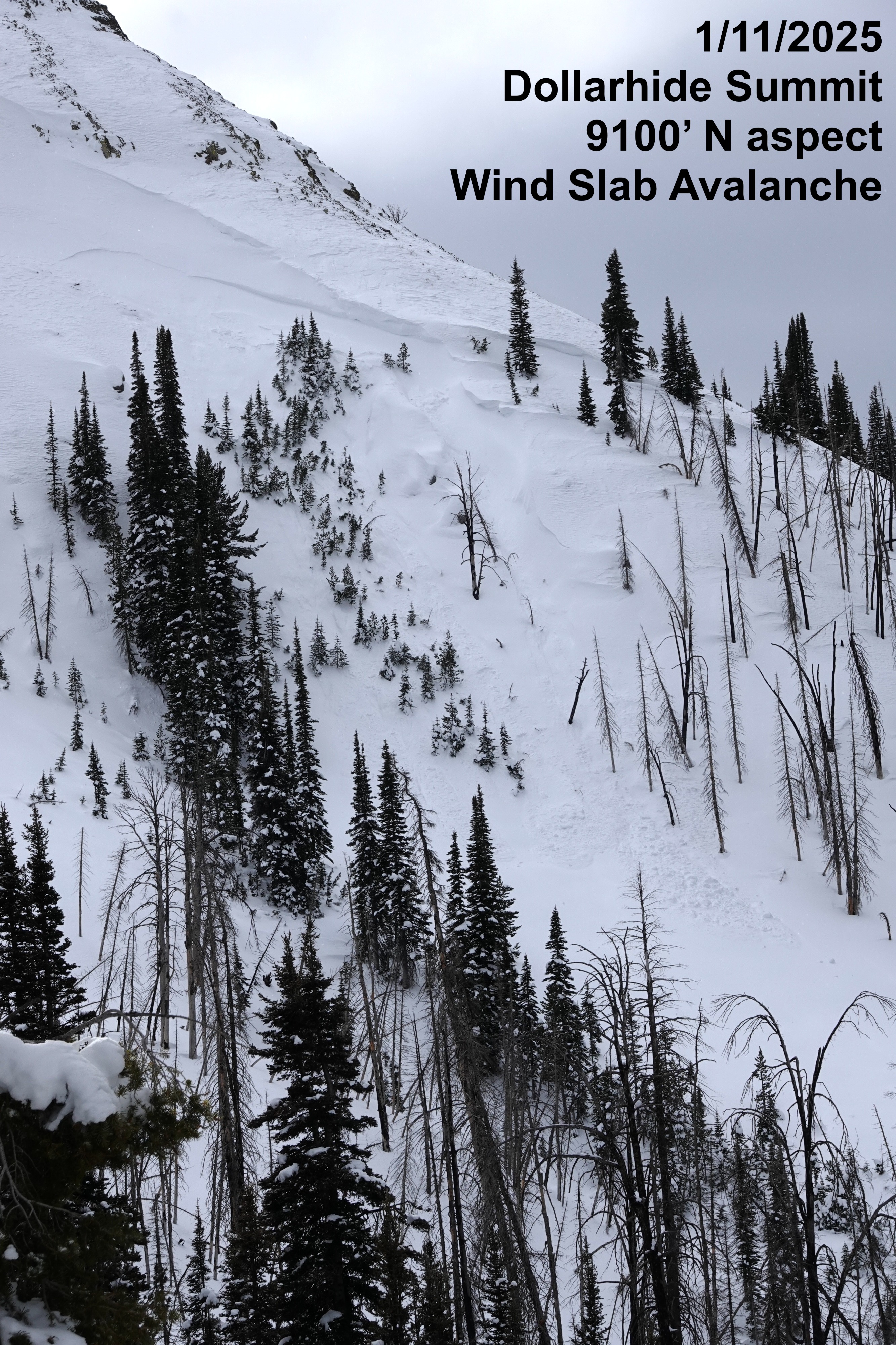
We observed one recent wind slab avalanche estimated to have released on Jan 8/9 during peak wind speeds given how refilled the debris was. This avalanche failed in an obviously cross-loaded gully at 9200 feet on a north aspect. There is a chance that an additional older deeper persistent slab avalanche failed in the path (look at photo near rocky rib) but we were unable to determine that with complete confidence.