
Quick report
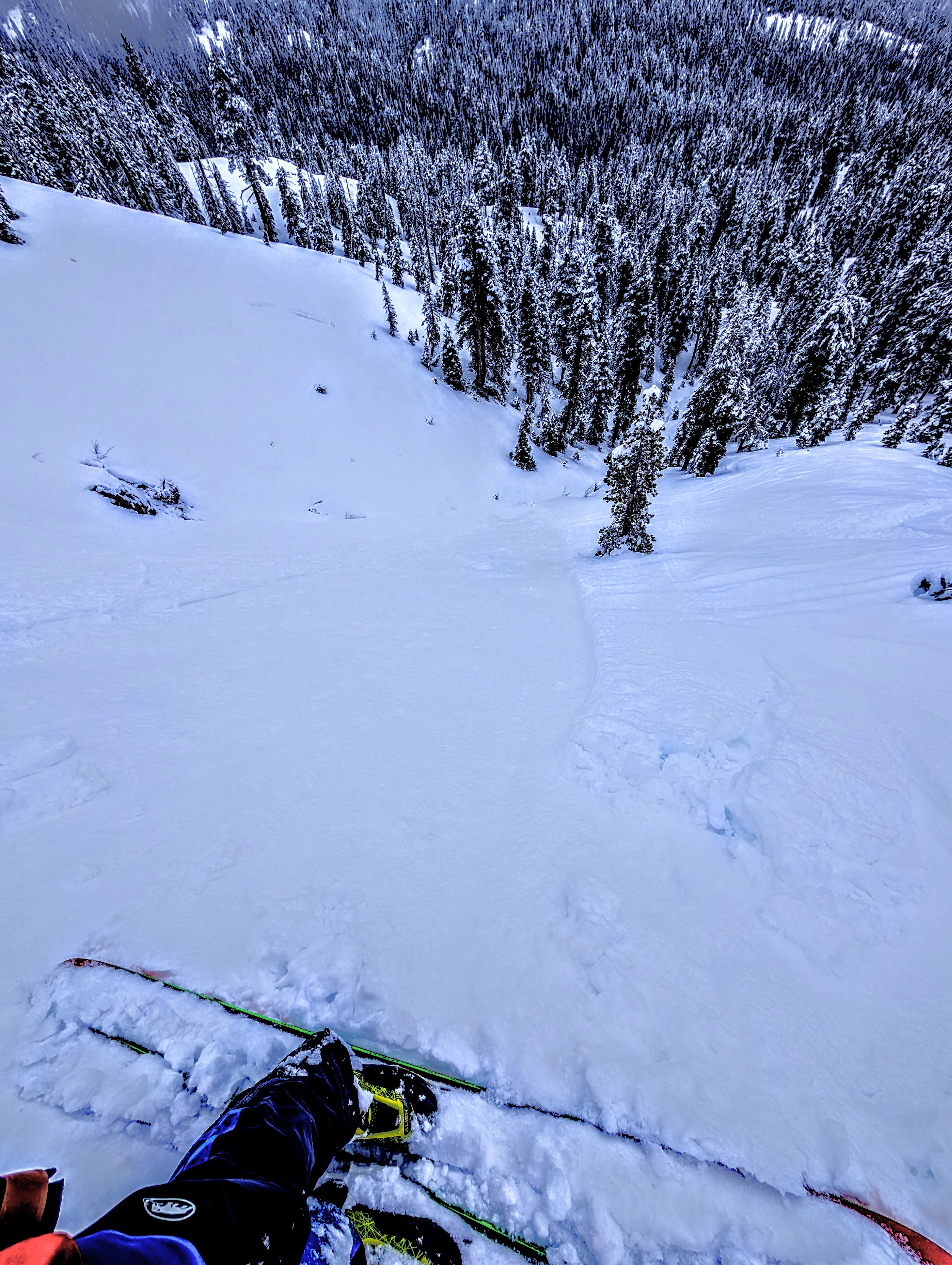
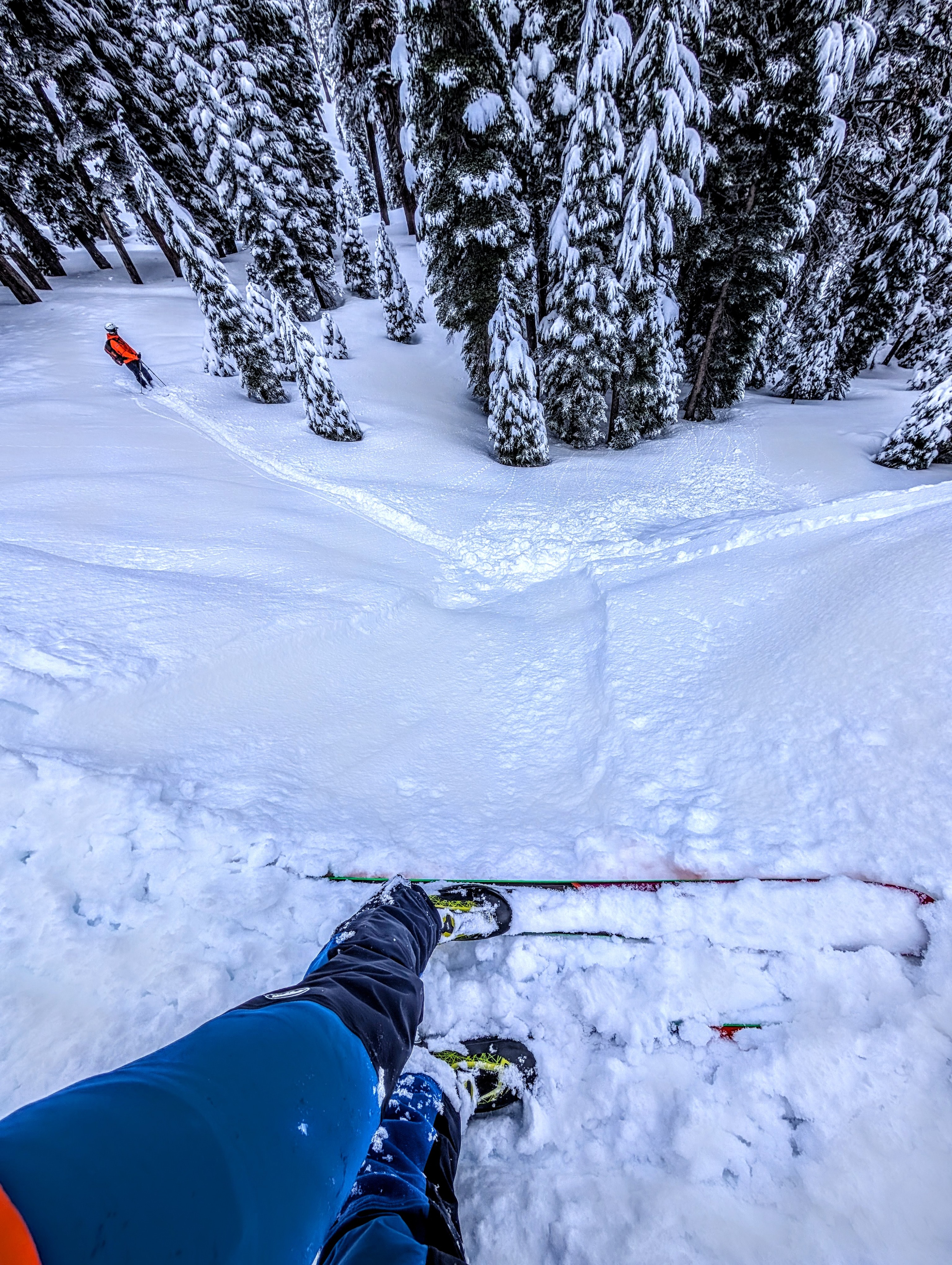
Shallow wet snow at the trailhead gave way to 4-8 inches of new snow resting on crusts and facets at the higher elevations. Tests indicated that the facets beneath the crusts are weak, but the new snow remained too soft to be a good slab layer (see the snowpack section for details). We did not see signs of unstable slabs in near or below treeline terrain despite this potentially weak snowpack structure. As we moved into more exposed terrain along the ridge, we started to see some small areas of wind-affected snow, but these were very small and isolated (details in the instability section). It also appeared that the new snow did not bond well to the crusts below, and we intentionally triggered a few small loose snow avalanches on test slopes (more details in the avalanche and instability section).
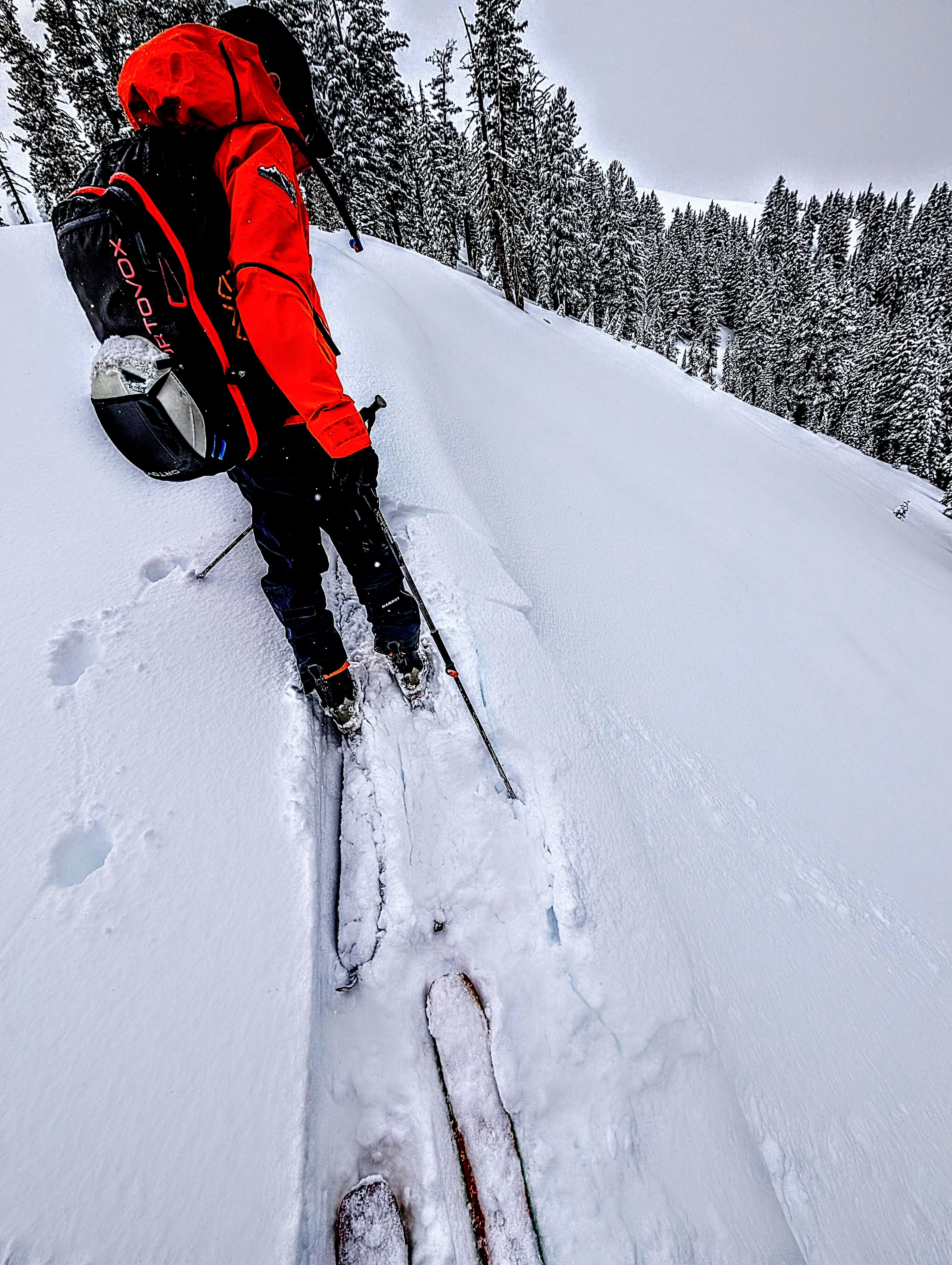
Ski cuts on steep test slopes caused the new snow to sluff off the crust below it. Above 7500 ft, the new snow sluffs felt loose and dry. Below 7500 ft, the new snow got moister as did the sluffs. In wind-affected areas near the ridge, we also triggered some small cracking, but the wind-affected snow did not extend more than a couple of feet from the ridge.Weather
- Air Temp
- 30 - 32 °F
- Cloud Cover
- overcast
- Wind Loading
- light
- Recent Snowfall
- 10 to 20 cm
- Snow Avail For Transport
- large amounts
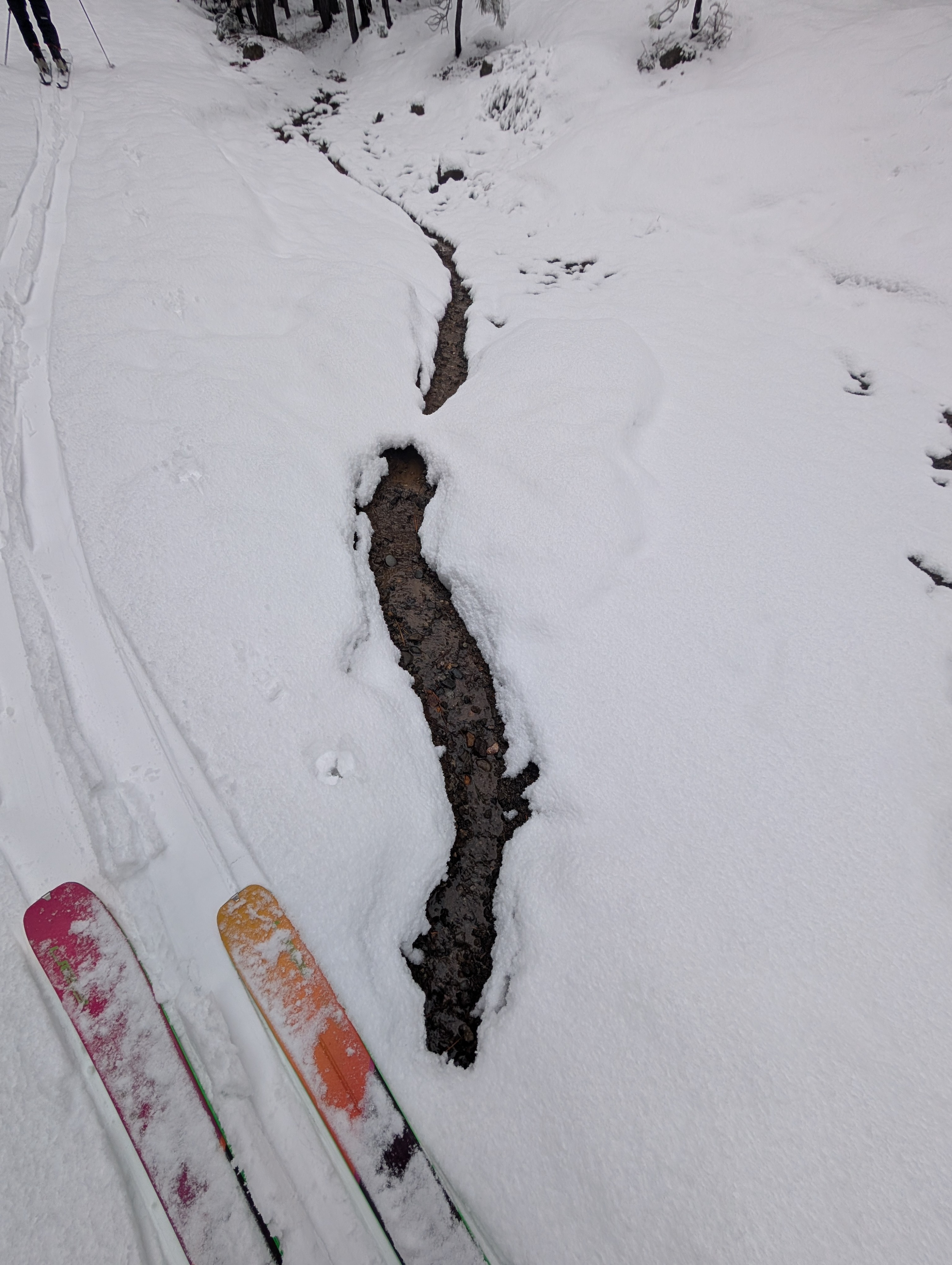
Snow showers continued intermittently through the morning, then tapered off some after noon. Temperatures seemed to hover around freezing, and the winds remained light to moderate even on the ridges. Snow totals increased with elevation. Below 6500 ft 1-3 inches of wet snow had accumulated. Between 6500 ft and 7500 ft, new snow amounts increased to 4-6 inches. Above 7500 ft, about 6-8 inches of new snow existed.
Snowpack
10 to 20 cm of soft (fist minus hardness) new snow rested on top of a thin crust with soft (fist hardness) weak facets below it. Below 7500 ft the facets were moist and easily clumped together. Above 7500 ft, they were drier and looser. Tests targeting this structure indicated that facets remain weak, but the new snow is not cohesive enough to form a slab layer (ECTN 15 and PST 25/100 SF).
Avalanche
- Size
- D1 R1
- Type
- L
- Aspect
- N
- Trigger
- AS
- Elevation
- 7300 ft
We triggered three D1 loose snow avalanches with ski cuts at the top of steep slopes. They entrained the new snow above the crust. One ran downhill for about 100 ft into a creek.