
Quick report
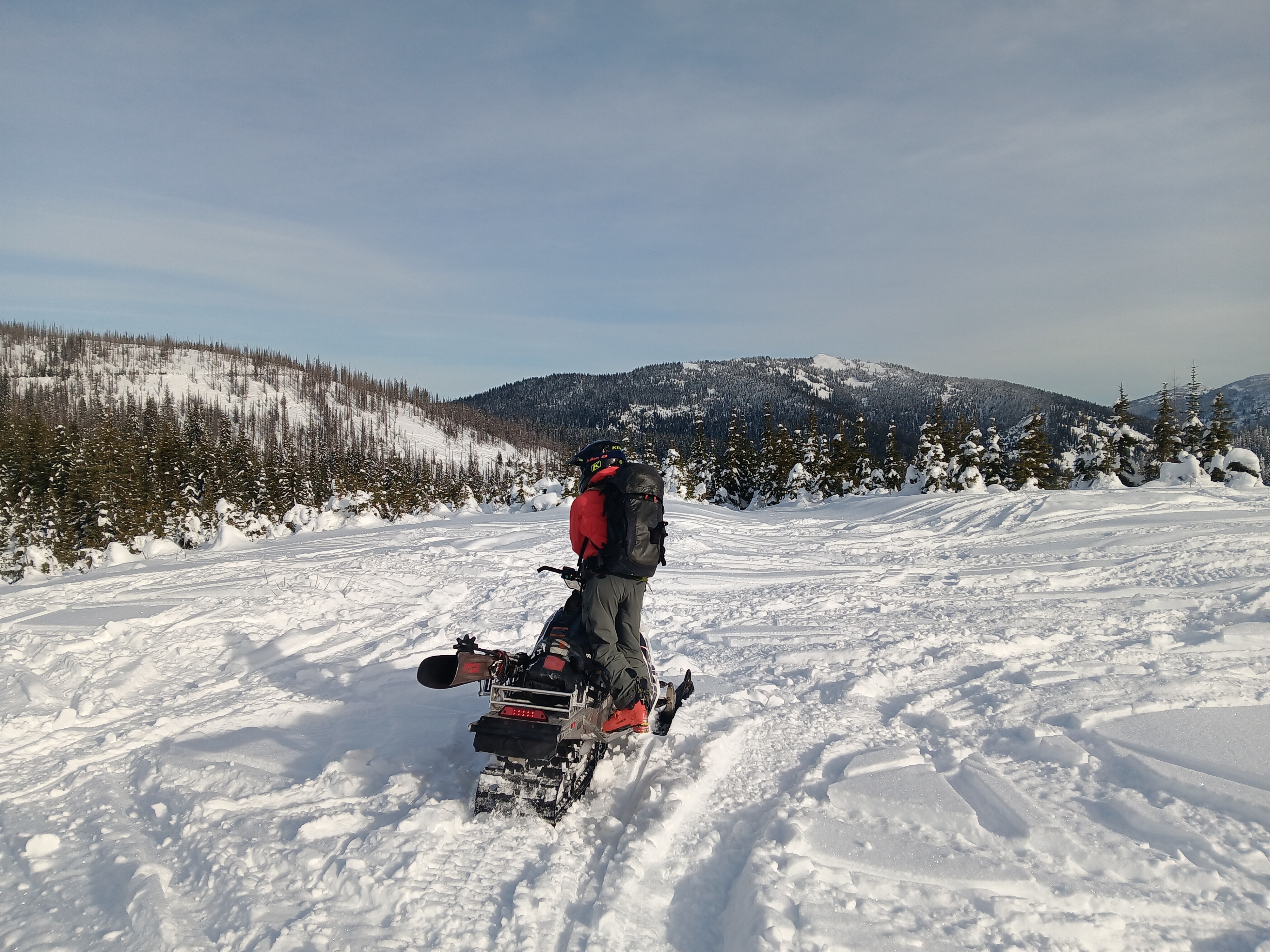
We found generally safe skiing and riding conditions on the aspects and elevation bands where we traveled. We did not travel above approx. 6,400 feet. Upper snowpack layers are supportive to travel on skis, but we easily punched through to the November 23 rain crust when stepping off our boards or machine. We found subtle wind-texture on the snow surface along ridges, but very little in the way of leeward slope drifted slab formation. While little hazard exists with our current snowpack setup, the soft surface conditions today will be our next persistent weak layer to contend with once fresh slabs form above. Once we have a new slab on top, terrain where we've been comfortable recreating in so far this season will likely become off-limits.
No signs of instability observes while skiing or riding. Lots of recent snowmobile tracks on steeper terrain without triggering an avalanches.Weather
- Cloud Cover
- scattered
- Wind Loading
- previous
- Snow Avail For Transport
- small smounts
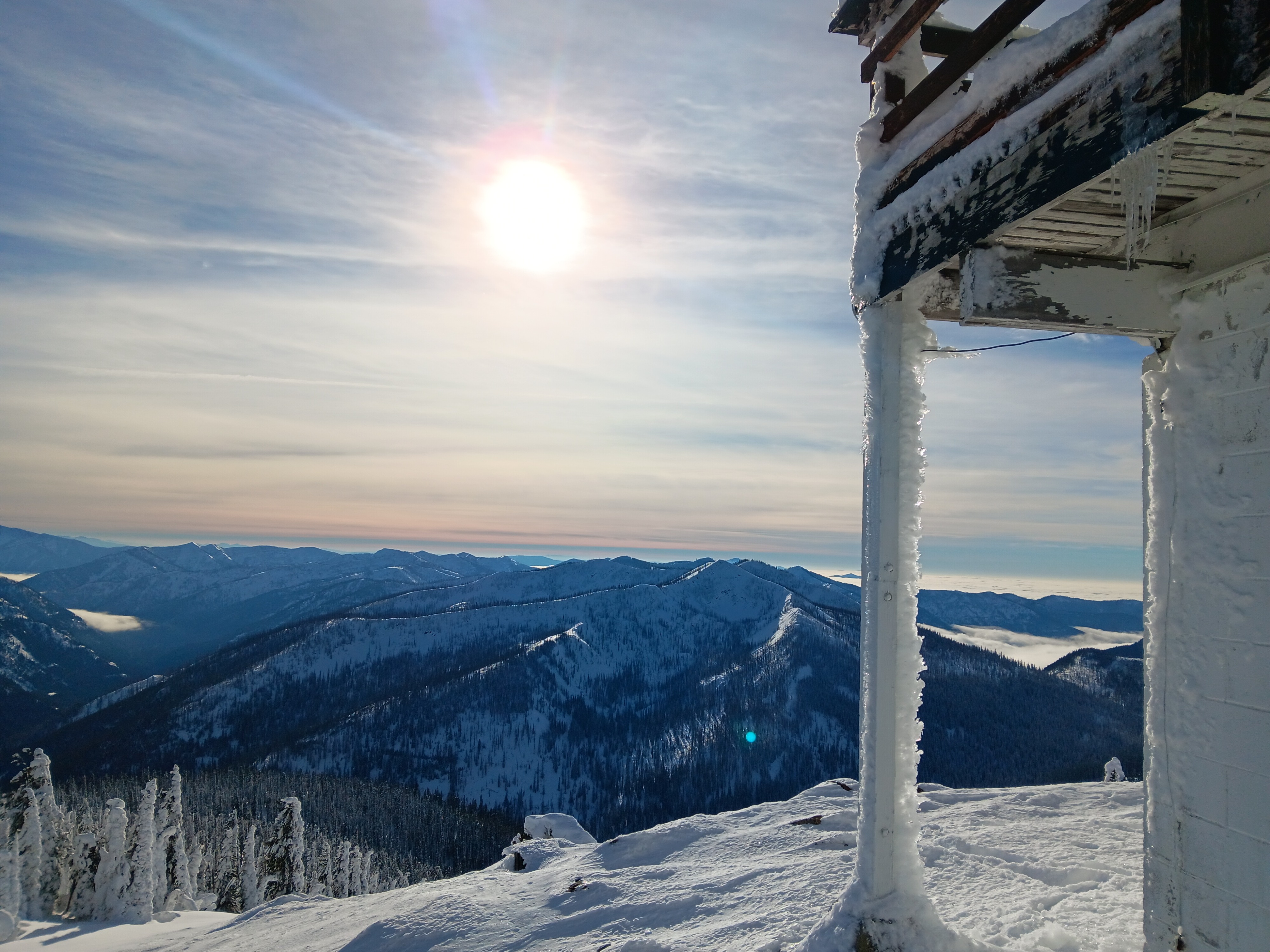
Up above the valley bottom cloud cover (which went up to ~4000'), conditions were mostly clear with good visibility, partly sunny, and very calm.
Snowpack
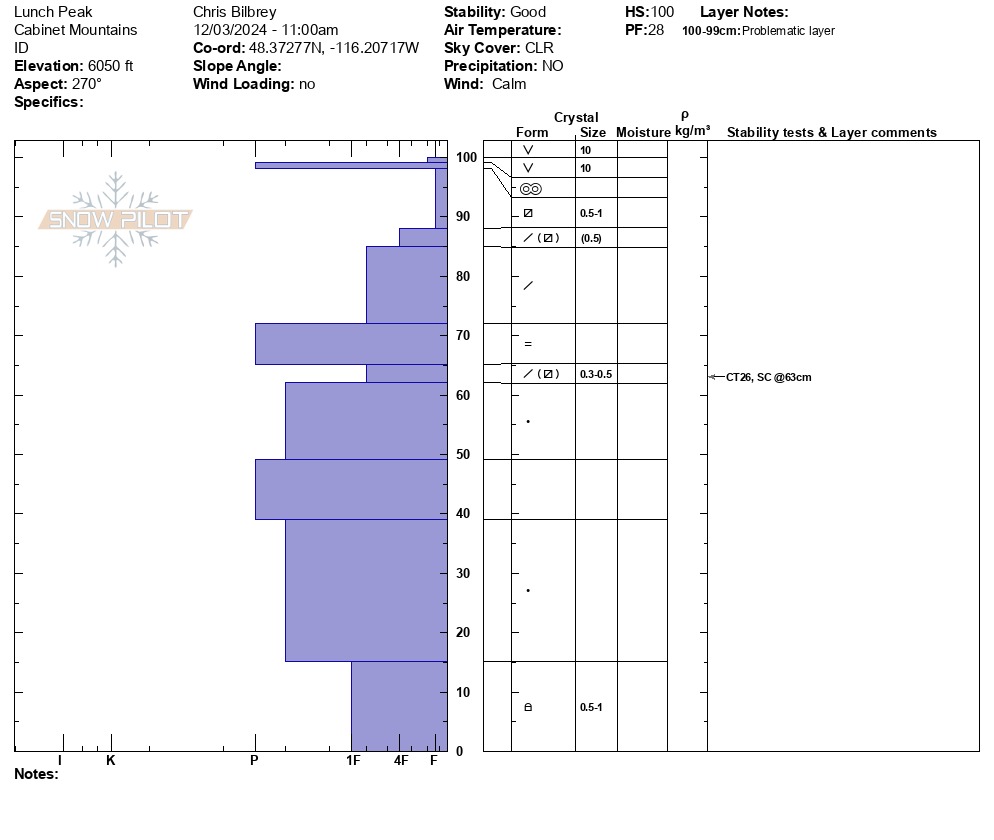
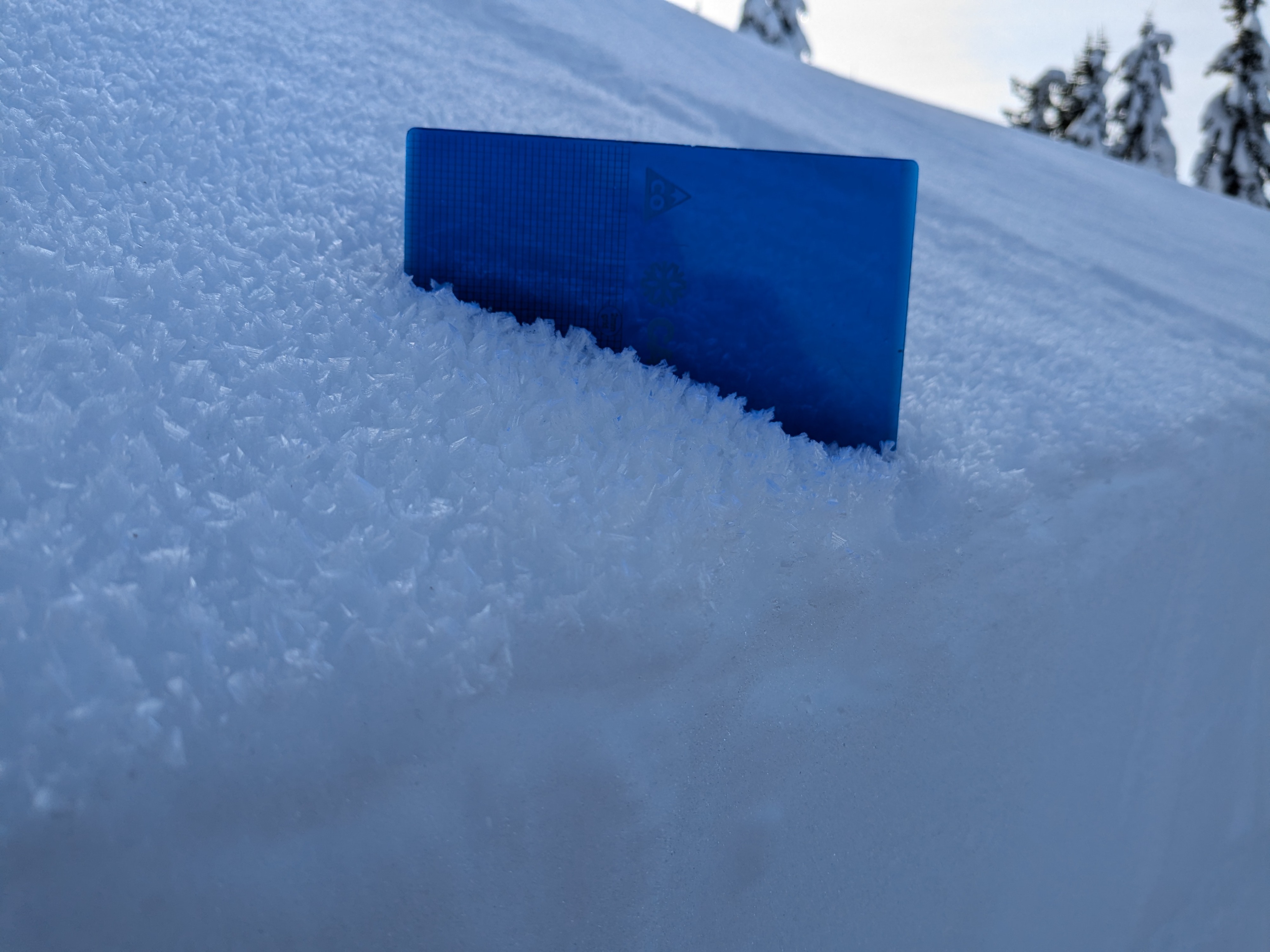
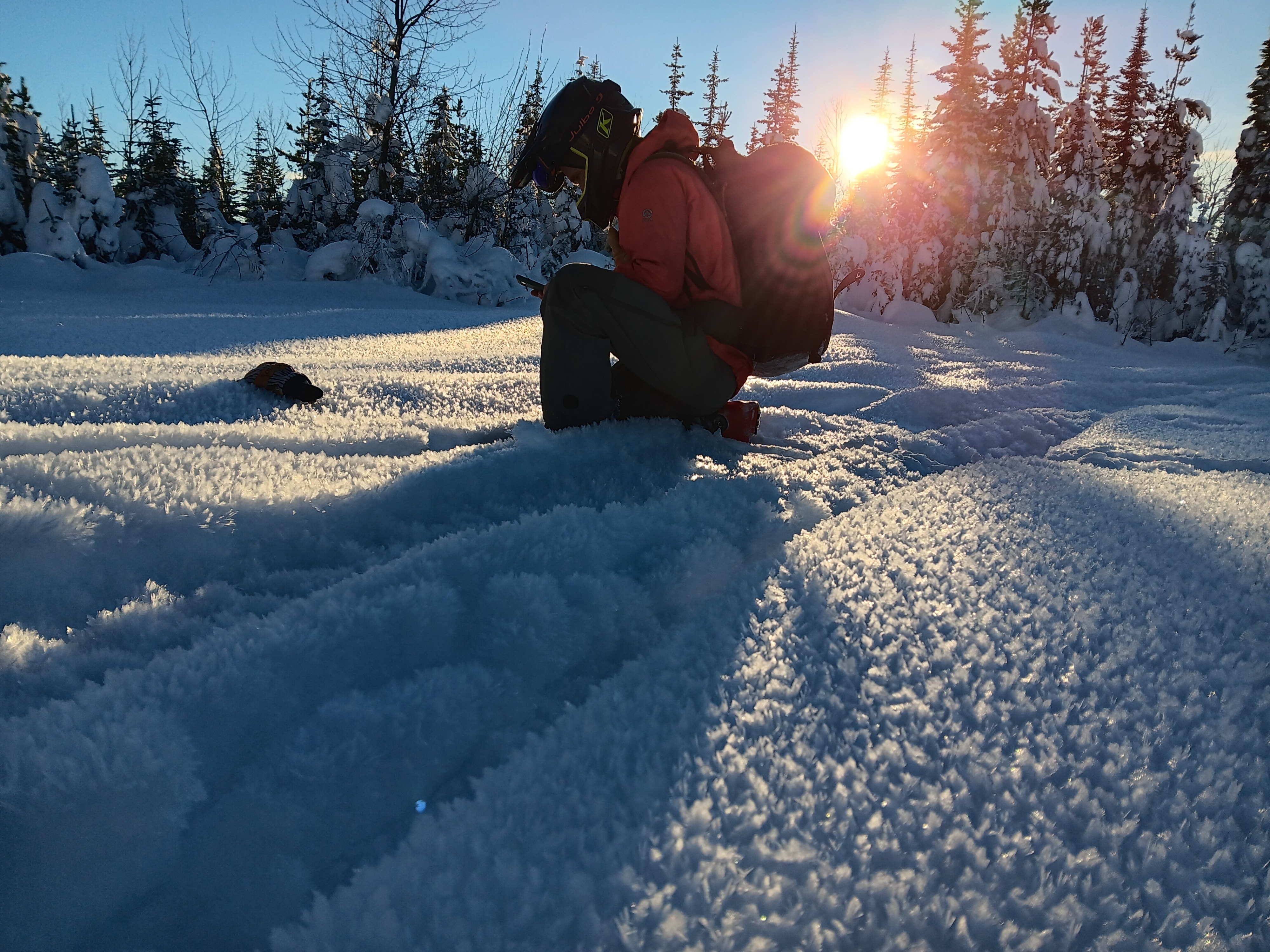
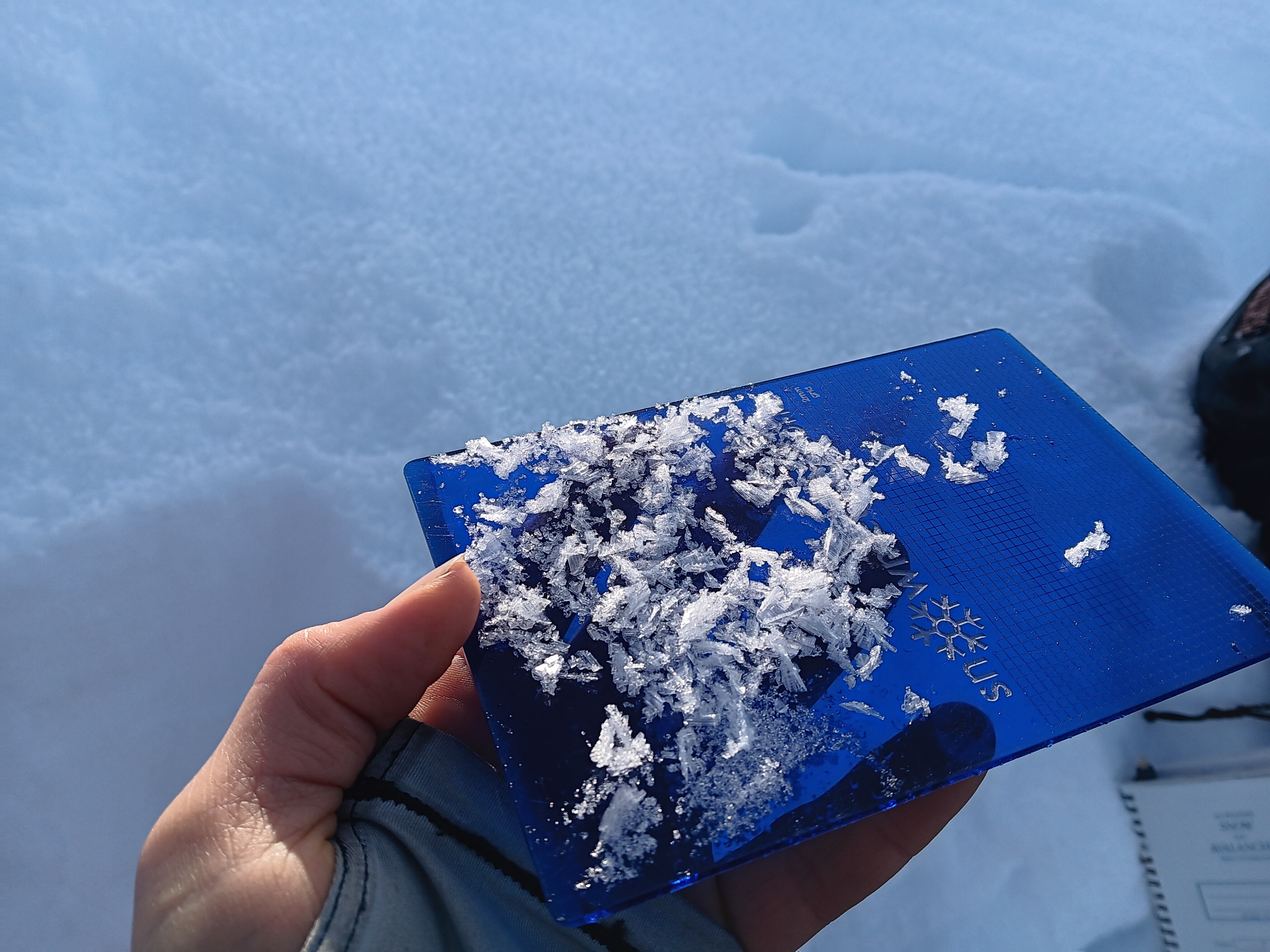
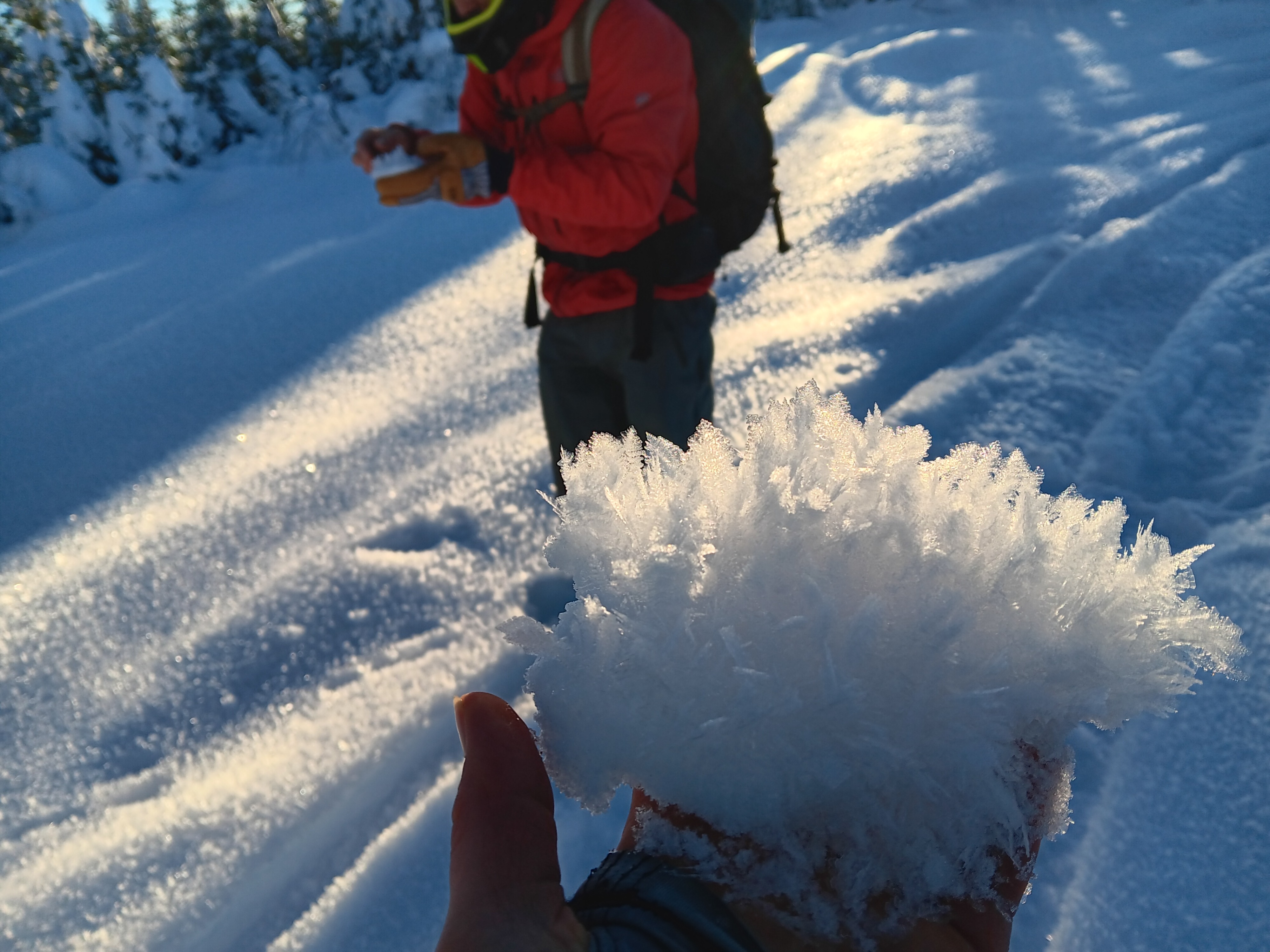
We found an approx. 3/4" thick, brittle Melt-freeze crust forming on the snow surface on east through south to west-facing slopes across all elevation bands. On top of the crust, we found Surface Hoar feathers up to 10 mm in size on all but the most wind and sun-affected slopes. These grains were more widespread on slopes between 5,000 and 6,000 feet in elevation. In heavily sheltered flat meadows, Surface Hoar growth ranged 20 to 30 mm tall! On slopes without fresh surface hoar, the recent cool, dry weather period has promoted advanced faceting in the upper snowpack - approx. 30 cm deep and F to 4F hardness (top to bottom). This weakening surface slab sits directly above the November 23 rain crust, and we suspect these grains will become more unconsolidated with a couple of more days with similar weather conditions. Digging deeper, the November 12 rain crust is approx. 10 cm thick with denser snow above and below it. Compression Tests produced stubborn results just below the deeper crust with 26 taps. Despite these results, the lower snowpack continues to solidify and is becoming more homogenous. Deeper snowpack failures will likely need a significant multi-day storm or prolonged rain-on-snow event for avalanches to fail near the ground.