
Quick report
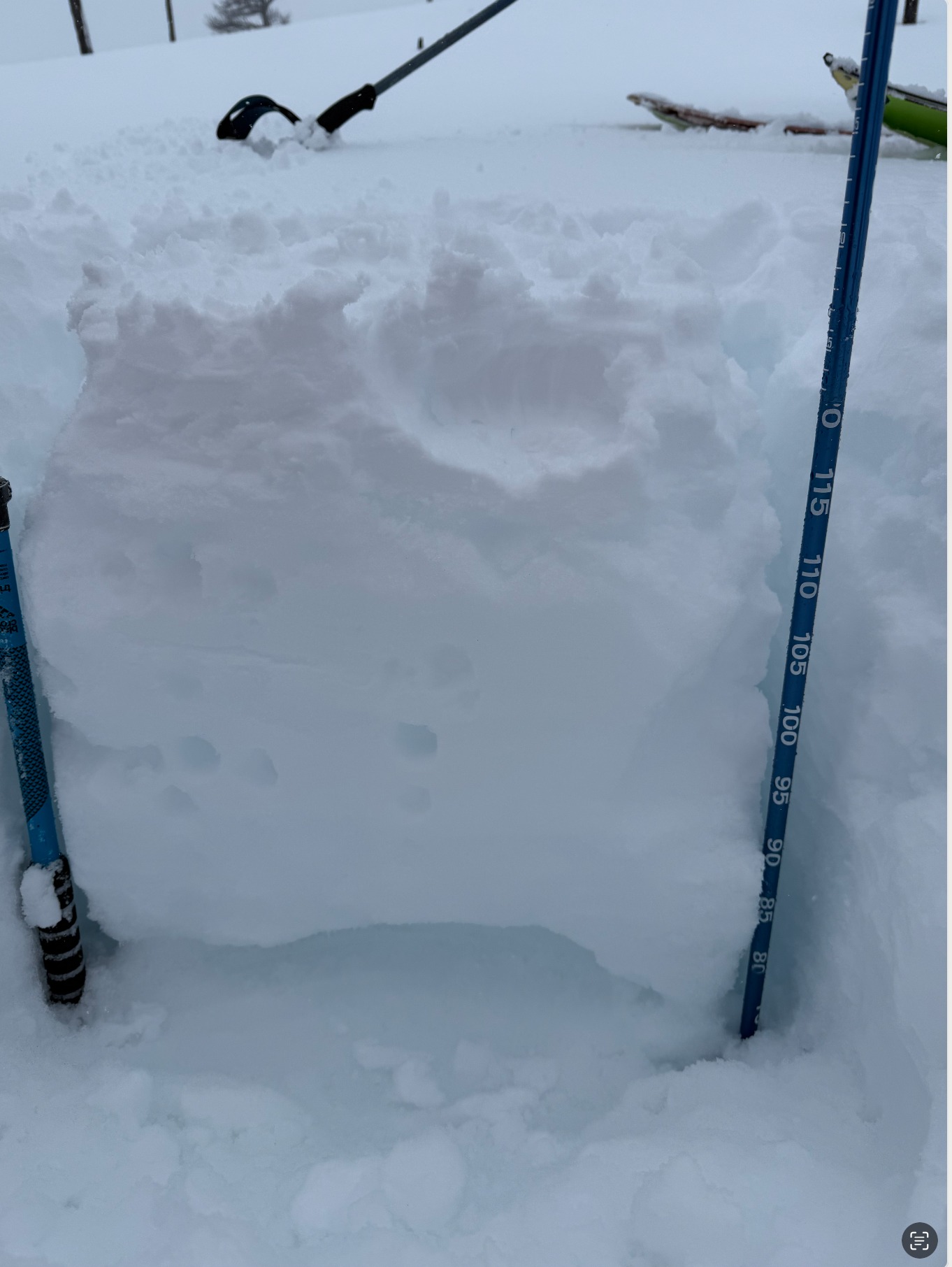
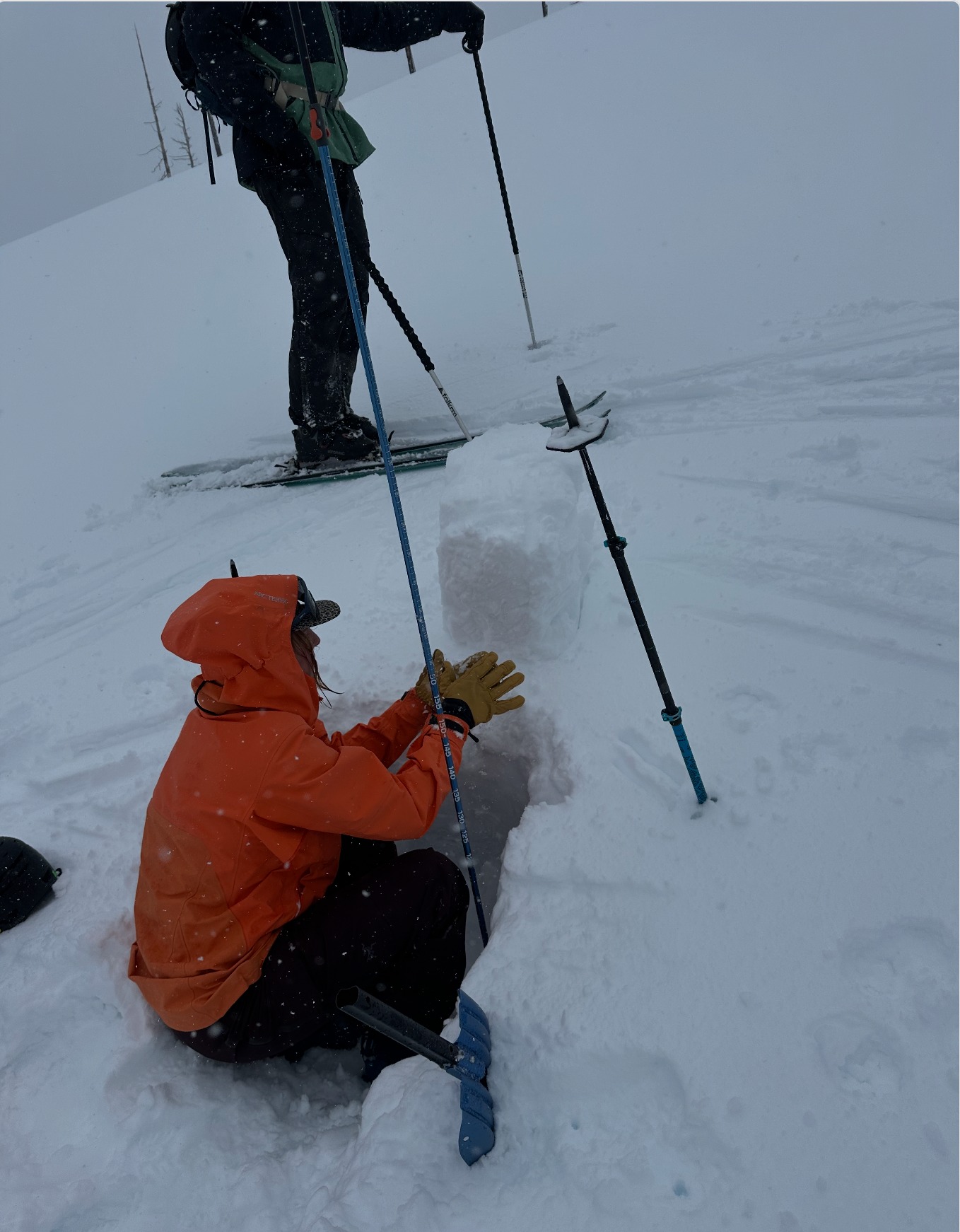
While traveling to Millican Crater my group did not see obvious signs of instability early on, but did observe quite a bit of blowing, moving snow. As we gained in elevation and toured through more wind loaded aspects, hand shear tests popped wind loaded slabs upon isolation alone, at about 2-3 inches in depth. While less consequential in terms of depth, I'd be wary of areas with additional wind loading. Out of curiosity, I dug a more substantial hand shear test pit on a similar aspect and angle to what my group planned to ski. Variations in the snowpack were evident with apparent crust layers, particularly a weaker layer about 35-40 cm down in the snowpack. I poked around quite a bit amongst this column and question the integrity it's stability on behalf of this, but it moved with little force application when I applied my hand to the back of the column. Given the above we skied conservatively, sticking to slope angles below 30 degrees and choosing terrain carefully.
Avalanche
- Size
- D1
- Aspect
- SE
- Elevation
- 5550 ft
Observed debris from what I assume was sometime in the day prior to the 4th of January, as it had fresh snow covering it, but was still quite evident. Hard to tell exactly what problem type this would've been as the cornice was still somewhat intact, but I would presume a combination of storm snow, wind loading, and the presence of a cornice created the conditions for snow to move/cornice to shear. The slope angle this debri was spotted on was at or below 30* and movement of debri down the slope was minimal.