
Quick report
- Cracking
- specific
- Collapsing
- specific
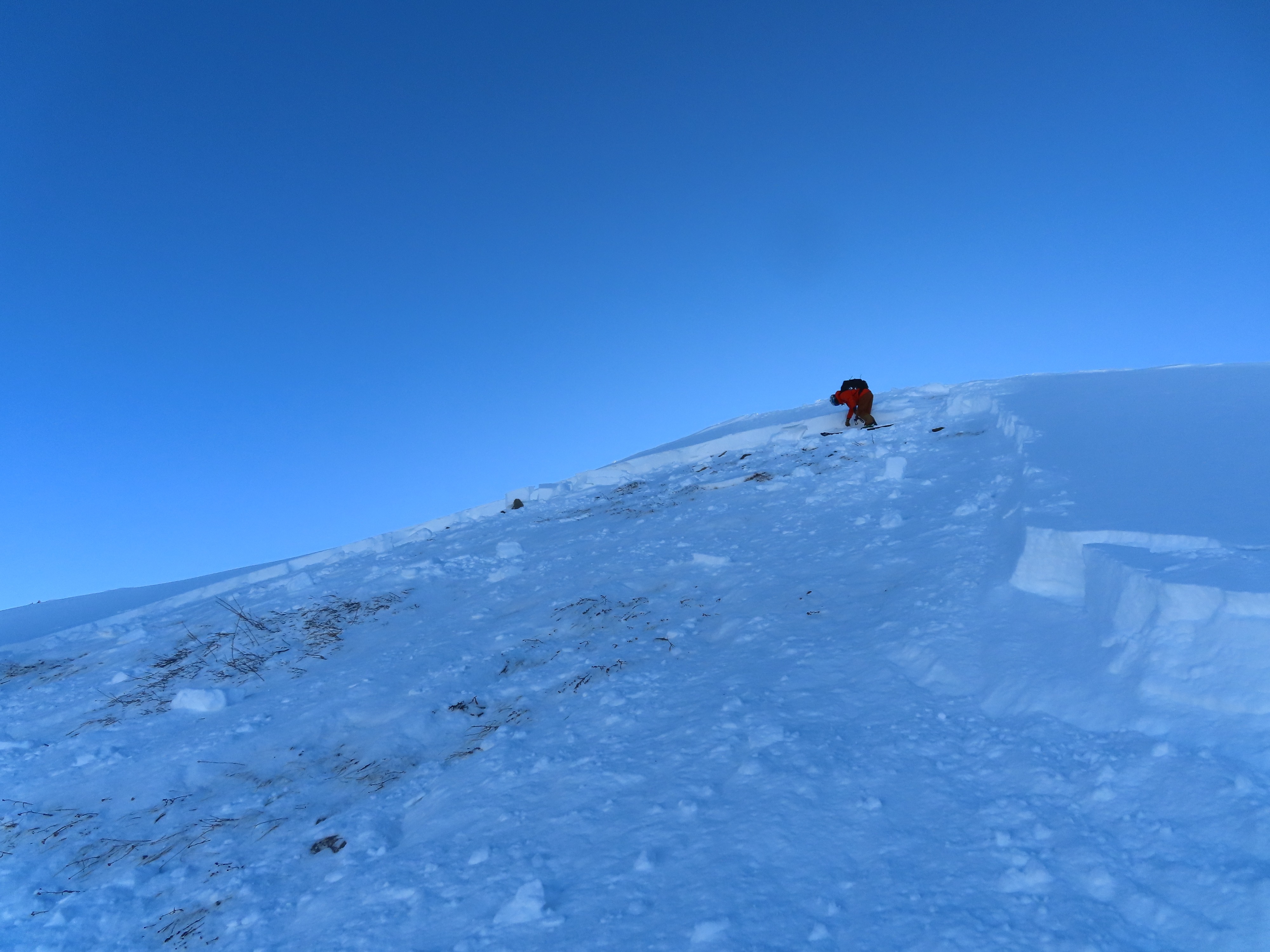
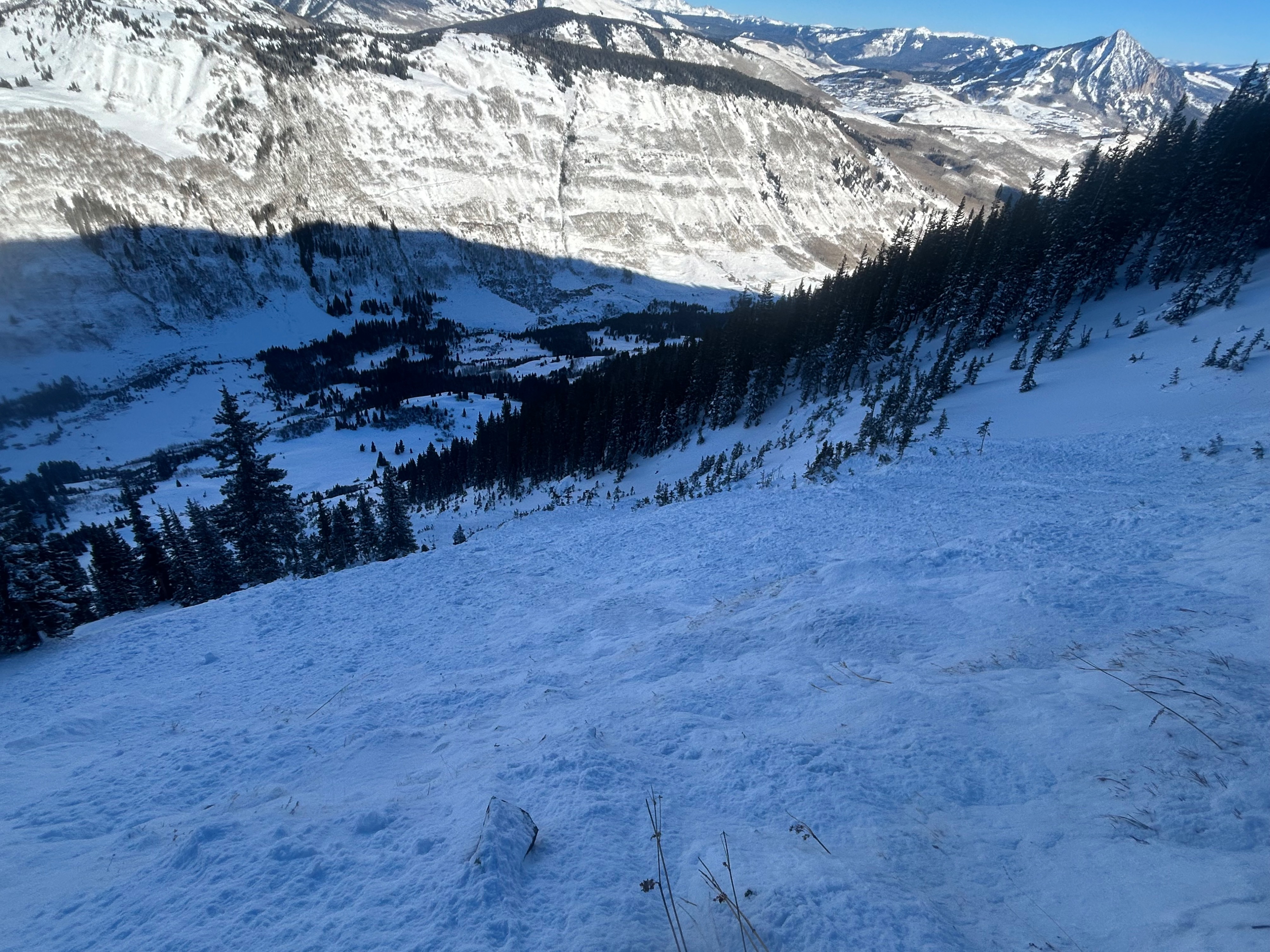
Conditions became significantly more dangerous once we gained elevation to where the Christmas rain crust thinned and disappeared, at around 10,800'. We found easy triggering conditions on the few steep slopes that we ski cut, D1 to D2 in size. These soft slabs broke near the ground on our December dryspell layer, and showed classic persistent slab behavior: remote triggering from a distance, wide propagation despite relatively thin soft slabs (1-2' thick), and slabs breaking higher above the ski cutter than expected. At lower elevations, about 6" to 10" fell on a stout crust and was unreactive except on cross-drifted features, which produced isolated shooting cracks.
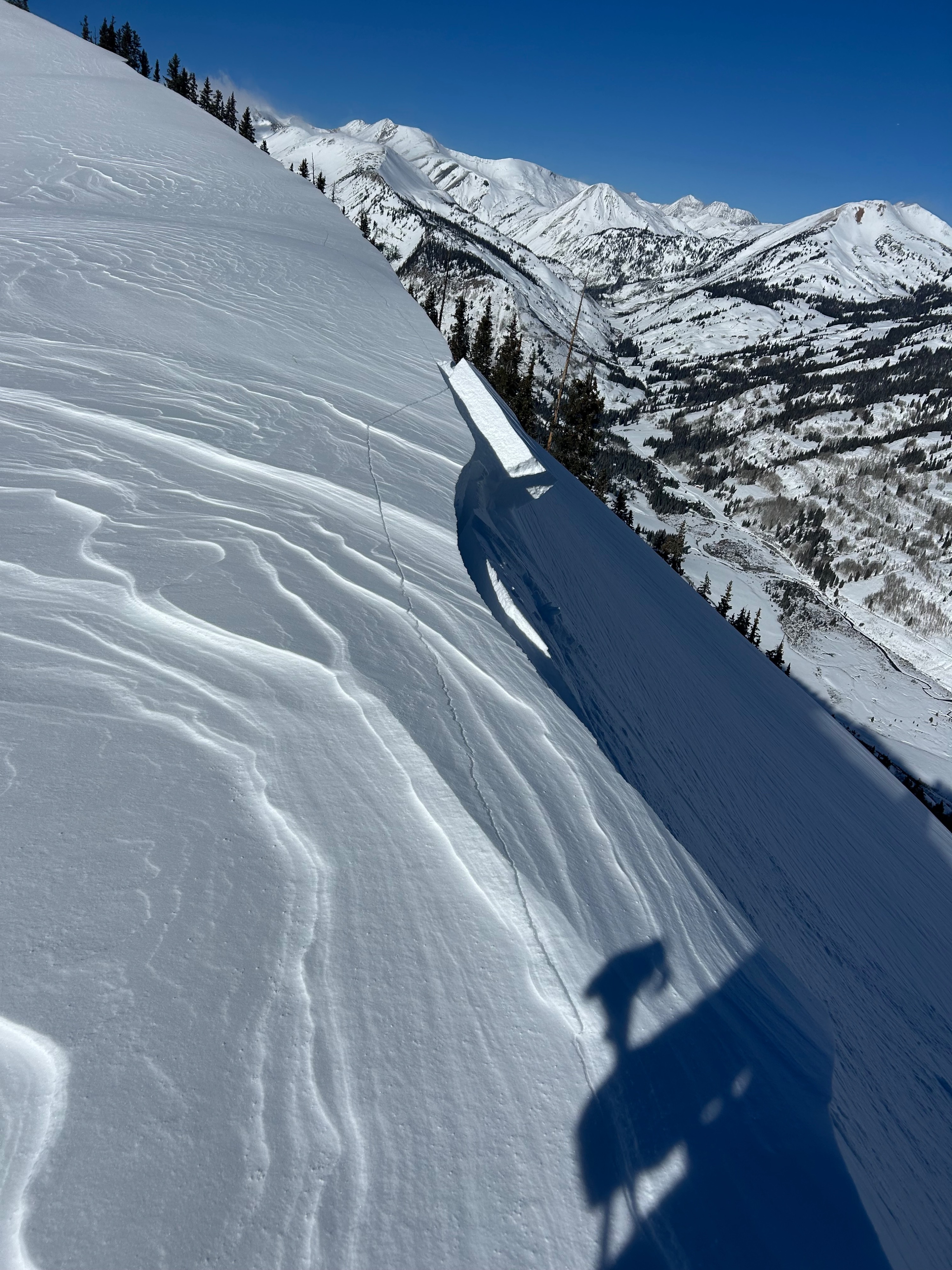
Frequent collapses and shooting cracks once we ascended above the Christmas Rain Crust at about 10,800'. These signs of instability were 1 to 2 feet deep in the December dry spell layer buried on 12/25. Collapses were louder, and shooting cracks traveled further once we reached the ridgeline, where slabs were stiffer and thicker from recent wind drifting.Weather
- Cloud Cover
- clear
- Wind Loading
- moderate
- Rain Elevation
- Below valley floor
- Recent Snowfall
- 15 to 25
- Snow Avail For Transport
- moderate amounts
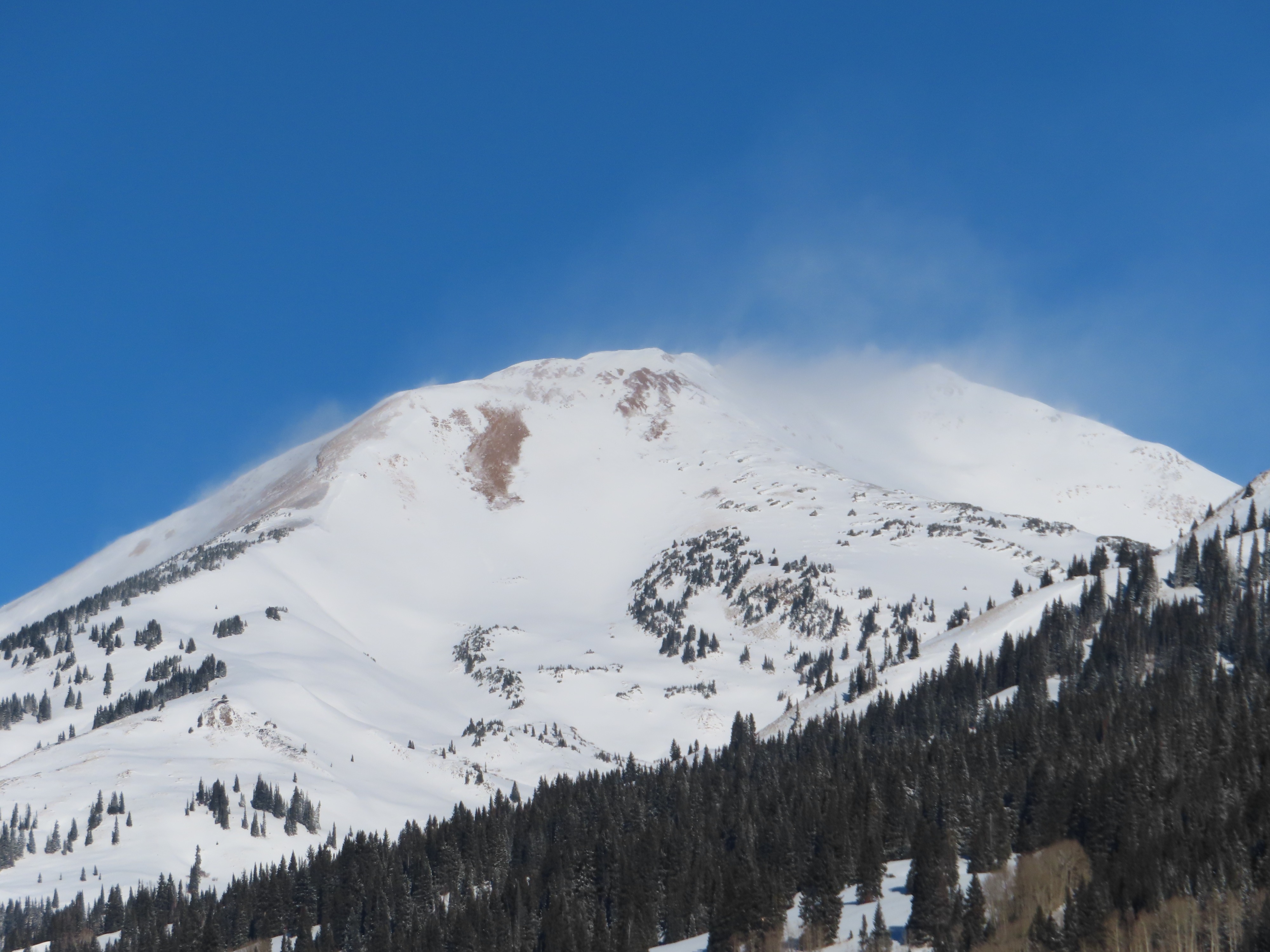
Ongoing transport above treeline throughout the day from strong northwest winds.
Snowpack
Slabs that we triggered were mostly F hard, with some F+ to 4F- near the bottom from the Christmas storm, 45 cm or less. December weak layer was 2-3mm, F hard. Some deeper (60 cm) 4F slabs on windloaded terrain. The collapses NTL were on a mix of facets with no crust (NE aspects) and facets below a melt-freeze crust, caused by sun (E aspects). Above 10,800' on northerlies, the Christmas melt-freeze crust (caused by rain) disappeared, thus the increased sensitivity.
Avalanche
- Size
- D1
- Type
- SS
- Count
- 7
- Aspect
- NE
- Trigger
- N
- Elevation
- 11300 ft
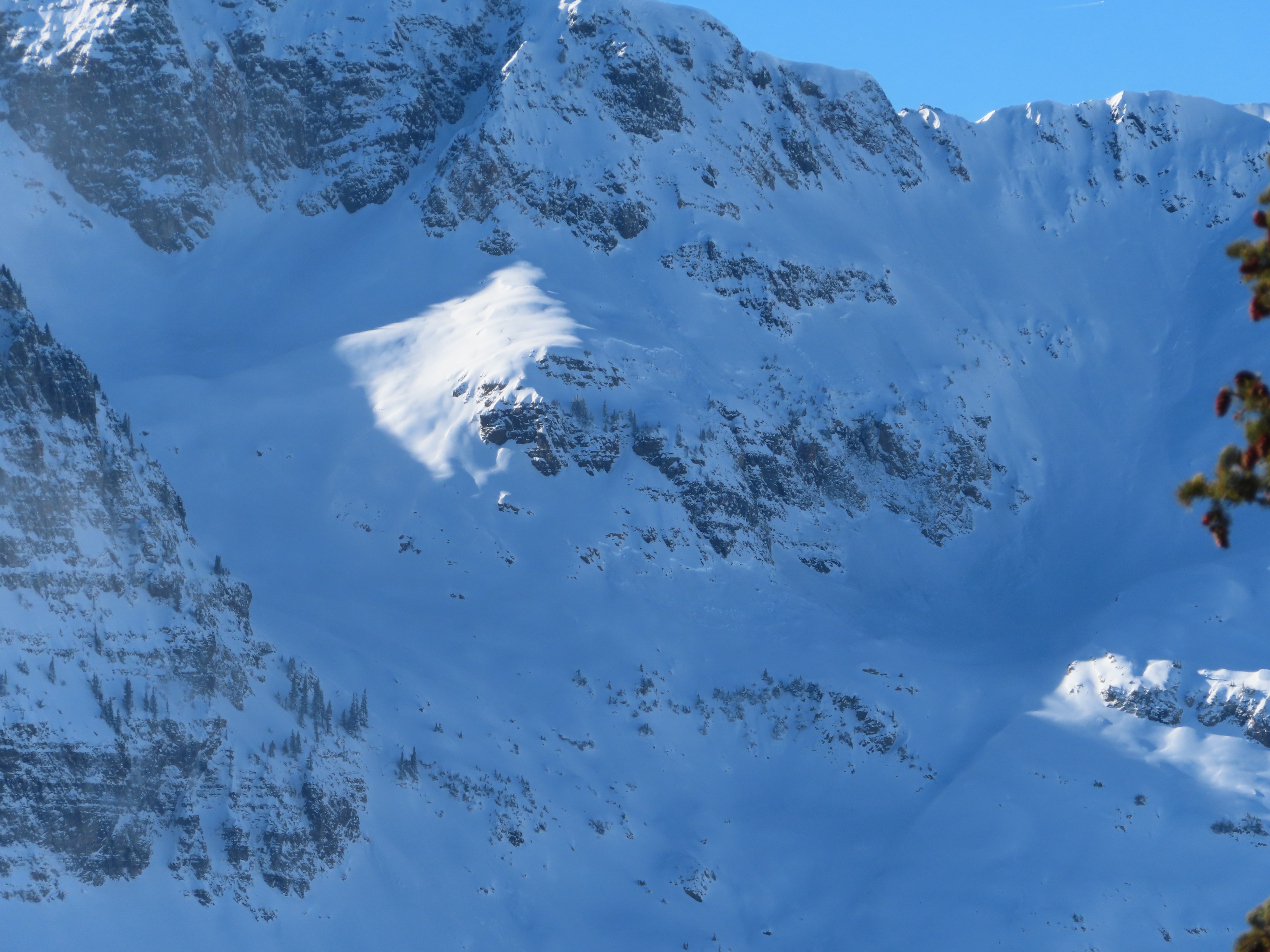
Skier and remotely triggered a few D1-D2 persistent slabs on Schuylkill Ridge. A handful of natural D1-D2s in the Ruby Range.