
Quick report
- Cracking
- isolated
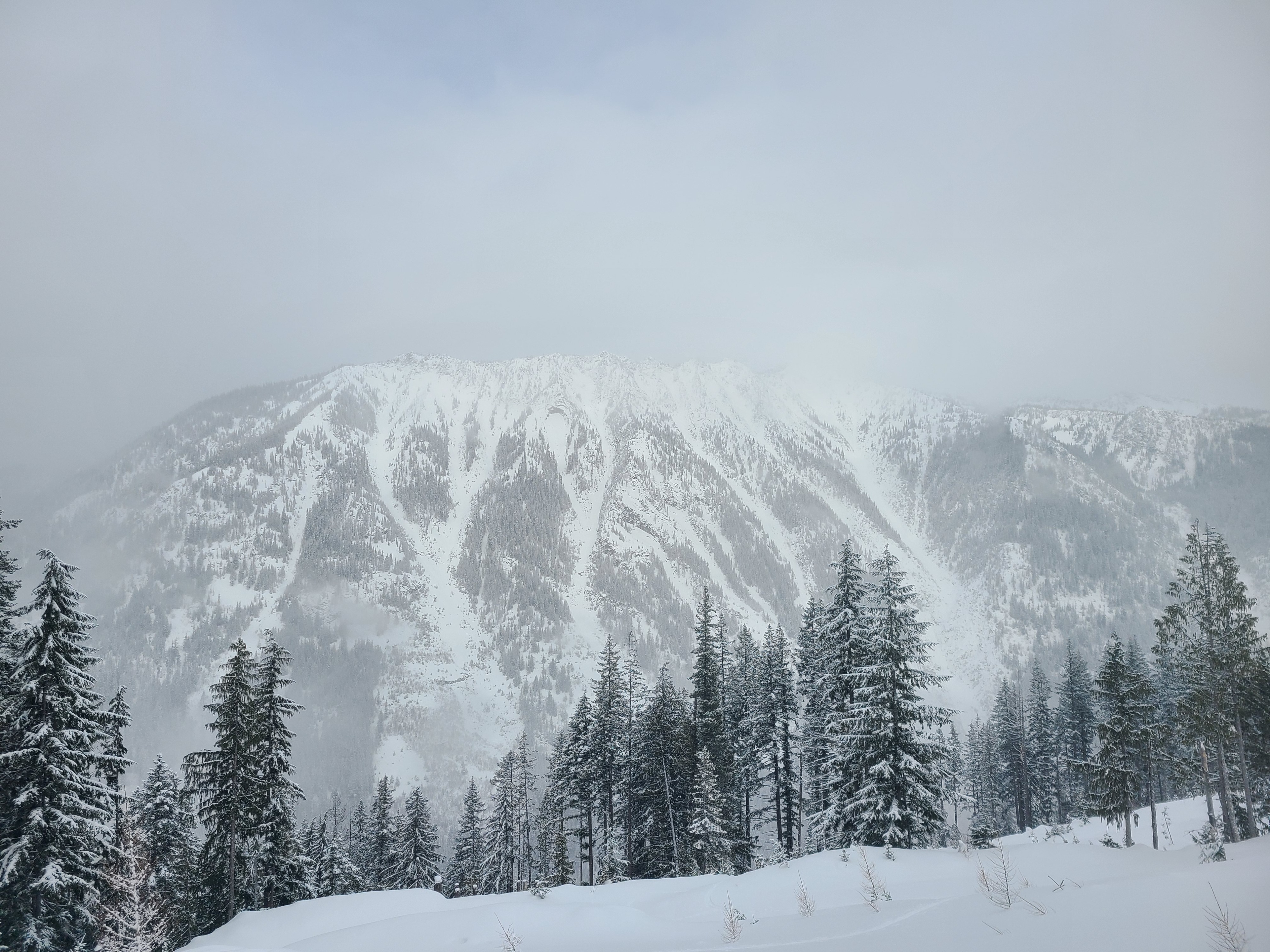
I got out for a quick morning tour to investigate the new storm snow. I found that the variable old snow surfaces (melt-freeze crusts, faceted snow, and wind-board) made the reactivity of the new snow inconsistent. But the new/old bond seemed weakest where fresh snow fell on slick melt-freeze crusts. At these elevations, older weak layers associated with the January Drought were below melt-freeze crusts. The JDL large faceted grains produced unstable test results in small columns but did not show a propensity for propagation in large column tests.
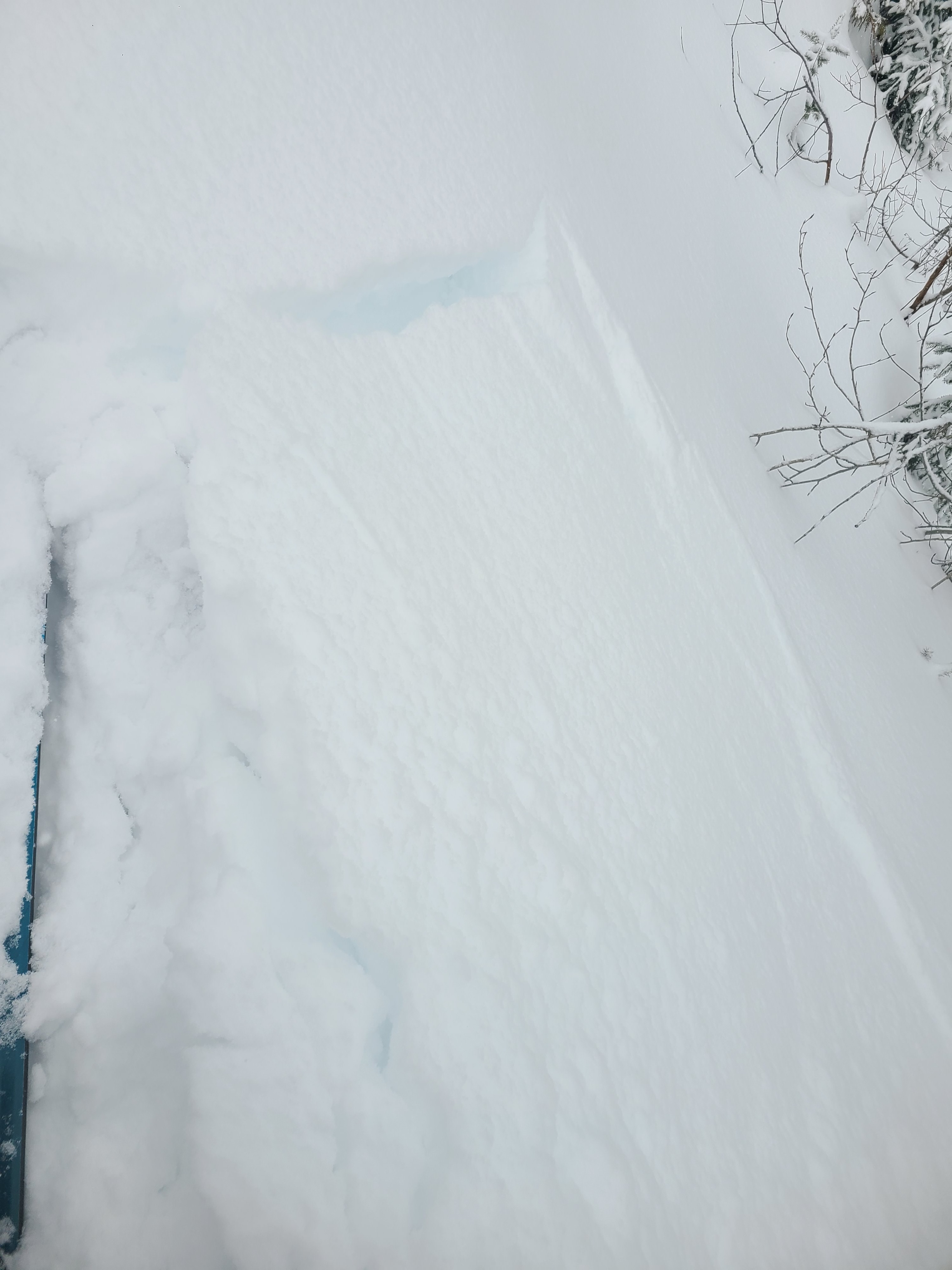
The inconsistent and variable old snow surface made for inconsistent test slope results. Most small test slopes produced minimal results or small loose avalanches. One very steep test slope produced a mini slab that failed on a melt-freeze crust.Weather
- Cloud Cover
- overcast
- Recent Snowfall
- 11cm
Temperatures stayed below freezing through the early afternoon with light easterly winds and light to occasionally moderate snowfall.
Snowpack
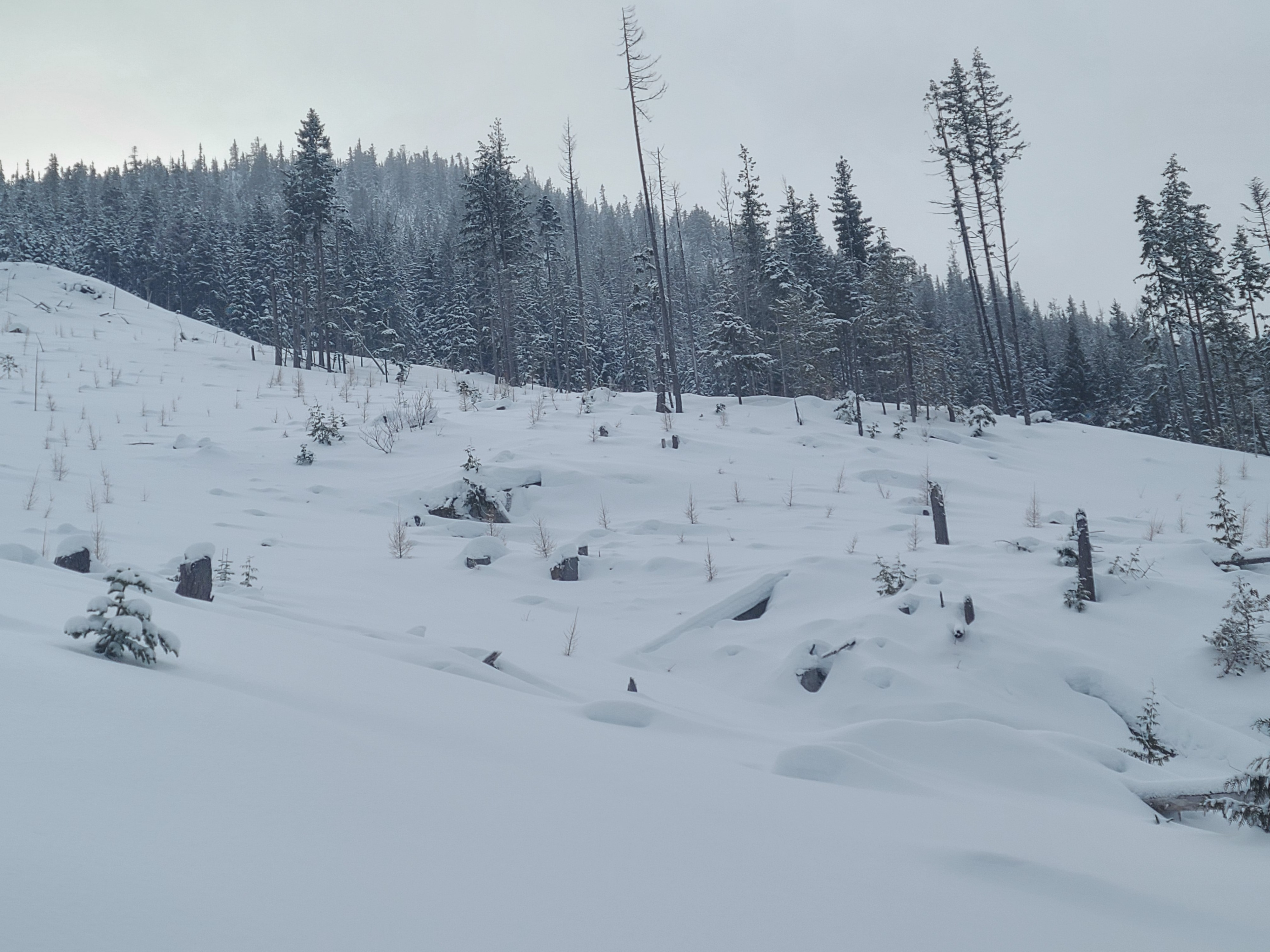
Snow surfaces: Below 3500ft, the 10cm of snow rests over a breakable melt-freeze crust. Above this elevation, the easterly winds from a couple of days ago had significantly affected the old surface, and I found the new snow rested on stiff wind-blown snow. The surfaces were soft, fresh snow, and I observed minimal warming before leaving the field at 12:30 pm. The bond at the new snow/old snow surface seemed favorable in wind-affected areas. Where the new snow rested on a melt-freeze crust, test slopes produced unstable results.
Snowpack Summary: I dug a pit in a more sheltered location at 4100ft on a north aspect. I found 11cm of storm snow over the 1/15 interface (new/old). This interface consisted of small near-surface facets and produced easy results in shovel tilt tests. Below this interface was another 10cm of snow from early February over a 20cm thick complex of melt-freeze crusts with faceted snow in between. I suspect these crusts formed during the fluctuating temperatures in the early February storm. This crust/facet complex rests over the January Drought Layer (JDL) buried 40cm down. The JDL interface is well-developed faceted snow (2-3mm). This interface produced sudden small column test results but failed to propagate in an extended column test. Below the JDL is pencil hard consolidated melt forms and rounds down to the Solstice crust 90-100cm deep.
Height of Snow: 160cm
Stability Test Results
STE ↓ 11cm
CT17 ↓ 40cm
ECTN 18 ↓ 40cm