
Quick report
- Cracking
- isolated
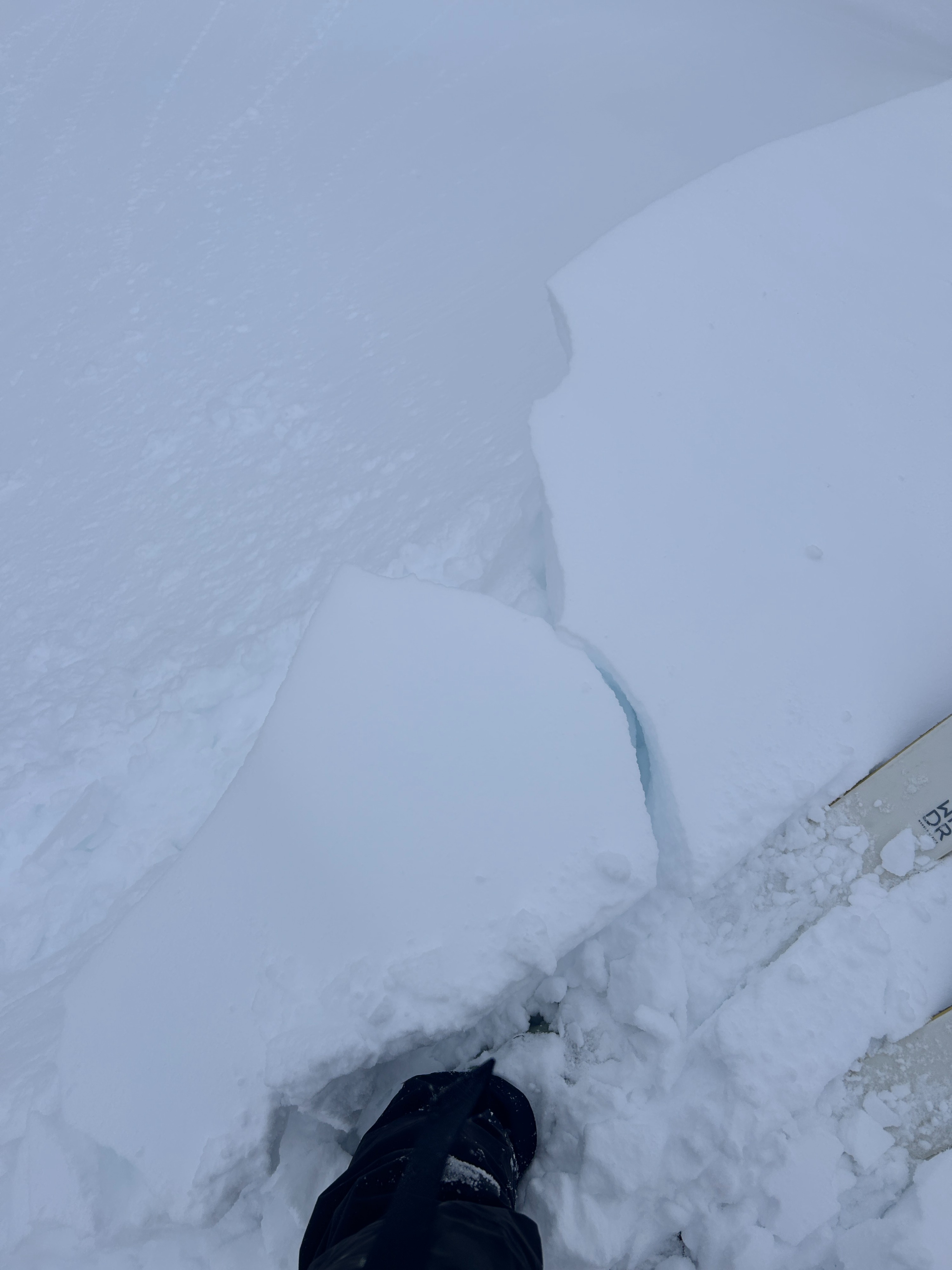
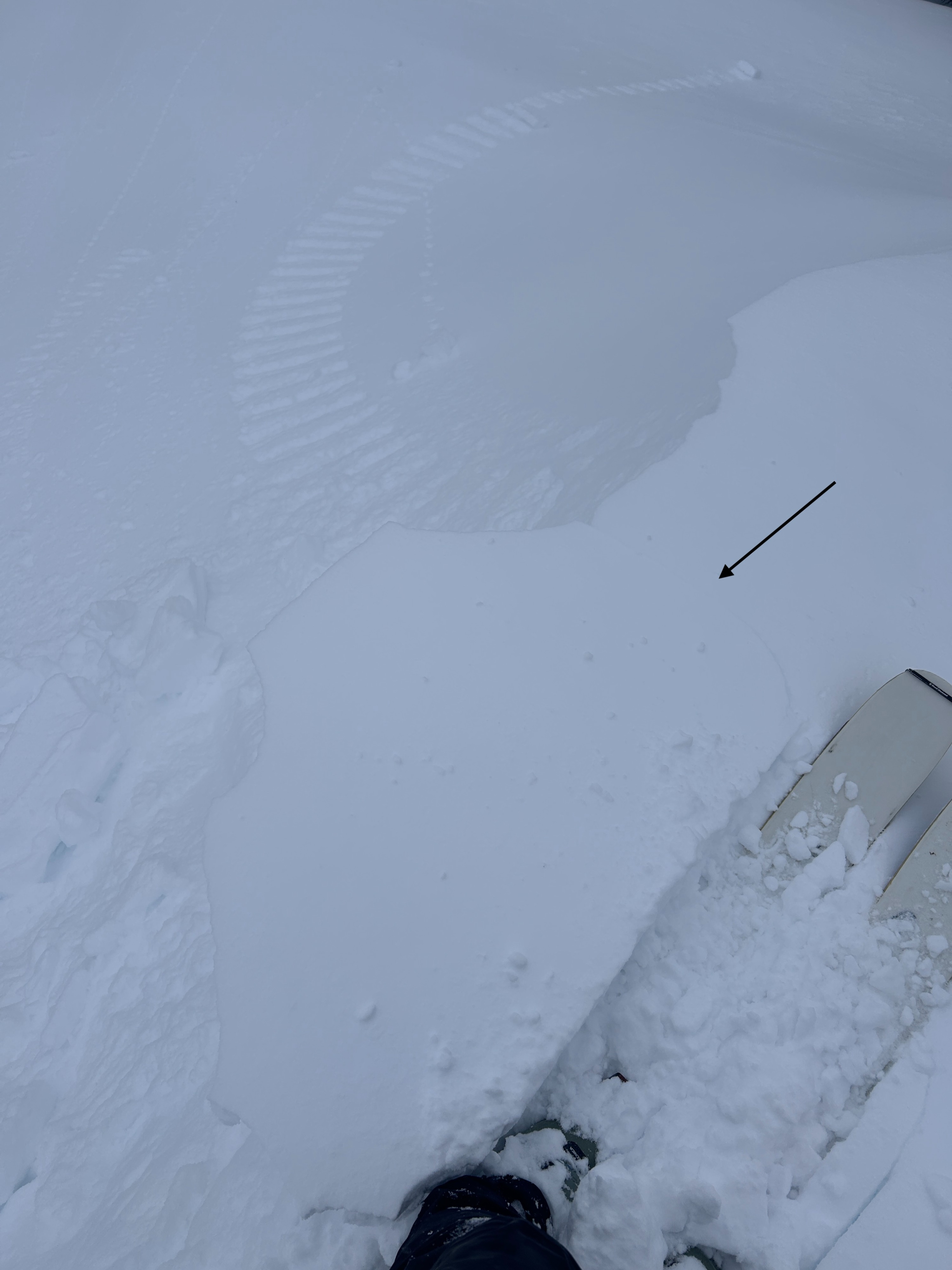
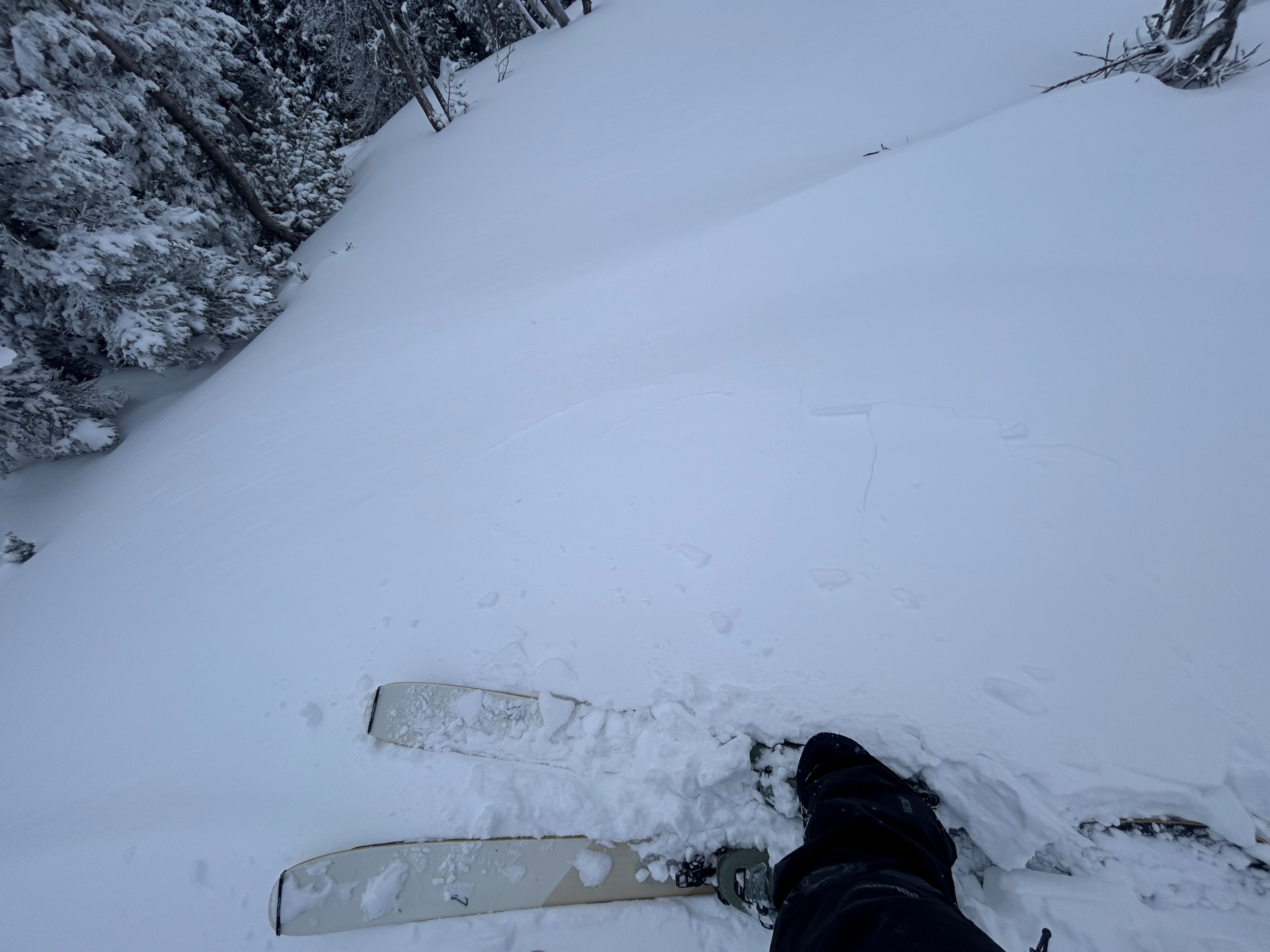
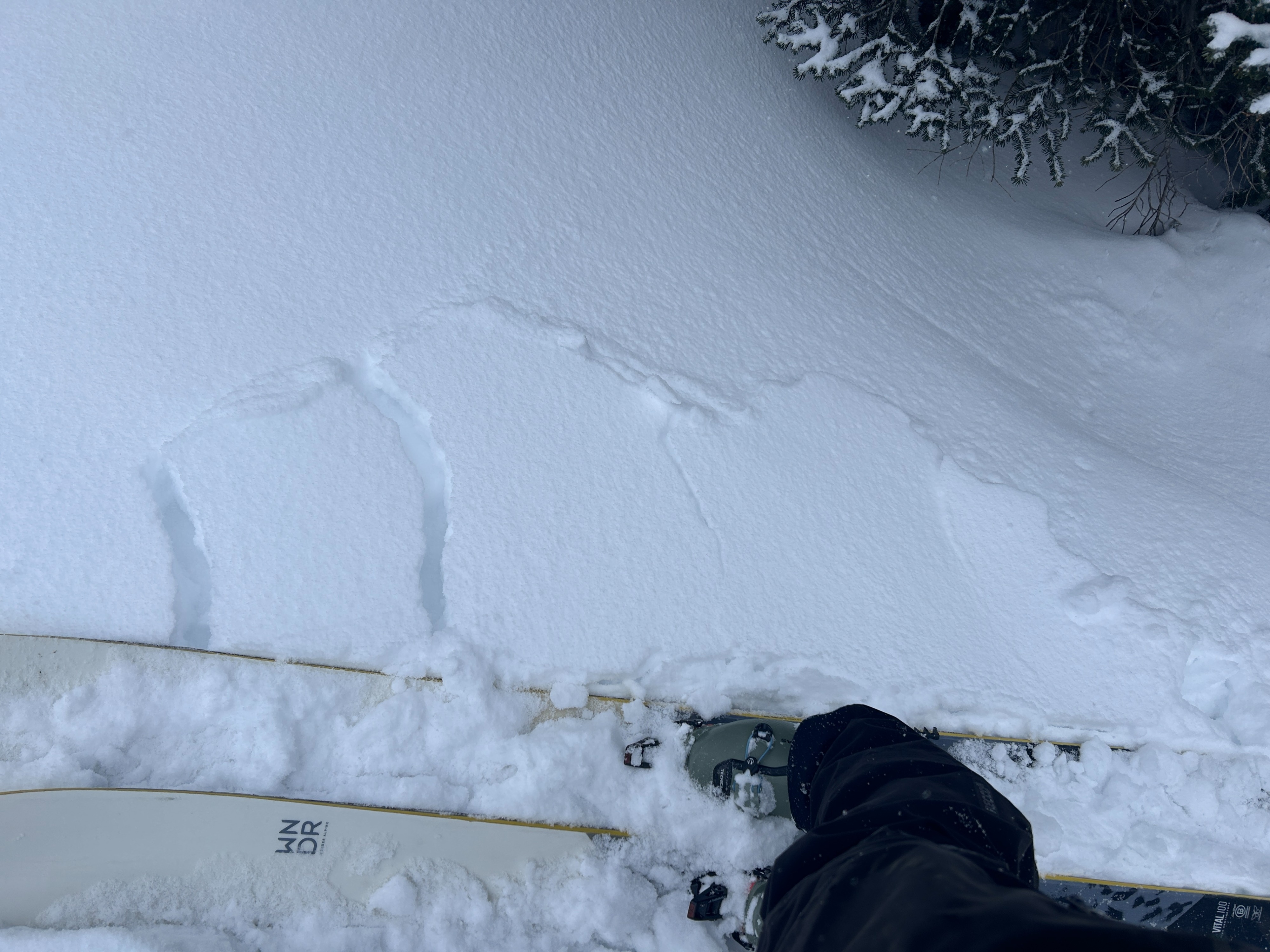
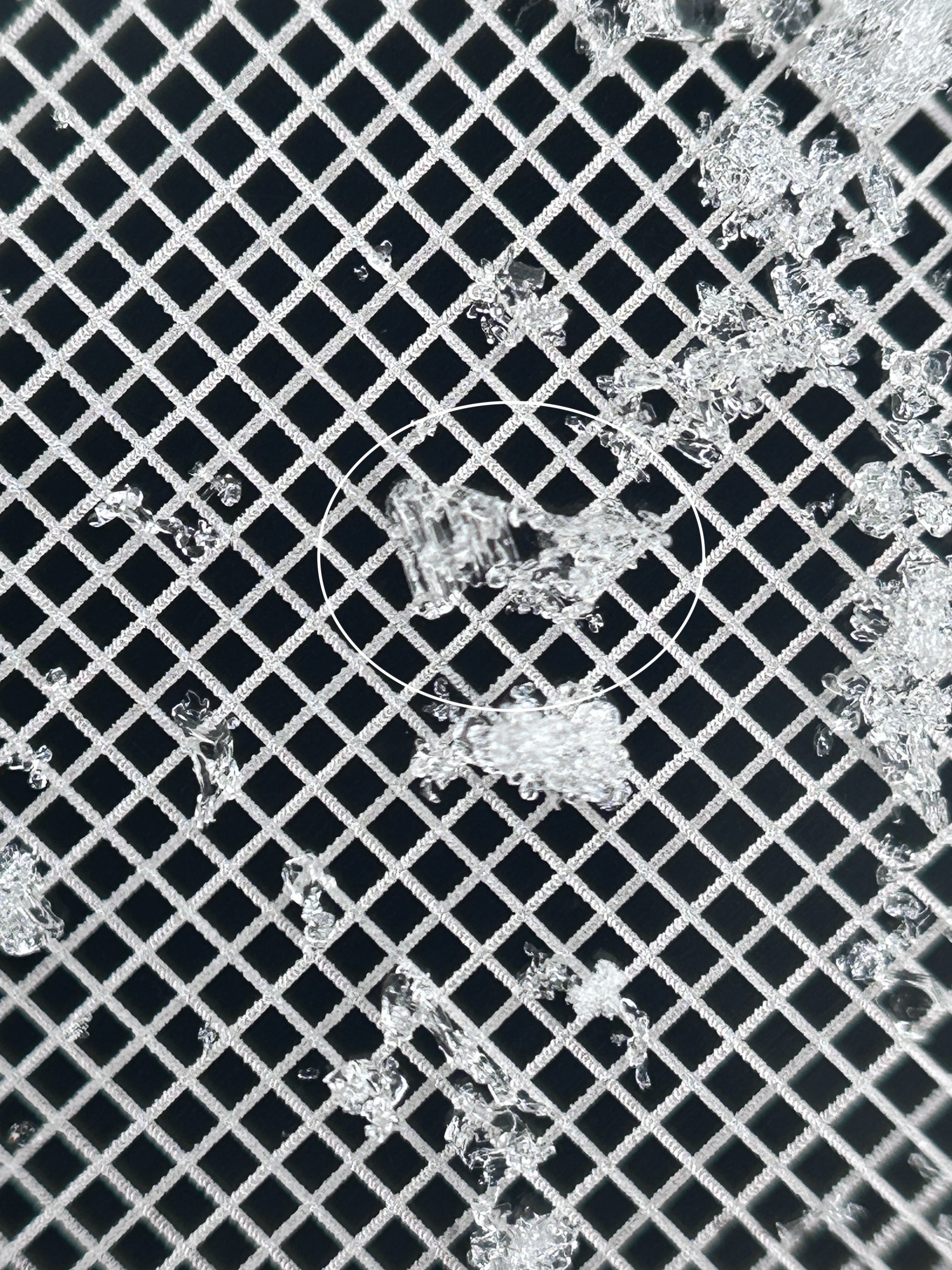
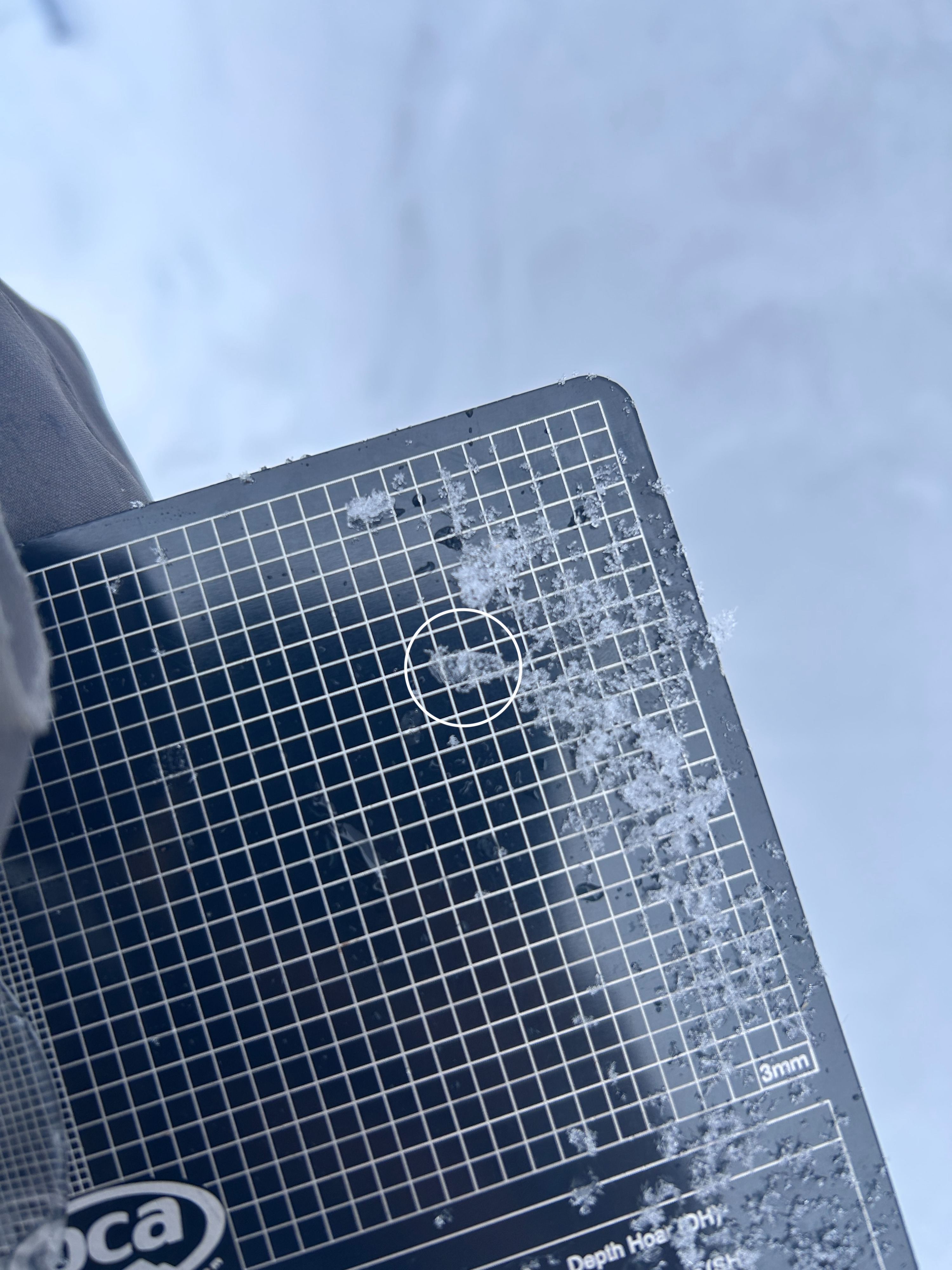
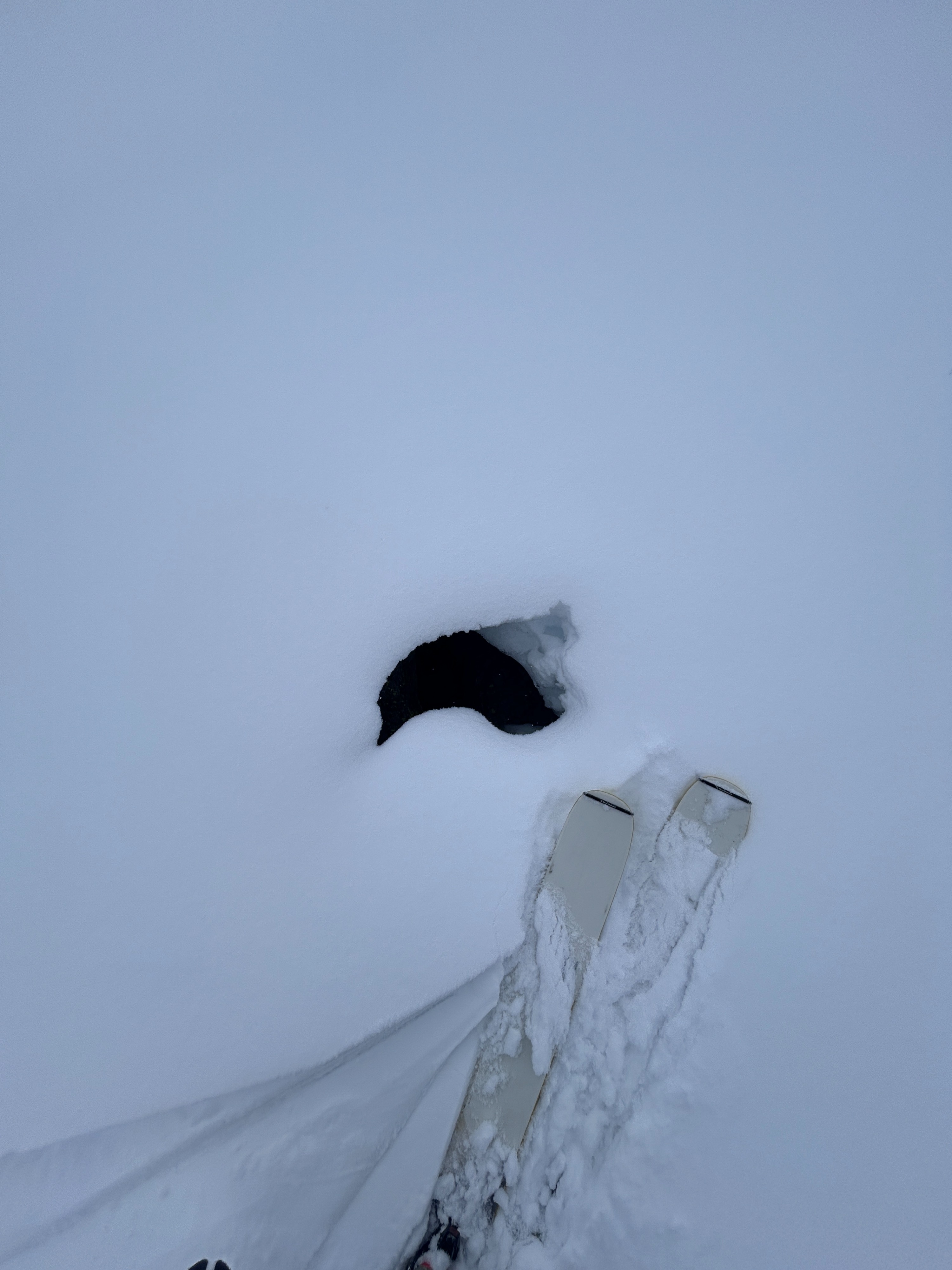
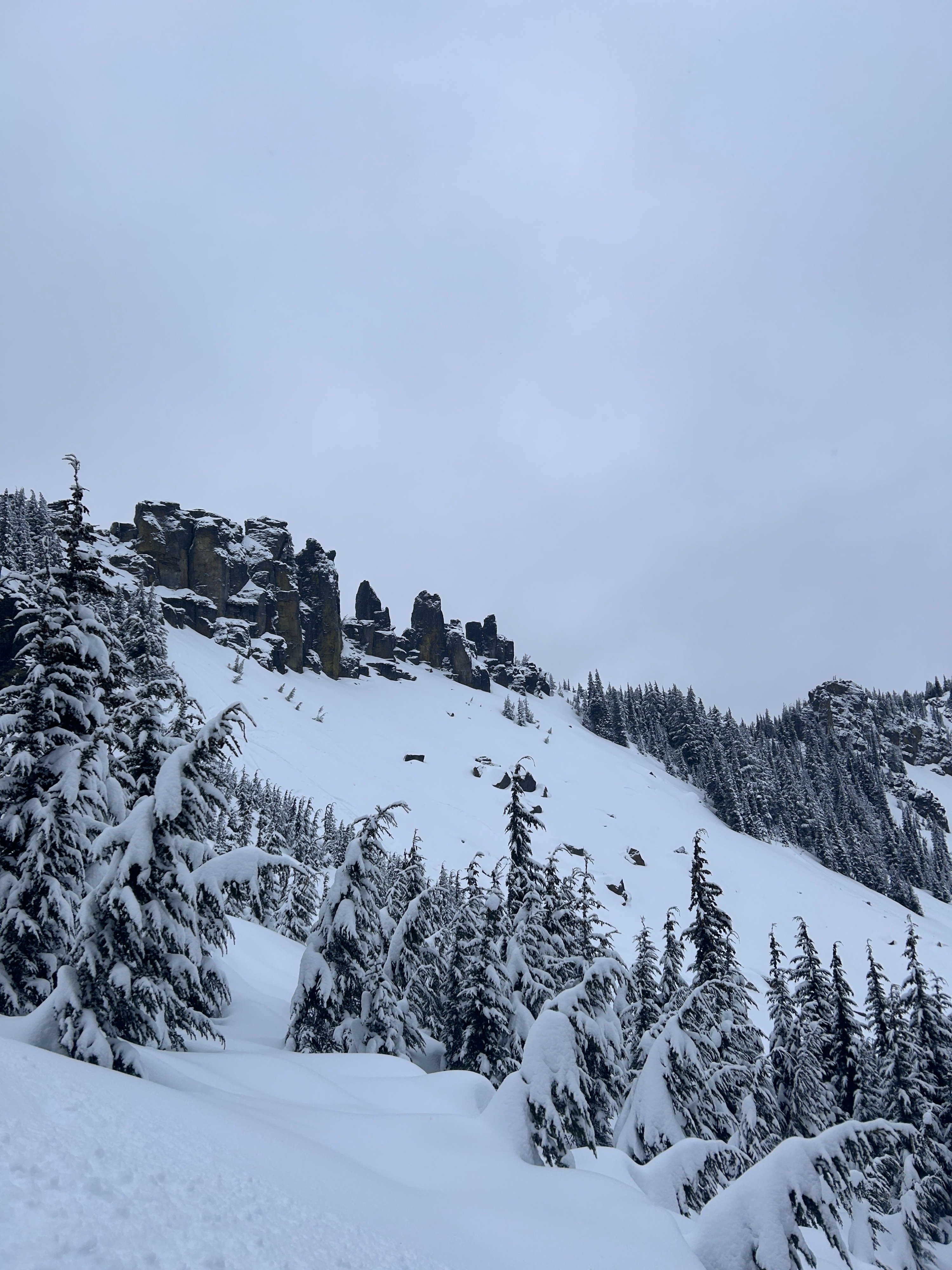
I dug 4 pits at upper elevations on SE, N, and W aspects. I found buried surface hoar in the N and W facing pits. All four pits had a similarly complex and junky crust/facet layer buried within the upper portion of the snowpack. Neither this layer, nor the buried surface hoar layer showed propensity for propagation at this time. Snowpit tests showed some midstorm interfaces, but other than some stubborn and isolated cracking in wind loaded snow, I did not see other signs of instability associated with these layers.
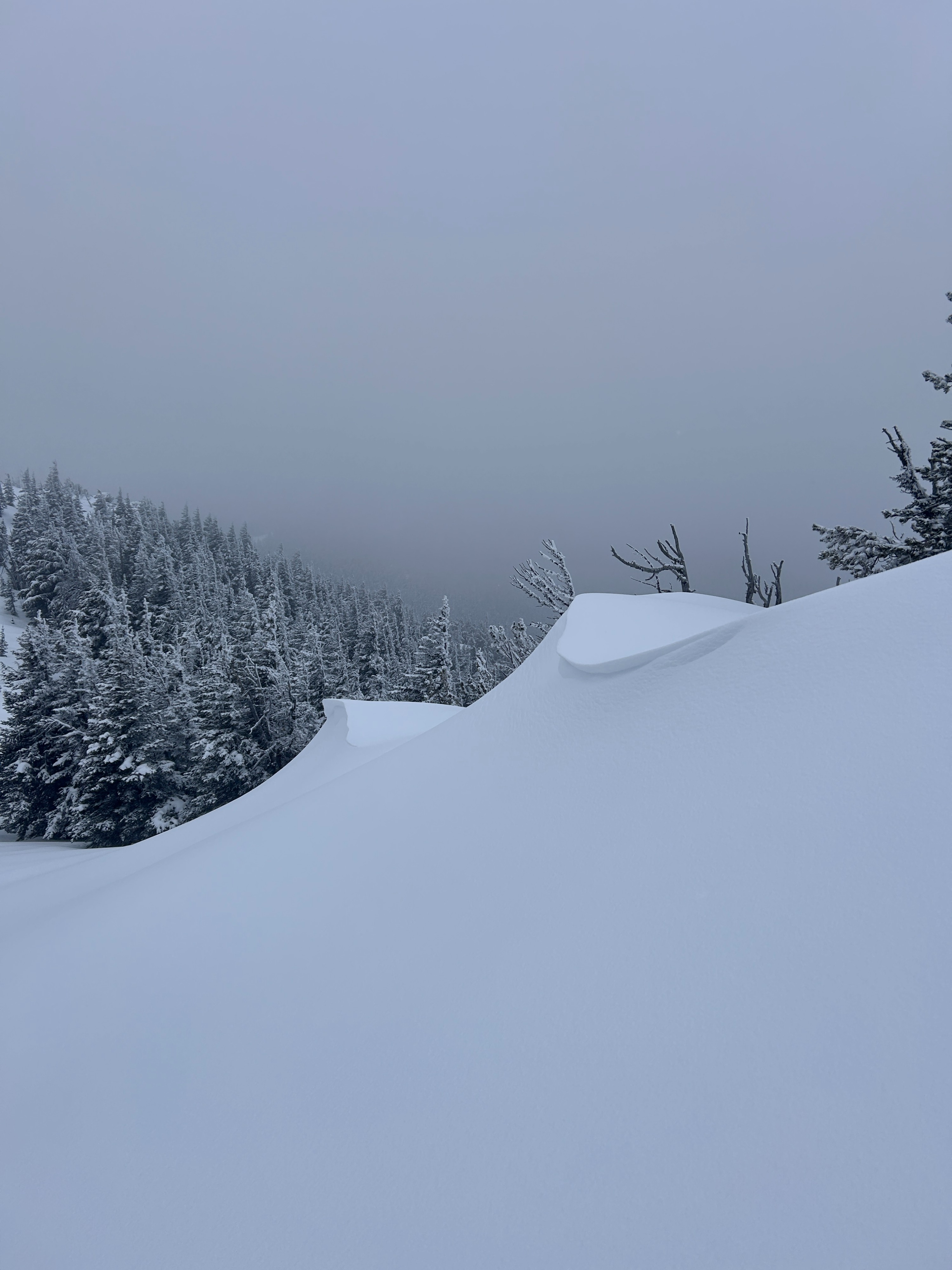
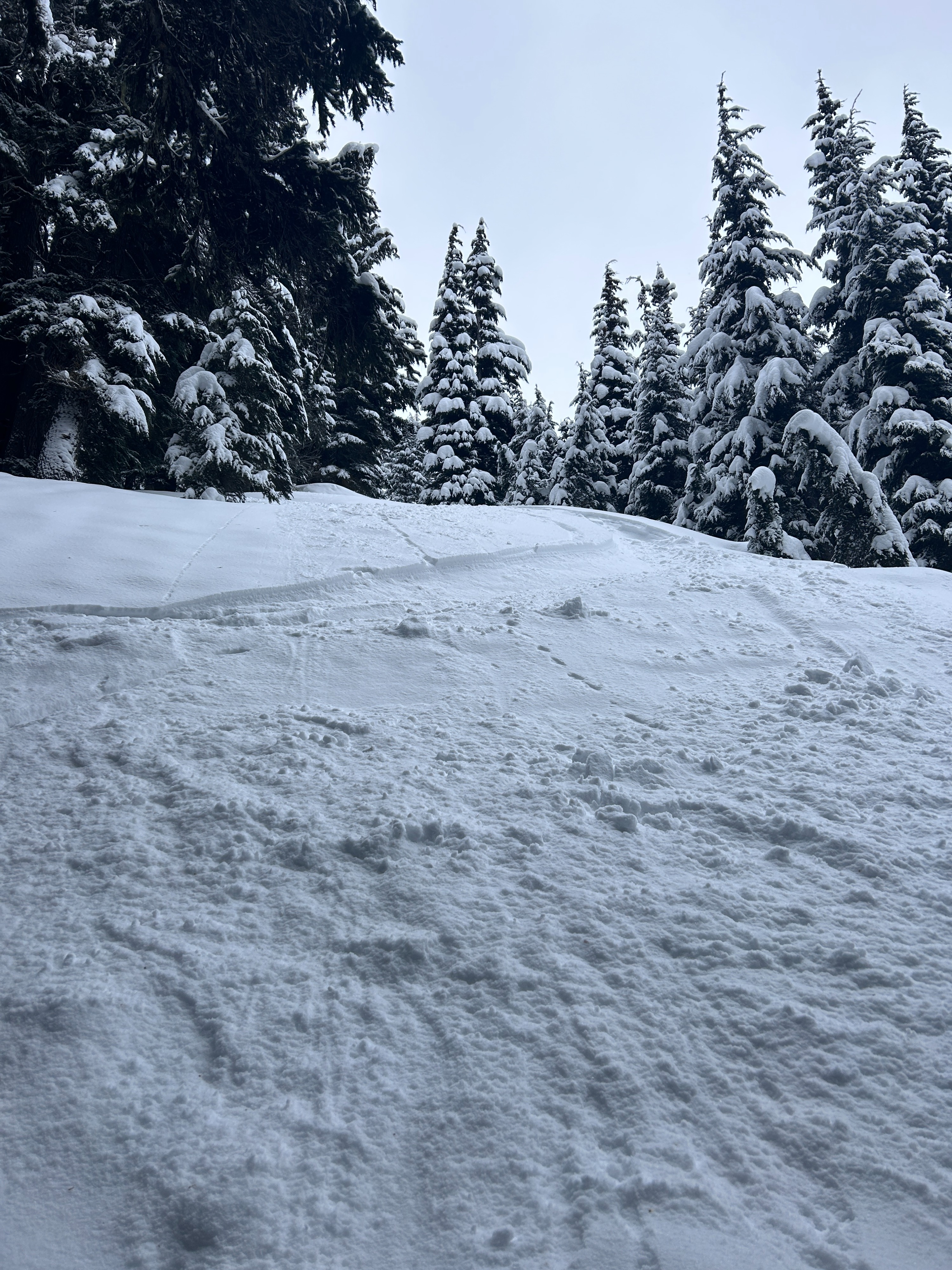
I got some stubborn and isolated cracking in wind loaded terrain at or just below the upper elevation ridgeline I traveled along. I also triggered some dry loose sluffing on my descent.Weather
- Air Temp
- 24
- Cloud Cover
- overcast
- Wind Loading
- light
- Recent Snowfall
- 10-15
- Snow Avail For Transport
- moderate amounts
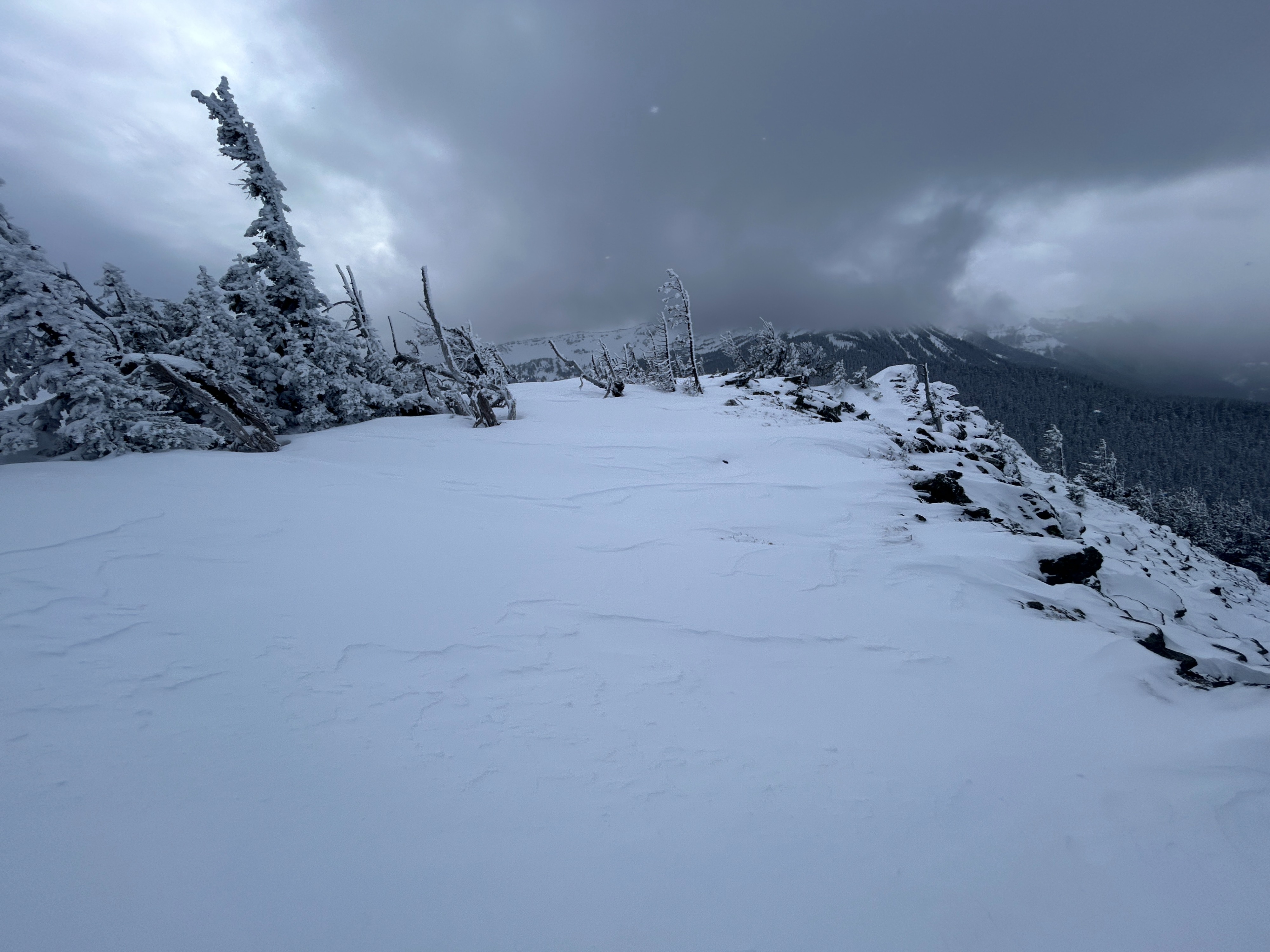
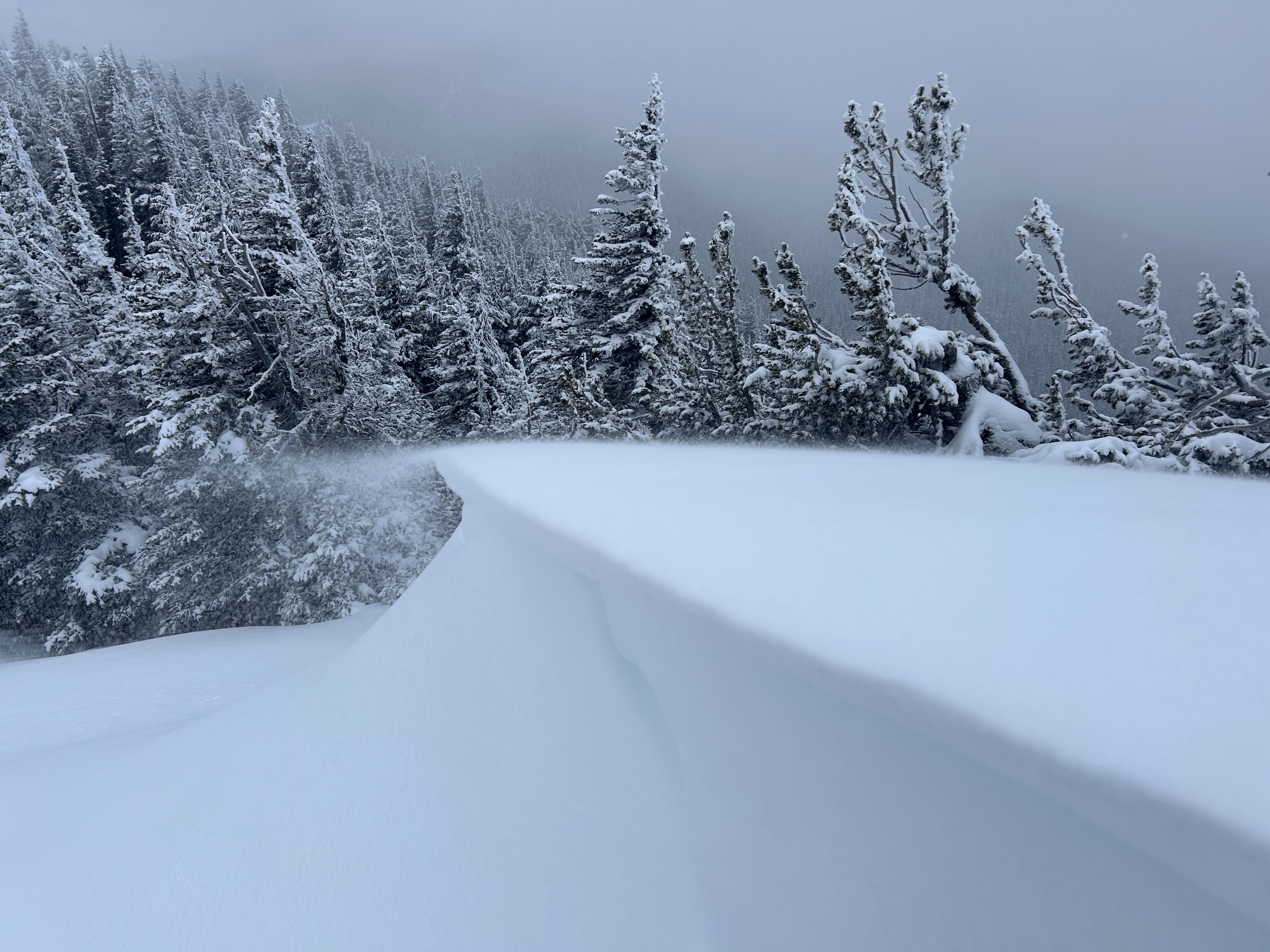
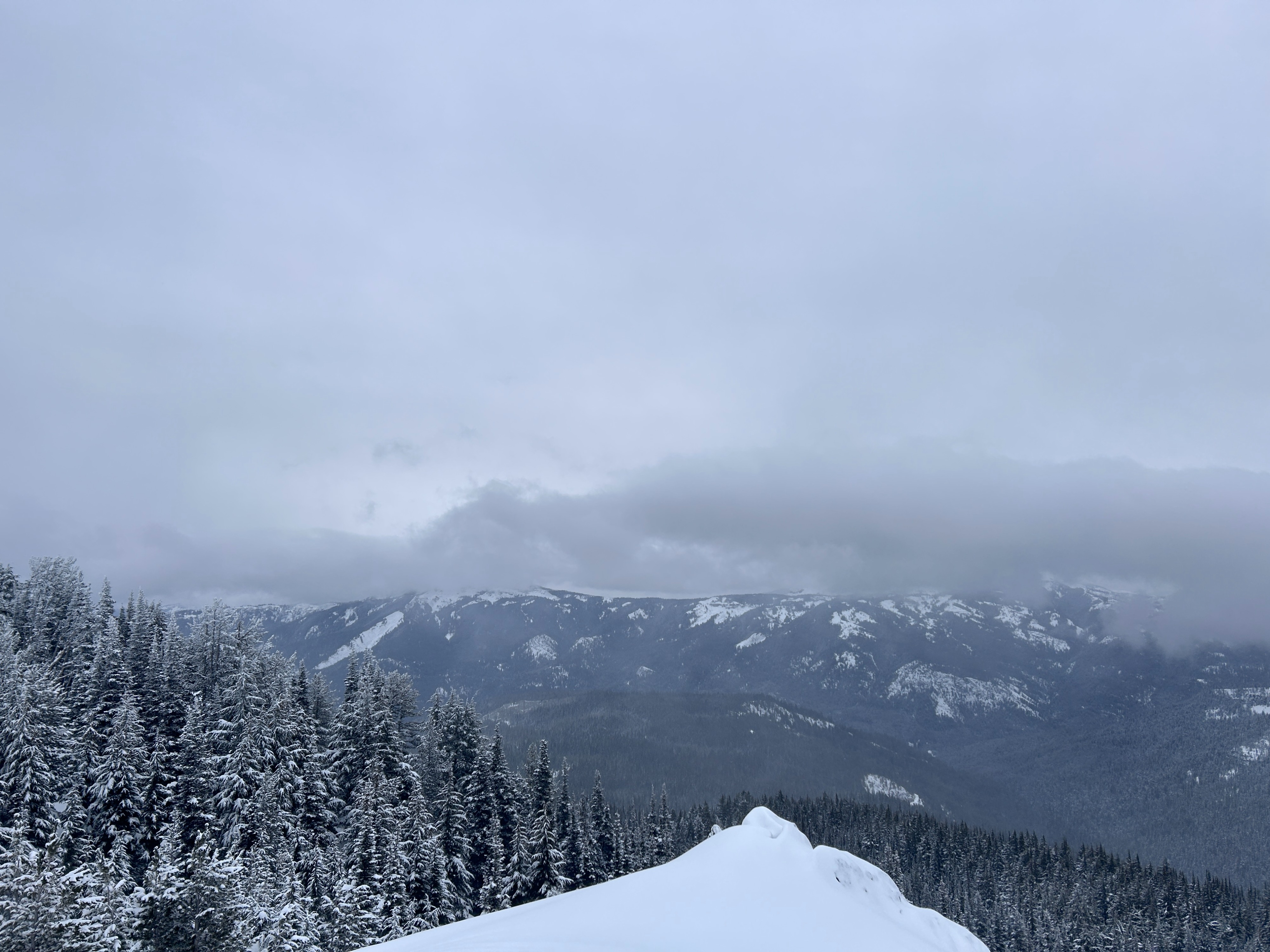
The sky was overcast until I returned to the truck in the afternoon. At that point, pockets of blue sky were visible. Very light snow fell throughout the day, with one period of light snow for about 20 minutes in the late morning. The wind was calm-light from a variety of directions. Light gusts transported snow from west to east along the ridgeline as well as down in at the lakes in open areas. Temperatures remained below freezing throughout the day at middle and upper elevations, but jumped above at lower elevations.
Snowpack
The vast majority of my snowpack obs were done at the upper elevation band. Lower elevations tend to still struggle to hold a consistent snowpack on any aspect. Middle and upper elevations also don't have a very robust snowpack on south and west facing terrain due to sun and wind exposure.
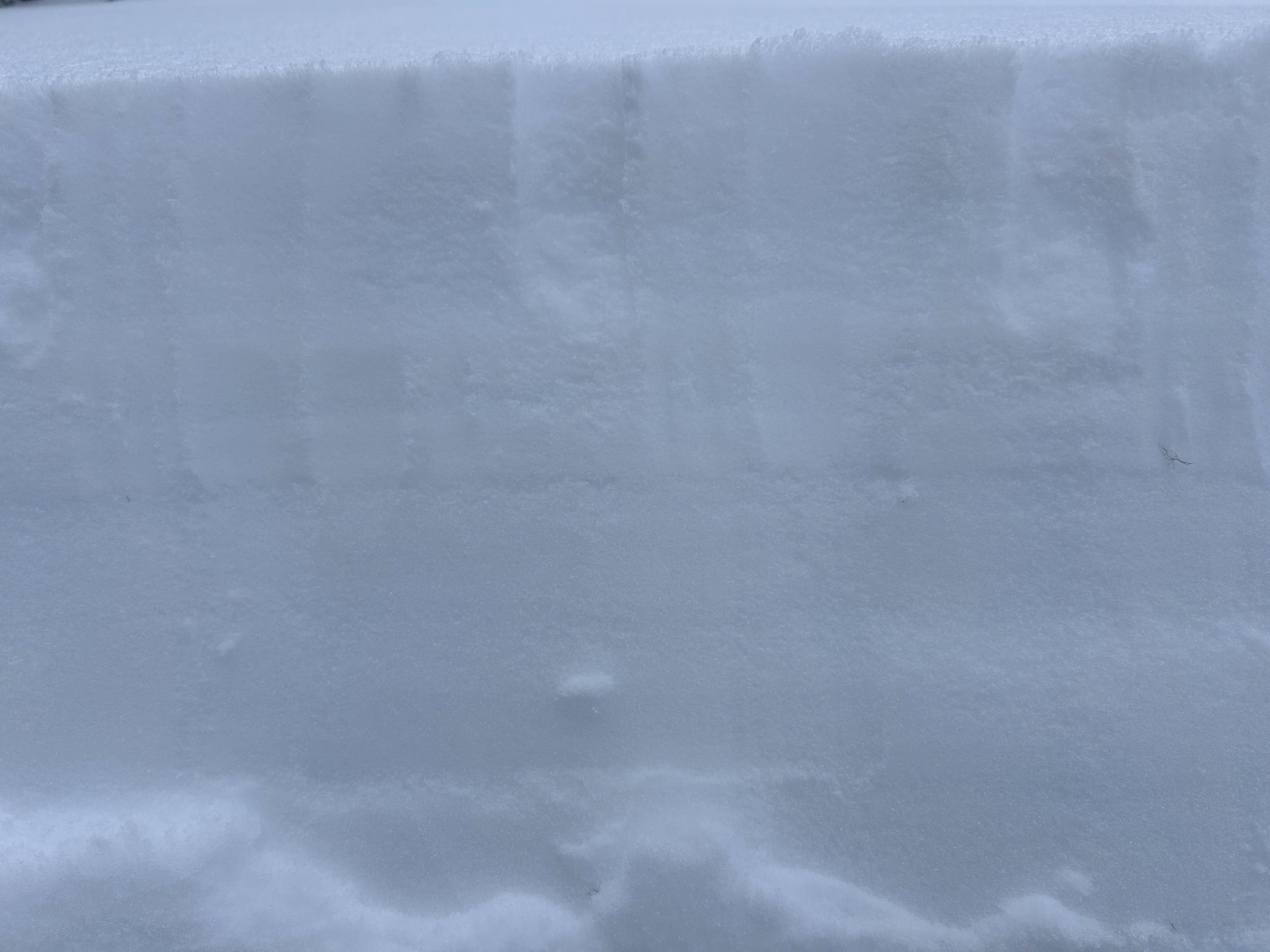
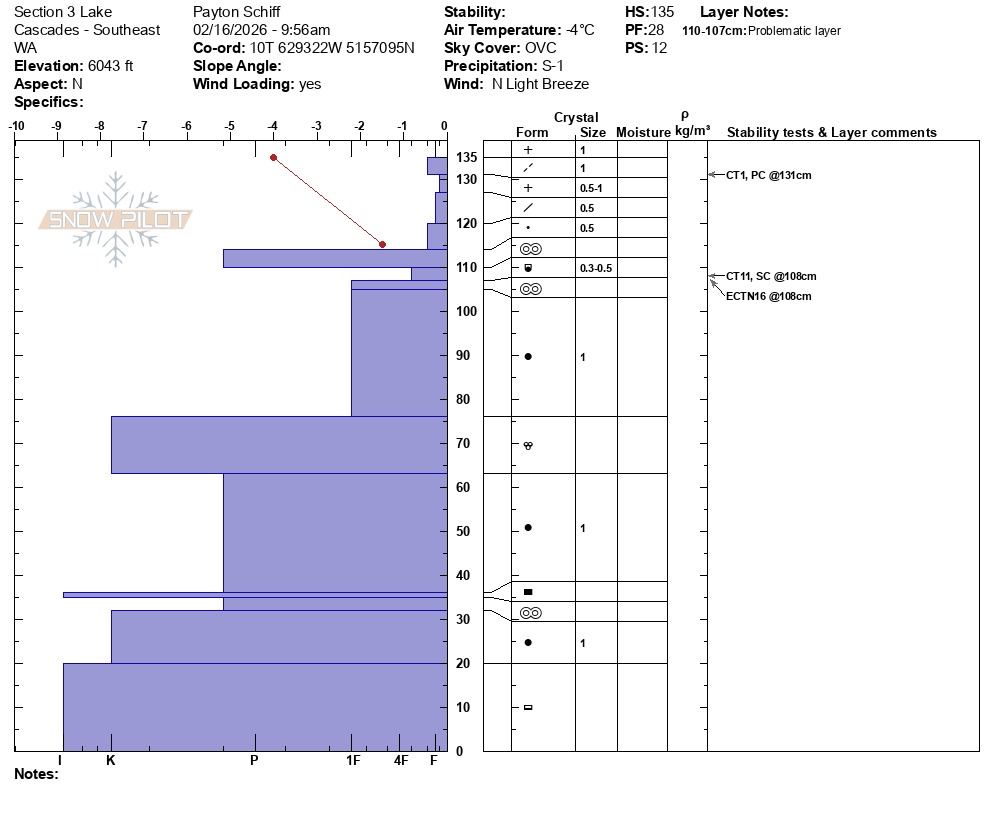
Pit 1: N aspect, 6043 ft The depth of this pit was 135cm (53in). I found 15cm of new/recent snow and did not find any buried surface hoar. A complex layering of crusts and faceted snow sits at depths of 105-114cm within the snowpack. I performed a compression tests and got an easy resistant result within new snow, then a moderate sudden result within faceted snow (CT1PC down 4cm, CT11SC down 27cm). I performed an extended column test and got a moderate non-propagating result at the same faceted snow layer (ECTN16 down 27cm).
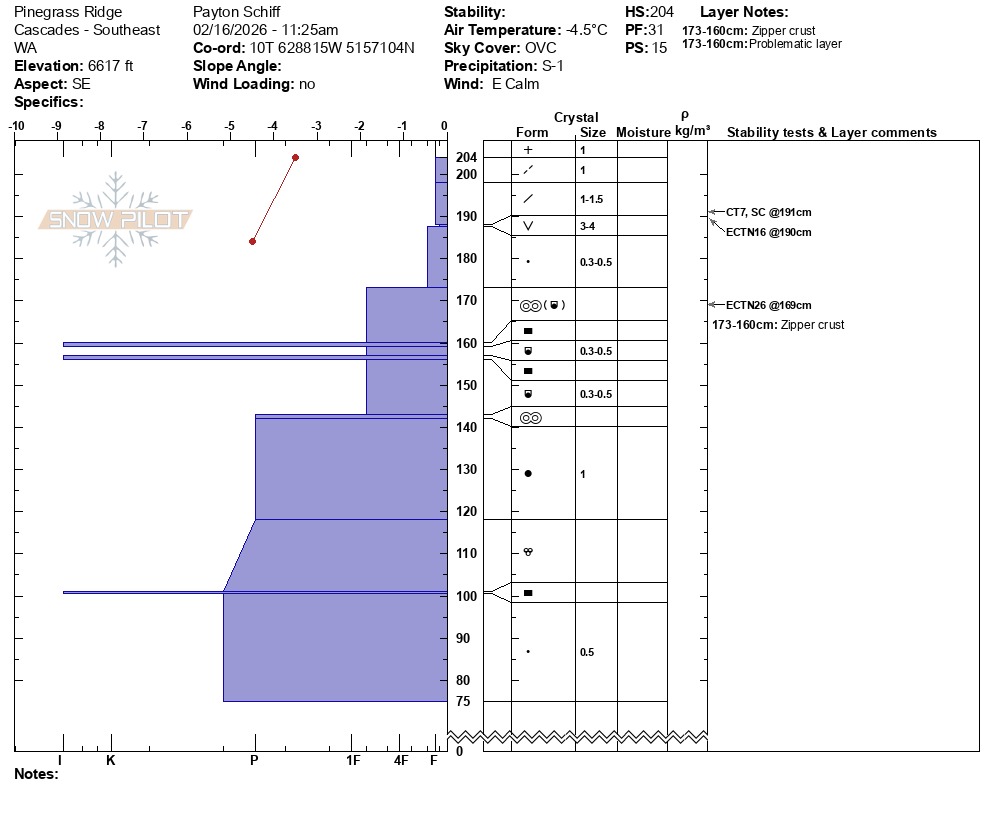
Pit 2: SE aspect, 6617 ft The depth of this pit was 204cm (80in). I found 16cm of new/recent snow overlaying buried surface hoar. The complex crust/facet layers were found at depths of 157-173cm. I performed a compression test and got an easy sudden result within recent snow (CT7SC down 12cm). I performed extended column tests and got a moderate non-propagating result at the same recent snow interface, then a hard non-propagating result within the crust/facet layers (ECTN16 down 12cm, ECTN26 down 35cm).
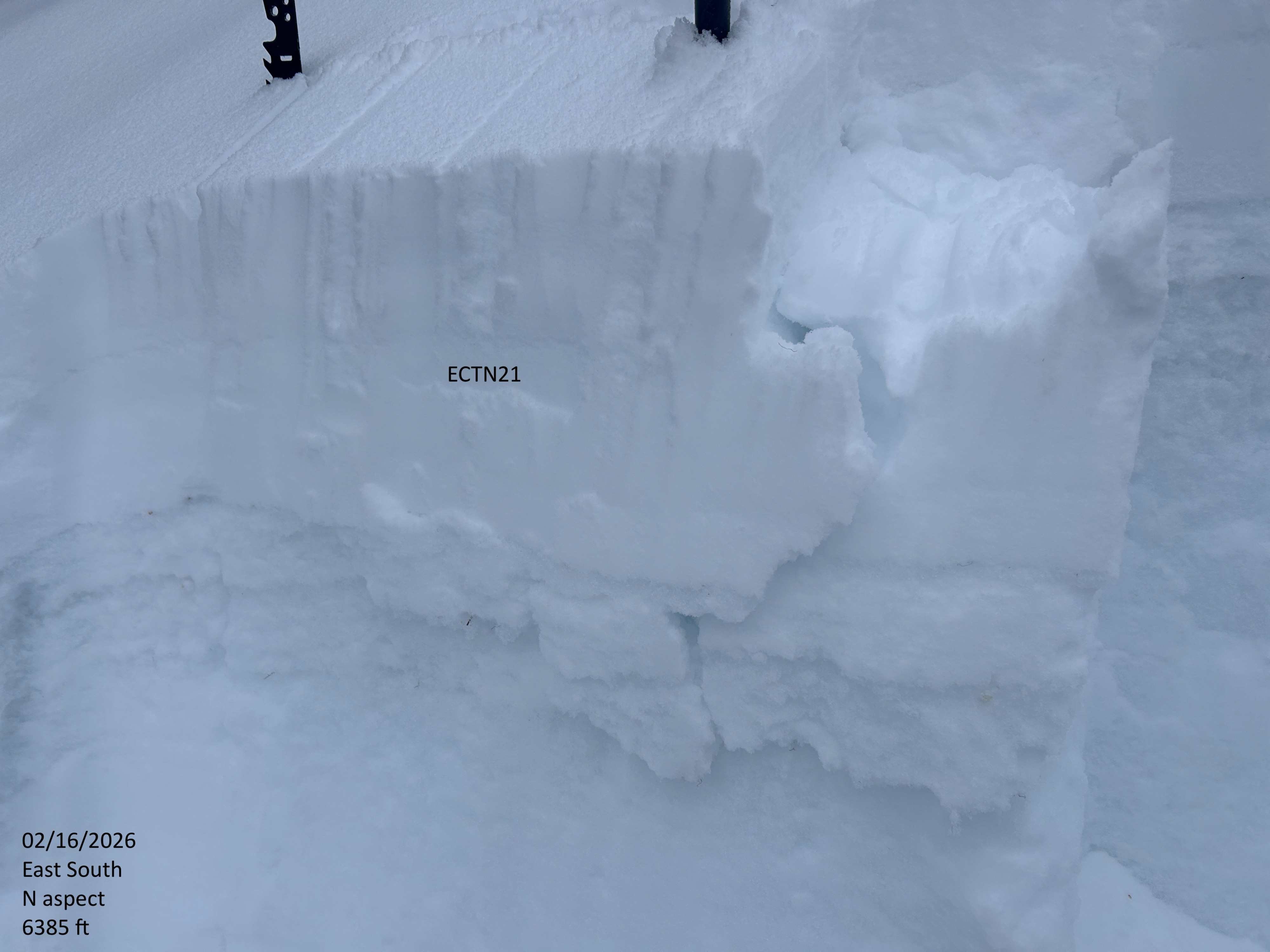
Pit 3: W aspect, 6562 ft The depth of this pit was 96cm (38in) (this was in a pocket of snow along the west side of this ridge that largely held only recently fallen snow). I found 10cm of new/recent snow overlaying buried surface hoar. The BSH at this location was a bit more rounded. Overall, the snowpack at this location was much more faceted. The crust/facet complex was found at 62-73cm however more fully faceted snow grains were found further down. I performed extended column tests and got a moderate non-propagating result within recent snow, then a hard non-propagating result within the crust/facet complex (ECTN11 down 9cm, ECTN21 down 30cm).
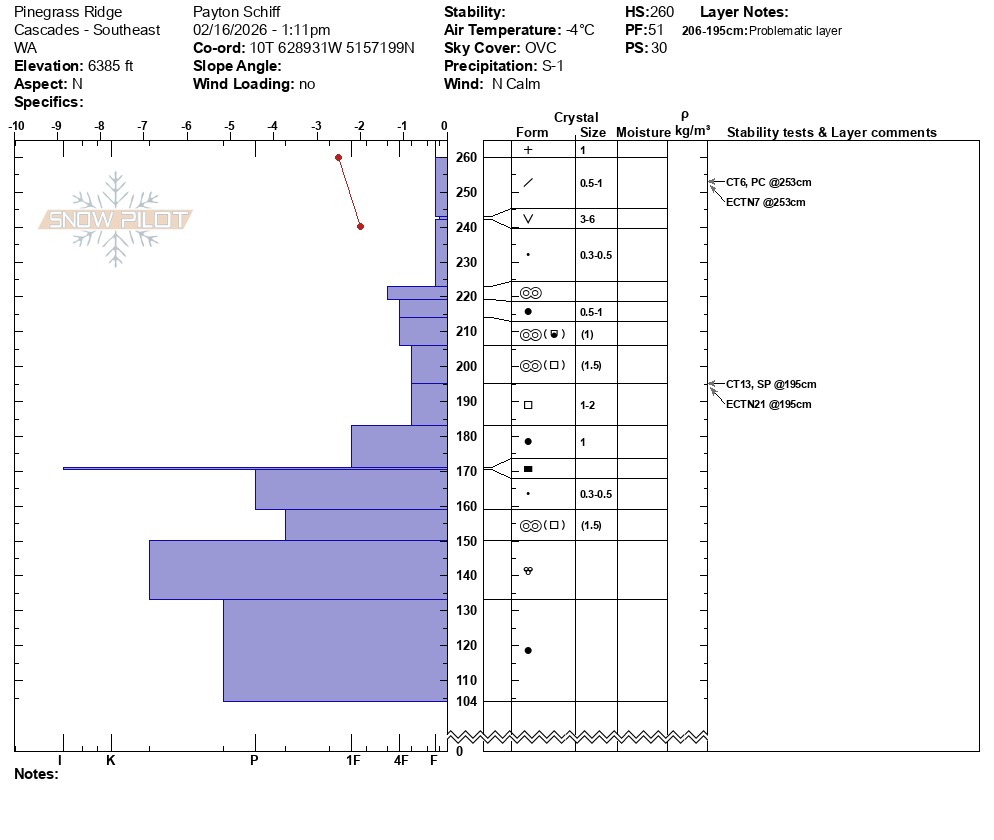
Pit 4: N aspect, 6385 ft The depth of this pit was 260cm (102in). I found 17cm of new/recent snow overlaying some of the larger buried surface hoar grains observed today. The crust/facet complex is found at depths of 183-214 and is overall much less supportable than all other areas I traveled. My boot penetration went way past the top crust in this pit while in others, it was always on the crust. I performed compression tests and got an easy resistant result within new snow, then a moderate sudden result within the crust/facet compex (CT6PC down 7cm, CT13SP down 65cm). I performed extended column tests and got an easy non-propagating result then a hard non-propagating result at the same interfaces (ECTN7 down 7cm, ECTN21 down 65cm).