
Quick report
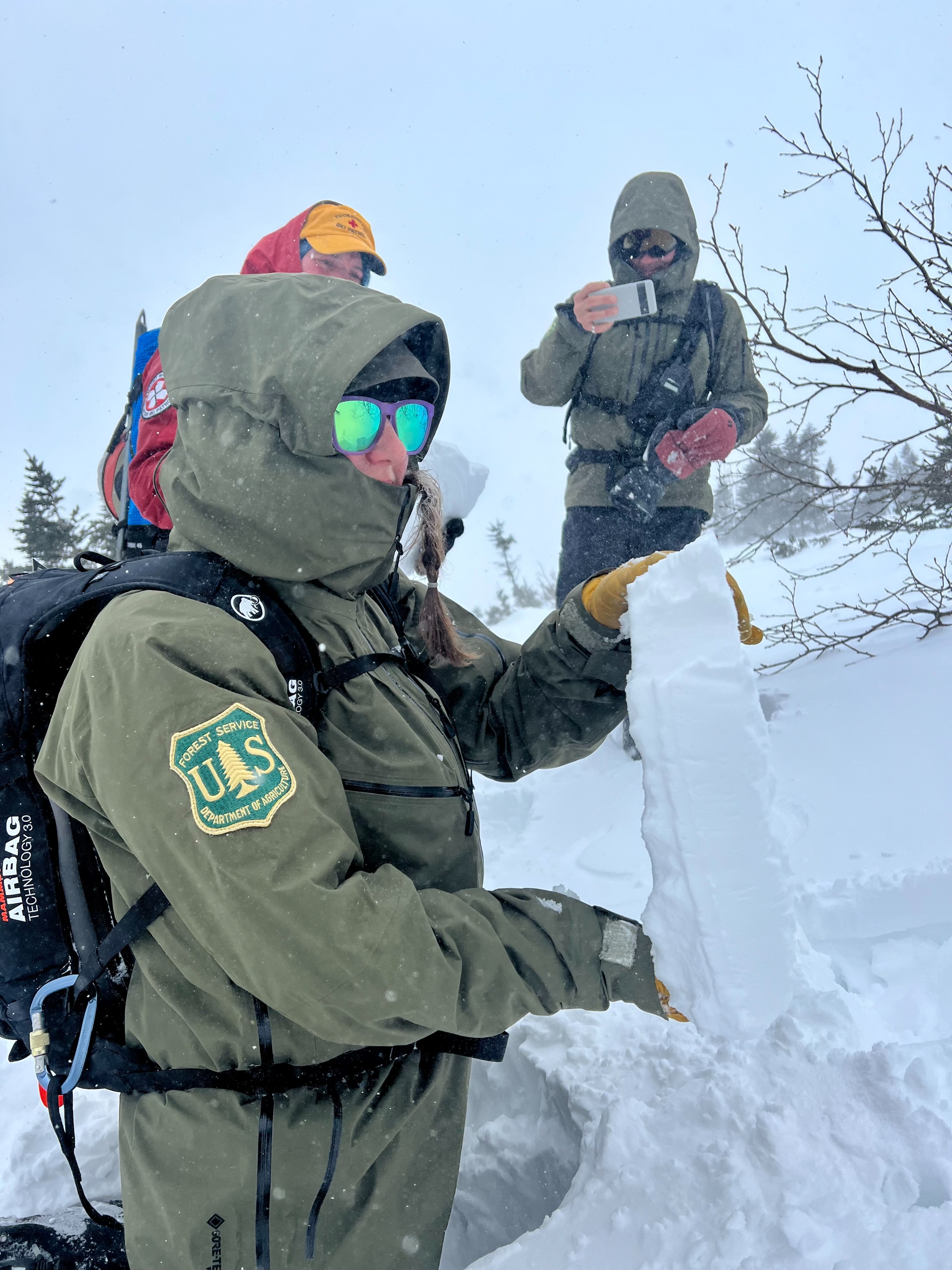
Found newly drifted snow depths to range 1-2 feet and all hand shears failed on isolation on a density change within the newly transported snow
Weather
- Air Temp
- 4
- Cloud Cover
- obscured
- Wind Loading
- moderate
- Rain Elevation
- Not Observed
- Recent Snowfall
- 11 cm
- Snow Avail For Transport
- small smounts
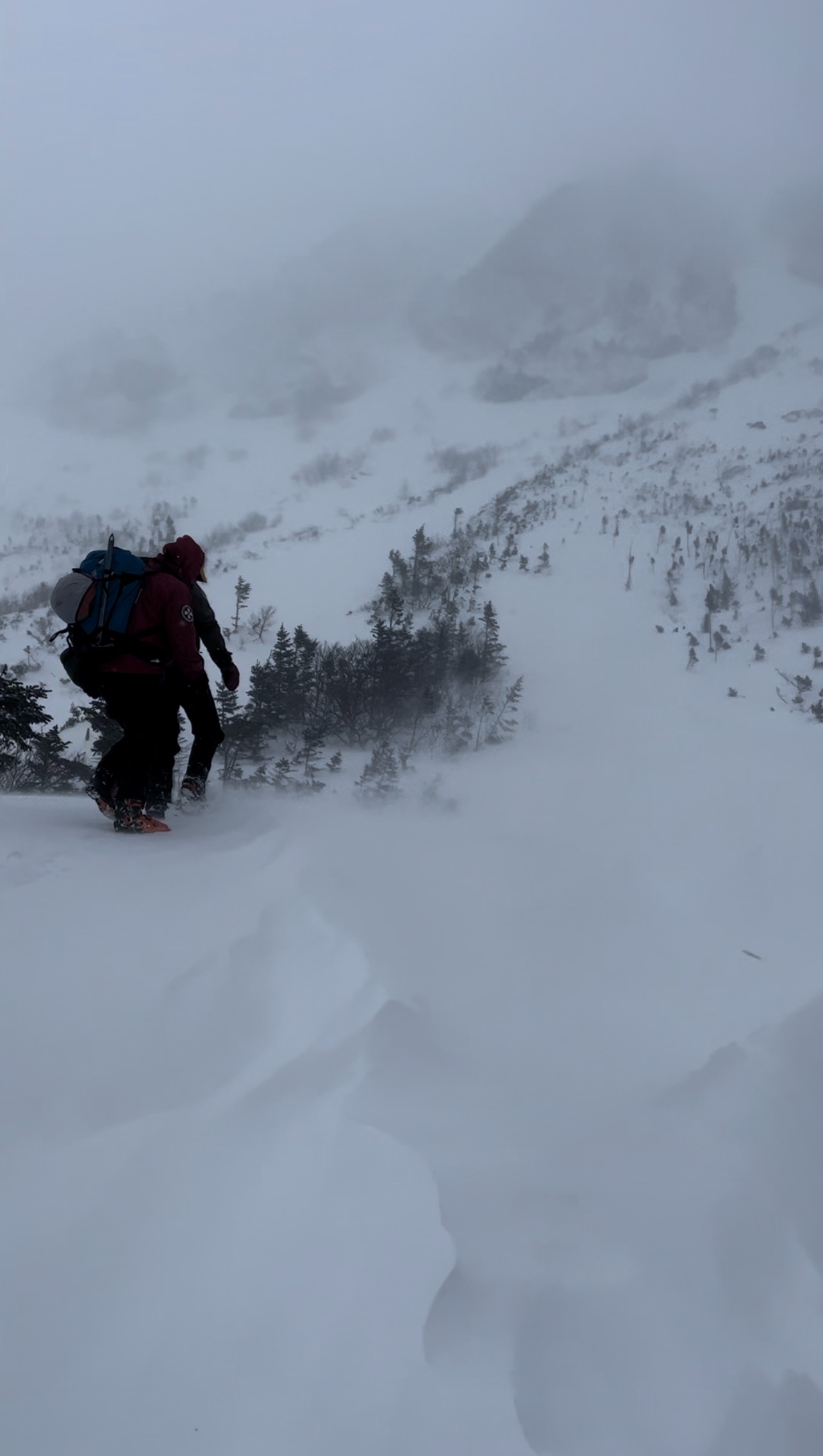
Low visibility was observed in the ravine this afternoon. Temperature was cold with strong western winds that have been building speed since the morning. Active loading was observed.
Snowpack
Entered the terrain looking to get an idea of the size, distribution, and sensitivity of the new wind slabs. Focused on south and southeast aspects in the ravine and observed snow around R3, Lobster Claw, and Right Gully. Found the newly drifted snow to be 1-2 feet in depth. In some areas that were more wind effected, things were scoured down to the melt freeze crust from yesterday’s warming. It is also possible to find deeper, isolated pockets in areas that are more wind sheltered.
Preformed several hand shears at various places, and these all failed on isolation. The failure occurred within a density change in the newly transported snow. Winds started slower and have been building in speed, and you can see the effect of this in the snow. All the newly transported snow is sitting on a slick melt freeze crust, then there is a thicker layer of soft fist hard snow, and on top of that is a 4F hard layer. At the moment, the snowpack is upside-down as the surface snow is firmer than the snow that it lies on, or strong over weak.
As mentioned, all of the hand shears failed on isolation, and they failed on this density change where the 4F snow and fist hard snow interact. The stiffer snow on top was more wind effected, and with continued loading and increasing wind speeds it is expected that this top layer will grow and continue to stiffen over time. Small cracking was observed in isolated areas, but at this point it lacked speed and energy and would not be defined as shooting cracks. As the snow stiffens, it may become more reactive, so this will be something to pay attention to in travel tomorrow. Shooting cracks will be a primary sign of instability. The current size of the 4F layer ranges from 2.5-5 inches. While results happened within the newly transported snow, the interface of the new and old snow is also something to pay attention to. At the moment the new snow is not adhearing to the slick surface and with continued cold temperatures through the night bonding is unlikely to happen.
Was unable to observe start zones because of obscured visibility, but do believe that those are scoured due to the high wind speeds and gusts that have been sustained this afternoon.