
Quick report
We observed a generally stable snowpack in Germania and evidence of an avalanche cycle from during the March 12-17 storm. Despite all the recent wind, snow surfaces were generally soft but hid stiffer wind slabs 6-8" below the surface on open slopes. We found weak snow on E aspects, where we found breakable crusts at the storm/old snow interface. These thin-crusted margins hold the most uncertainty with persistent slab problems right now. Solar aspects started to moisten by 3pm below 8500'. Above that, consistent light winds kept surfaces surprisingly cool. We also observed the dust-on-snow event buried ~6" below the surface everywhere we looked (and on the surface at lower elevations or where the wind has scoured away soft snow).
While touring, we avoided obviously wind-loaded slopes and kept aware of changing surface conditions with the powerful sunshine today.
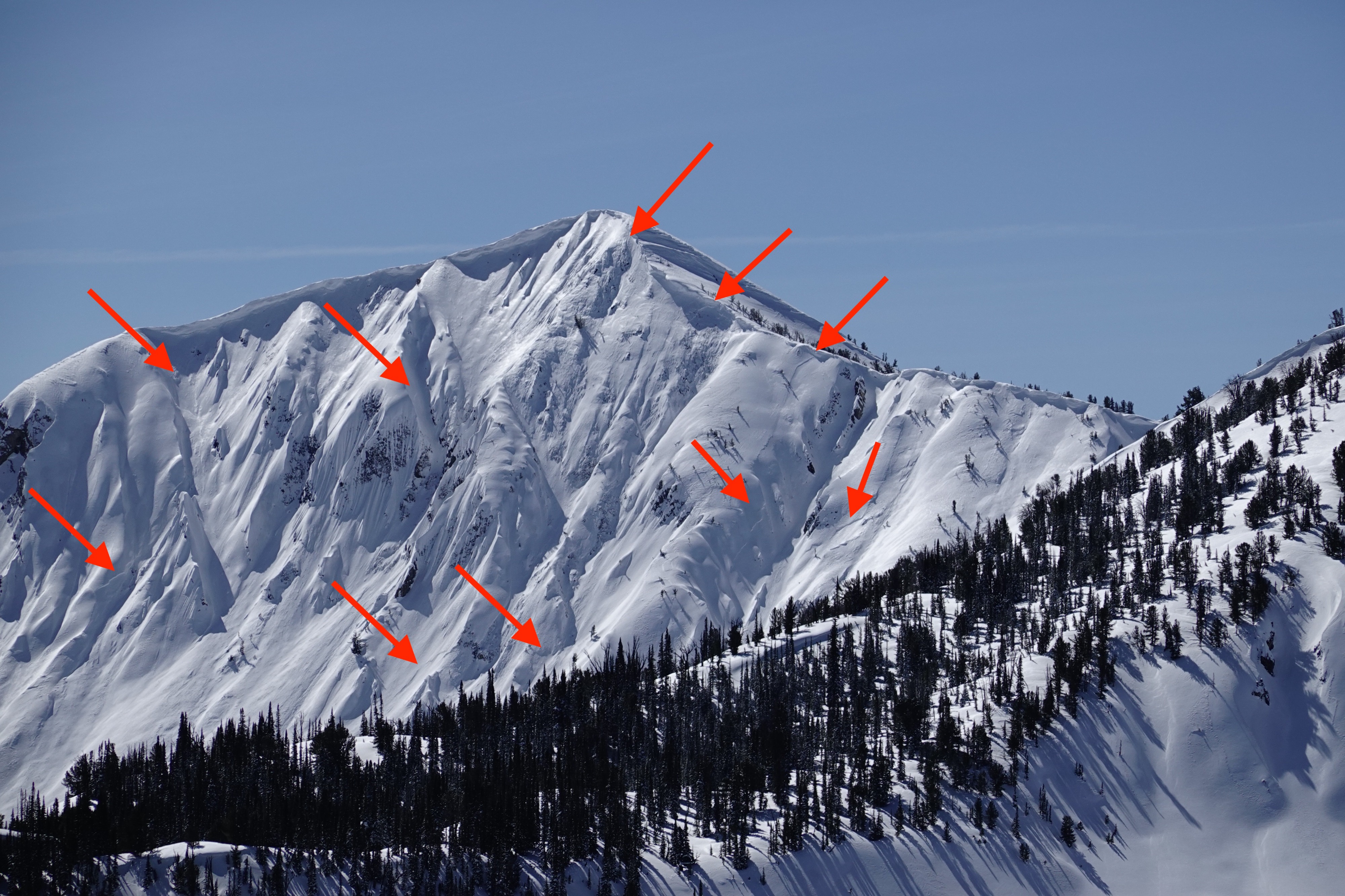
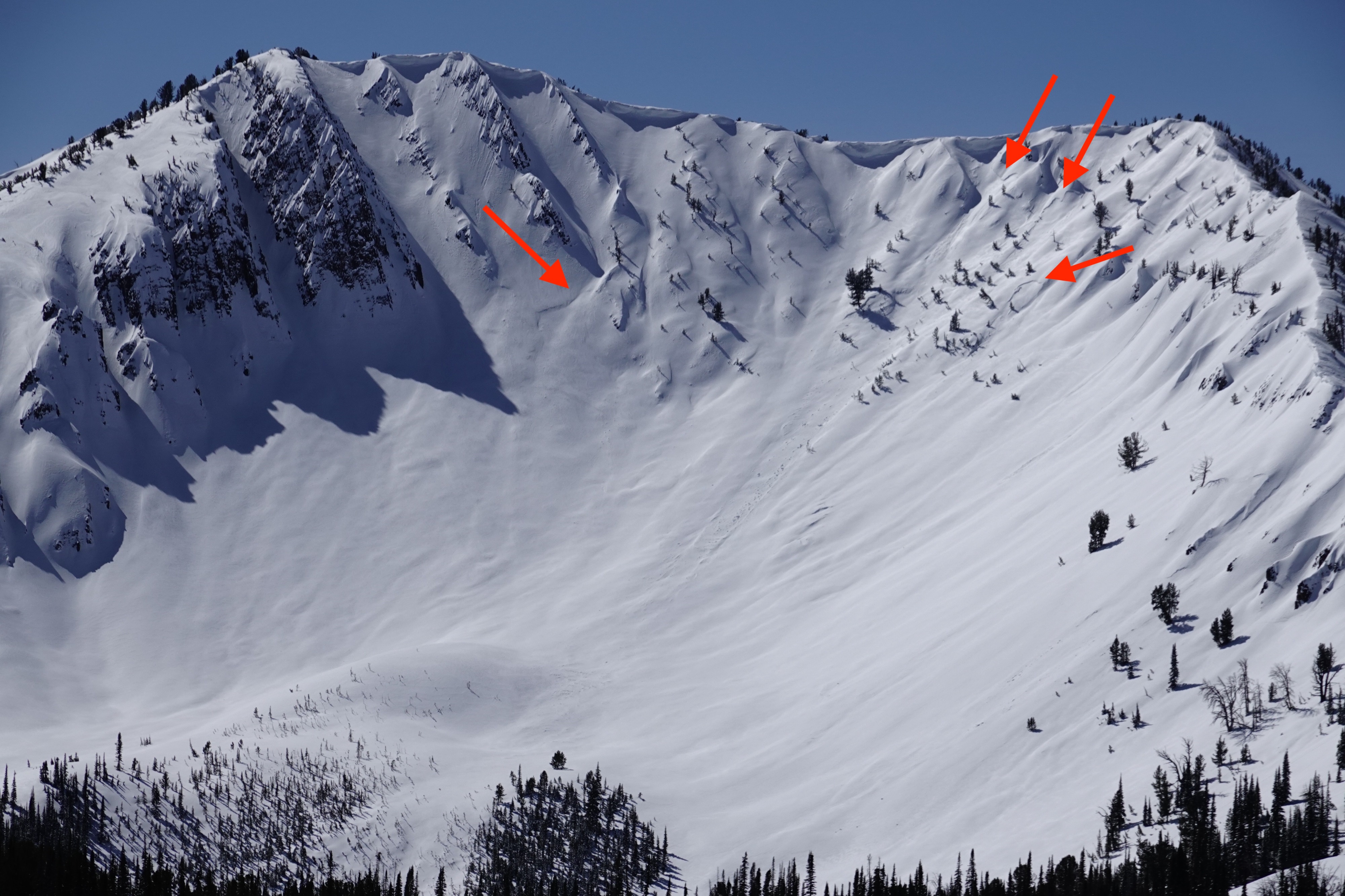
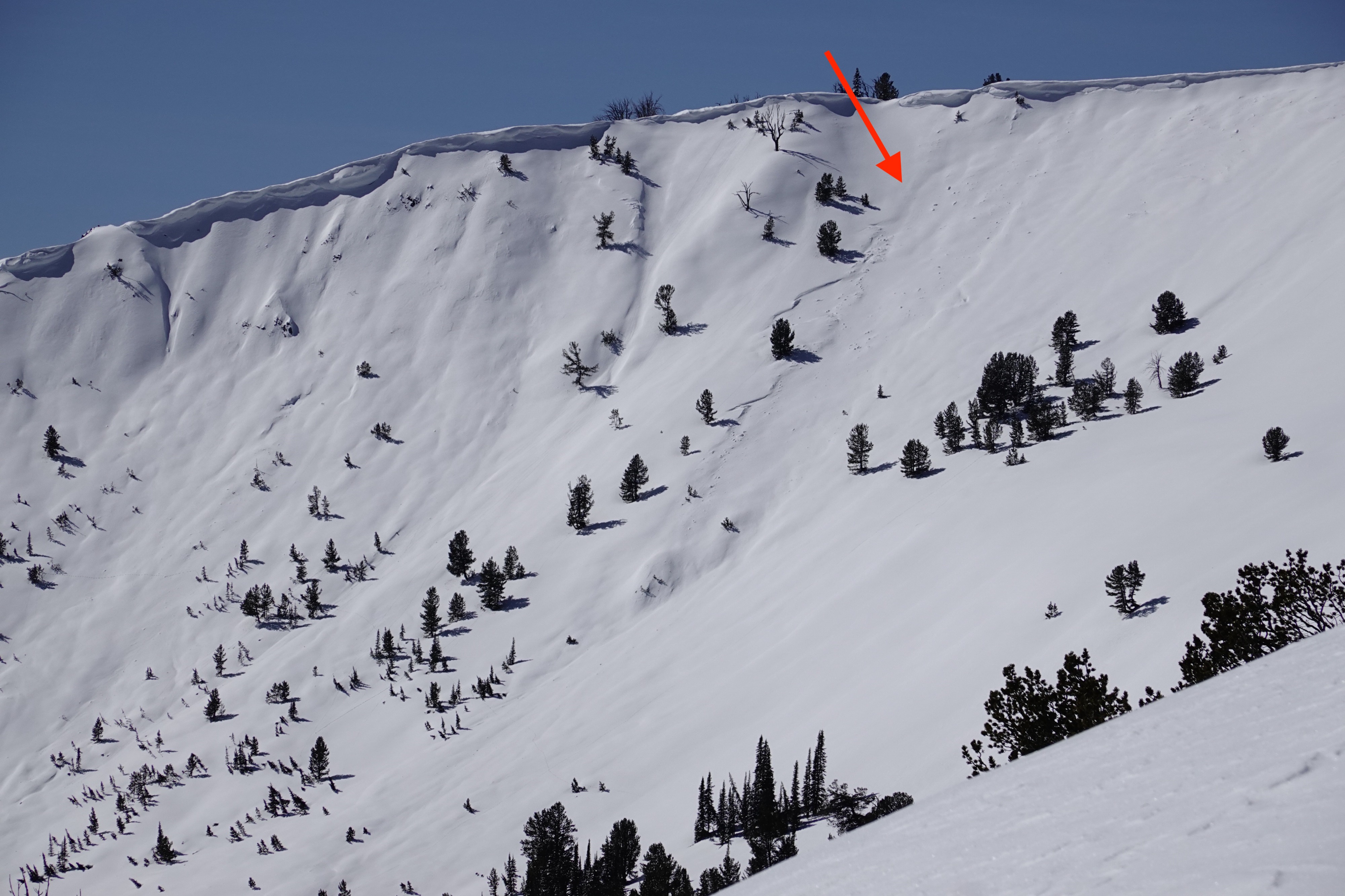
No obvious signs of instability observed but we did see a few older avalanches (discussed in avalanche tab).Weather
- Air Temp
- -5 to 30
- Cloud Cover
- few
- Wind Loading
- previous
- Snow Avail For Transport
- moderate amounts
Clear skies and light winds made for a beautiful day out.
Snowpack
Warm up: Snow surfaces were generally soft today where we travelled and stayed that way above 8500' despite the powerful sunshine. Below 8500', the upper 4cm of the snow surface were moistening by 3pm but had yet to produce much for roller-balls or wet loose avalanches.
Persistent weak layers: We pole-probed and dug on a variety of aspects and elevations, with the weakest snow found at 9200' on an E aspect. There, we found well-developed facets between a pair of crusts. The lower crust seemed to be a refrozen pooling layer from snow surface melting that occurred before our last storm rolled in on March 12. There were also additional small rounding facets above the upper crust. We didn't find the same distinct weak snow interfaces on protected northerlies, despite the known presence of old surface facets.
Wind slabs: We could feel thin, supportable wind-slabs roughly 15-25cm below the surface soft snow in exposed open terrain. We stomped on a variety of cornices with minimal results and observed no shooting cracks while poking into more wind affected terrain.
Avalanche
- Size
- D2 R3
- Count
- 2
- Aspect
- N
- Trigger
- N
- Elevation
- 10000 ft
Observed approximately 10 D1-D1.5 small old storm/wind slabs that probably occurred mid-storm with peak snowfall and wind (Sunday - 3/16). The two largest are described above. One of these large avalanches appears to have failed post-storm, as the debris wasn't covered up by additional snowfall.