
Quick report
- Cracking
- isolated
- Collapsing
- isolated
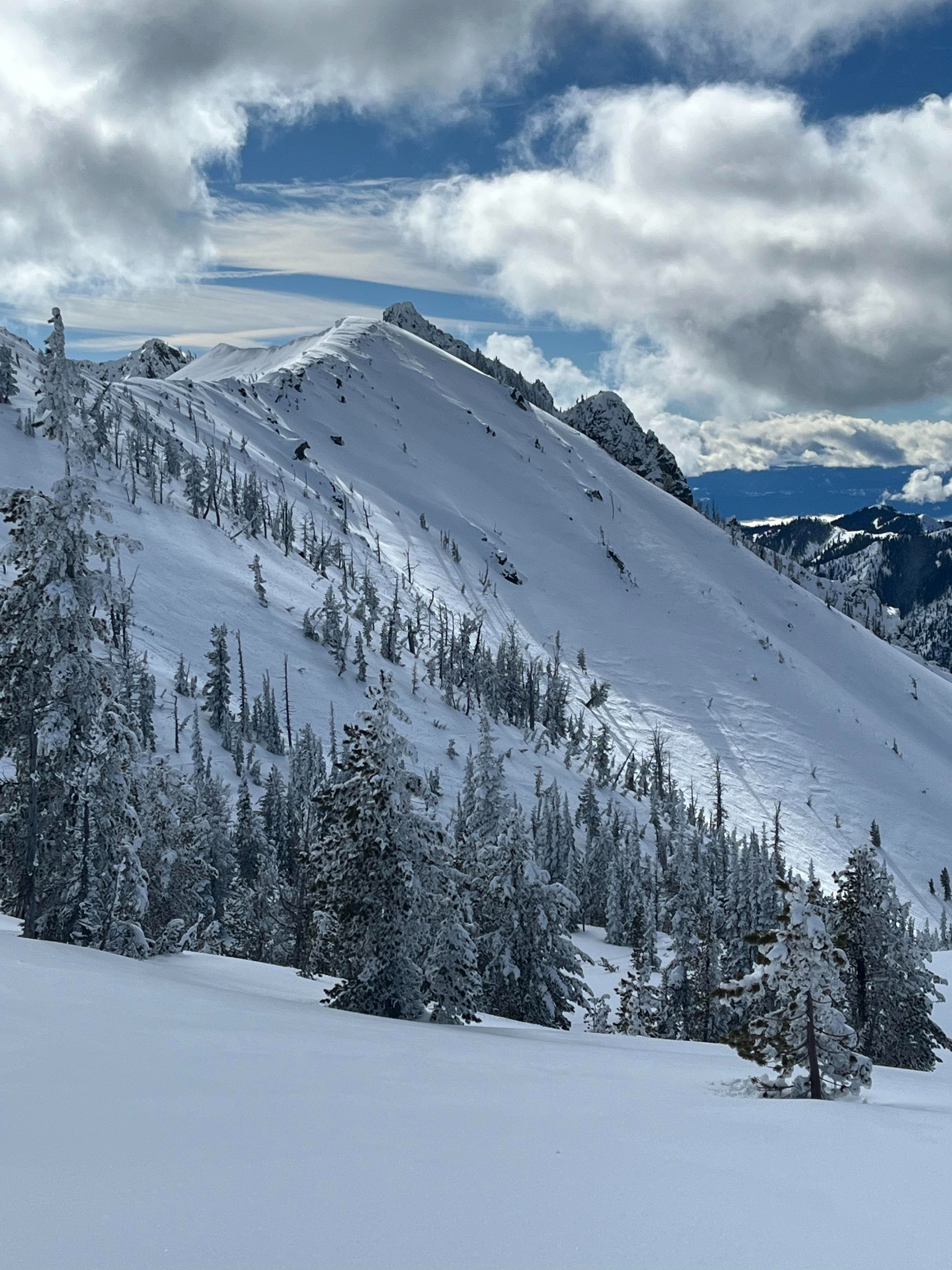
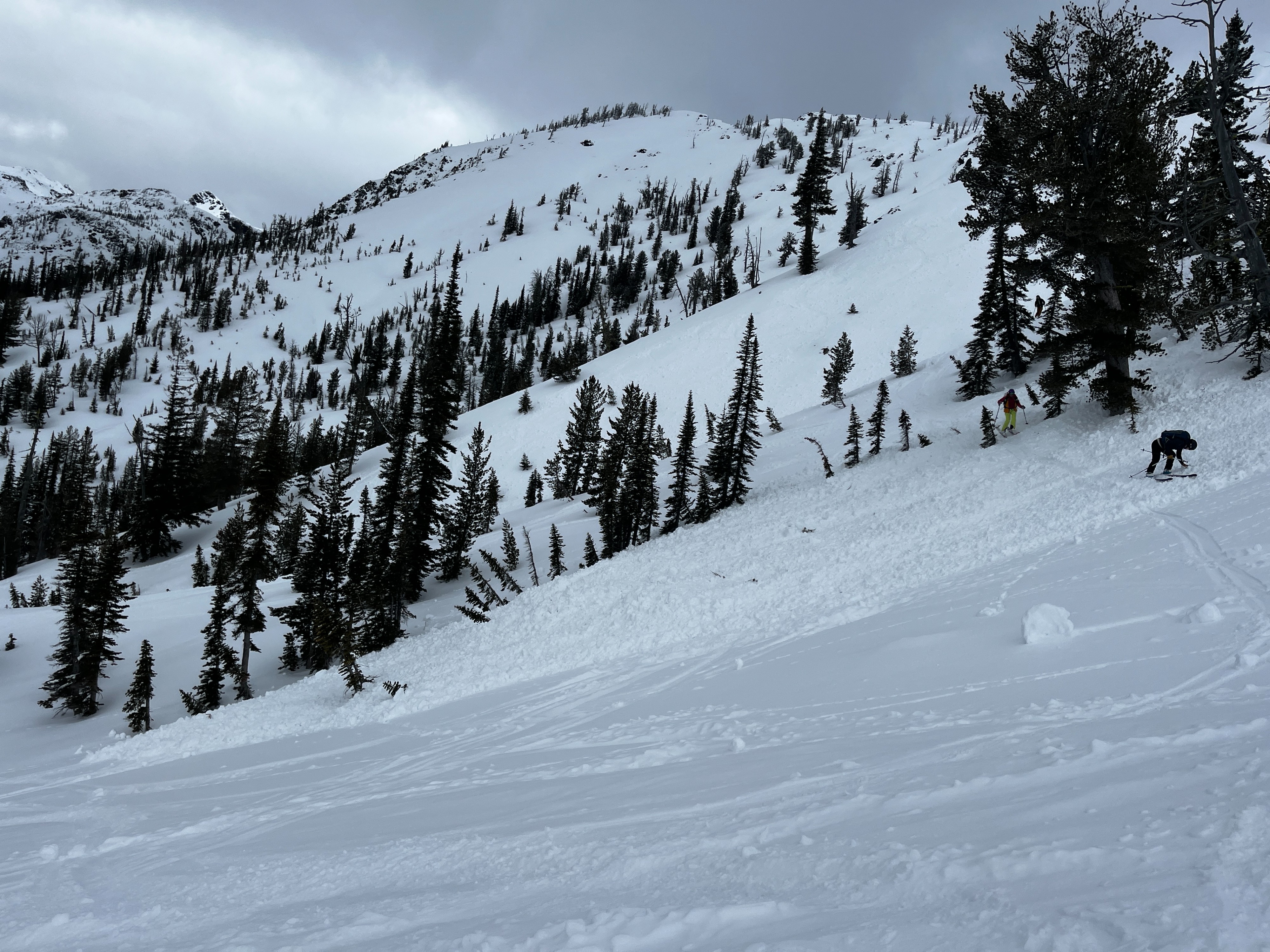
Throughout the week since Monday, we observed very little wind near and below treeline. Wednesday was warm and wet with rain at low elevations and 1.5 cms of new snow near 6000'. Winds observed included moderate ridgeline gusts and only a few cms of snow for transport atop the saddle of Iron Mountain. We skied several cms of wind buff in 29 degree terrain off the ridgeline, and quickly descended into slushlike skiing conditions at mid-lower elevations (5300' - 3800'). Thursday, wet loose activity was less reactive than anticipated when clouds came over the valley and decreased the solar input. Winds were light gusting moderate at ridgetop, however, they were loading slopes opposite the deeper "wind slab" problem that was helping to harbor the facets above the EFC. This was the day we unintentionally triggered a D2 avalanche in previously wind loaded terrain. Friday, we avoided avalanche terrain and stuck to lower angle, slushy skiing. Uncertainty is high for how connected the weak layer is in the terrain and what kind of slab is needed to initiate on the buried facets. Trigger points, near trees and rocks, are likely places to initiate below this pencil-hard layer. Propagation seems likely where persistent grains are preserved beneath a slab on any given slope.
Weather
- Cloud Cover
- broken
- Wind Loading
- light
- Snow Avail For Transport
- small smounts
Warm ambient air temp, however, snow stayed cool with broken skies, thick clouds, wind chill and convective cooling at mid-upper elevations.
Snowpack
We observed primarily west aspects; opposite dominant wind directions indicated by cornices and current loading patterns. Near and Above Treeline, we found variable snowpack layering: From a few cms of snow, up to 50 cm of old wind slab atop the EFC, and some places snow surfaces had been scoured down to the crust. Where deeper wind slabs existed (40+ cm), we performed small and large column tests and found consistent reactive results (ECTP14 x2, CTM x3) on the 1-2mm rounding facets atop the Early February Crust. Where overlying snow was shallower, our results were inconsistent in snowpack tests. The faceted layer ranged from a few mm's up to 1cm thick in some pit locations at higher elevations (5800' - 6000'). We did not find any layers of concern beneath the EFC.
Avalanche
- Size
- D2 R4
- Type
- HS
- Aspect
- W
- Trigger
- AS
- Elevation
- 6200 ft
Unintentional skier triggered avalanche (by the 3rd skier, while preparing to cross the slope). Two skiers previously crossed the slope with no signs of instability, and observed inconsistent and varying depth of the old wind slab in 30 degree terrain. Assuming the wind slab was the overlying problem, we were surprised in finding the more prevalent underlying problem to be persistent in connectivity and behavior in the terrain.