
Quick report
- Cracking
- isolated
We had hoped to access upper elevations on our tour today but we were thwarted by tricky snow coverage that made travel slow moving. Nonetheless, we gathered interesting information about wind slab sensitivity at middle elevation ridgelines as well as some well defined differences between north and south facing aspects. That is to say, the skiing on north aspects is quite good right now above 4500 ft. Below this, the snow is being affected by spring time warm ups.
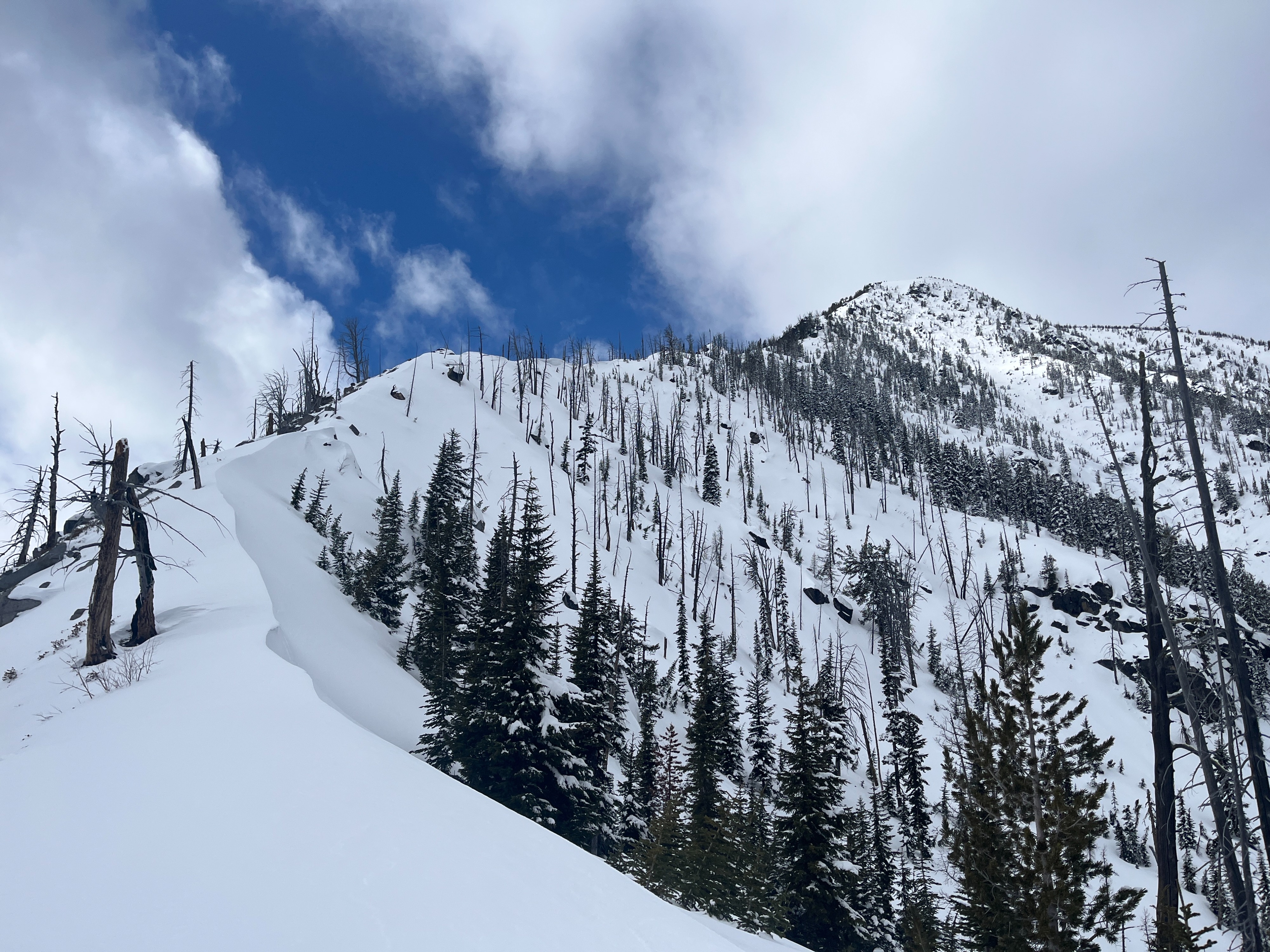
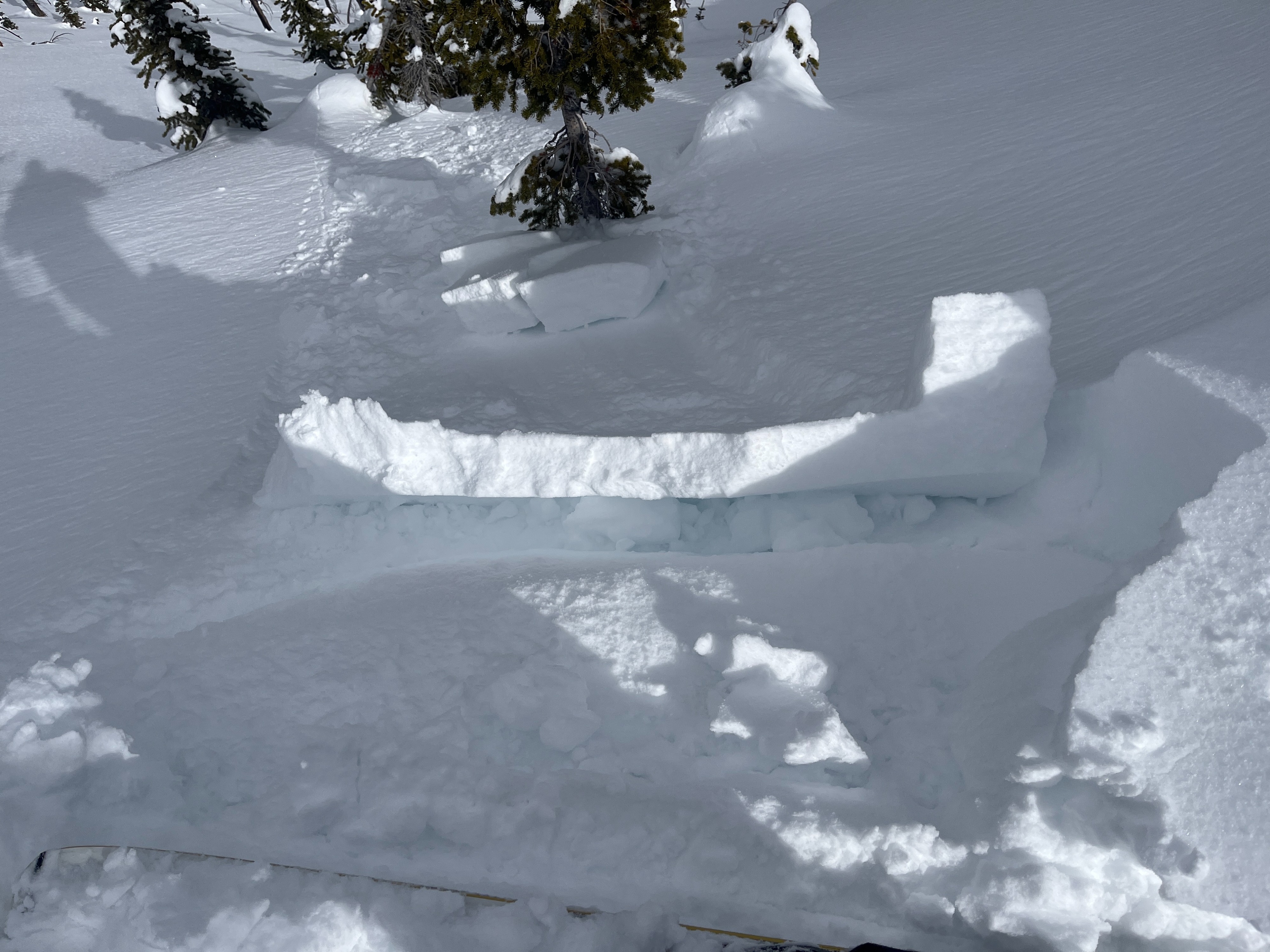
We triggered stubborn cracks in wind loaded terrain. In chunks of a wind lip we knocked off, two different interfaces were made apparent in the way the block broke when it hit the slope below. The first interface was about 1 ft deep and the second was about 1.5 ft.Weather
- Cloud Cover
- scattered
- Wind Loading
- previous
- Recent Snowfall
- 30
- Snow Avail For Transport
- small smounts
The day was warm morning to afternoon, but the sun was in and out of the clouds constantly. By the afternoon, it was more in than out. The wind was calm and from the south with some light ridgeline gusts.
Snowpack
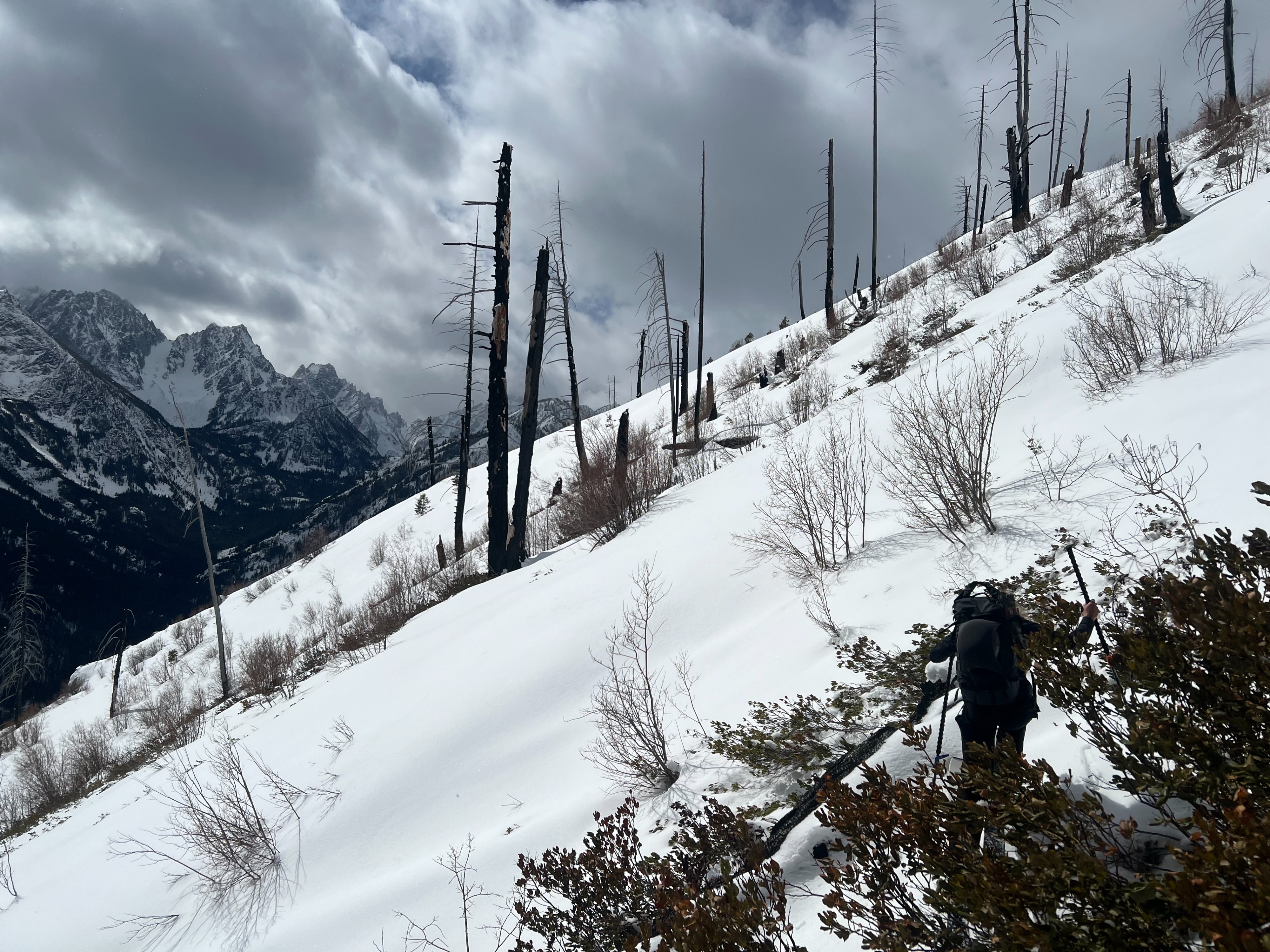
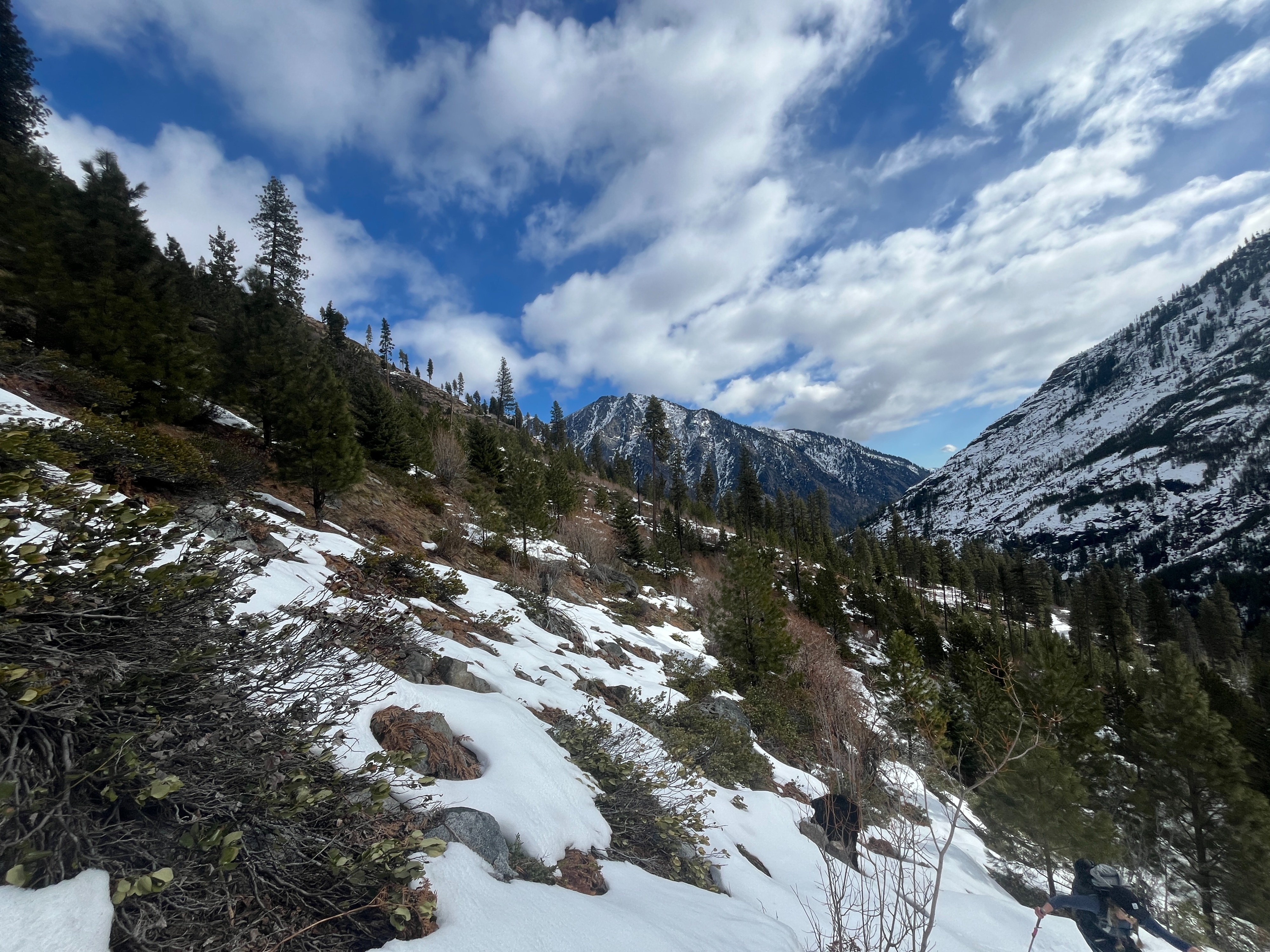
The snowpack is lacking on all aspects at lower elevations, but unsurprisingly, especially so on south aspects. Until around 4500 ft, there is not enough consistent snow coverage to make travel straightforward at all. On north aspects, you can find consistent coverage down to around 3000 ft.
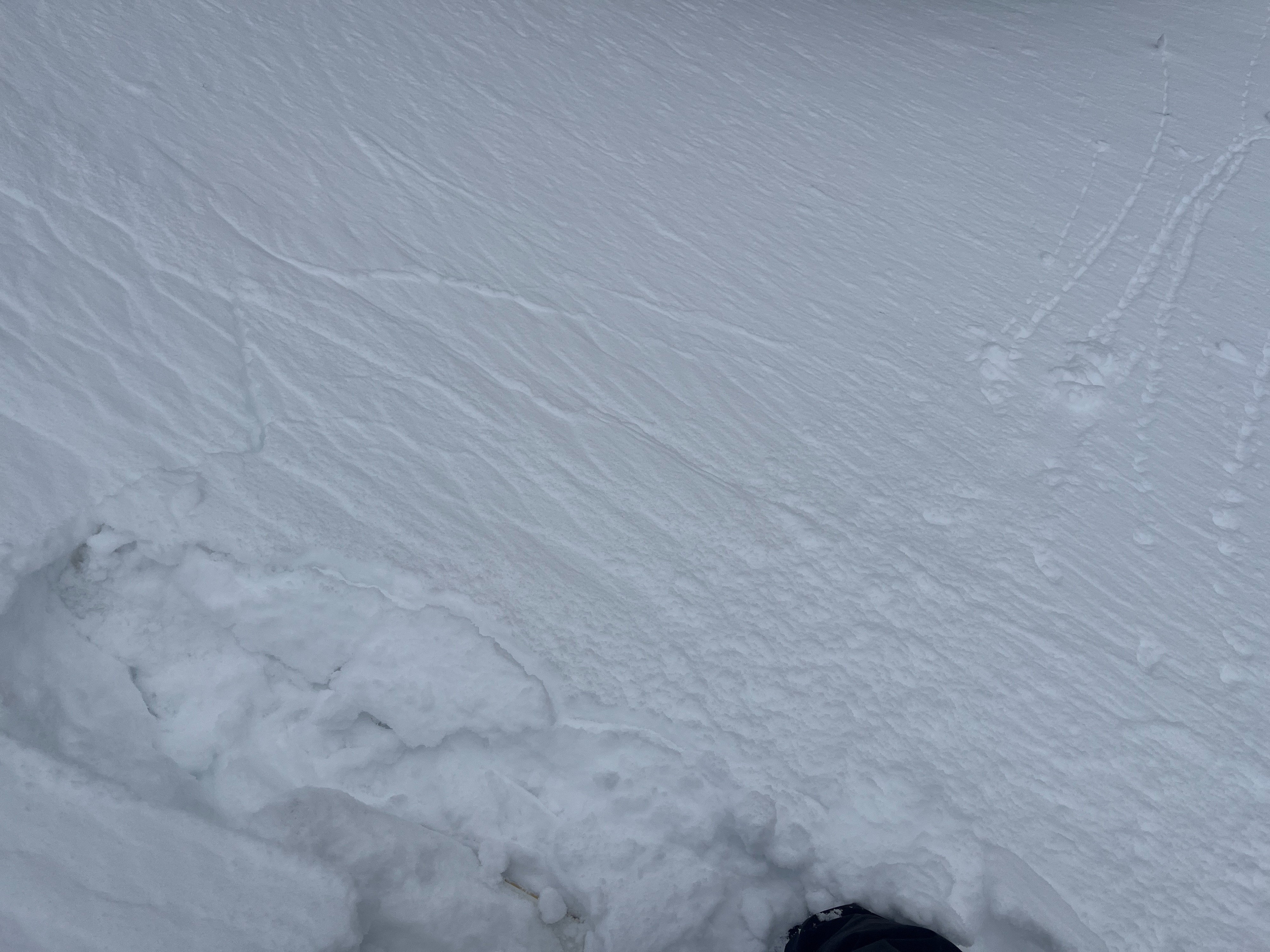
On south aspects, what snow there was was by in large very hard, refrozen, and supportable. There are softer pockets where wind has cross loaded little gully features. By late morning, the top 1cm of snow was moist.
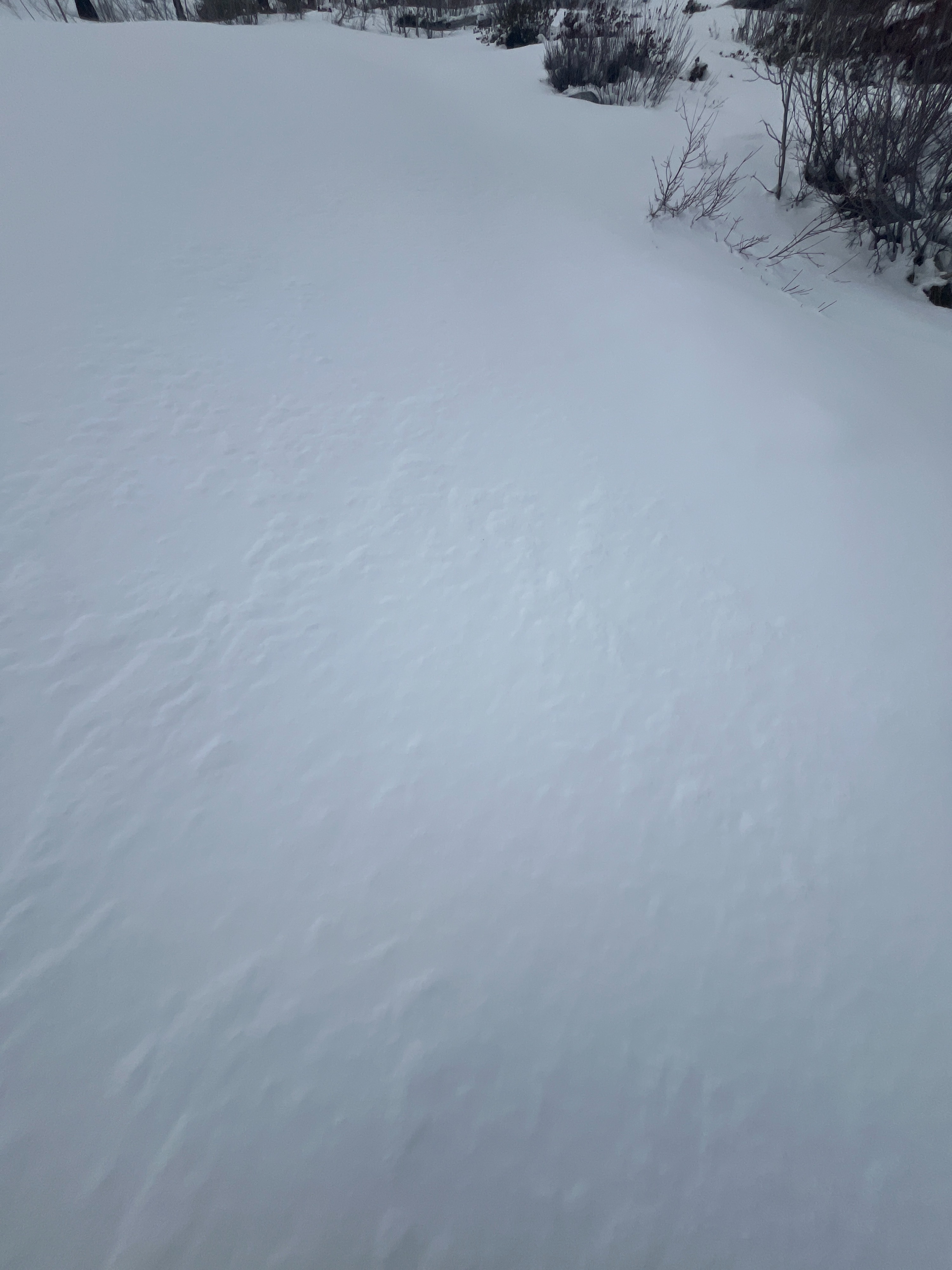
Once you moved on to north aspects, the snow immediately changed to soft and deep. There was just the slightest hint of a sun crust at the surface on a slope with an eastern tilt. In some areas there was a hard supportable crust in the upper snowpack, but it was not always present. The surface snow was dry and loose down to around 4500 ft. At this elevation, the snow quickly became dense and moist to the point where it was destabilized.
Avalanche
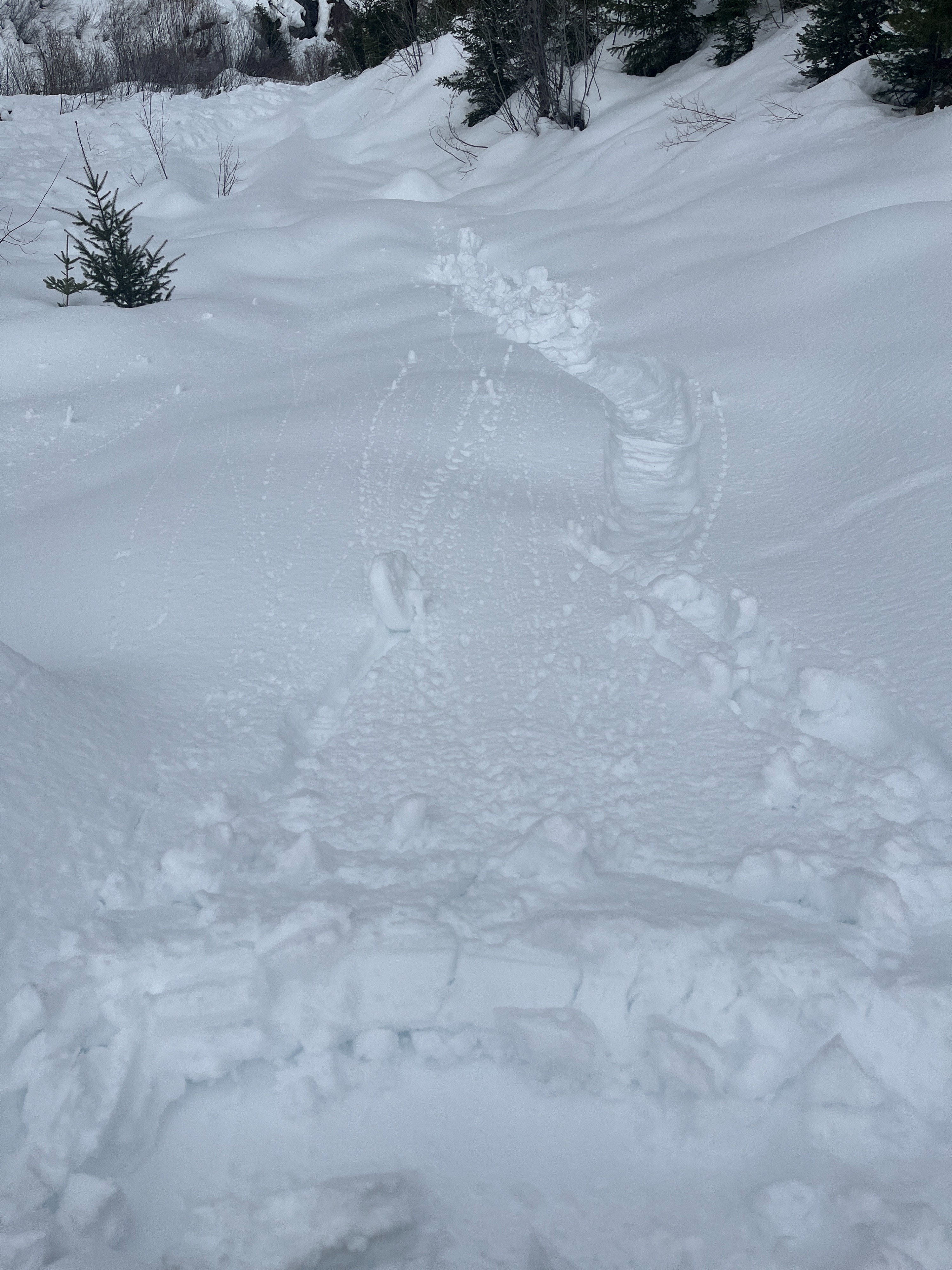
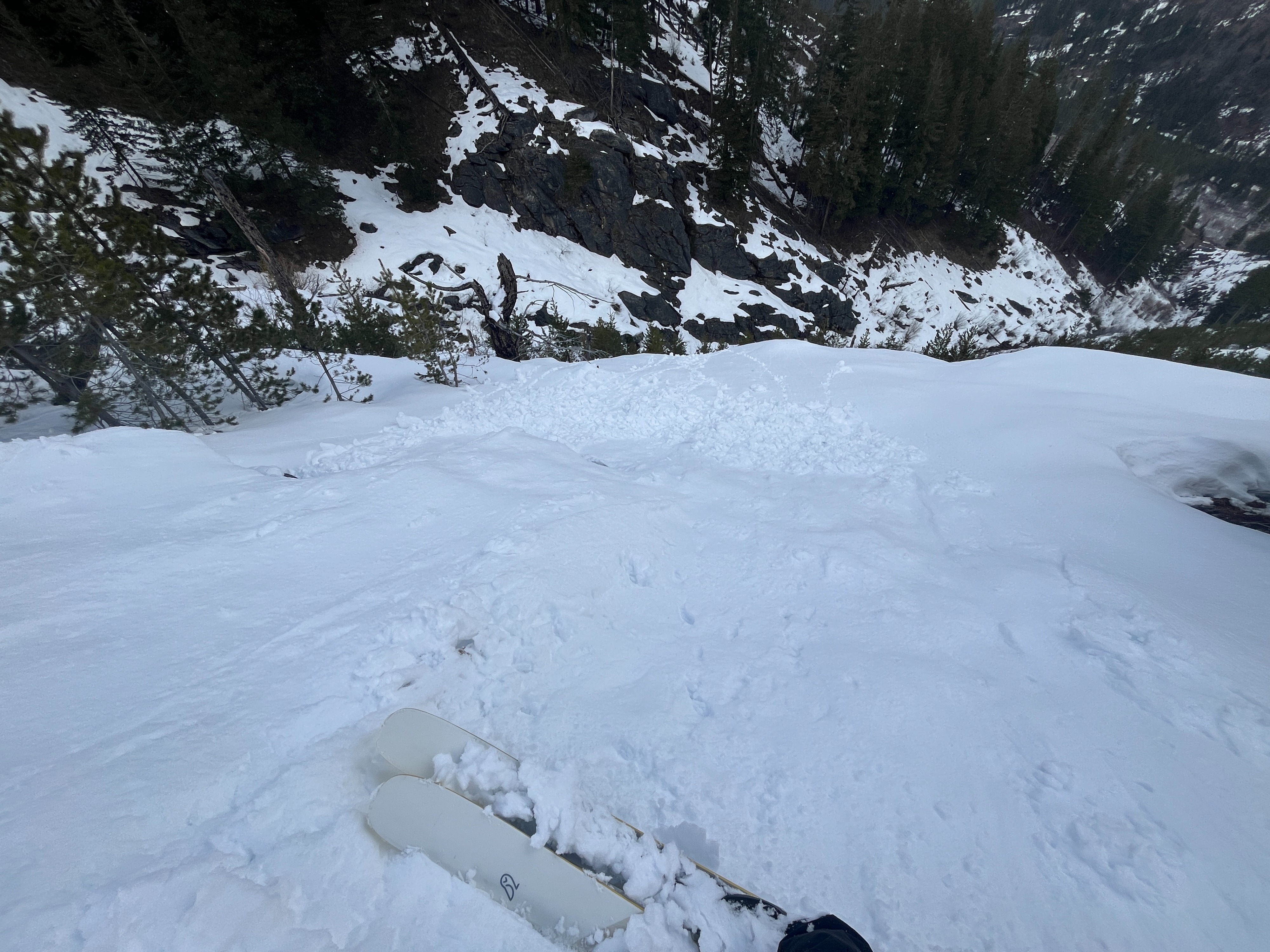
We observed very old D1-1.5 wet loose avalanche debris on both south and north facing aspects. On our descent, up high, we triggered some dry loose sluffing. Lower down, we triggered some very small wet slab avalanches. The wet slabs were running on an interface 1 in up from an old crust that formed earlier in the month.