
Quick report
- Cracking
- specific
- Collapsing
- specific
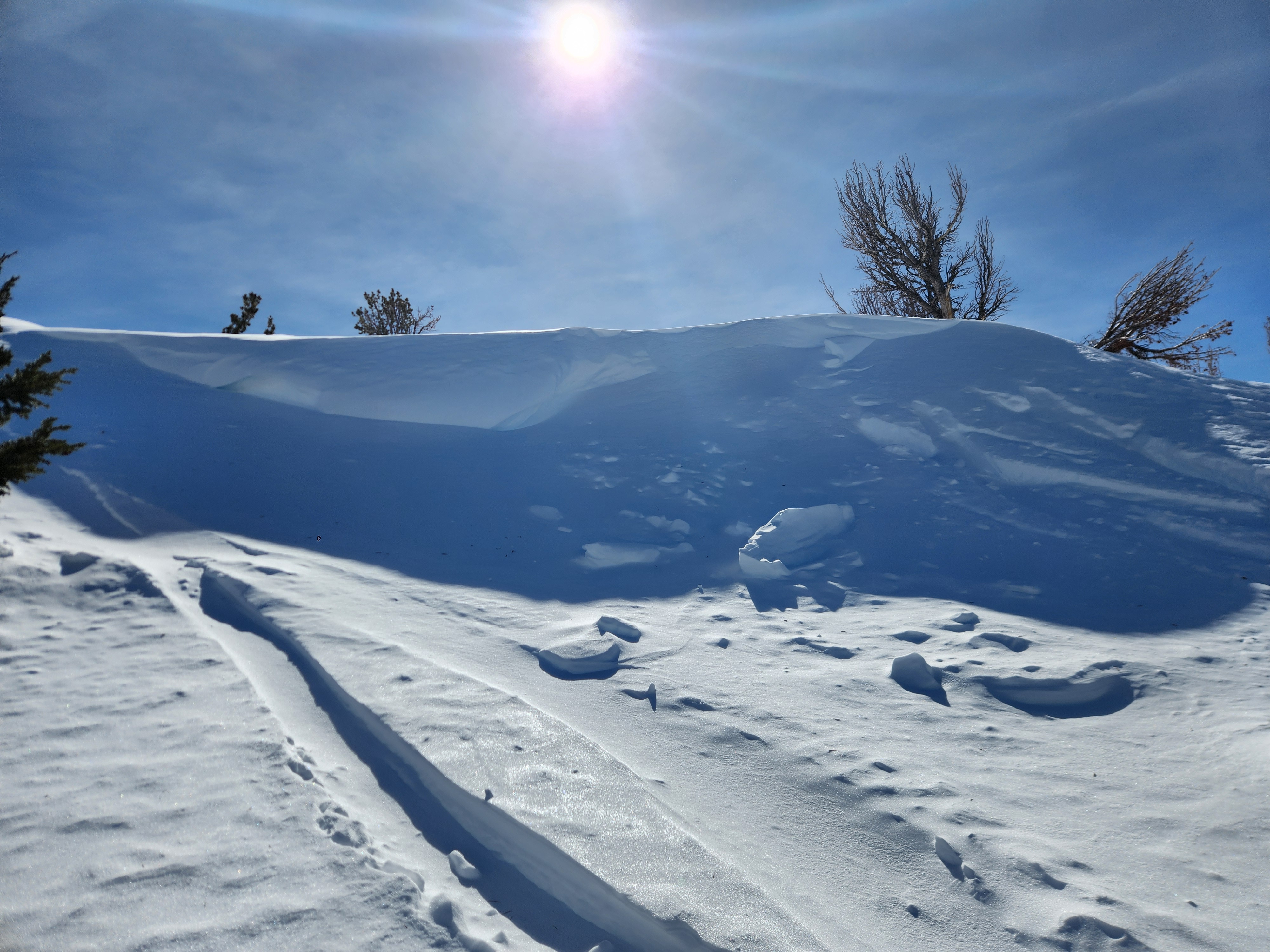
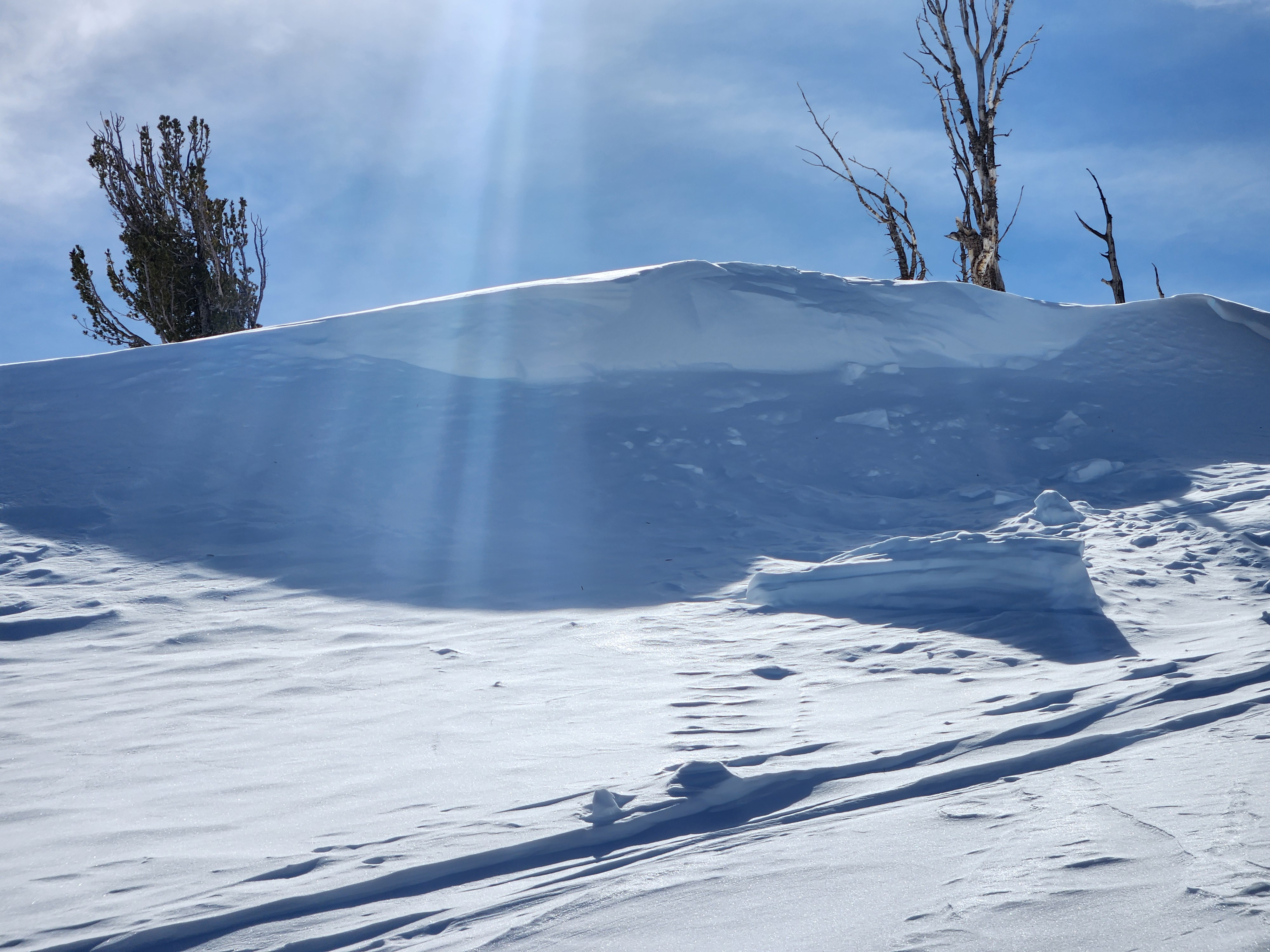
I went looking for wind effects from yesterday. I was up on Elephant's Hump and observed any available snow being blown over the Elephant's Back on to its NE side. Winds yesterday were moderate to strong with strong gusts. It was a sight to behold. The SW winds produced Medusa-like patterns on top of Elephant's Back.
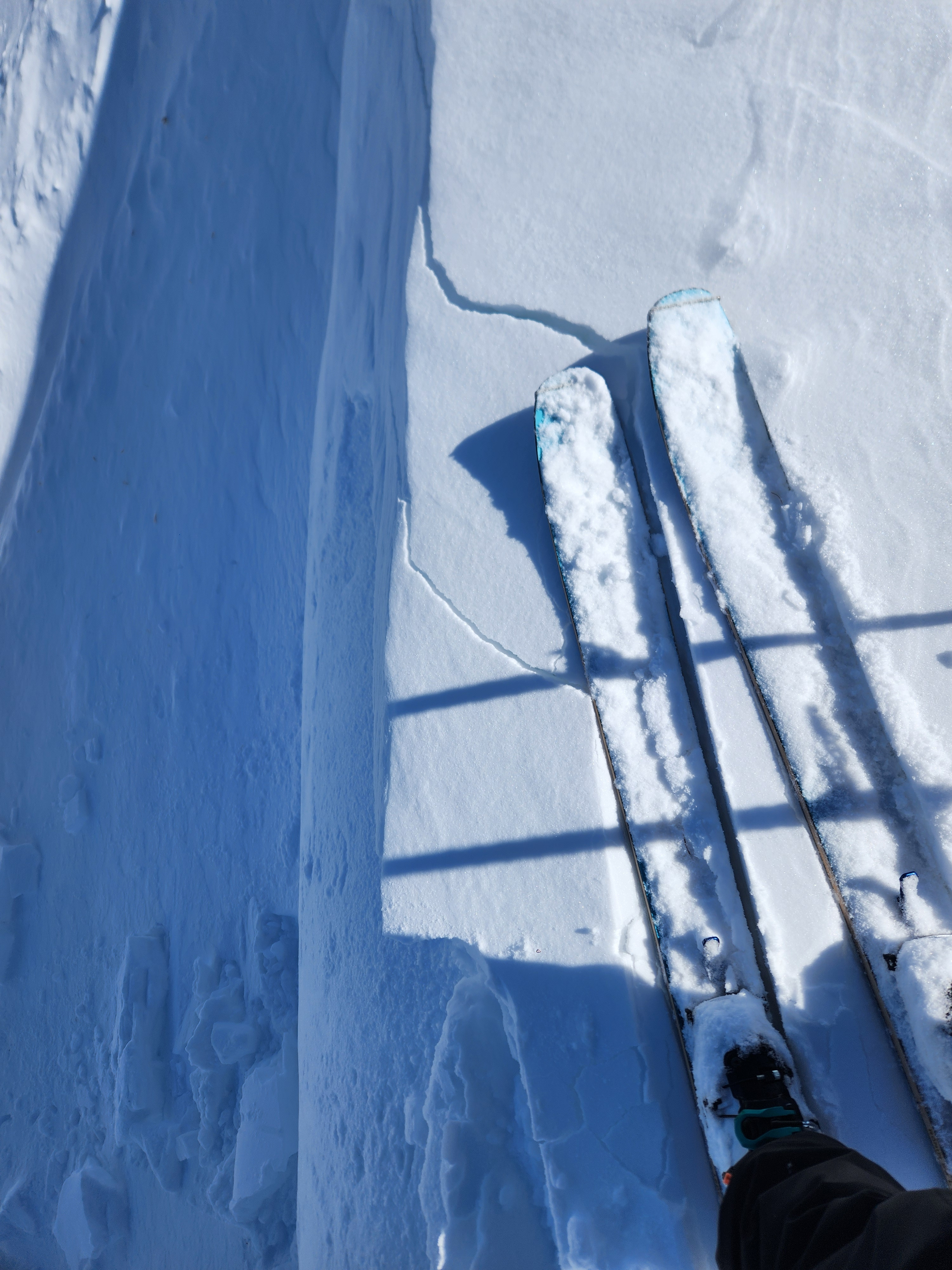
When I got to the ridge of Waterhouse, there were numerous small test slopes. I stomped on four of them and got them to all to slide with very little effort. Cracking happened immediately whenever I loaded the little cornices. Usually one small stomp with one ski was all that was necessary to release the top slab of between 20 cm and 34 cm. I also stomped on the remaining slab, wind created from previous winds, but I could not get any of these to budge.
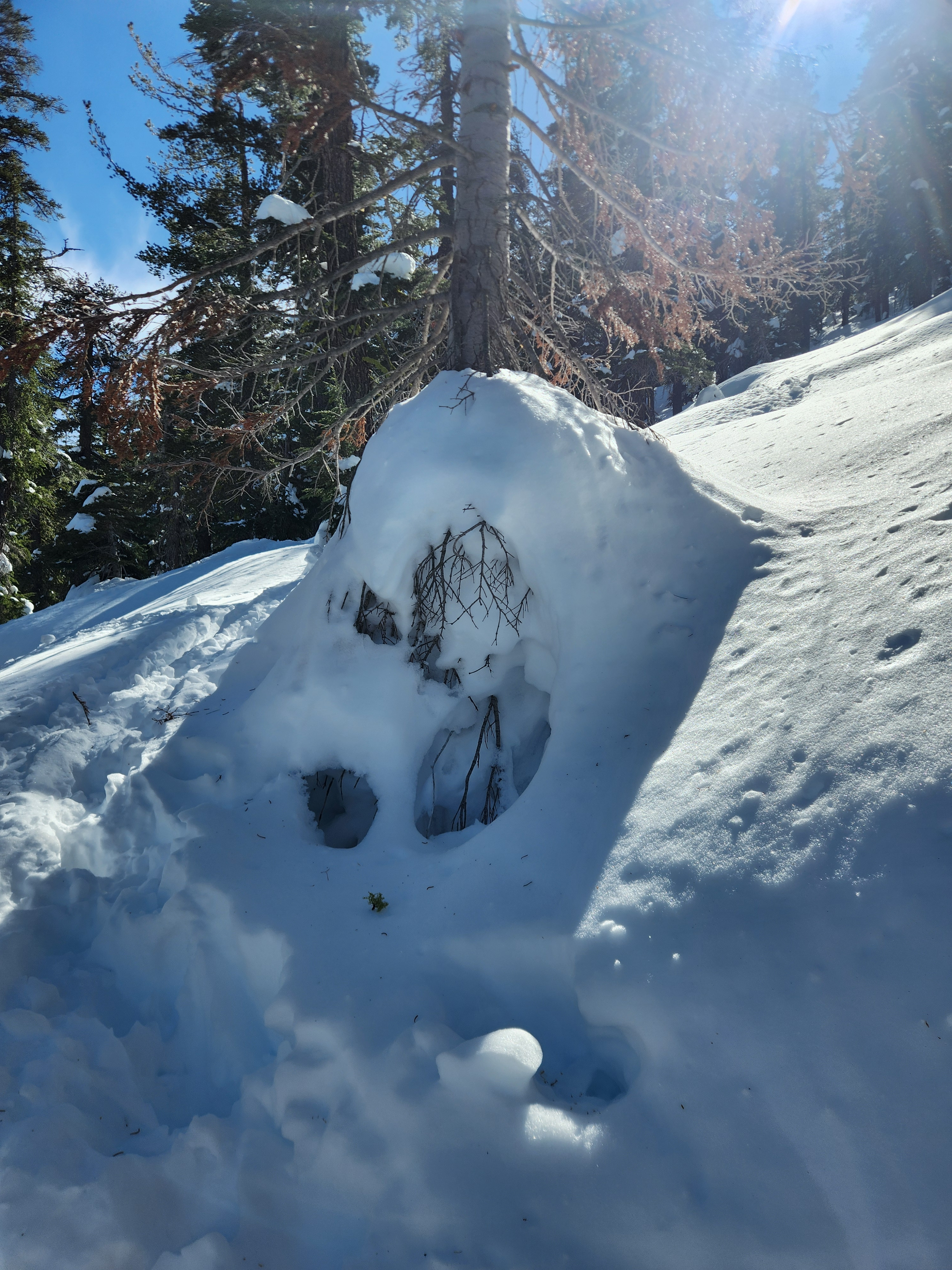
It was extremely warm, despite the intermittent moderate winds at the top. The snow quality was very good with soft powder skiing until about 8100 ft; there was some light breakable crust on E and SE aspects -- anywhere the sun had hit it. The snow below 8100 ft turned into glue. Despite having new, freshly waxed skis, I had huge clumps on my skis during the descent below 8100. In the last 50 ft, it was so bad that I had to walk down on my skis. There was also bad clumping at times on the ascent, mainly in the first 500 ft, but the problem never went completely away during the ascent.
Cracking and collapsing were specific to wind affected areas, such as the peak ridge.Weather
- Air Temp
- 50s
- Cloud Cover
- few
- Wind Loading
- previous
- Snow Avail For Transport
- none
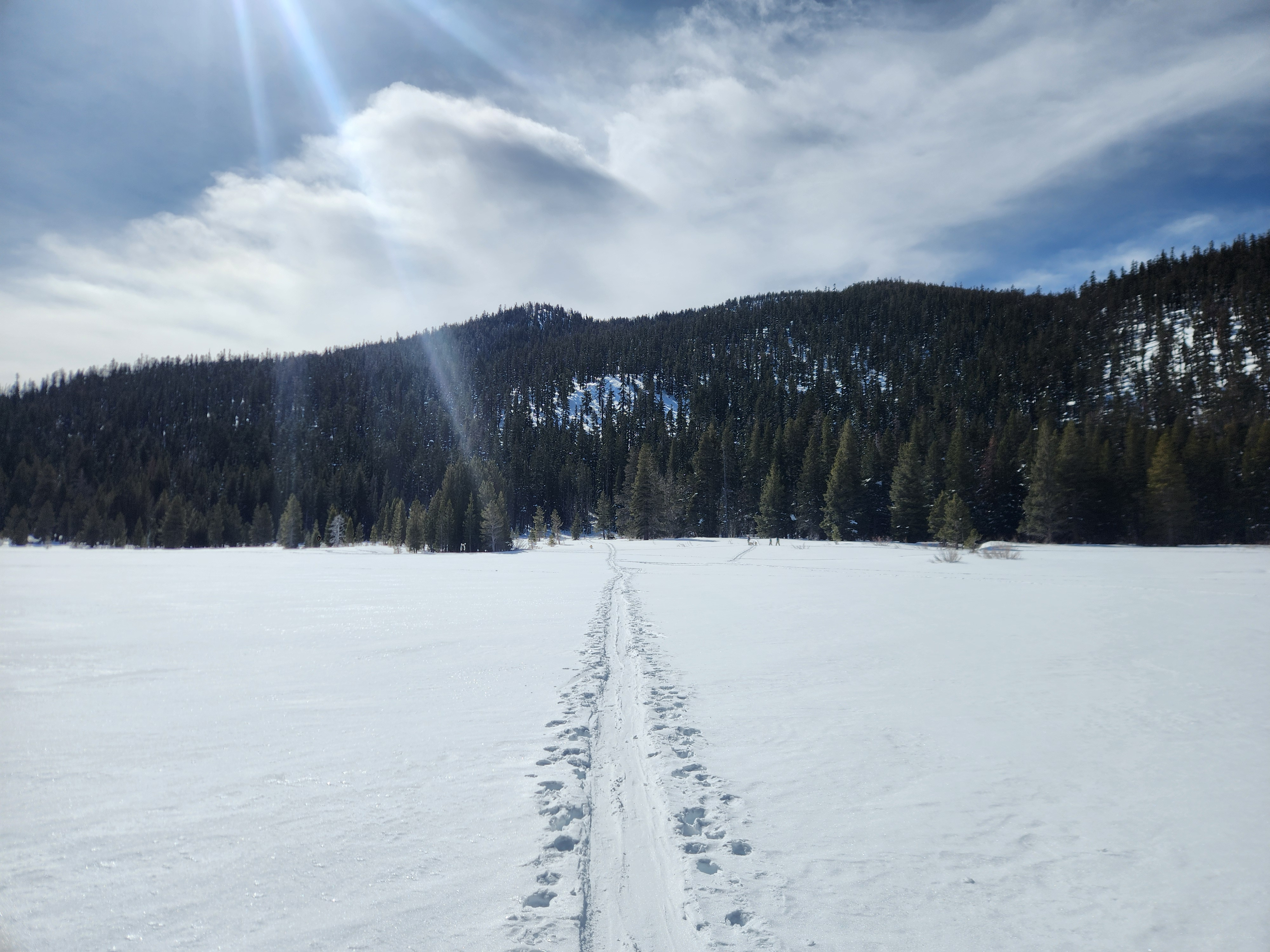
It was a very warm day with temperatures into the 50s. There was no wind on Grass Lake or on the ascent, but on the peak itself, there were intermittent bursts of moderate SW winds and higher gusts.
Snowpack
I measured the snow on the way up and noted the layers I could feel with my probe.
8025 ft, NW, HS 160 cm, denser snow at 40 cm and then at 140 cm below the surface.
8525 ft, NW, HS 167 cm, denser snow at 70 cm and 110 cm below the surface; at this altitude, snow increased in density to the ground.
9025 ft, NW, HS 234 cm, denser snow at 70 cm and 120 cm below the surface; snow increased in density to the ground.
9425 ft, NW, HS 234 cm, denser snow at at 67 cm and 127 cm below the surce; snow increased in density to the ground.
I stomped on some cornices on the ridge. They cracked on the loading step, and it only took 1-4 stomps with a single ski to break away the top fresh wind slab layer of between 20 cm and 34 cm. Under these surface slabs, there was a very thick and very stubborn layer of snow that would not budge, no matter how hard I stomped on it; they were slabs from previous winds, not yesterday's. I also performed a hand shear test on the leeward side of one of the cornices; there was no sliding, but the layer did pop off easily.