
Quick report
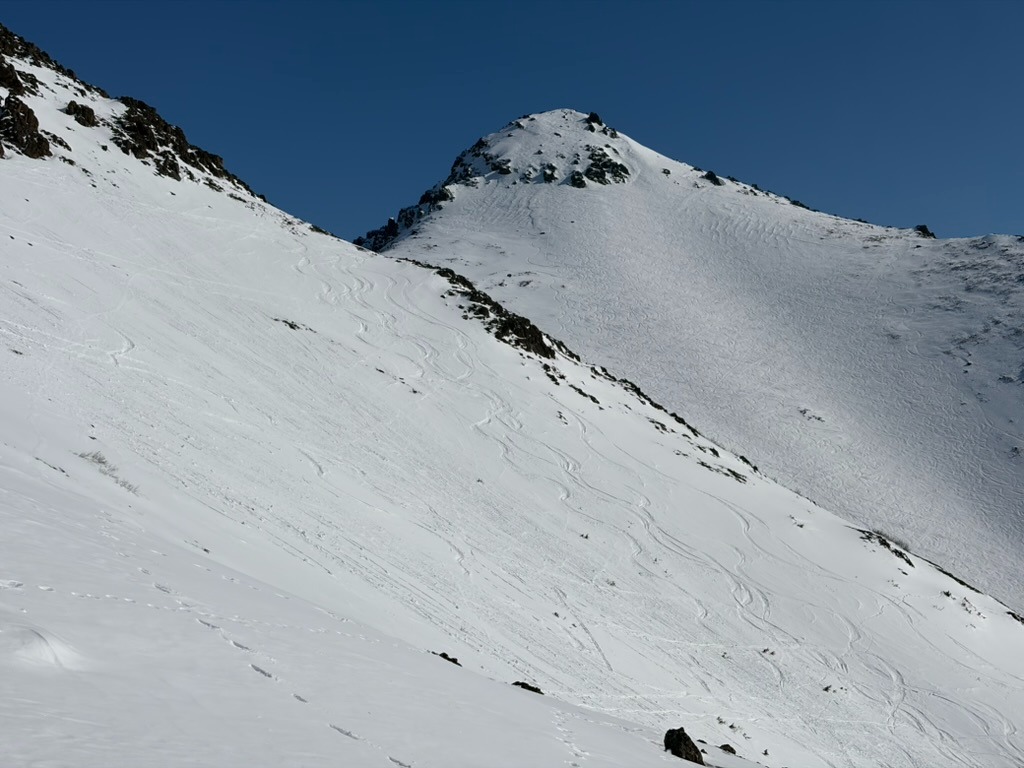
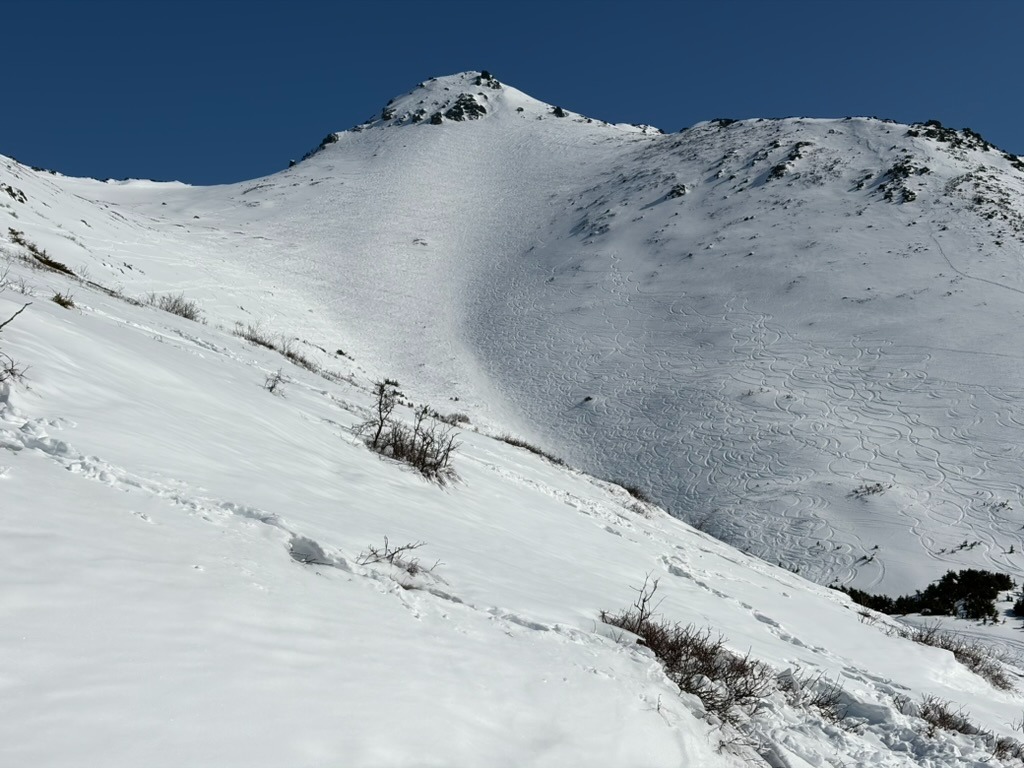
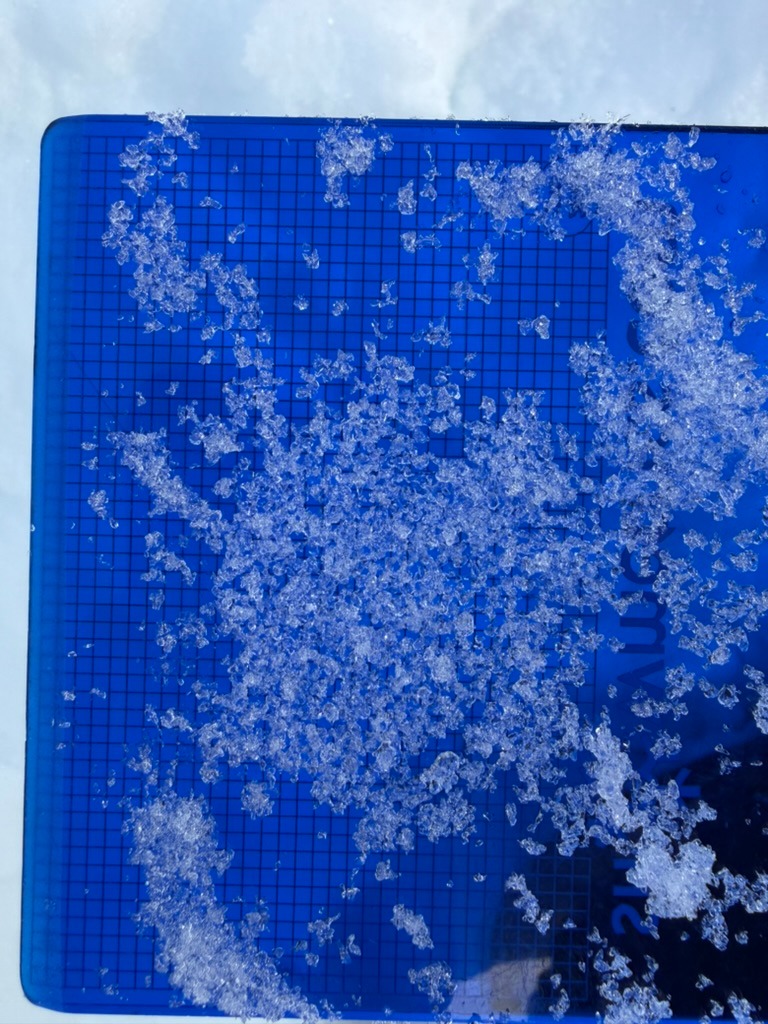
We set off for Peak 2 with the goal of assessing how the snowpack was holding up during this period of increased solar input and potential warming. Although temperatures in sunny areas had us down to t-shirts, we did not observe any wet loose avalanche activity in this zone. We did, however, see a fair amount of rollerball activity on steep, rocky terrain near the summit of Peak 2. Despite the noticeable warmth of the sun, temperatures at upper elevations remain relatively cool, and we have not yet seen a full transition to spring conditions. While skinning, we found that steep southerly slopes held a thin melt freeze crust with about a half inch of near surface facets on top, making for soft and enjoyable turns. In our snowpit profiles, we are still finding concerning structure, though the buried facet layers continue to be stubborn in stability tests. For now, it is a great time to get out and enjoy activities in Chugach State Park while temperatures remain mild and winds stay calm.
Weather
- Air Temp
- 23 degrees at 3450 ft
- Cloud Cover
- clear
- Wind Loading
- none
- Snow Avail For Transport
- small smounts
Clear skies and calm winds
Snowpack
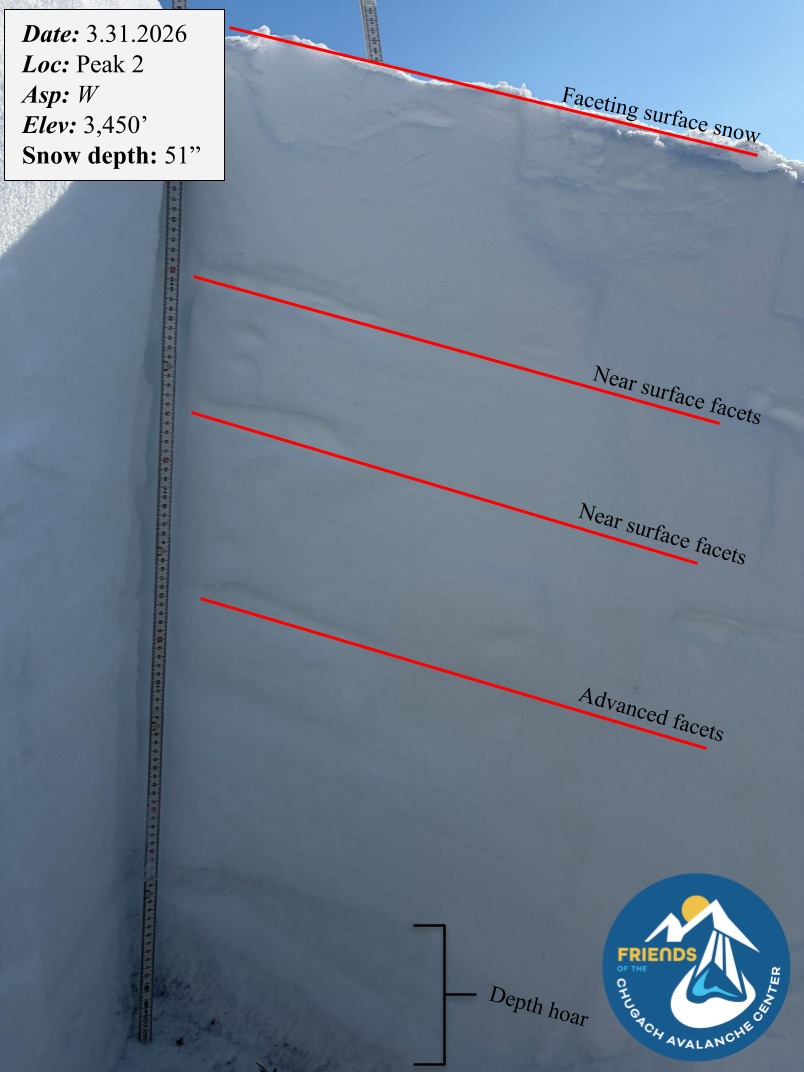
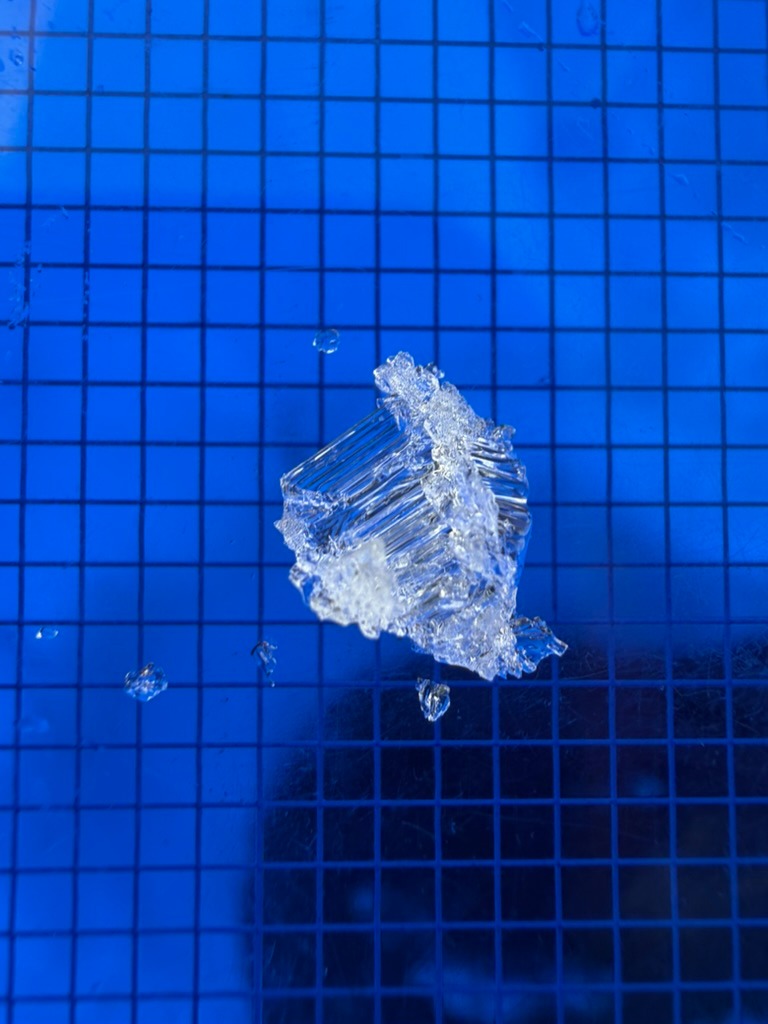
We dug two snowpits on a west aspect of Peak 2 at 3,450' and found a consistent structure between the two. We did not see any unstable test results, but the weak facet layers we have been tracking all winter are still present, including depth hoar and the December facets. We also identified a couple of small facet layers in the top foot from those cold clear stretches in early and mid March.
Most of these weak layers are separated by pencil to one finger hard snow, which is giving the snowpack some strength for now. Even though it is almost April, the snowpack in the Chugach State Park still resembles mid winter. There are multiple buried facet layers that remain a concern and we are not seeing clear signs of them healing.
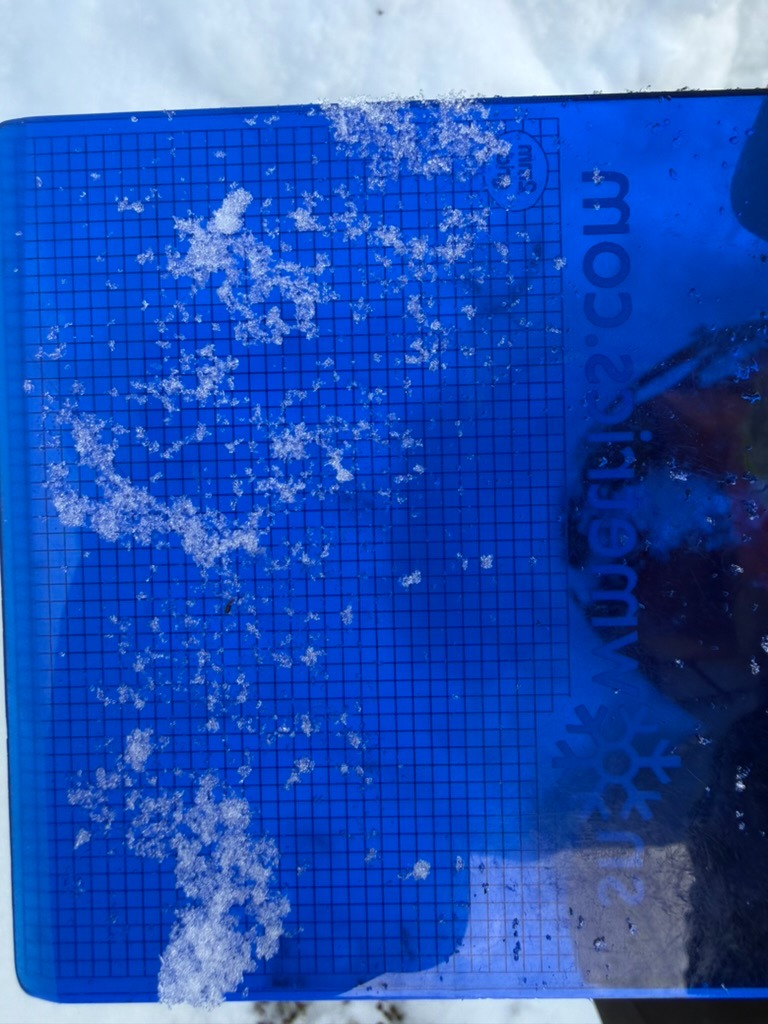
The March buried near surface facets in the top foot of the snowpack stood out. They were not producing unstable results in our tests (ECTN 14 down 9 inches) but they remain on our radar. If we see more warming and move into a thaw cycle, these layer could become a bigger concern.