
Quick report
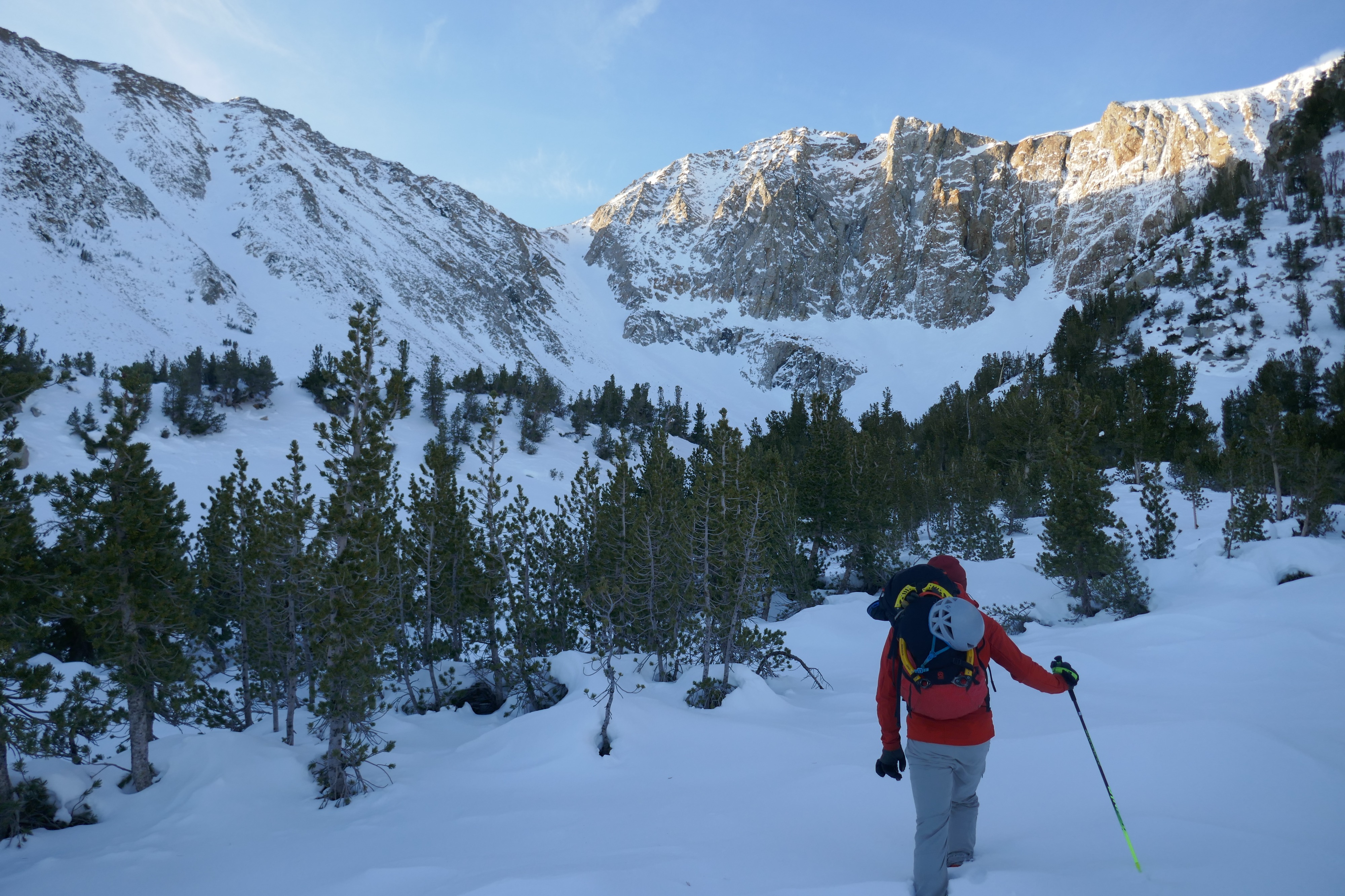
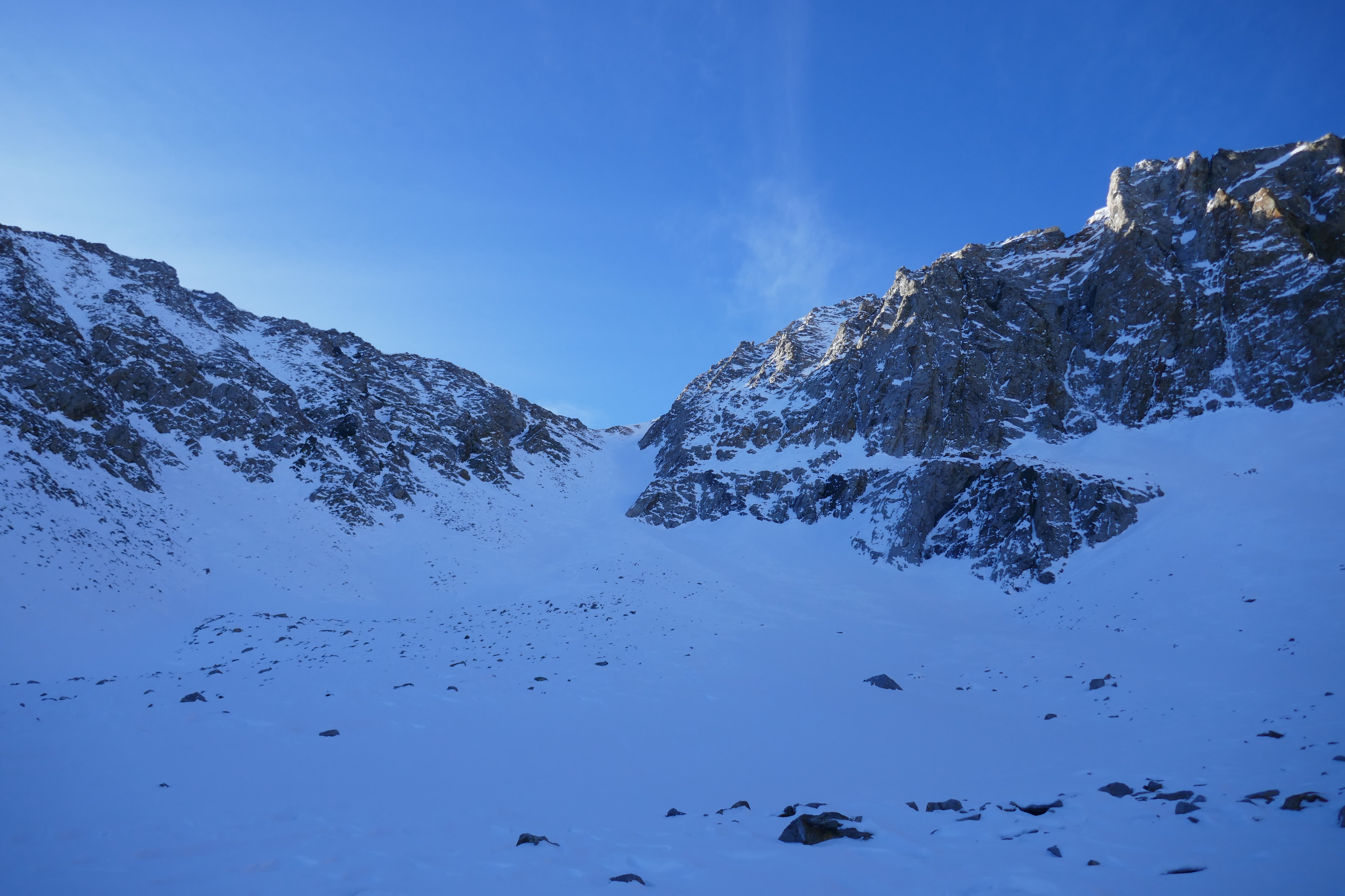
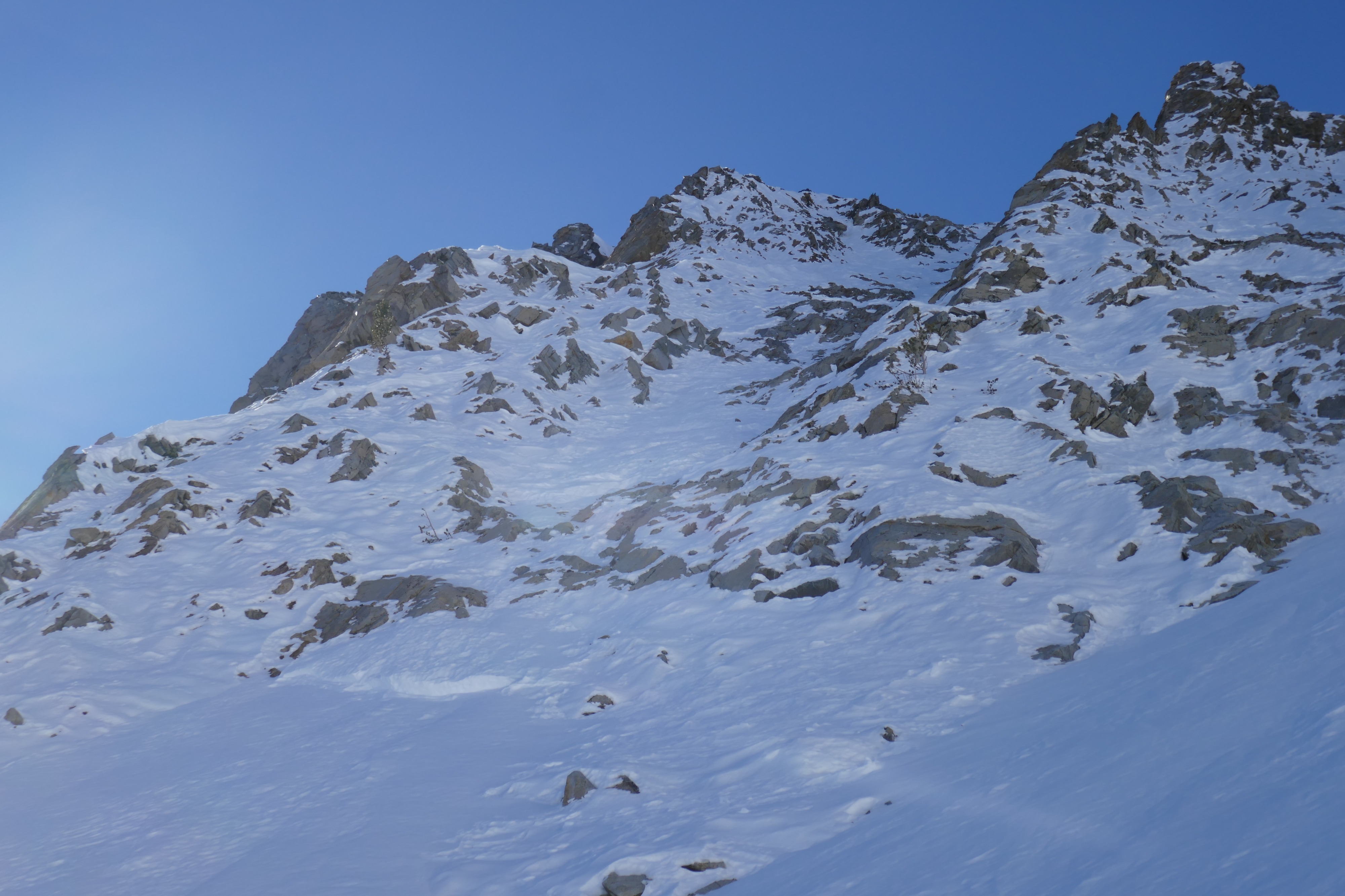
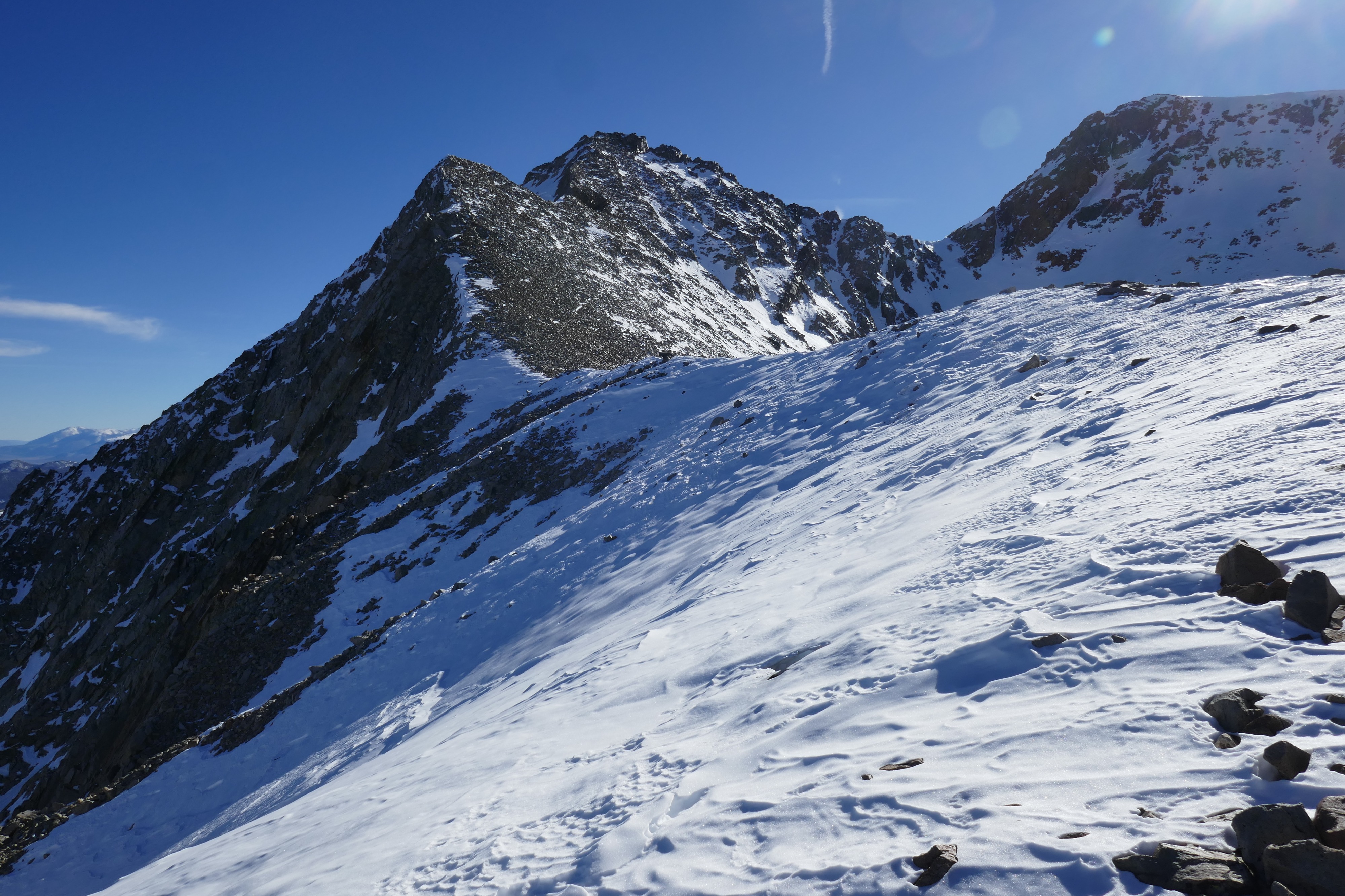
The snow story of the day was more of the same... More snow would be nice! But until that happens, I will continue to have fun! We rambled up Mt. Lewis with climbing boots instead of skis and had a great day. We postholed all the way to 9800' and from there we were mostly walking on firm snow that supported us. It took four difficult hours to get to the cirque proper. Snow - Below Treeline surfaces ranged from dirt to entirely faceted snow to the ground, breakable crust and sometimes powder interspersed with wind board. There was never enough snow to ski, you would be hitting everything because the snow isn't supportive. Pretty much every step was a posthole to the ground, be that dirt or talus. Near treeline we definitely found wind slabs. They didn't seem reactive, no shooting cracks, no collapsing, no recent slides, but the structure was there. When they did break they were plates where we were immediately walking or sliding, not anything concerning. Above treeline snow surfaces ranged from firm wind board/slab to deteriorating wind board (we punched through it, it was soft throughout, didn't have grossly noticeable layers, and had a variable surface consistency. Sometimes crusty, sometimes close to neve, sometimes snow that would be good to ski if there was better coverage), corn/mashed potatoes on south aspects, bare rock, and sweet water ice:) We saw some old avy crowns, they weren't fresh. They were in a steep NE gully above treeline near rocks but there did not appear to be a slab anymore, it may have metamorphosed(?). I suspect they went closer to the storm when the start zones near the ridge were wind loaded. There was a breakable but unreactive wind board/slab approaching the gully proper. I did not notice facets in the gully. Near the ridgeline in the NE aspect there was maybe some facet snow where it was soft to the ground. I don't know whether that layer would become reactive upon the next storm. It may serve as a weak layer above the ground up high. I have a hard time imagining the snow further down in the gully becoming reactive, but I would certainly approach with caution when the time comes. It would definitely serve as a bed surface. Snow depth never really exceeded 2.5 feet, usually it was less than that. Hazards - The main snow related dangers that we discovered were pretty serious slide-for-life conditions and buried obstacles (no surprise). We considered descending the main N gully but opted to descend the ridge as we were ridge rambling at that point. When we dropped off the ridge we aimed for a lower angle wind loaded gully (in hopes of firm snow deep enough to bury the talus) and butt slid down with ice tools at the ready to practice self arresting. It was difficult to stop even with aggressive ice tools (much more bite-y than aluminum skimo axes), good self arrest technique, and a modest slope angle. Had we descended the very wind board-y looking main north gully or main NW gully and started sliding, I am not sure that we could have stopped or even slowed down, despite our aggressive tools and good self arrest technique. Self arresting with just a ski pole would be impossible. I think that ride would very likely be fatal. The other danger we faced was twisting knees as you punch through the snow and into a talus hole. Skiing - You could ski. You would have to hike all the way up there and in our case you'd score some gnarly wind board, and barely be able to ski the talus in the moraines. Though I tried last week, I'm not going to ski again until it snows more, but the winter climbing is really fun!