
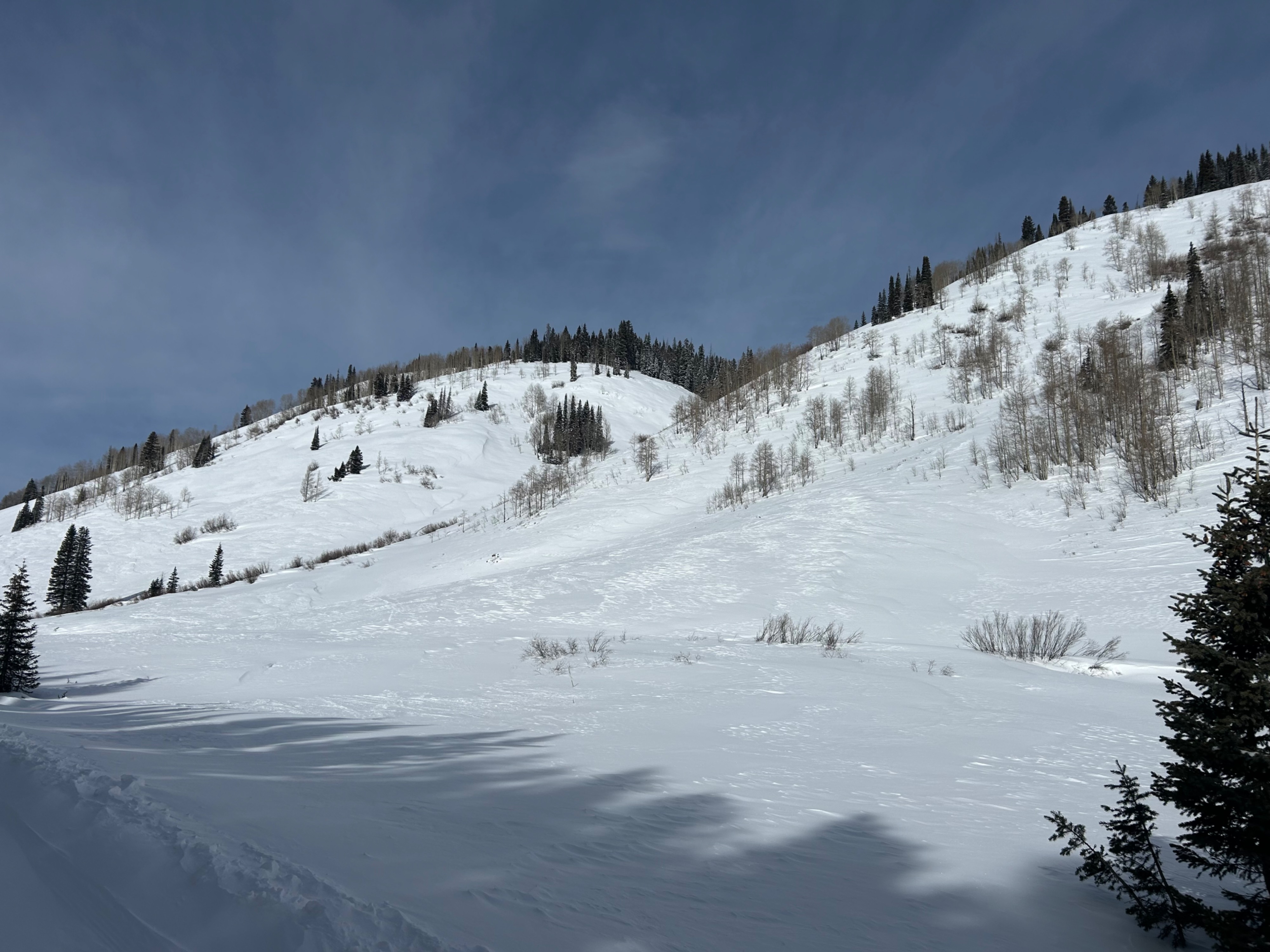
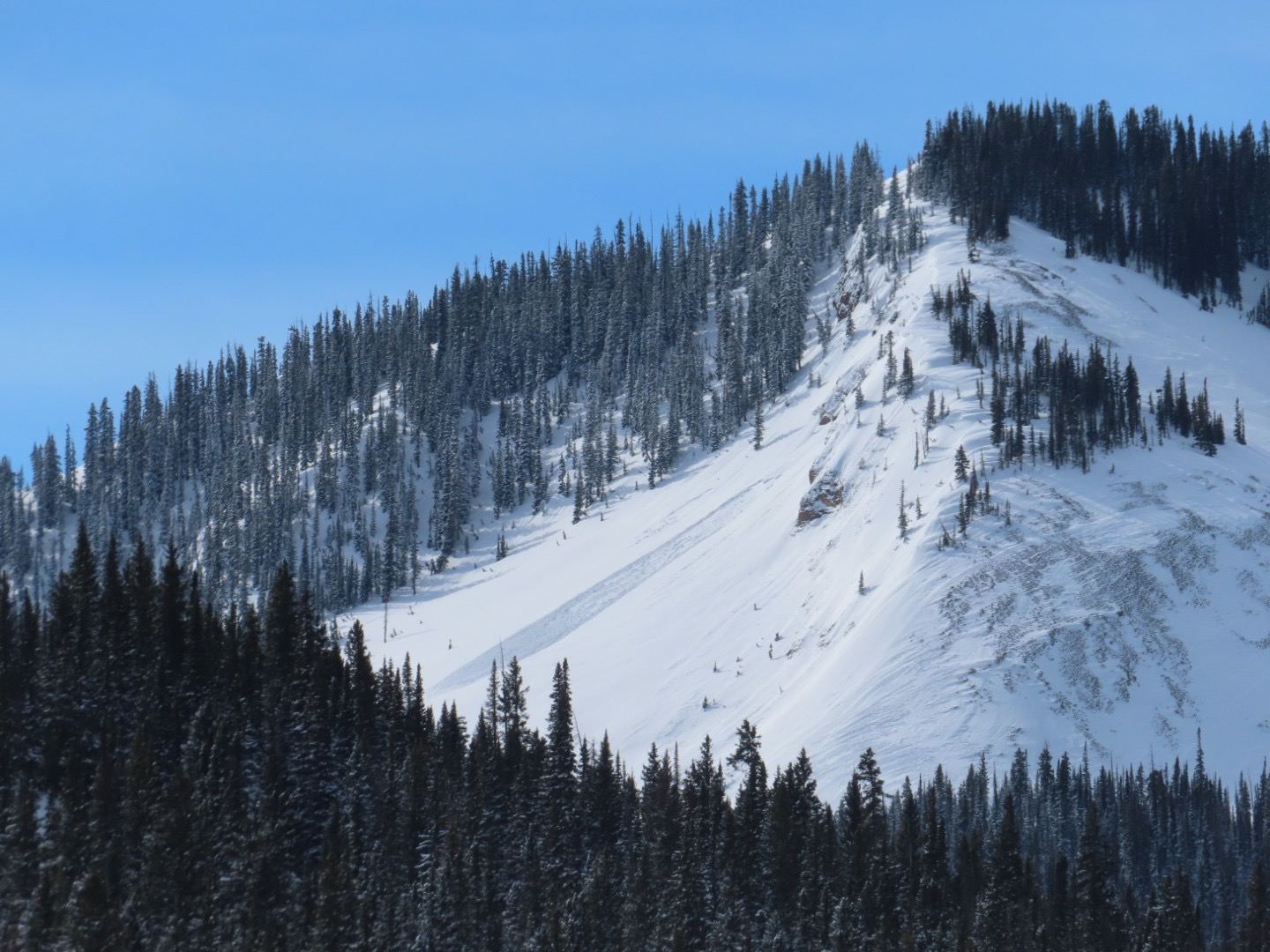
Quick report
- Cracking
- isolated
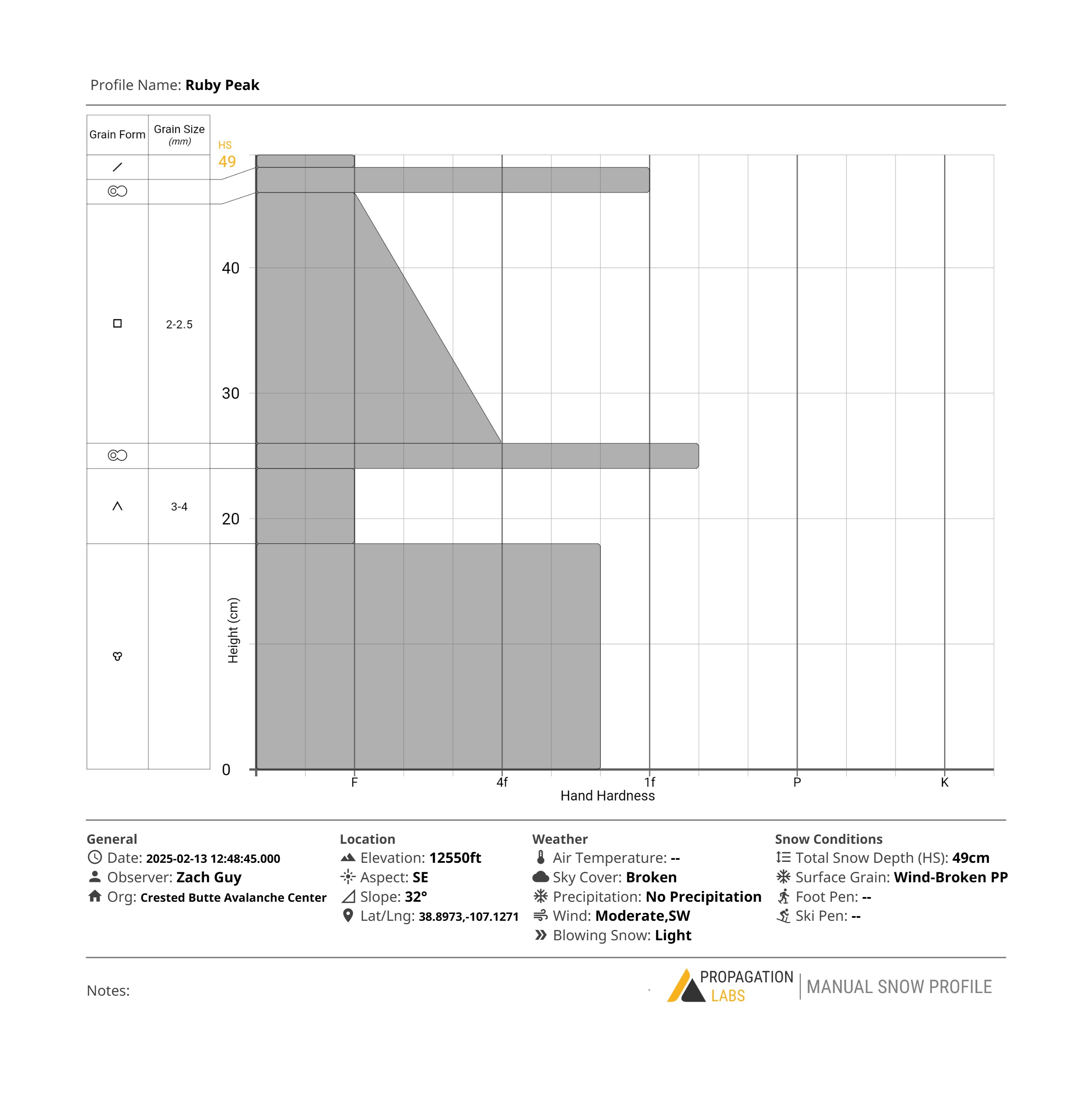
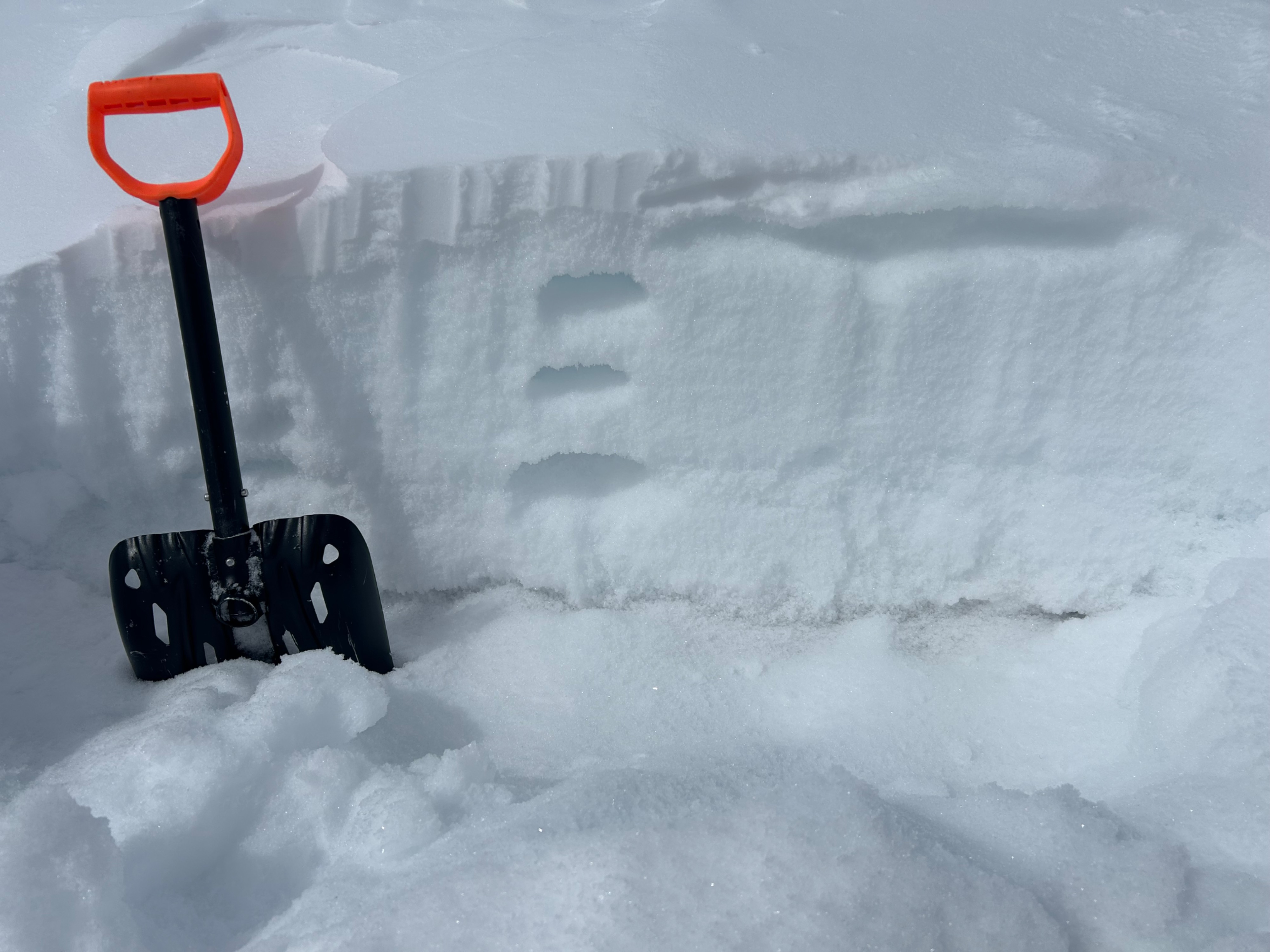
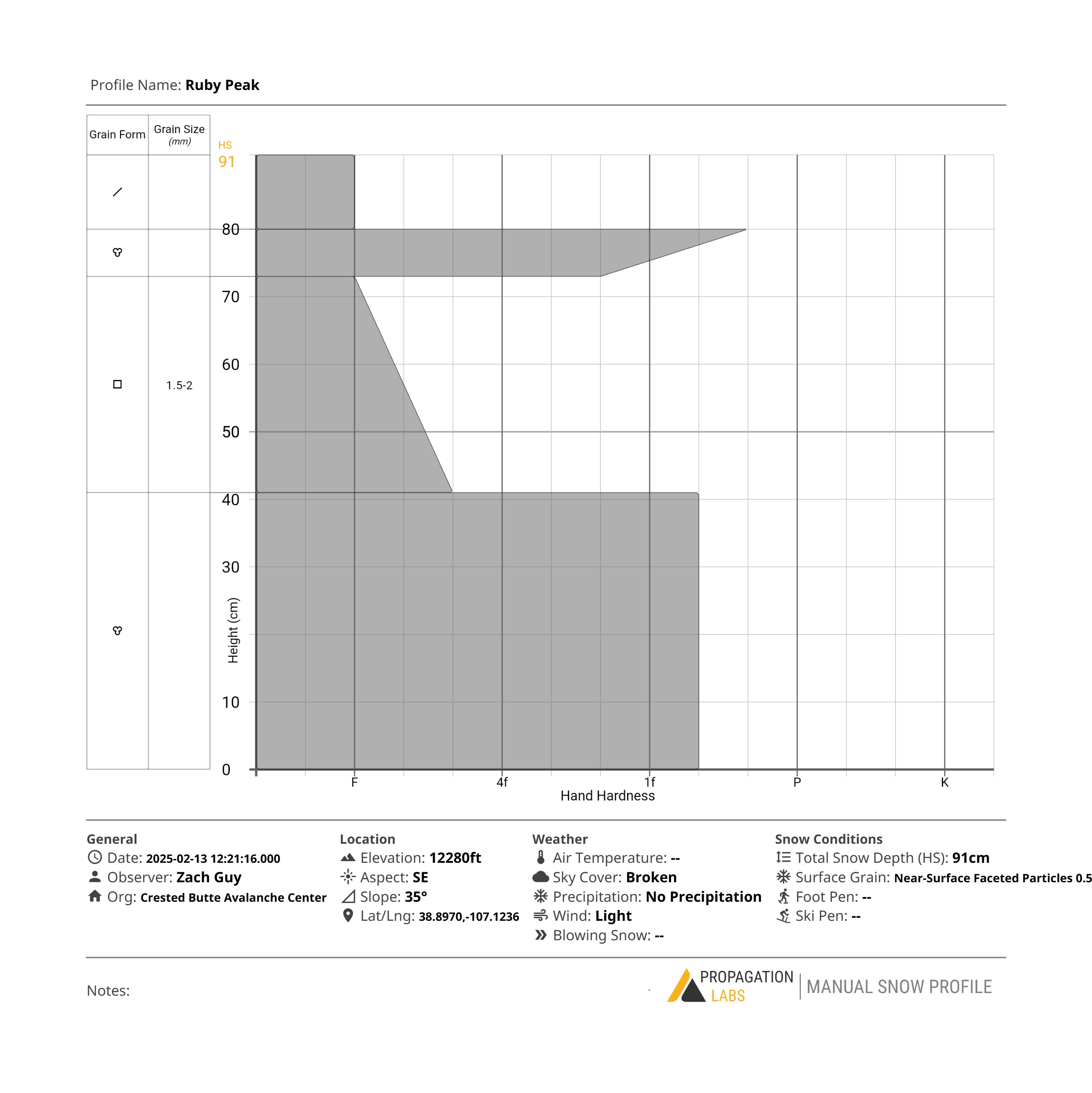
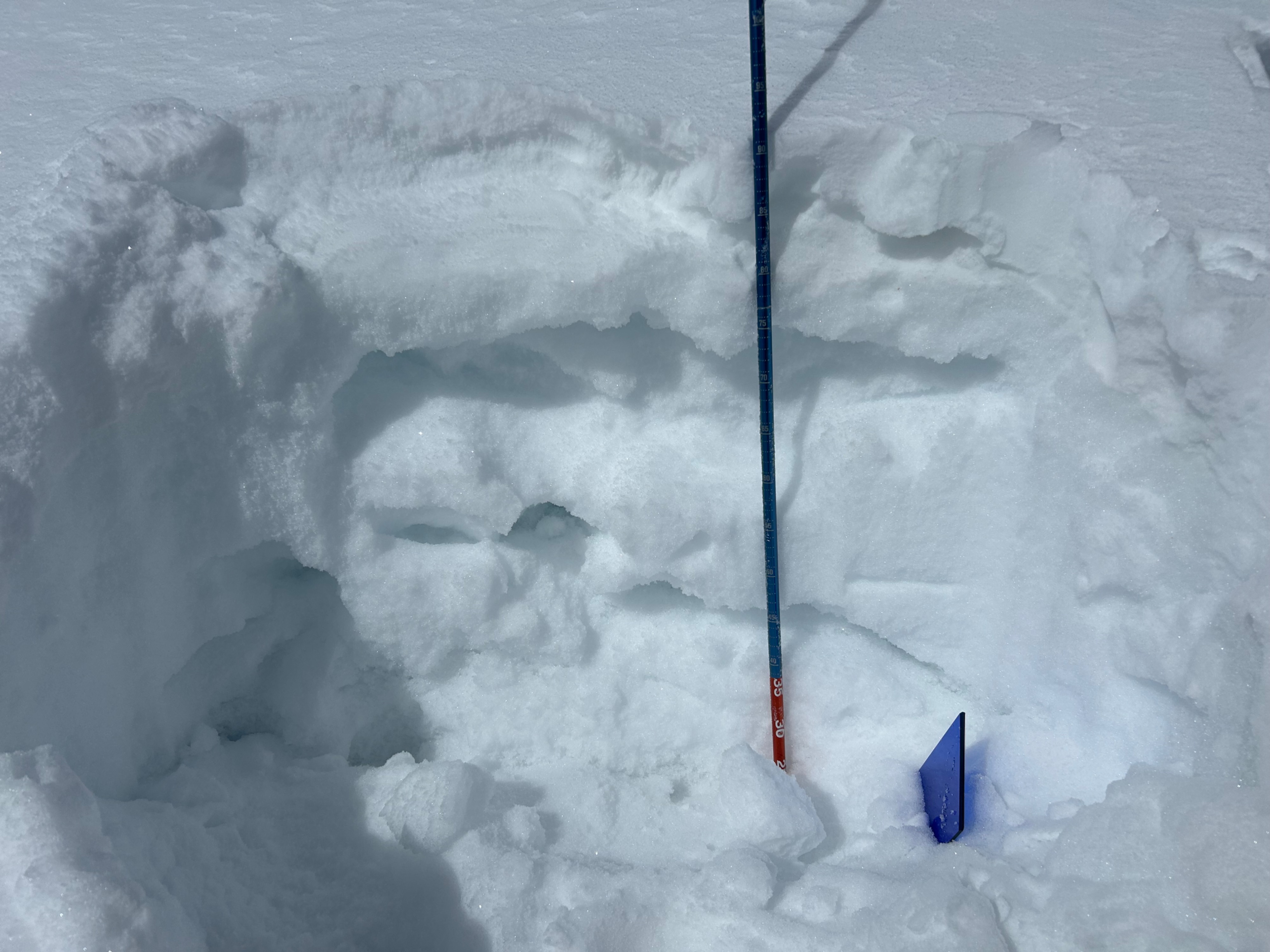
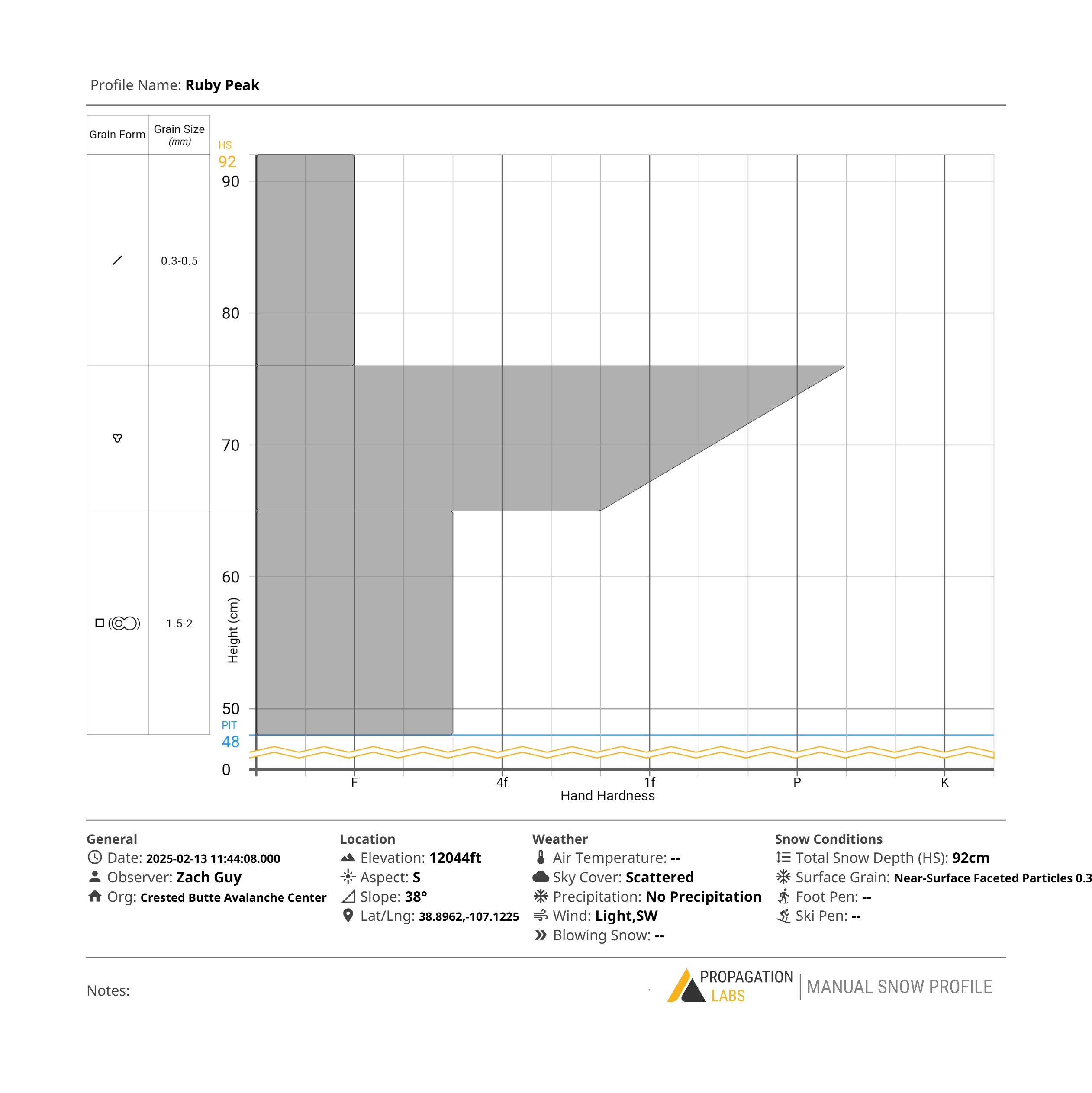
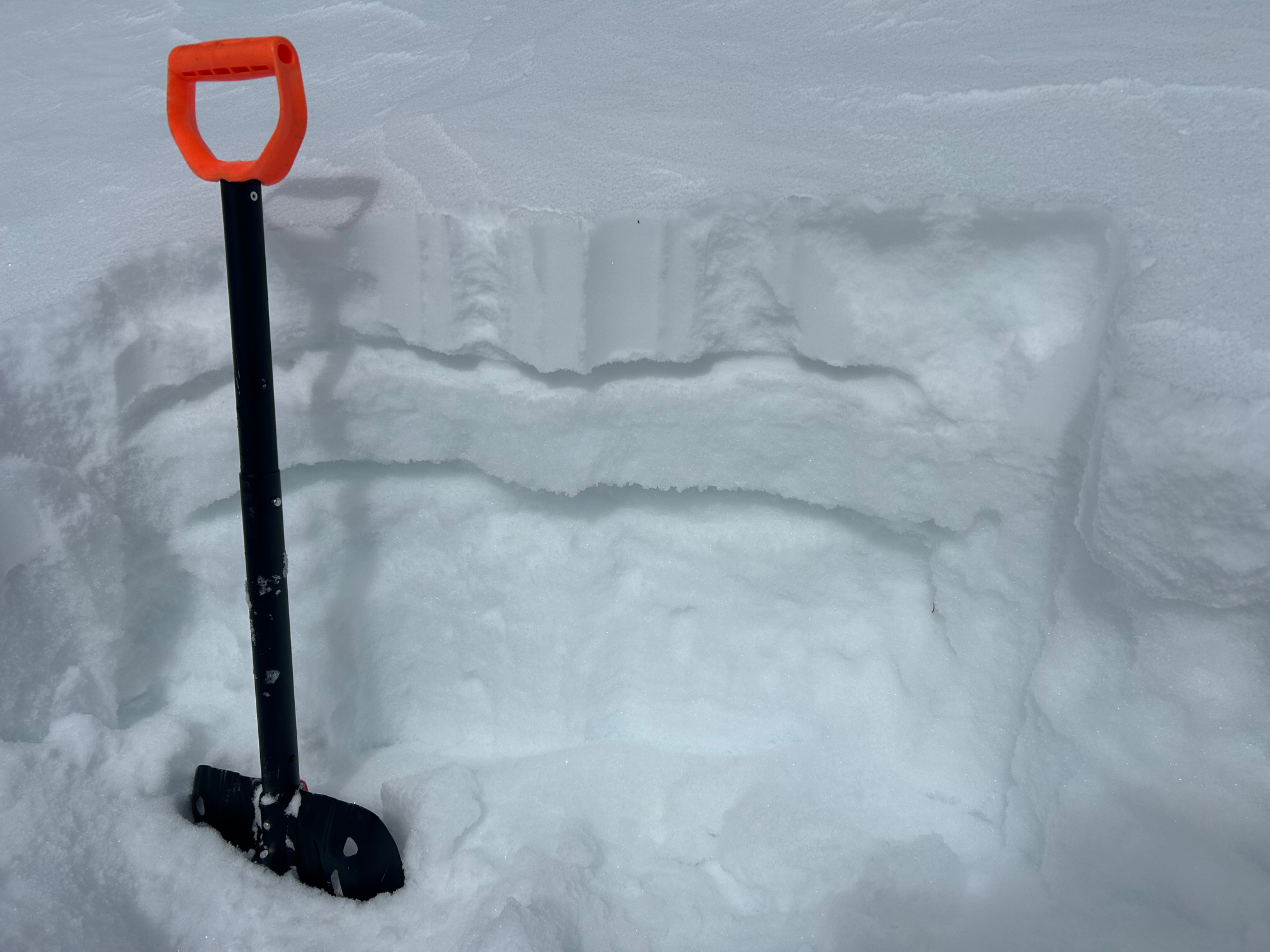
Southerly aspects have stronger, thicker crusts bridging underlying facets compared to other aspects. Southeast aspects above treeline concern me more for persistent issues: some of the lower-angle start zones have thin, collapsible crusts similar to east-facing terrain. Note the slope angles in the profiles below.
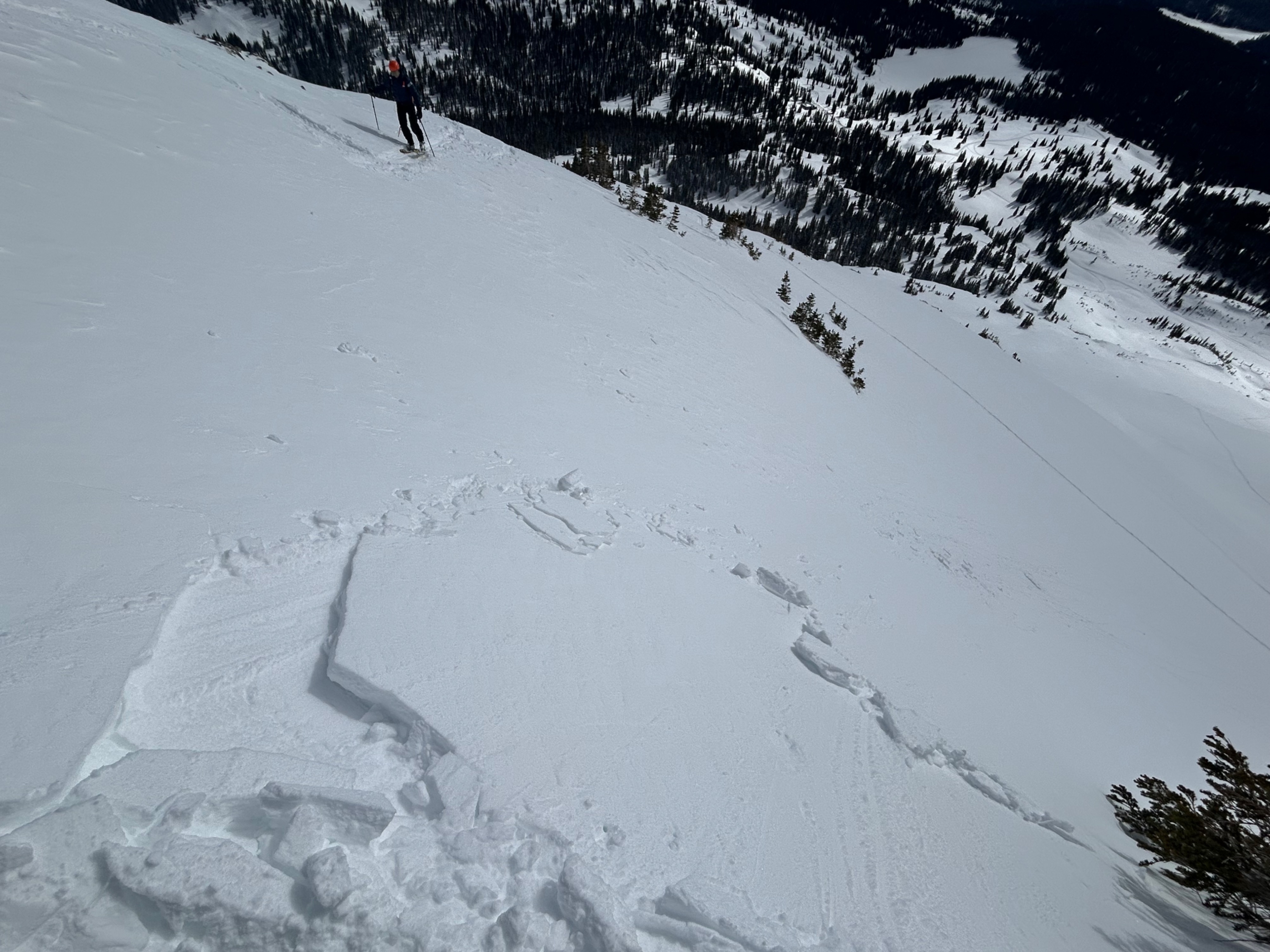
Stiff, obvious drifts were up to 12" thick and fairly isolated where we traveled, providing stubborn feedback. We avoided a couple of drifted features in high-consequence terrain.
We targeted a couple of recent drifts and produced minor cracking with aggressive stomps. Otherwise, we traveled on numerous steep slopes without signs of instability apart from some shallow sluffing.Weather
- Wind Loading
- previous
- Recent Snowfall
- 0
- Snow Avail For Transport
- small smounts
Clouds increased this afternoon. Light to moderate winds with minimal transport.
Snowpack
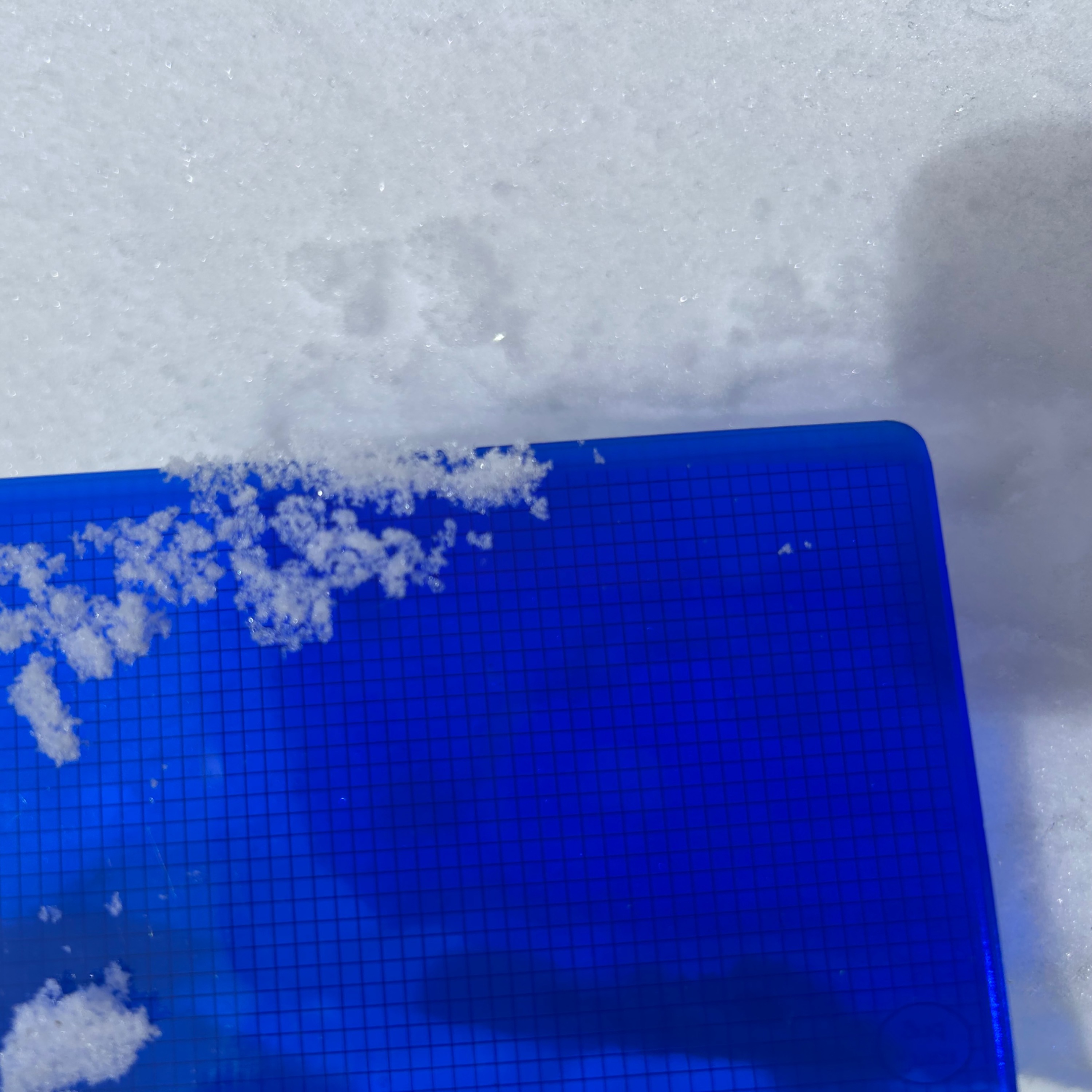
Steep, south-facing slopes have thick crusts that are supportive to skis and semi-supportive to boot penetration (sometimes boots punch through, sometimes not). Southeast aspects above treeline held some thinner crusts in lower angle start zones (~30-34*), while steeper start zones held stronger crusts that would require much larger loading to collapse. There were small-grained near surface facets (.3-.5mm) on the snow surface in areas where today's winds were minimal above soft settled snow. About 4" to 10" of recent snow was above the warmup-crust except in scoured areas.
Avalanche
- Size
- D1.5
- Type
- SS
- Count
- 2
- Aspect
- SE
- Trigger
- N
- Elevation
- 12800 ft
Good vis this morning revealed a few small windslabs that ran in the past 48 hours on Mt. Owen and in the Anthracite Range.