
Quick report
No signs of instability underfoot, but we continued to choose smaller terrain features when traveling through steep terrain to help manage the risk. We did observe old cracks on steep southeasterly slopes that occurred during the storm and broke into basal facets near the ground. Avalanche conditions have improved in the past week but stiff slabs capping weak basal snow kept us from stepping out into consequential terrain.
Weather
- Cloud Cover
- scattered
- Recent Snowfall
- 8
Increasing cloud cover around midday. Mild air temps and decent solar radiation moisten surfaces on steep sunny slopes.
Snowpack
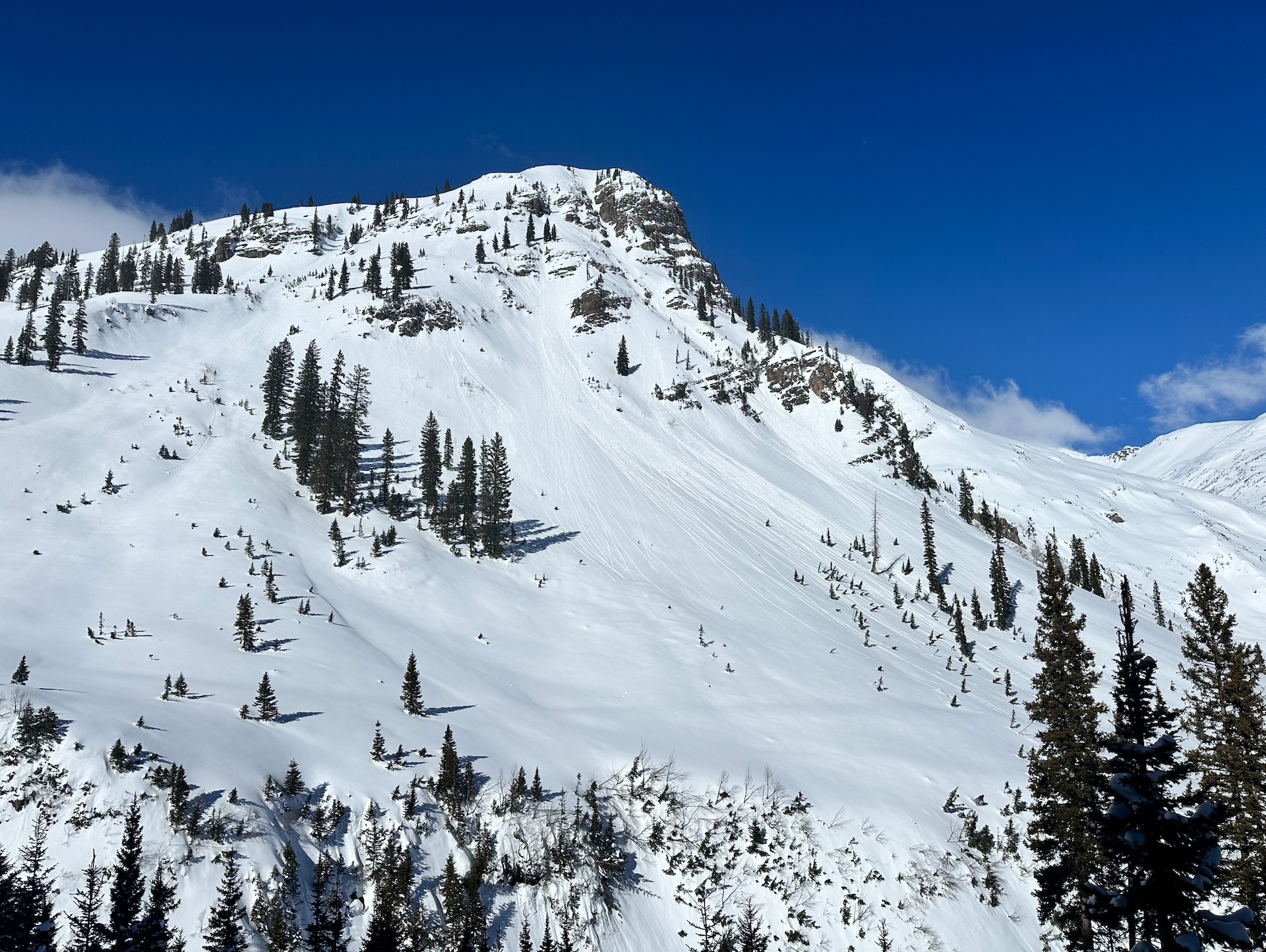
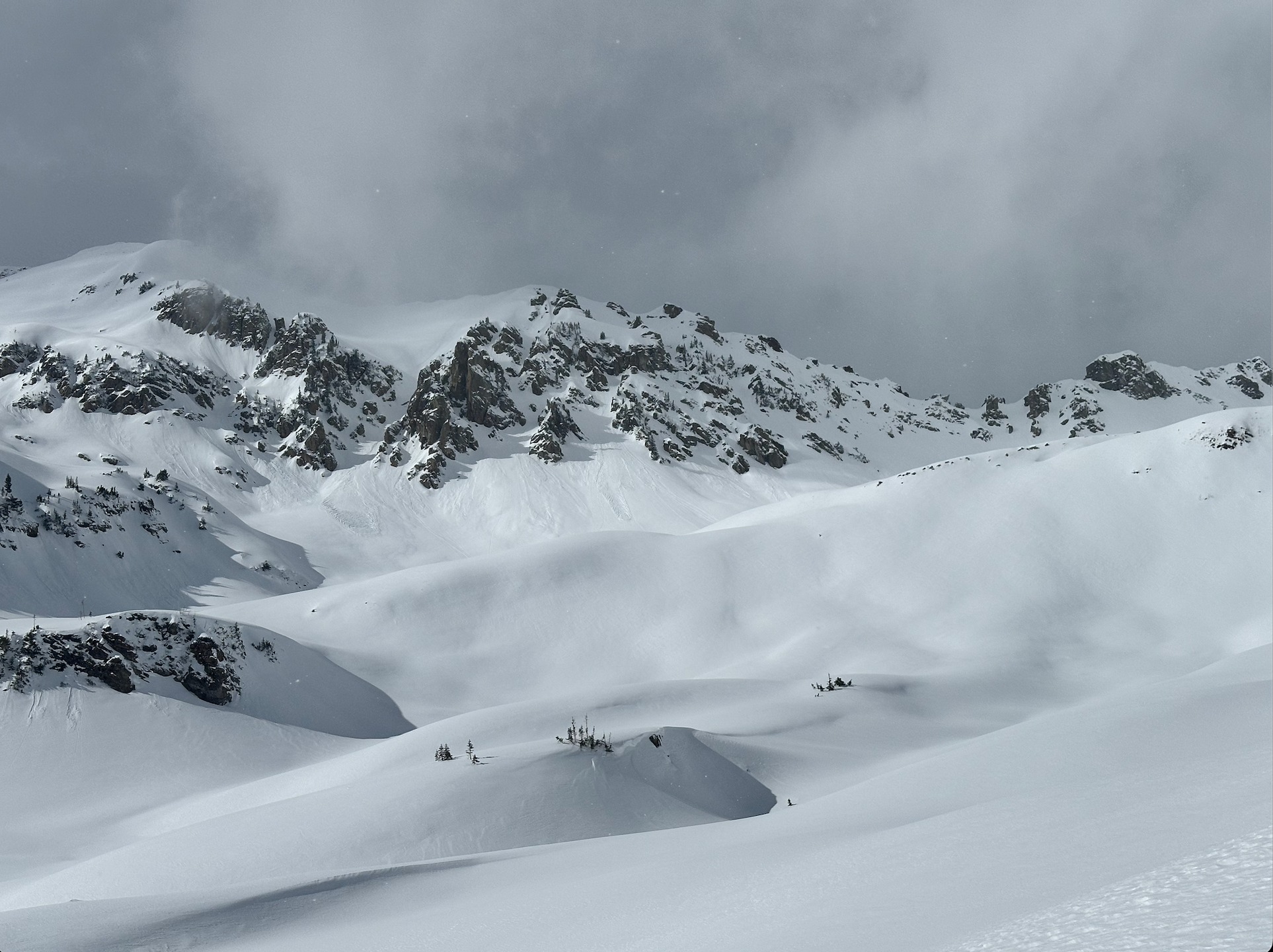
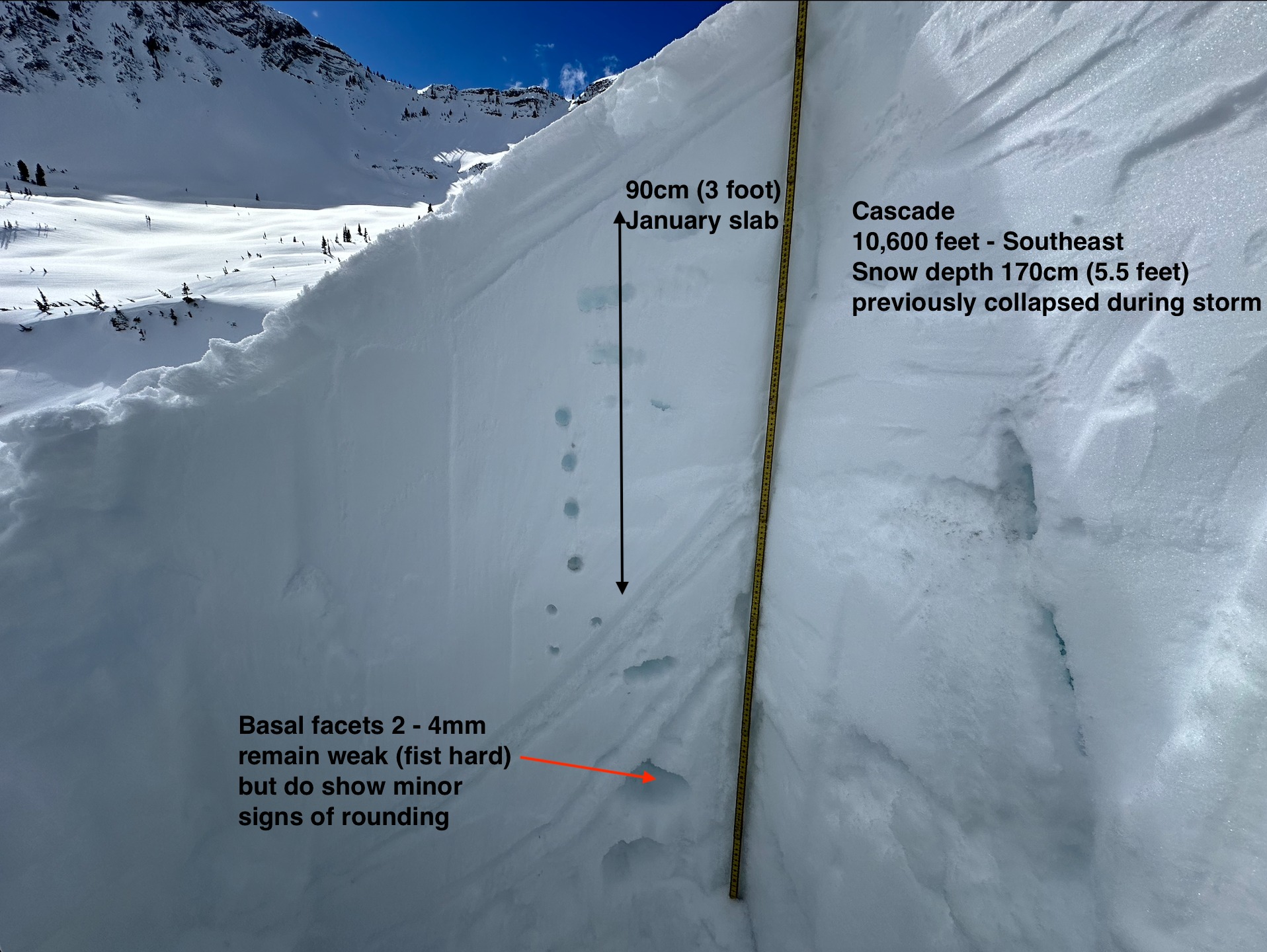
We traveled northerly and southerly-facing terrain to 11,000 feet. Snowpack depth on northerly slopes was around 2 meters and 160 cm-ish on sunnier features. We did not experience any collapsing. In one profile on a southeast slope, the facets at the 1/5 interface resting on a crust appear to be less problematic than a week ago with a clear increase in hardness and rounding. Basal facets beneath crusts on sunny features still appear weak and pose a threat for triggered avalanches in places where the slab thins. While descending a few steep sunny slopes, old cracks were visible (the profile image has one such crack running into basal facets) at the surface.
Crusts on sunny features below treeline from previous warmth and sun are 1-2cm thick with a few inches of recent snow above. On the steepest features, this crust was generally able to support skis.
Avalanche
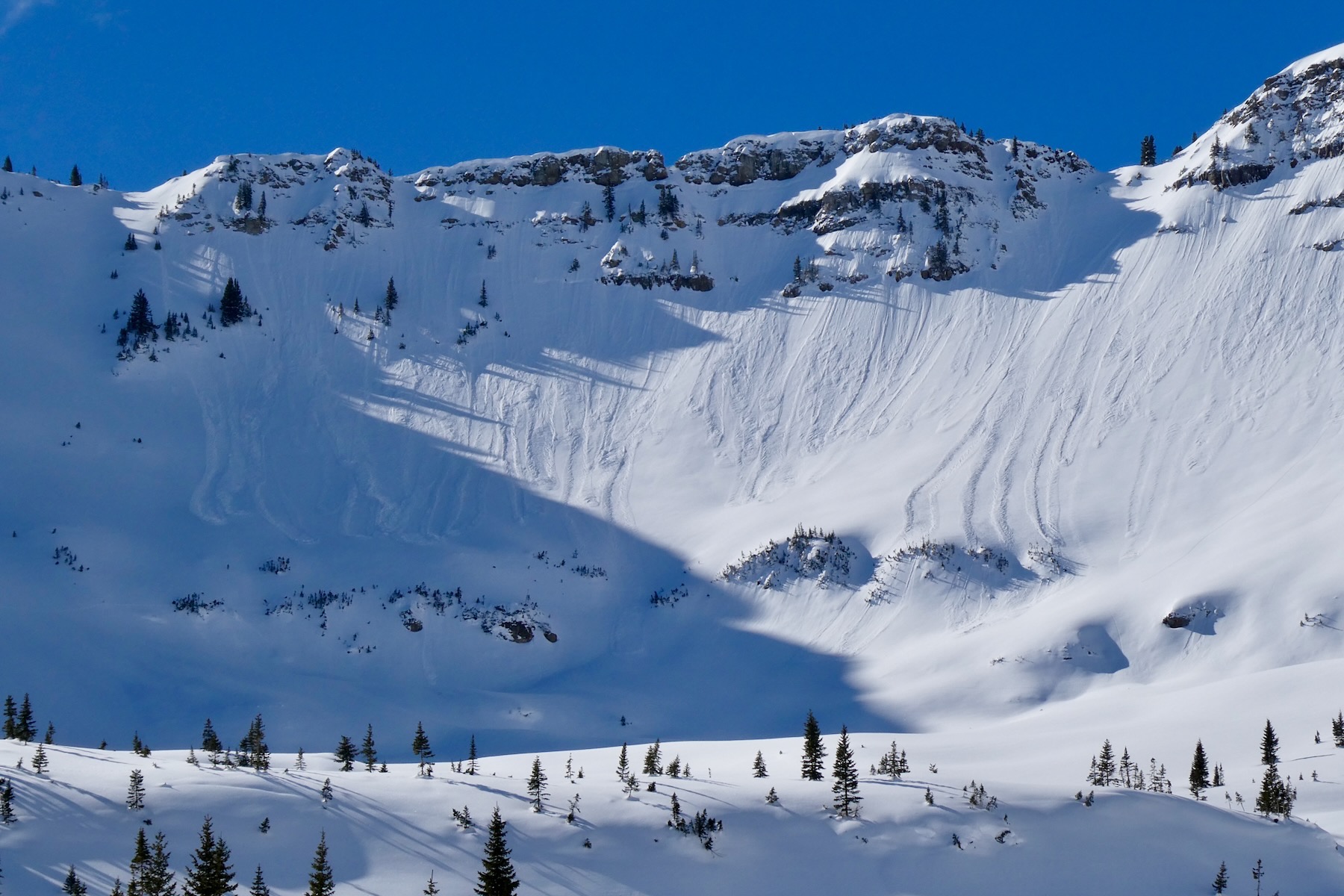
Numerous tiny loose snow avalanches at upper elevations. This involved the few inches of recent snow sliding due to solar radiation. Not much risk as the size is very small. (Bigger gremlins to worry about in the basement).