
Quick report
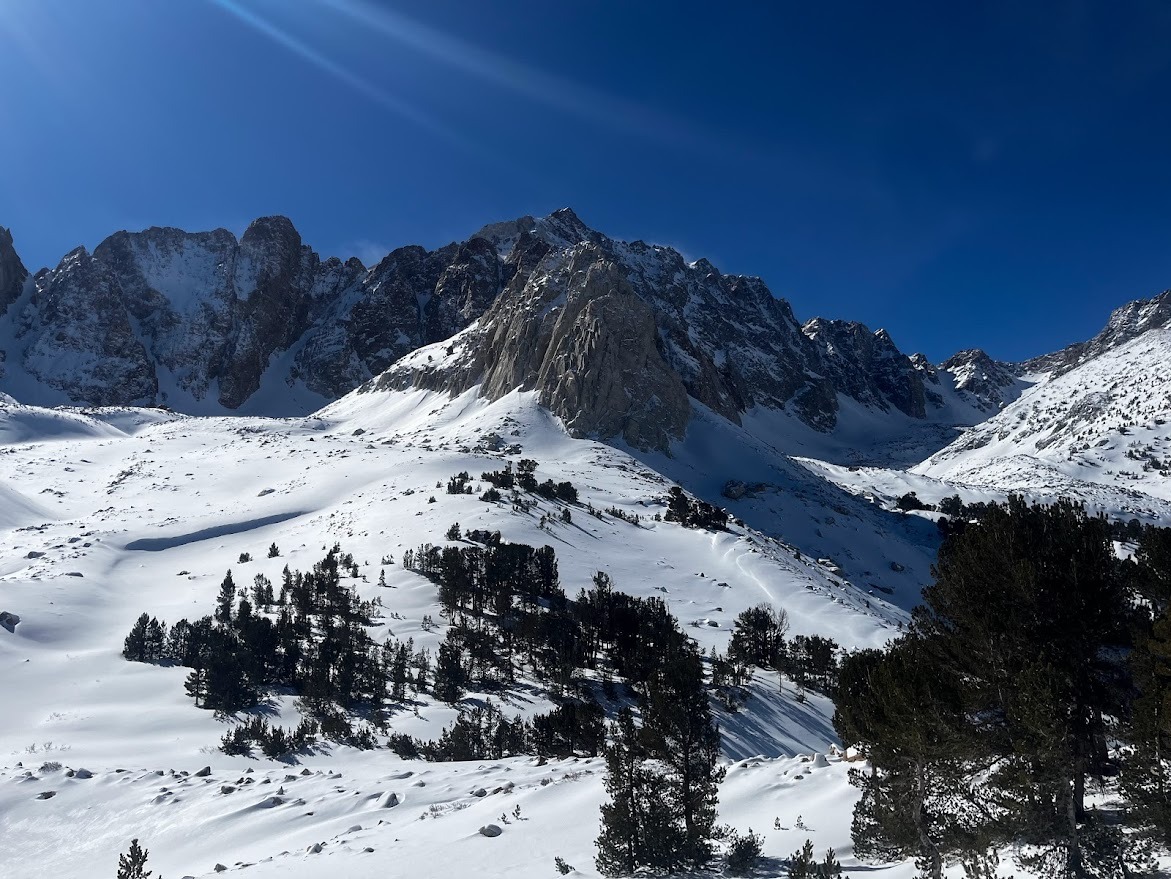
I went up towards the Paiute Crags today to get a sense of conditions in Bishop Creek on multiple aspects at multiple elevations.
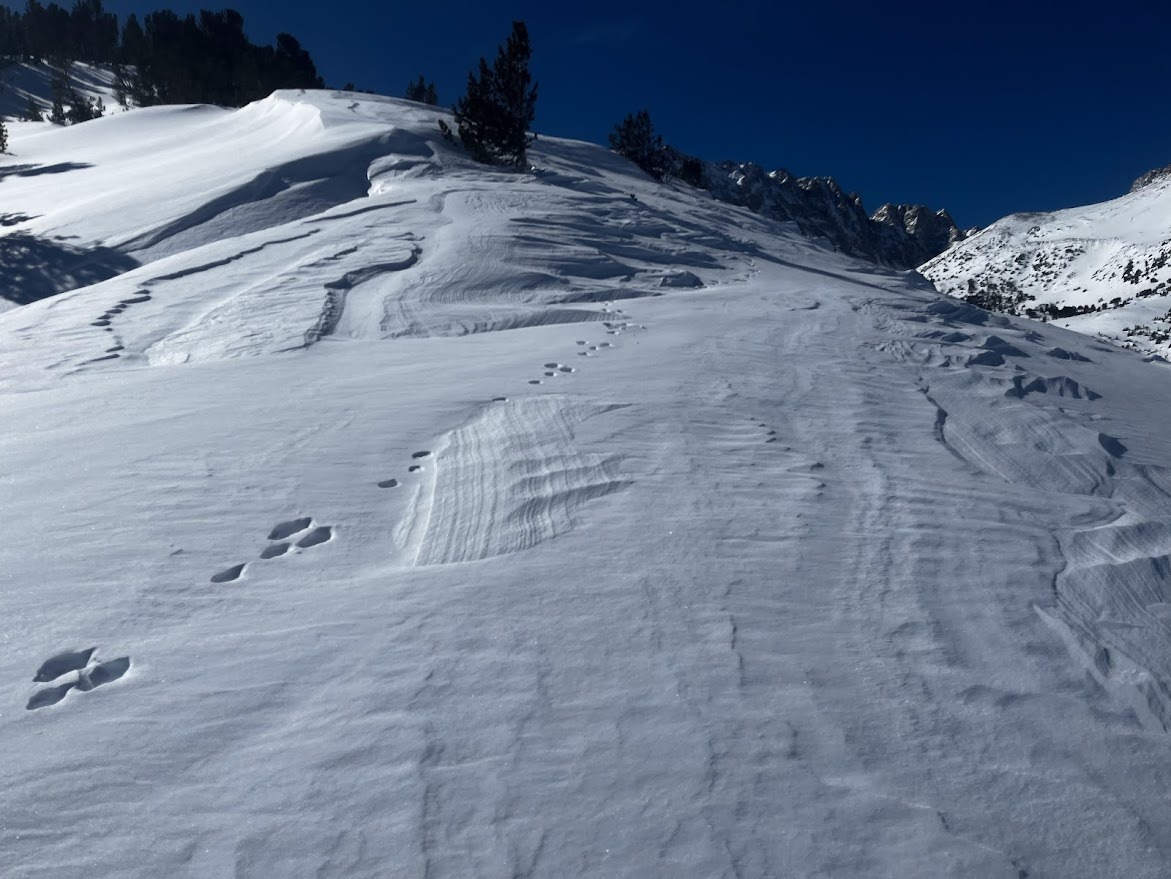
- Winds were calm up to 11,000' today, but blowing snow was visible on the highest peaks.
- Temperatures remained below freezing, but thin crusts developed on solar aspects by mid-afternoon
- The basal weak layer is not as evenly distributed in Bishop Creek as it has been in the northern part of the forecast area.
- Wind-deposited layers in the upper snowpack are making triggering less likely. Trigger points are hard to find.
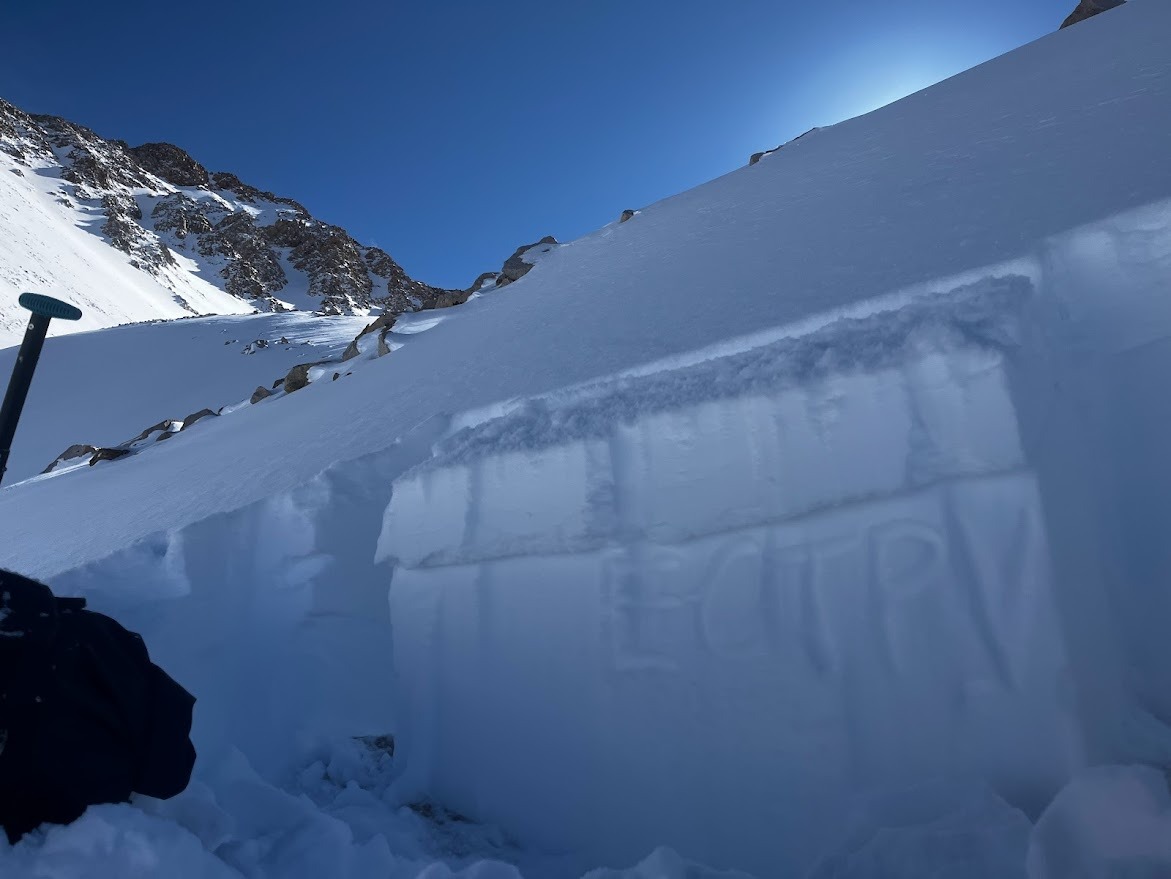
- Snowpit tests continue to indicate the potential for persistent slab avalanches in this area.
- In the alpine snowpack layering is less continuous, due to wind-loading and scouring. It is difficult to assess the distribution and sensitivity to triggering without exposing yourself to slopes that have the problem.
Even with a whole day and a good plan it was tough to narrow down the uncertainty surrounding the persistent slab problem in Bishop Creek.
No signs of instabilityWeather
- Air Temp
- 28
- Cloud Cover
- few
- Wind Loading
- previous
- Recent Snowfall
- 10 - 20
- Snow Avail For Transport
- moderate amounts
Snow plumes on peaks over 12,000' from north winds and blowing snow. Snow plumes decreased over the day.
Snowpack
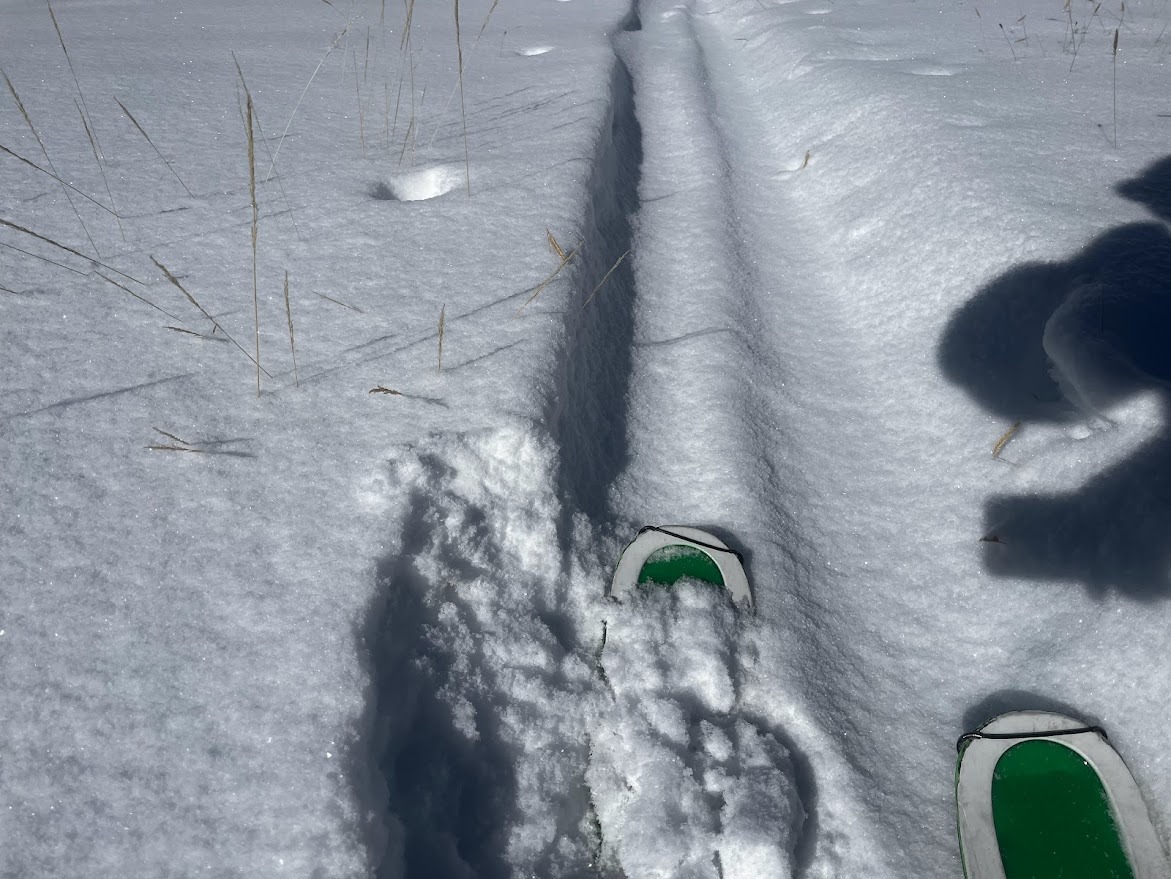
BTL: 1-6 inches of recent low-density snow. 1 to 3 feet of total snow. Ground anchors are visible below 9300'. Skis sink in up to the ankle (20cm). Boots sink in up to the knee (60cm). Deeper snow on north aspects. Less on southerly slopes. Southerly slopes had a 1-inch (3 cm) melt-freeze crust below the most recent snow. The crust was less noticeable at higher elevations and on lower-angle slopes.
NTL: 3 to 8 inches of recent low-density snow. 2 to 5 feet of total snow. Ground anchors are only visible on wind-stripped terrain features. The layer of concern is F hardness, advanced depth hoar up to 10mm buried at the base of the snowpack ~ 3 feet below the snow surface. The layer is discontinuous or interrupted by ground anchors except in northerly terrain which accumulates and holds snow during wind events. Strong layers of wind-deposited snow near the surface of the snowpack make it hard for a rider's weight to disturb the weak layer (Ski penetration 0 - to 6 inches and boot penetration 2 feet). No results in ECT. Propagation in PST - see attached profile.
ATL: 3 to 8 inches of recent low-density snow. 0 to 5+ feet of total snow. Coverage is discontinuous and care must be taken to avoid shallowly buried talus in most terrain. The exception is in couloirs and pockets below cliff bands where snow depth is much greater. Two pits in medial moraines at ~ 11k failed to find the depth hoar layer at the base of the snowpack. This area was likely wind-scoured to ground in late Dec. and early Jan when the depth hoar layer formed. There is avalanche debris from the Feb. 4th and 5th storm at the base of many large north-facing avalanche paths.
Avalanche
- Size
- D1 R1
- Type
- SS
- Aspect
- W
- Trigger
- N
- Elevation
- 11500 ft
The smallest natural slab avalanche I have ever seen.