
Quick report
- Cracking
- isolated
- Collapsing
- isolated
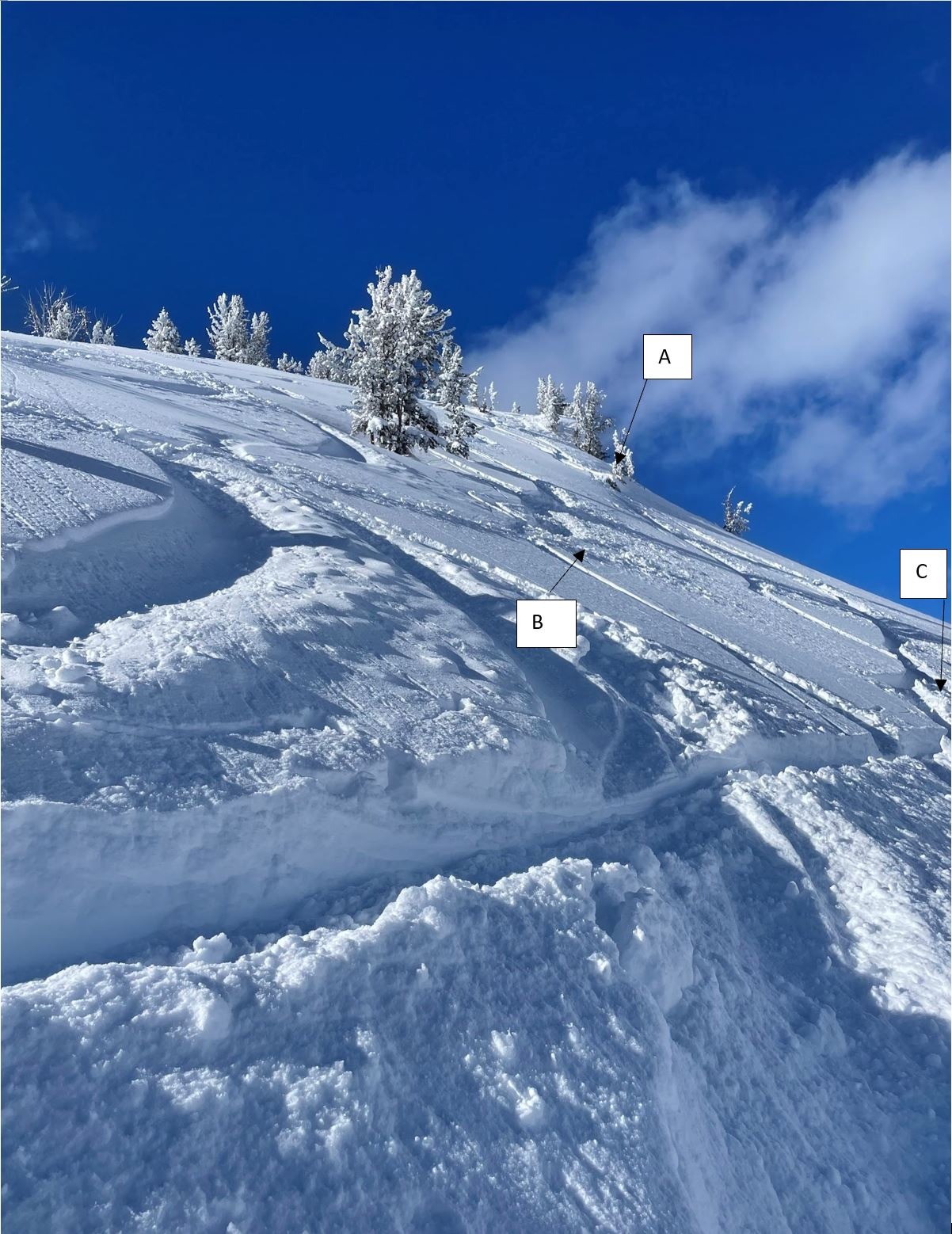
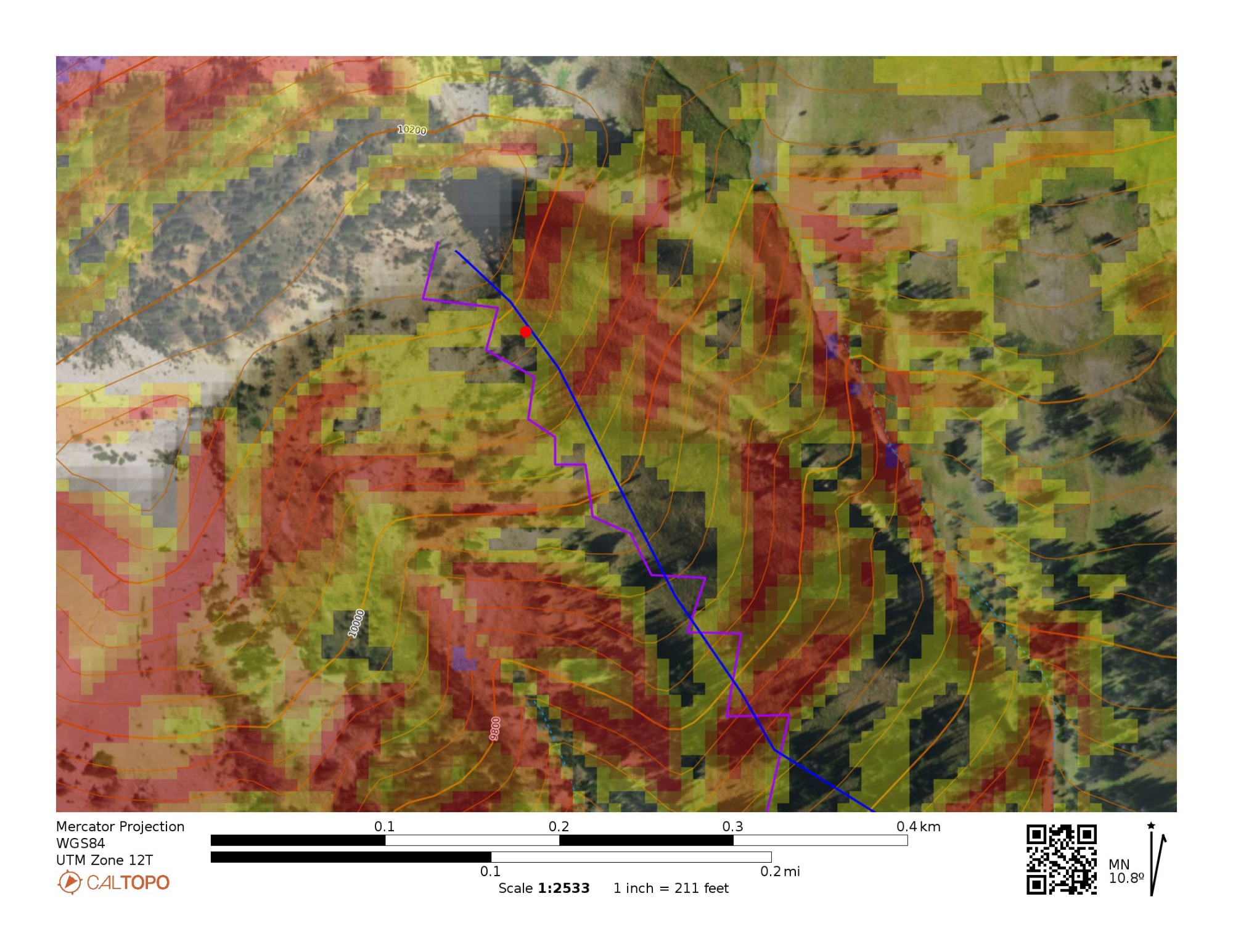
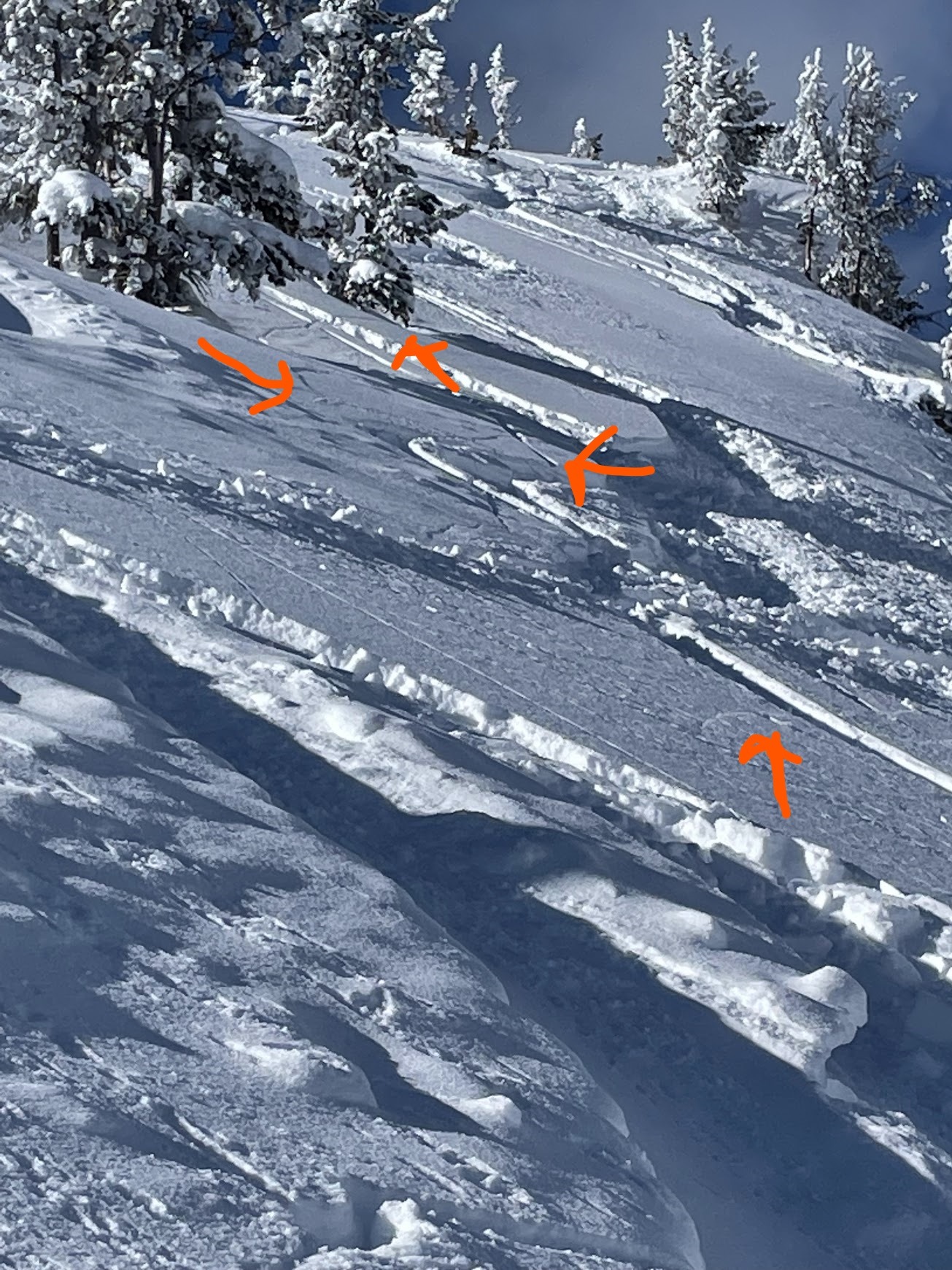
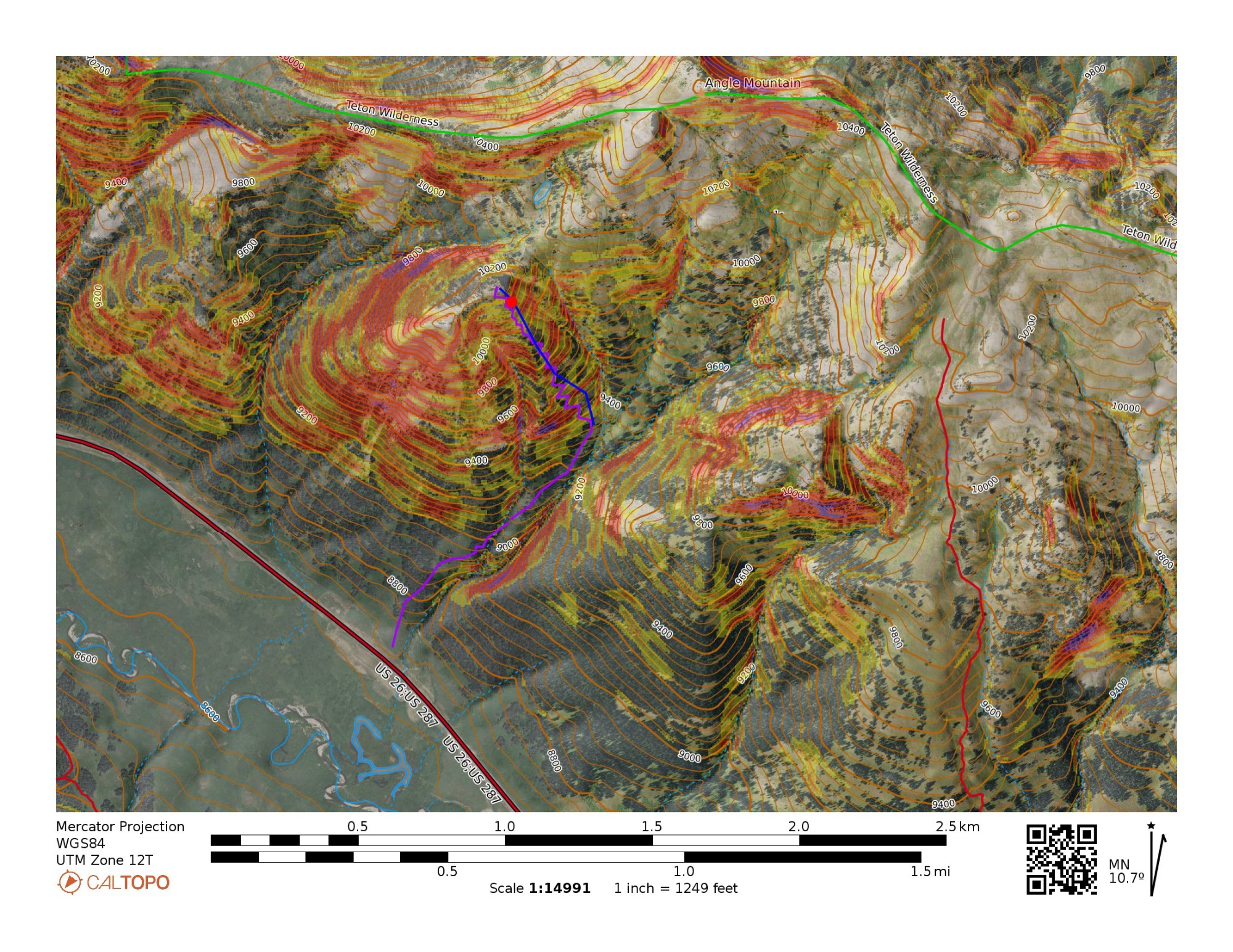
Part Size: 3 (two skiers and one split boarder) Experience: All three members have taken an AIARE 1 and one member has taken a rescue course. The first thing I noted when we started our trip was the debris from a natural avalanche that had most likely occurred in the last couple of days. The debris was at the top of the main avalanche path that can be seen when driving westbound on the highway or to lookers left of the middle gully of Angle Mountain. It was most likely a wind slab avalanche or cornice collapse with an estimated size of R1/D1. Throughout our day I dug several hand pits at different aspects and elevations of the ridgeline our party ascended. Each pit had different results. In the trees on SE aspects I consistently found a layer of crust buried about 30 to 50 cm down that was fairly REACTIVE (1-2 pats from the elbow resulted in collapsing). The snow just below and above this crust was sugary and weak. The top layer of snow was a soft slab from recent snowfall about 10 to 15 cm thick. For another hand pit on the ESE aspect just below the crest of the ridgeline at about 9800' I found a thicker layer of snow buried about 50 cm deep. This layer seemed to be about 10 cm thick and was much firmer than the crust layer in the trees. I was NOT able to induce any collapsing with a few hits from the elbow and shoulder. Perhaps I did not isolate a column well enough. Due to the exposure of this part of the ridge, I believe the buried layer to be an older wind slab. Below and above this layer, the snow was soft, but not as sugary as the tree pits. Similar to the tree pits I found a soft slab as the top layer that was approximately 15 to 20 cm thick. No major cracking or collapsing was observed during our two ascents and our first descent. On our second descent, two of our party jumped off a small natural feature about 20 feet below the crest of the ridgeline (Point A in photo 1) at about 10080'. The third person in our party had skied down first sticking mostly to the top of the ridgeline and settling at point B in photo 1 to observe the other two. After hitting the feature the two party members skied down to just below point C in photo 1. It was at that point that an area of snow about 40' X 80 ' collapsed around all three of us and settled at least several inches. Major cracking was observed. At that time skier 1 rapidly skied off the affected snow onto the ridgeline where the angle was less steep. Skier 2 followed after skier 1. Next, skier 3 pushed themselves back across the slope over to less steep terrain. All three skiers skied down the ridgeline staying to the right of the crest. Had there been a little more potential energy stored in the snow, or if the slope had been just the slightest bit steeper and sustained, I think it is likely an avalanche would have occurred. All three skiers were contained in the area of snow that collapsed. We got lucky... The weight of 3 stationary skiers triggered a major collapse of a buried windslab on the ESE aspect just below the crest of the ridgeline we ascended at approximately 10040'. I estimated the area of snow affected was approximately 40' X 80'.
Weather
- Cloud Cover
- scattered
- Wind Loading
- moderate
Scattered snow showers. Light wind with mild to moderate gusting depending on elevation.