
Quick report
- Cracking
- isolated
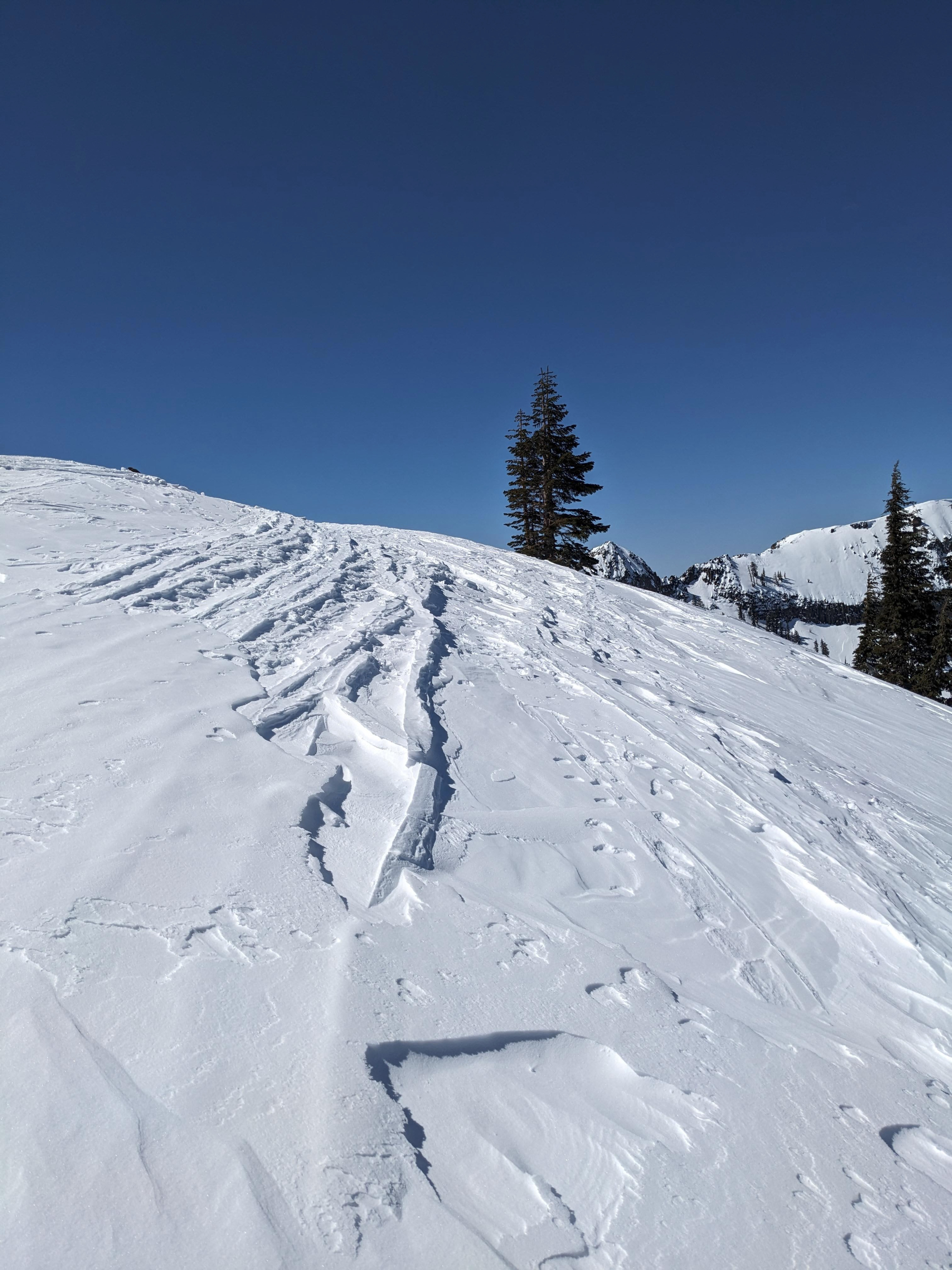
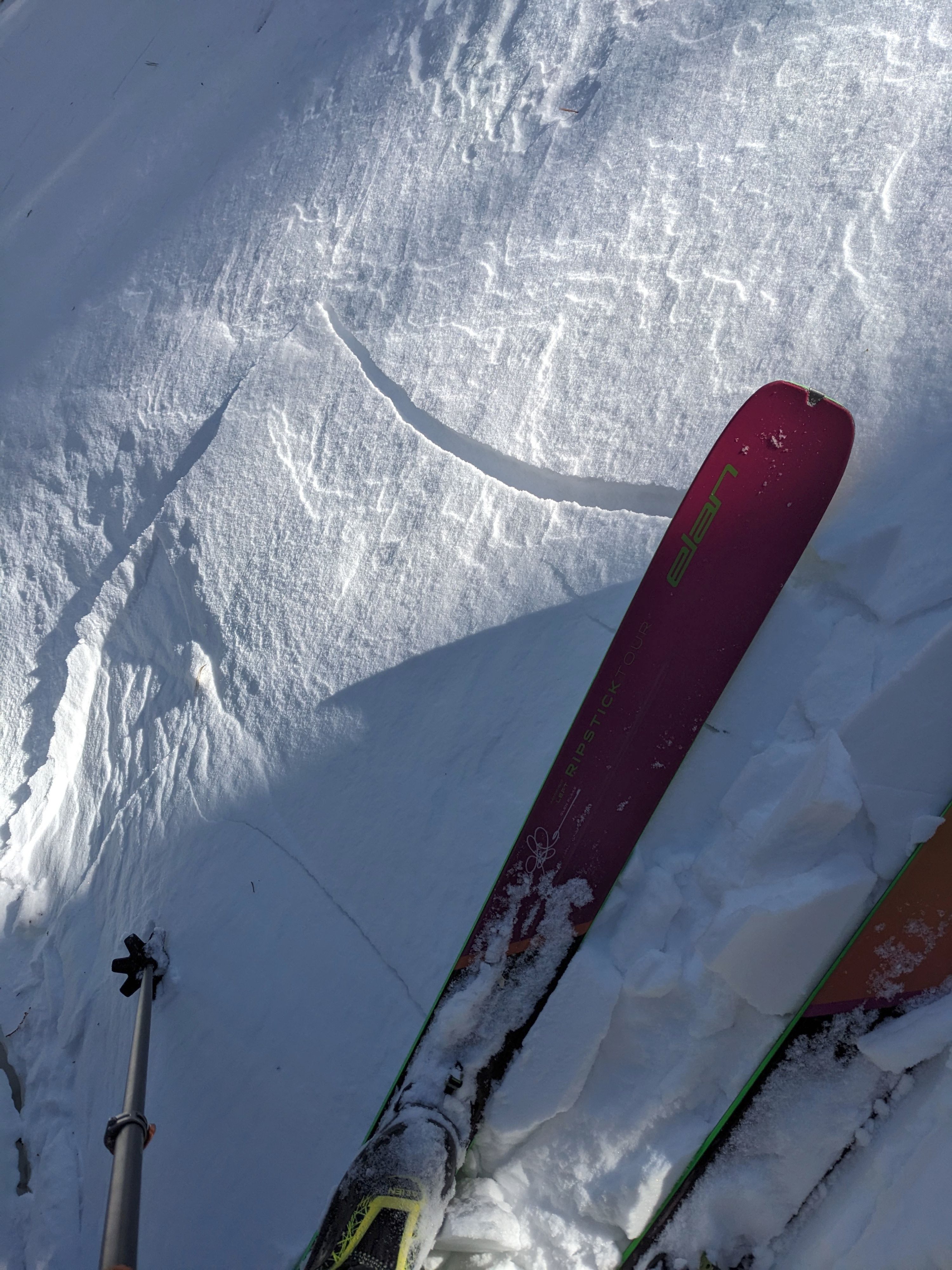
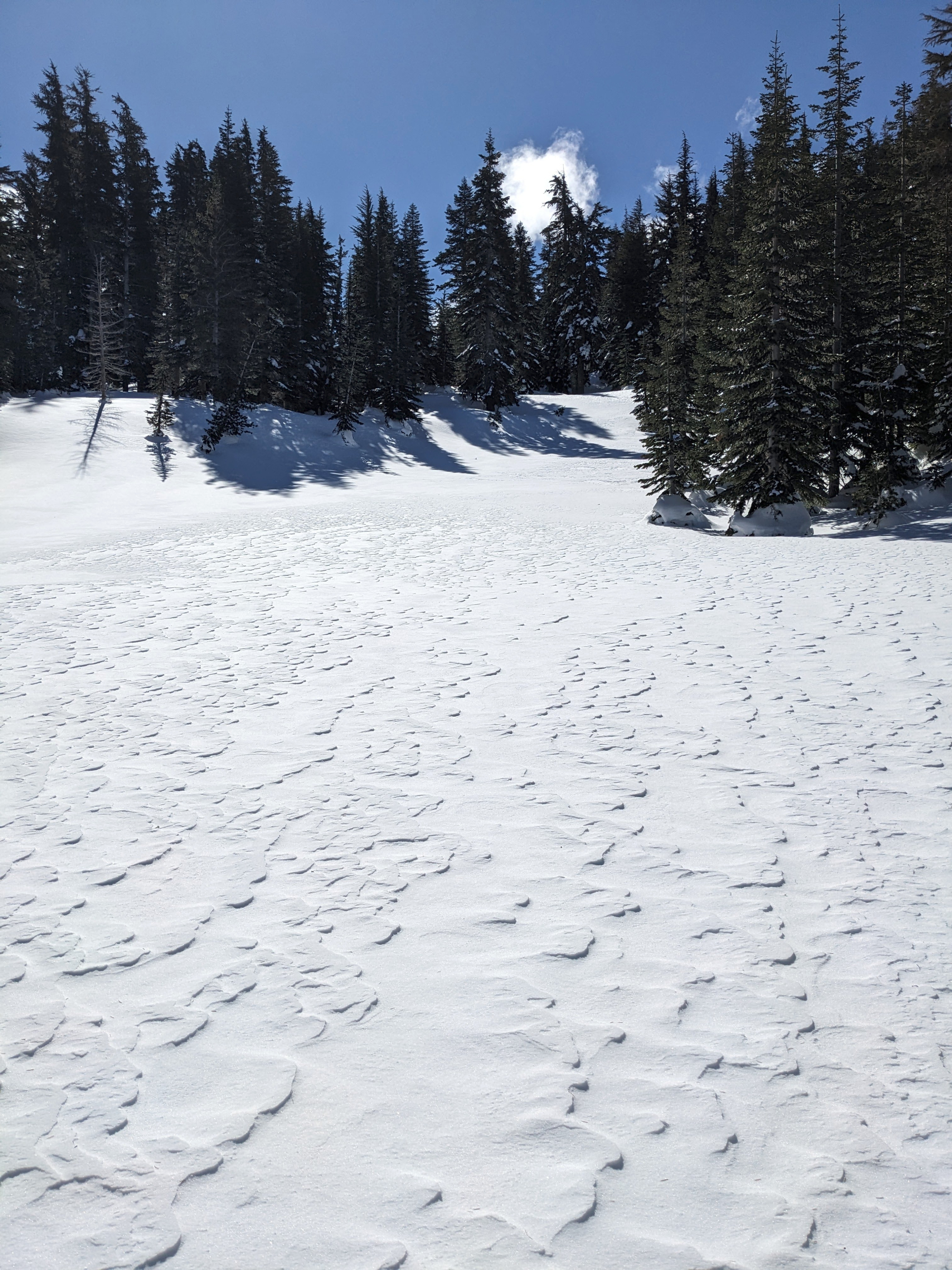
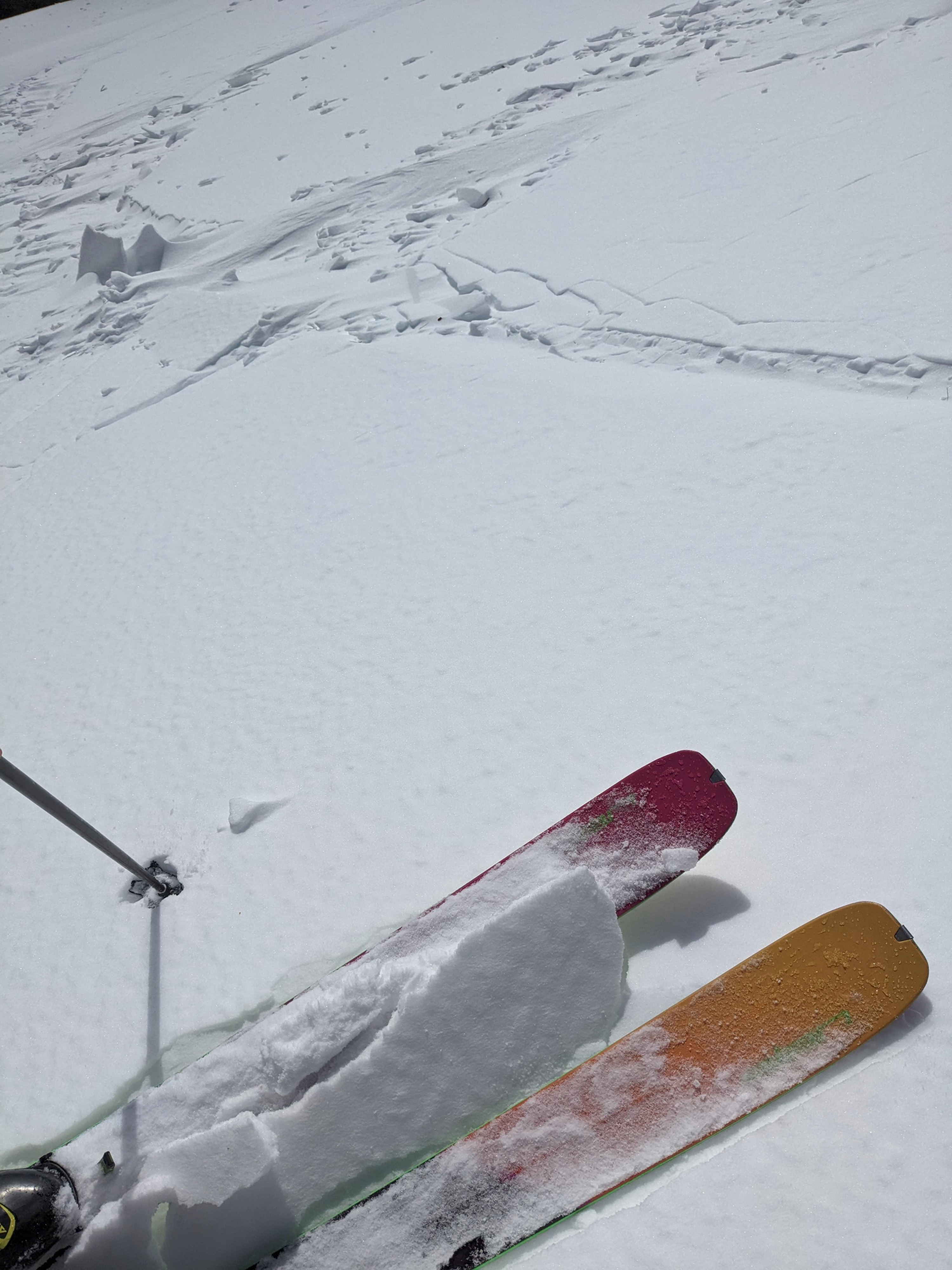
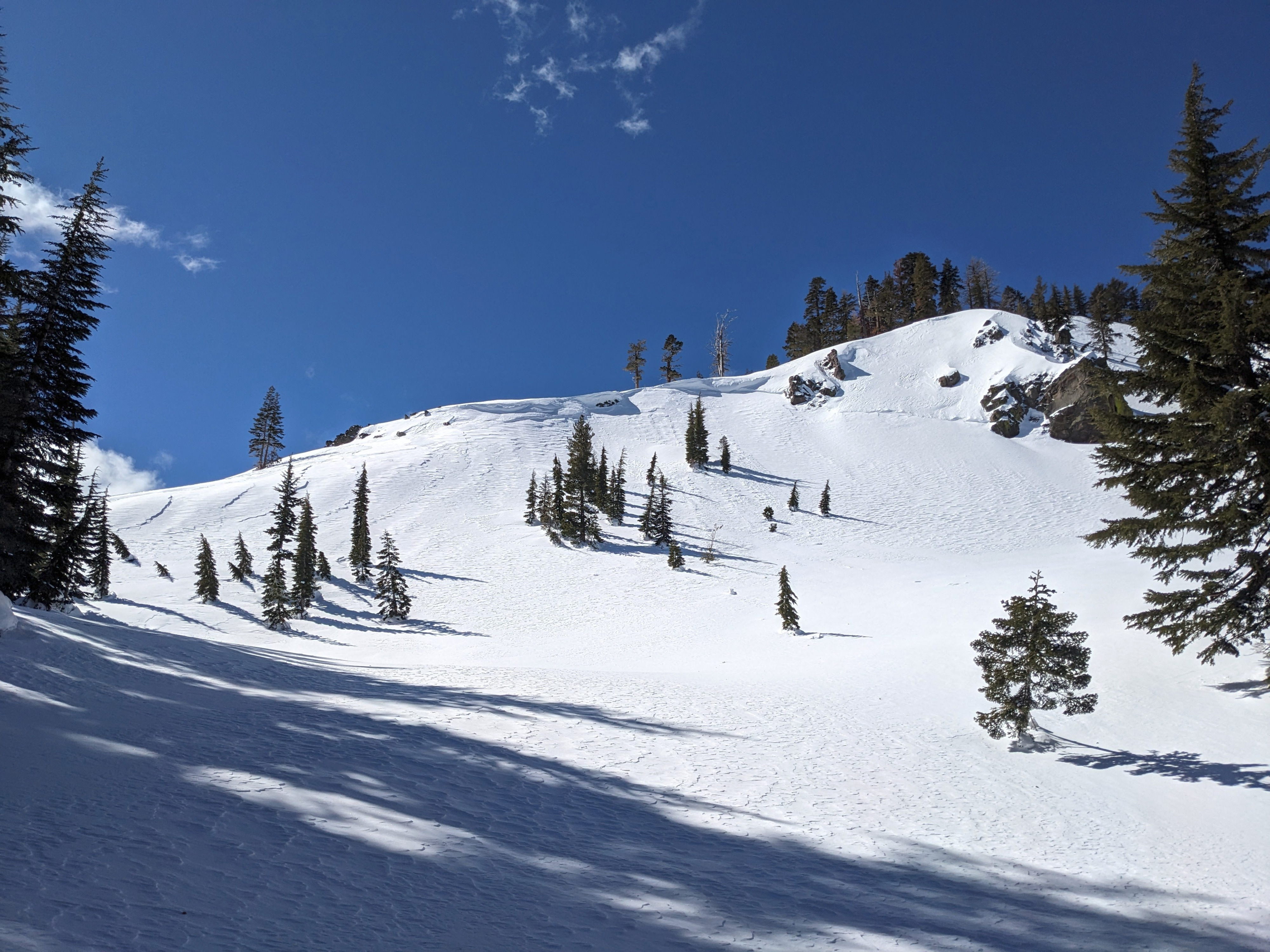
After examining the wind speeds on the remote sensors and the forecasted NE wind speeds, we chose to head into Deep Creek in hopes of balancing sheltered travel with seeing the wind effects along ridges. We could see wind-affected snow in below treeline terrain as we moved up the drainage. We found some small deposits of wind-blown snow on cross-loaded slopes. Ski kicks only produced minor cracking on one of these wind-loaded spots, even though we kicked numerous pockets of wind-loaded snow. For the most part, the snow remained soft on the sheltered N-facing slopes. Variable snow existed on the surface whenever we deviated from the sheltered N aspects, including thin crusts, wind-pressed snow, firm snow, and uneven wind-affected snow.
When we reached the ridgeline, we encountered less wind than expected. Still, we could see signs of stronger NE winds in the form of scoured surfaces and drifted snow on the SW side of the ridge. These drifts also did not crack when we kicked them.
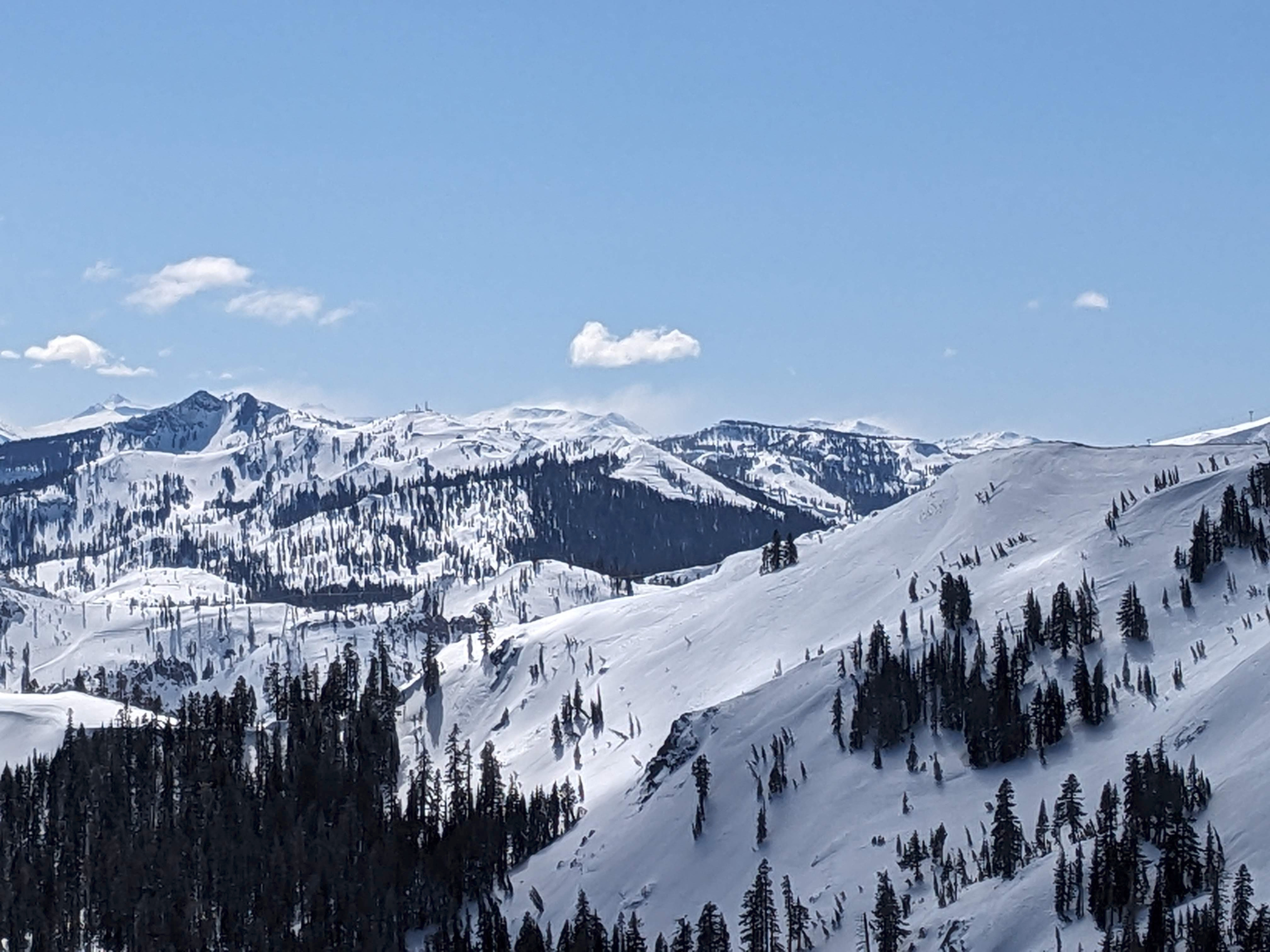
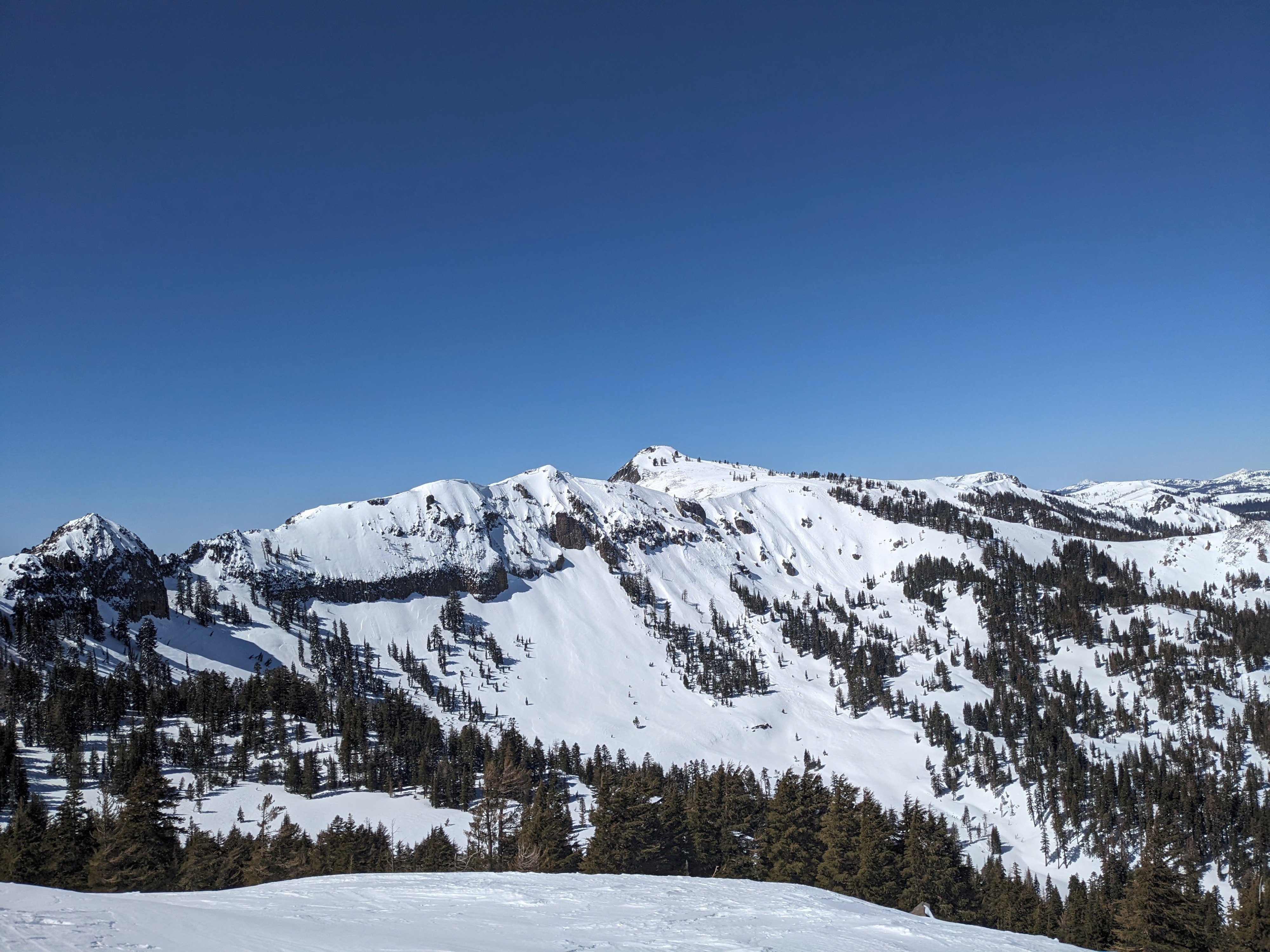
Even though the winds on the Deep Creek ridge remained moderate, we could see large plumes of snow blowing off of Twin Peaks and other peaks in the Crystal Range to the south of us.
We only triggered small cracking at one lightly wind-loaded spot below treeline on a cross-loaded NW aspect.Weather
- Air Temp
- ~ 28 to 30 ° F
- Cloud Cover
- few
- Wind Loading
- previous
- Snow Avail For Transport
- small smounts
Moderate NE winds existed on the ridges, and lighter winds were present at the lower elevations.
Avalanche
- Size
- D2
- Count
- 2
- Aspect
- NE
- Trigger
- N
- Elevation
- 8300 ft
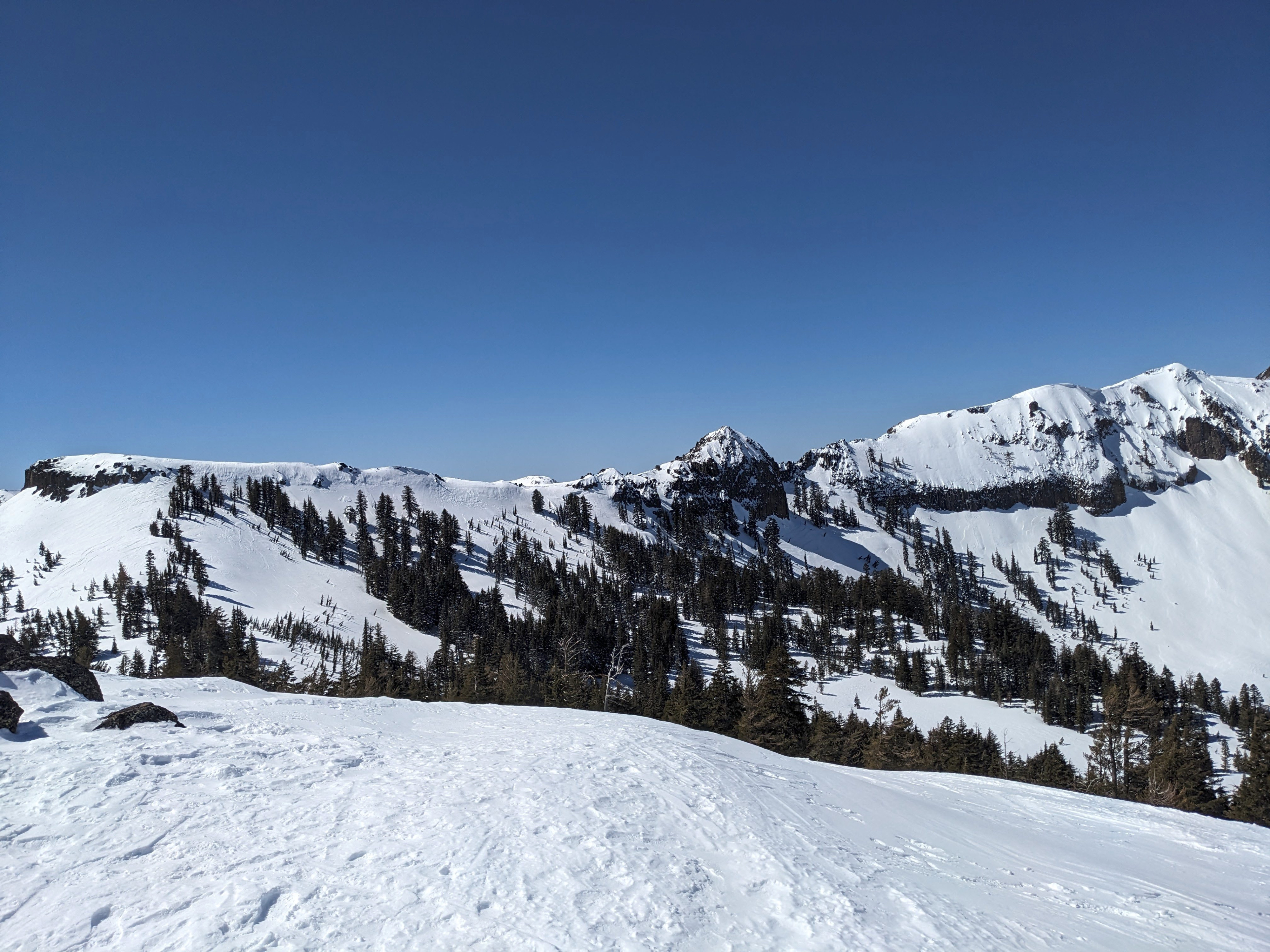
We saw two old wind slab avalanches that likely occurred during the storm at the beginning of March.