
Quick report
- Cracking
- specific
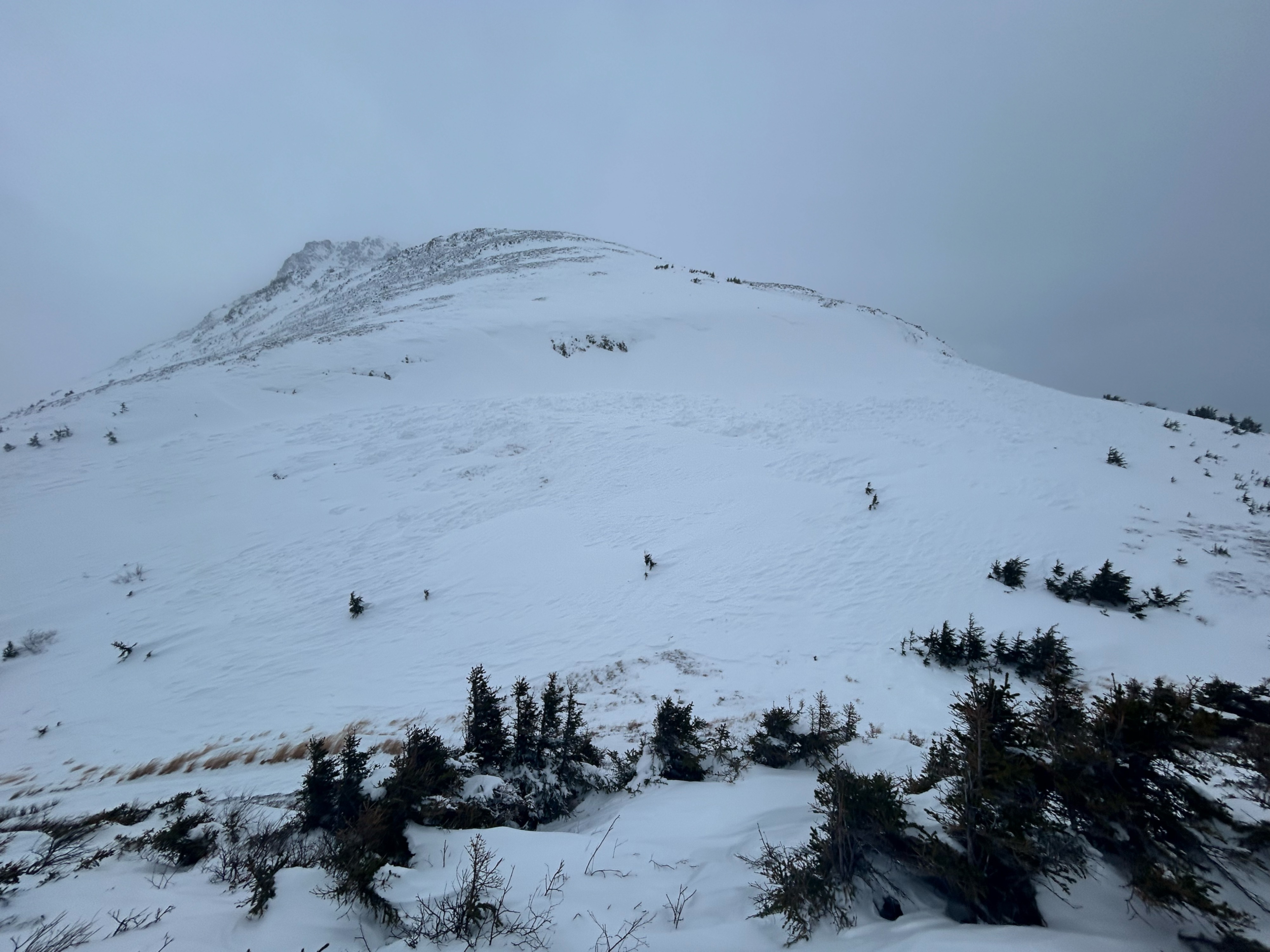
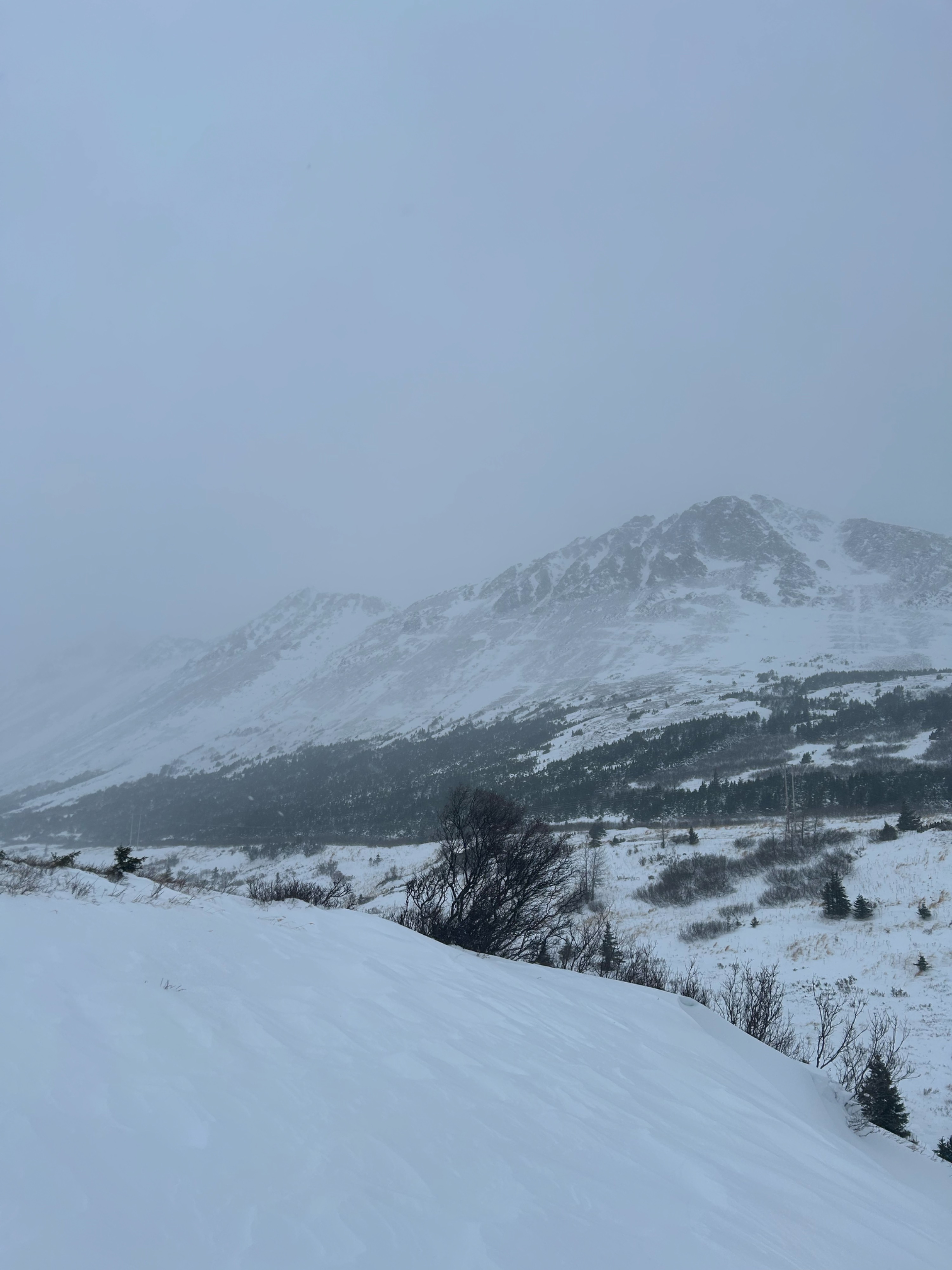
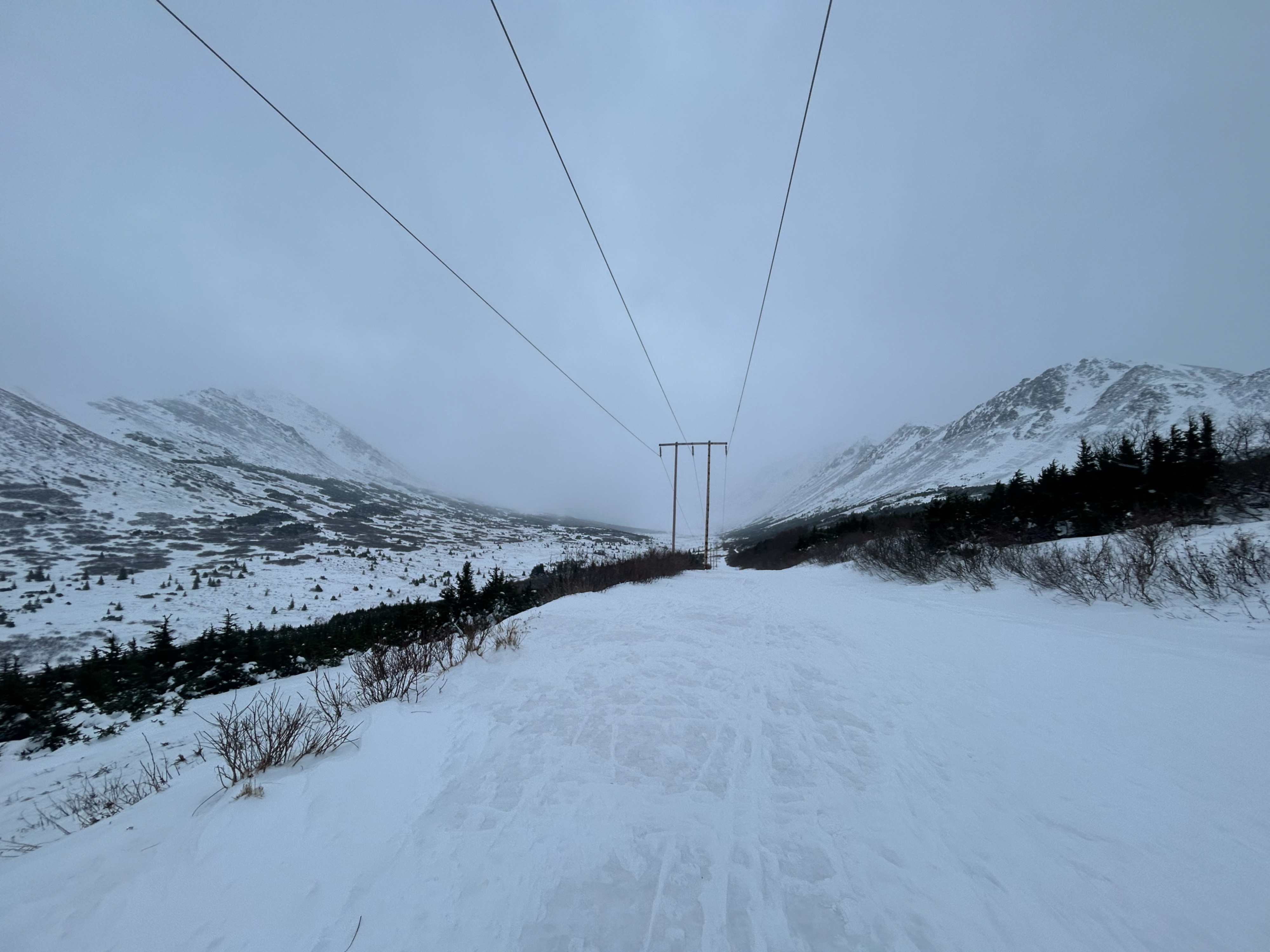
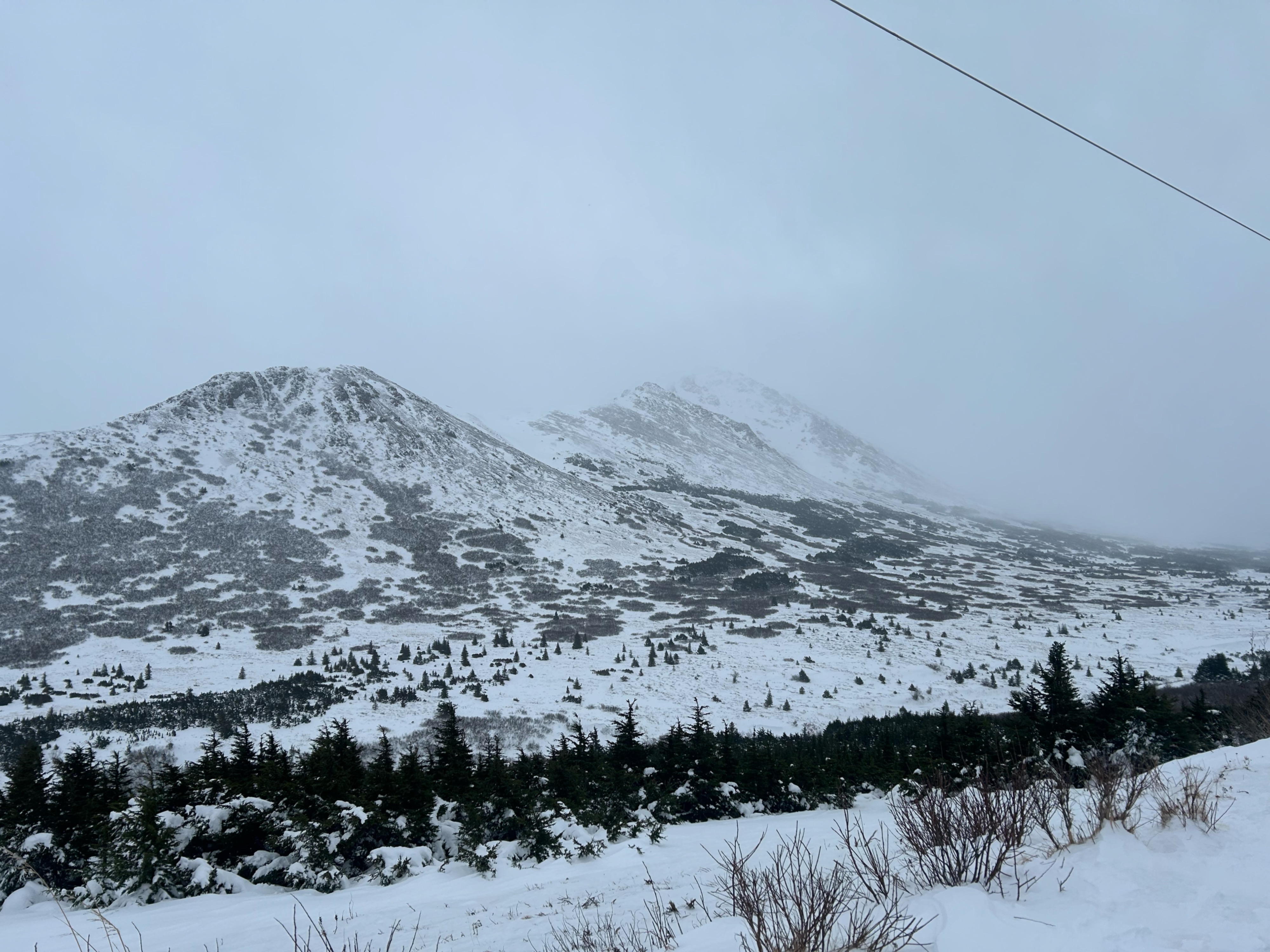
Went for an afternoon storm tour in the Glen alps area to check out how the start of this storm is impacting the area and if there are any natural avalanches and reactive test slopes. First off I toured around Blueberry Knoll to the wind tunnel slide path under Flattop and found old debris piles but did not look like it had recently slid. Though it was getting intensely loaded. I found a pocket of softer wind drifted snow in protected low angle trees and skied down to Powerline and across the valley to find loaded test slopes. Wind loaded test slopes produced large shooting cracks but no slides. The fresh slabs were generally 1' thick. It was a warm day even with the winds and the snow was getting sticky in the afternoon. With the many present red flags proving the snowpack was experiencing a lot of change, I avoided all avalanche terrain and just enjoyed the tempest. Large shooting cracks in some wind loaded features. Did not see any obvious recent natural avalanches though visibility was poor.
Weather
- Air Temp
- 30
- Cloud Cover
- overcast
- Wind Loading
- intense
- Rain Elevation
- inversion
- Snow Avail For Transport
- small smounts
At noon when I got to the parking lot it was 28F, a 9F inversion, 30F at 2pm. Snowfall was light (S-1) and only obvious when the winds were calm. Snowfall was mostly graupel. There was impressive amounts of snow being transported and very strong to intense winds blasting out of the SE through Powerline pass and swirling around the glen alps area. Much of the snow was getting picked up high and sublimating. Warming temps caused some decent glopping on the skins in the afternoon.
Snowpack
Highly variable. In wind loaded terrain features there generally was a fresh hard slab (soft in some areas), that showed evidence of being affected by warm temps, overlaying old hard wind slabs and/or very weak basal facets. Shooting cracks were most common where the freshly wind drifted snow had formed a slab softer than bullet proof. Test slopes with thick (2-3'), hard slabs did not give feedback where nearby test slopes with softer, thinner (8"-1') slabs produced very long shooting cracks.