
Quick report
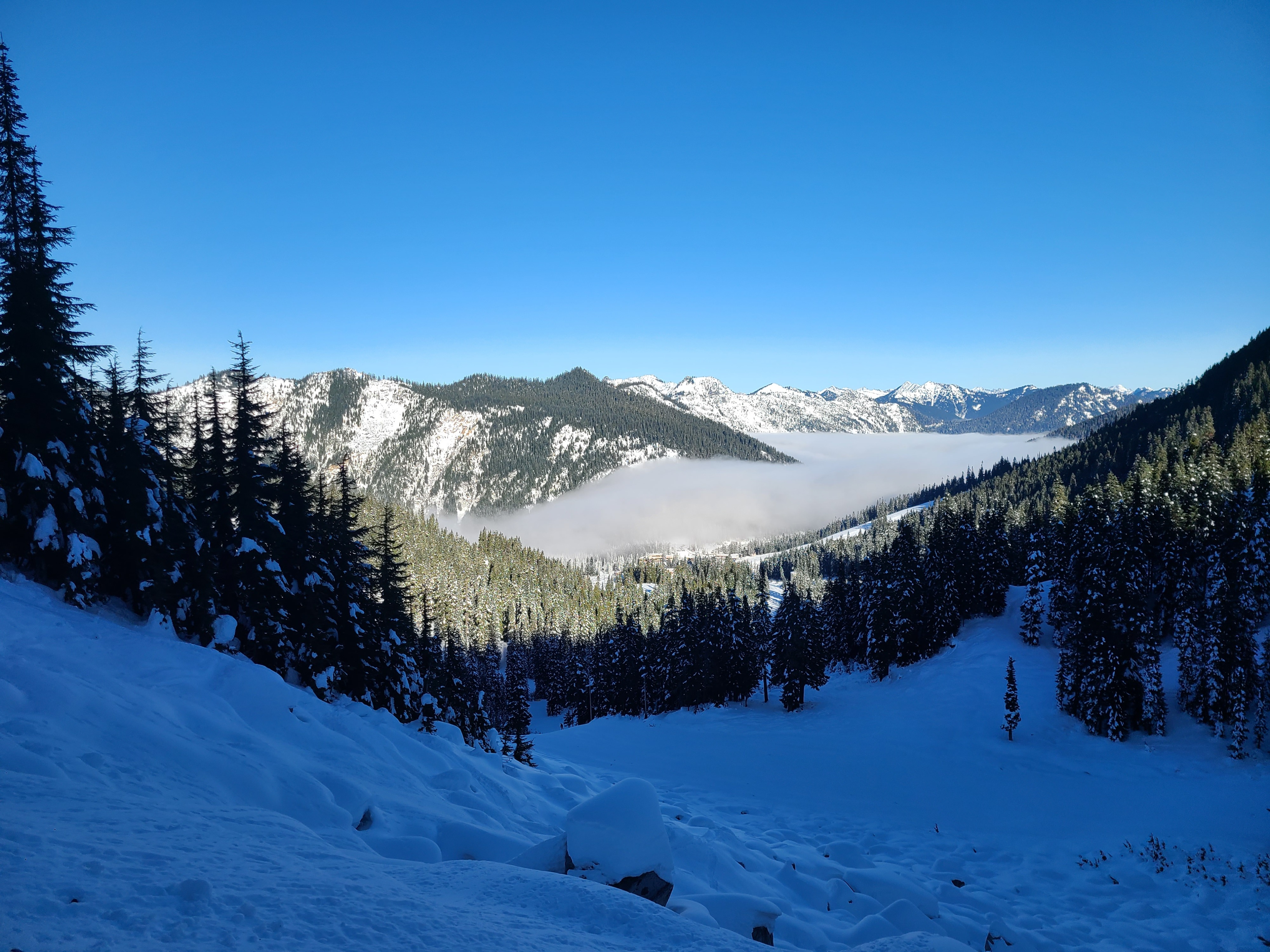
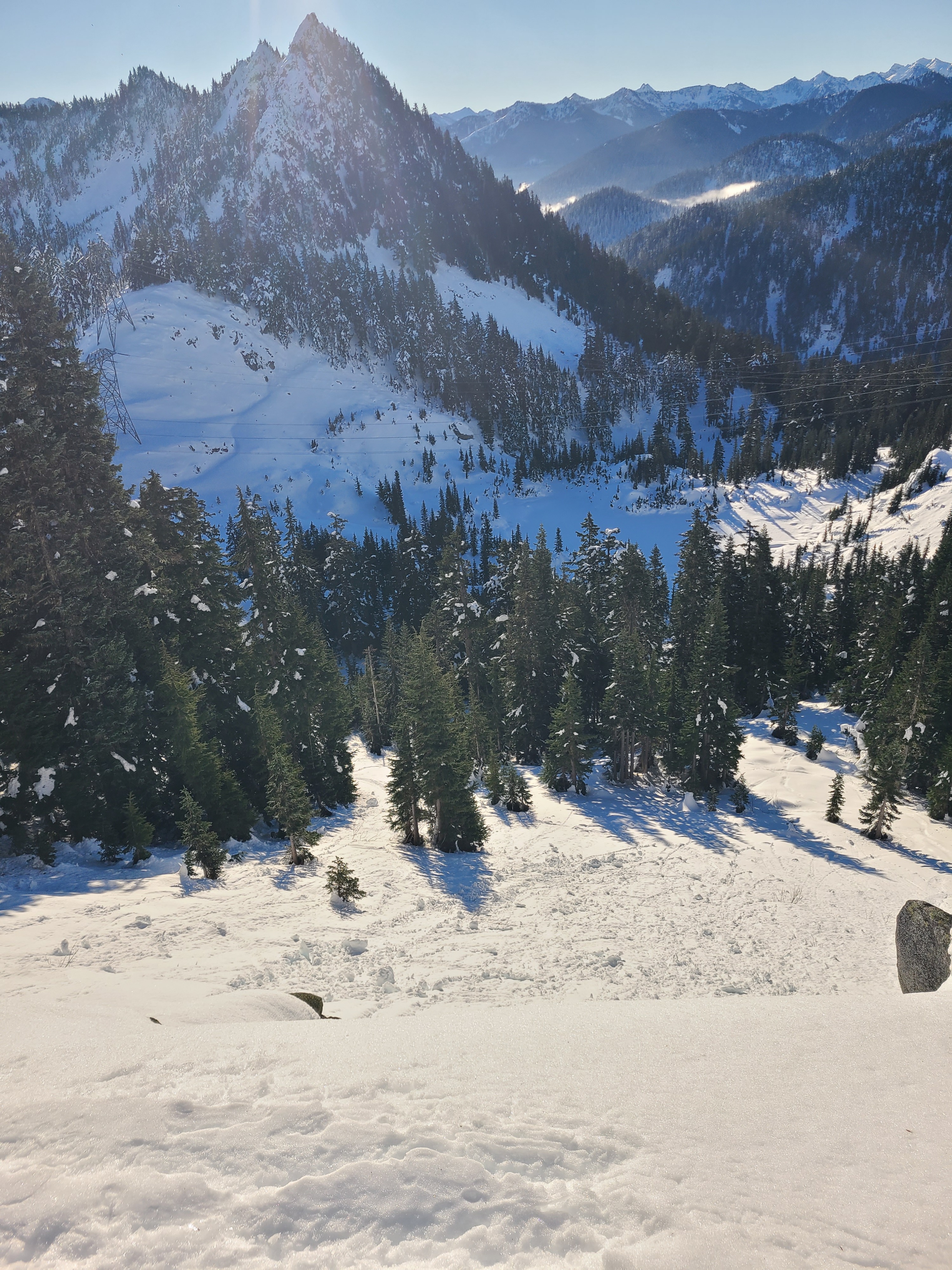
I wanted to get out and see how the snowpack is holding up with this prolonged dry spell and inversion. Overall, I was pleasantly surprised by how much snow is still holding on, even on sunny slopes, despite recent temperatures in the mid-40°F range at mid and upper elevations. It was also apparent that the sun lacks much energy with the low angles and short days this time of year. Southern slopes had plenty of rollerballs but few wet loose avalanches of any notable size. However, the breakable surface crust would make for variable travel conditions. Northern slopes provided nice soft turns, if you avoided the many low snow hazards of rocks, trees, and holes. On shady, sheltered slopes, a bathtub ring of surface hoar existed between 4100-4600ft. Below this cloud cover prevented the radiation loss required for surface hoar to form. And above 4600ft, it seemed the air was just too warm and dry for favorable surface hoar formation.
Weather
- Cloud Cover
- clear
- Snow Avail For Transport
- small smounts
There were very cold temperatures at pass level, 15°F with moderate winds blowing clouds through the highway gap. Temperatures increased significantly with elevation; above approximately 4900ft, it was warm and sunny with clear skies.
Snowpack
We dug around on both Southern and Northern slopes between 5000 and 5200ft. Snow depths averaged between 105 and 120 cm, with the southern slopes holding just a bit less snow.
A snow profile on a south aspect showed a strong, well-consolidated snowpack with a 1-2cm melt-freeze crust on the surface. This crust was fragile and starting to break down in the warm sun. The late November crust was present, buried ~25cm deep. We did not note any weak snow above or below this crust. Stability tests produced no results.
A snow profile on a northern aspect showed a layered, cold, dry snowpack with soft surface conditions. There is a complex of crusts from late November buried approximately 30cm deep. This presented as four separate crusts with weaker snow in between. This whole complex was about 10cm thick. A thin layer of weak snow over this crust produced stubborn small column test results (CTH). More notable was a weak interface in the upper pack down 13cm, consisting of buried small Near Surface Facets that produced clean shears with moderate effort (CTM SP).