
Quick report
I dug three pits on the north half of the compass at elevations between 7600 and 7800' on Hoffer Butte. I did not find any buried surface hoar in these three pits. The most notable weak layer was a layer of facets above the 2/1 rain crust buried around 3 feet from the surface. In pits with North and Northeast aspects, I found failures in my compression tests to have a fracture character of sudden planar (CT12SP) and sudden collapse (CT24SC). There was less of a slab overlying the weak layer in the pit with a Northwest aspect, and a compression test in this pit produced a resistant planar result. No propagation was noted in an ECT at this location.
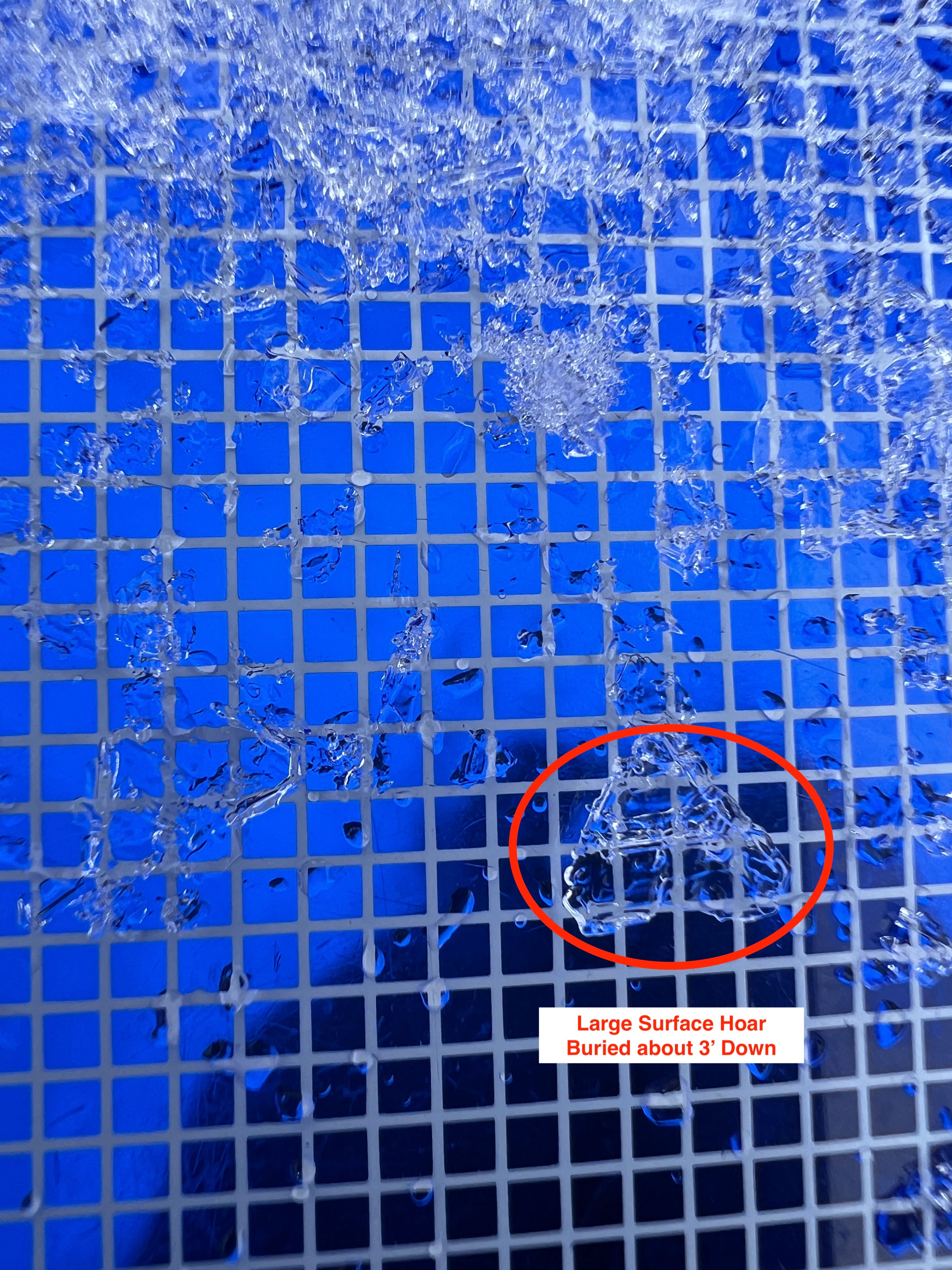
I went over to the west shoulder of Gunsight Mountain, and found the 2/26 Buried Surface Hoar on a North aspect at 7700'. It was 68 cm/just over 2' from the surface and was 6-10 mm in size. It produced a Sudden Planar result in a compression test (CT30SP).
Sudden planar and sudden collapse fracture character in compression testsWeather
- Air Temp
- -3
- Cloud Cover
- broken
- Wind Loading
- none
- Snow Avail For Transport
- none
Overcast skies gave way to broken skies by 11:00. Light NW wind. Temperature just below freezing.
Snowpack
A melt-freeze crust was present on the surface of almost all areas that I traveled. It varied in thickness from a thin breakable crust on North aspects to a supportive 4" crust on more solar aspects. There were plenty of roller balls out of cliff bands in steeper terrain from the week of warm weather. The temperature had not warmed the surface snow enough by the time I left the field for wet loose avalanches to be a concern.
The persistent slab problem seems to still be present in specific locations in the Elkhorns, namely North aspects near treeline. The presence and reactiveness of the buried surface hoar and 2/1 crust/facet combination was enough for me to want to stick to terrain less than 30 degrees on Northerly aspects.