Bollettino valanghe

Southeast Mountains

Crested Butte Avalanche Center
Vedi sulla mappa

Pericolo valanghe

Wed
Alta quota
2 · Moderato
Limite del bosco
2 · Moderato
Sotto il limite
2 · Moderato
Non aggiornato — questo bollettino è scaduto 5 years ago. Stai vedendo condizioni passate, non il bollettino in corso.

In sintesi

There is a low likelihood but high consequence threat of triggering an avalanche that breaks on weak layers near the ground today.  Be cautious of steep terrain that faces the northern half of the compass, especially where snow depths are less than about 4 or 5 feet over sugary weak snow.   The safest riding is on southerly aspects or slopes with deep, uniform snow coverage.  An explosive triggered avalanche that broke at the ground yesterday highlights that these concerns are still quite real.  

Problemi valanghivi

  • Persistent Slabs

    • Alta quota
    • Limite del bosco
    • Sotto il limite del bosco
    Probabilità
    Possible
    Dimensione
    2–3

    Persistent slabs are becoming a low likelihood but high consequence concern on the northern half of the compass, where faceted weak layers lurk near the ground.   You are most likely to impact these layers and trigger a dangerous avalanche where slabs are thinner.  Choose terrain with a deep, uniform snowpack to reduce your risk.  Be cautious near rock bands and in alpine terrain where winds have created variable snow depths.  Slopes that avalanched early in the holiday cycle or slopes in the shallowest parts of the Southeast Mountains also have thinner slabs that could be easier to trigger.  

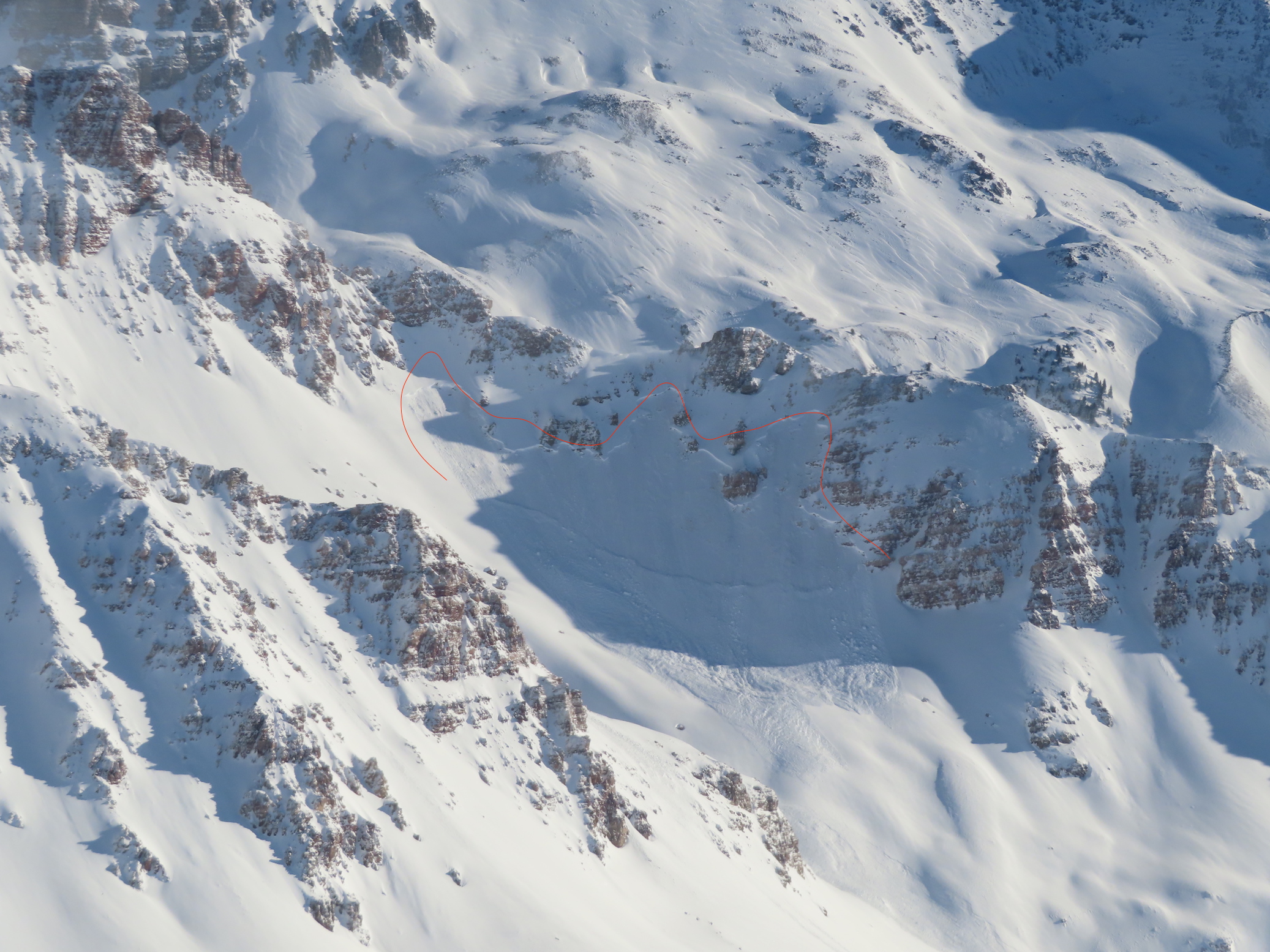
    A persistent slab avalanche on an east aspect of Hunter Hill. This avalanche released at the start of the new year.
Avalanche Discussion

We're seeing a slight uptick in wind speeds this morning, with moderate gusts in the alpine out of the northwest.  This might be enough to reignite some light wind drifting in the alpine; watch for signs of fresh wind slab formation if you are riding in high elevation, consequential terrain.  There is also a layer of graupel that is buried by about a foot of new and wind drifted snow in some parts of the Northwest Mountains. We have limited data on this issue; it seems to be an isolated concern on leeward terrain in areas where graupel collects, such as aprons below cliffs.  

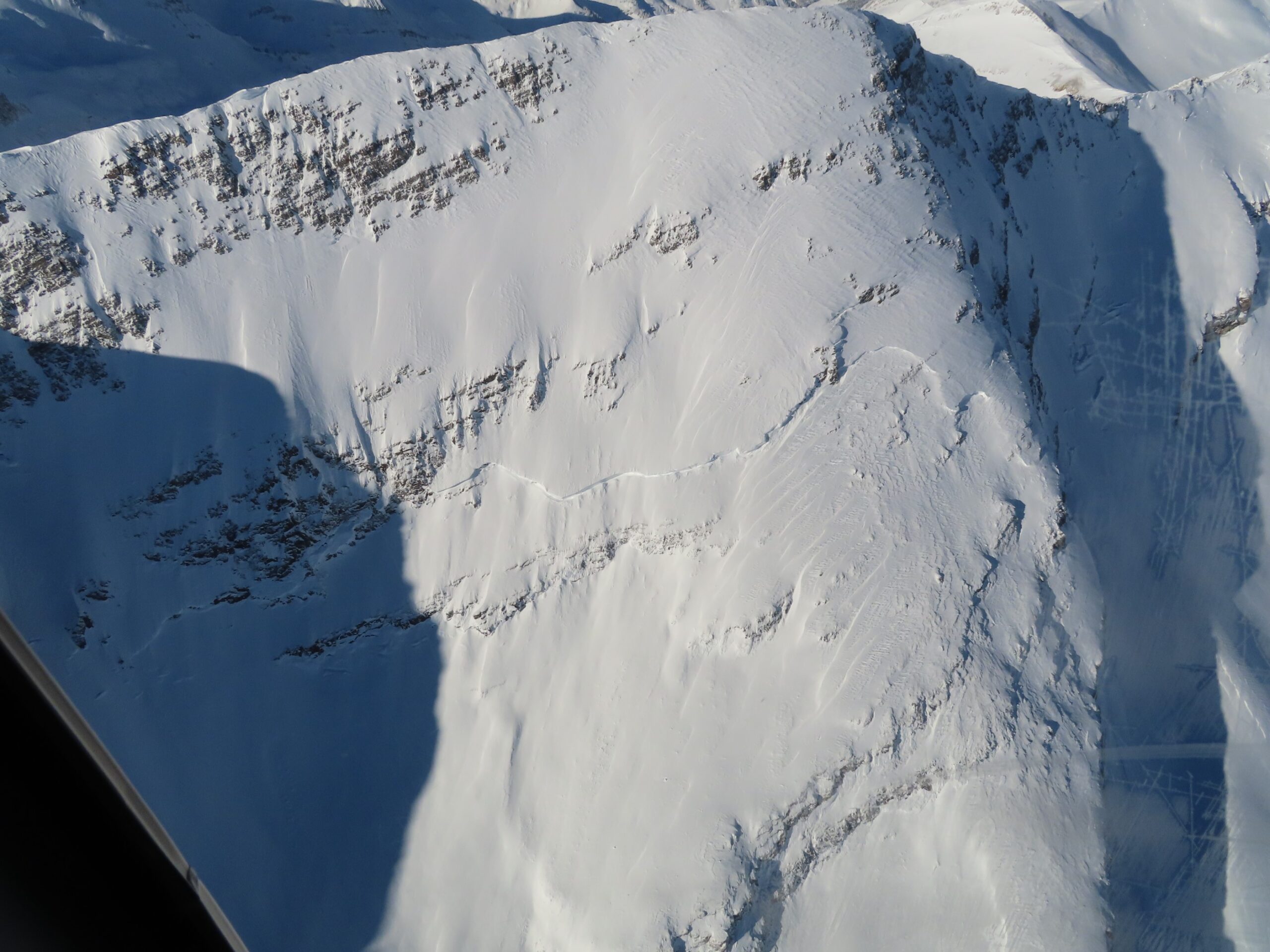
The primary concern today remains deeply buried weak layers.  Yesterday, a single hand charge produced a large avalanche that broke on weak layers near the ground in the Southeast Mountains. The slide was on a northwest aspect near treeline.  There were also a couple of explosive triggered avalanches breaking on weak layers near the ground last week.  The lack of human-triggered activity in the past two weeks highlights the low likelihood element of our concerns (and cautious travel habits).   Looking through our photo galleries below, the high consequence nature of the problem is equally obvious.  Because a triggered avalanche would be difficult to survive, it's best to give yourself a wide margin for error in your terrain choices and snowpack assessments.   With more than 10 days since the major loading event ended, we've dropped the danger to LOW below treeline in the Northwest Mountains.  Although deep weak layers still exist below treeline, we have higher confidence in a deep and uniform coverage above them in the snow favored zone.  In that elevation band, exceptions to a generally stable snowpack might exist in very steep, rocky, or variable terrain.   The danger remains MODERATE throughout the Southeast Mountains and at higher elevations in the Northwest Mountains, where we have more concerns about the potential for human triggering.

I'm going to keep yesterday's forecast discussion describing our concerns by aspect up for another day because it's worth a read and still applies.   

  • West to North aspects.  Early season weak layers are fairly widespread on anything tilted north of due west.  Weak layers on a lot of west-facing slopes with a tilt of south melted off early season, especially at low elevations or on wind-scoured slopes.   Periods of extreme winds in the past few weeks have scoured slabs away on the most wind-exposed terrain.  Those slopes are obvious and safe, but won't offer attractive riding. The slopes that concern me the most are sheltered cirques or cross-loaded terrain features near and above treeline, where thick slabs exist but also have thin spots because of  seasonal wind erosion patterns.  That's where you might hit a trigger spot.  
  • North to East aspects.  Early season weak layers and slabs are widespread on anything that didn't slide near the end of the holiday cycle.  Snow depths are also deepest on these aspects so it is now very difficult to trigger an avalanche where the entire season's snowpack exists.  My greatest concerns are near rock bands because they can have shallow spots (example A,  example B, example C), or in the shallowest parts of our forecast area from town towards CB South where slabs are thinnest.  We also have concerns for slopes that avalanched early in the cycle on mid-pack weak layers (around Christmas Eve) and have rebuilt thinner slabs over basal weak layers.  This is probably more of an issue in the shallower parts of our forecast area (Southeast Mountains).  For these latter two concerns, we are showing a higher likelihood for the problem in the Southeast Mountains.  
  • Southeast to Southwest aspects.  Early season weak layers melted into strong crusts or melted off on these aspects.  Our snowpack tests continue to show that the smaller grained weak layers that formed in mid-December are generally healed.  We didn't observe any deep failures on south or southwest aspects with the 12/31 cycle, and we spotted only two avalanches that failed deeply on east/southeast aspects. (Example A: Raggeds Wilderness, Example B: Avery). We don't know if these were on early-season crusts or the mid-December weak layers.  Southerly aspects have the strongest and most trustworthy structures across our forecast area; confidence decreases as you turn from southeast to east at higher elevations.  

Regioni coperte